
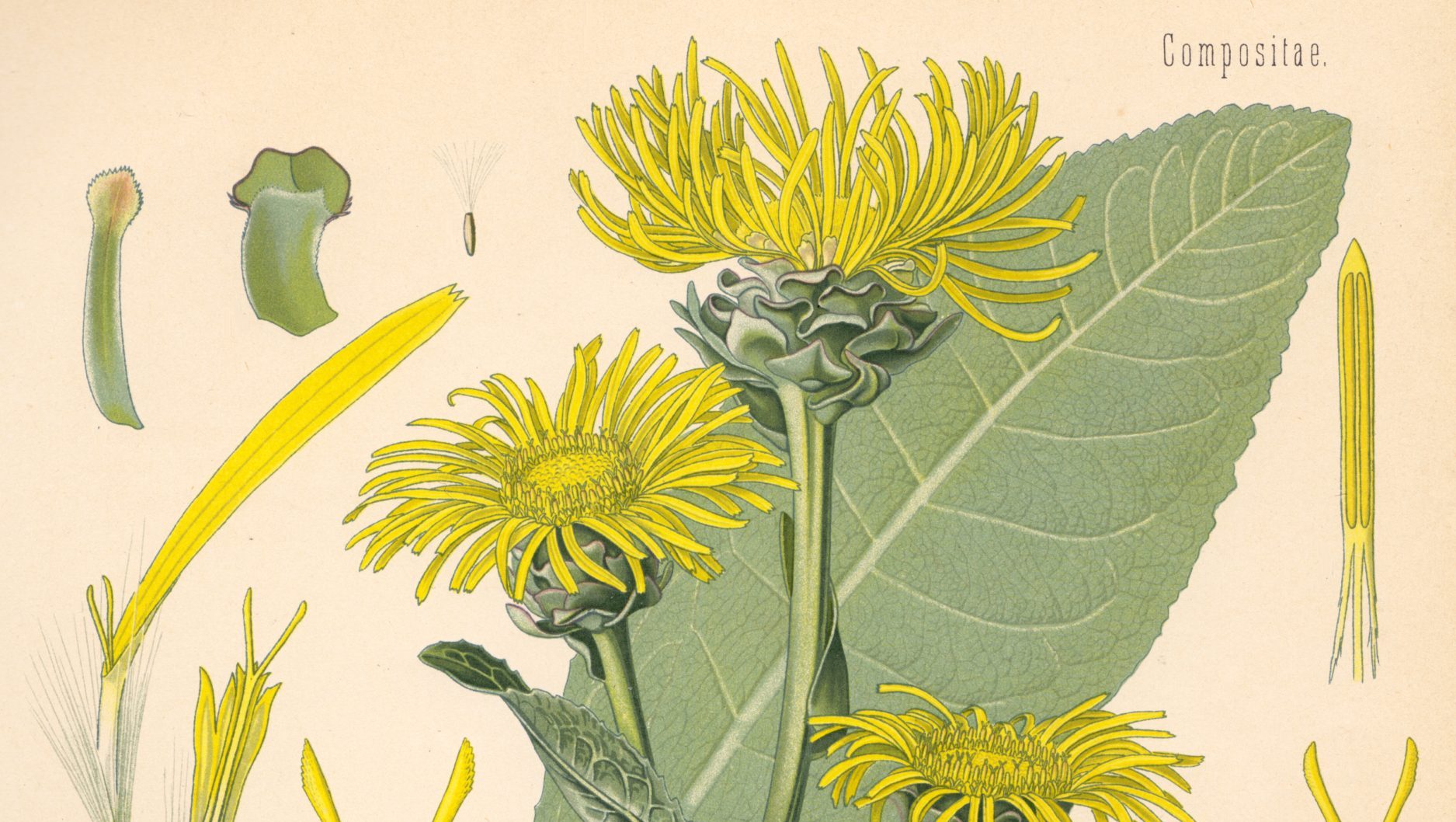
Elecampane
Inula helenium
Common & Folk Names
- Elecampane
- Elfwort
- Horse-heal
- Scabwort
- Wild Sunflower
- Velvet Dock
- Elf Dock
Plant Family
Asteraceae (Formerly Compositae)
Geographic Location
Native to Europe and temperate Asia, from Britain and Scandinavia south to the Mediterranean and east to central Asia. Found in damp meadows, along streams, and in woodland clearings. Now naturalised in North America and parts of other temperate regions. Cultivated in herb gardens worldwide. Thrives in cool to moderate temperate climates with adequate moisture.
Habitat
Naturally grows in damp meadows, along streams and ditches, in moist woodland clearings, and in rich, moist soils. Prefers partial shade to full sun with consistently moist but well-draining soil. Tolerates clay soils if drainage is adequate. Found from lowlands to moderate elevations.
Growing Conditions
Sun: Full sun to partial shade; produces best in full sun with adequate moisture
Soil: Rich, moist, well-draining soil high in organic matter; tolerates clay if drainage adequate; pH 6.0-7.5 (slightly acidic to neutral); requires consistent moisture but not waterlogging
Propagation: Grow from seed sown in spring (germinates readily) or divide established plants in autumn or early spring; root divisions most reliable
Propagation: Space plants 60-90cm apart; elecampane grows large (1.5-2 metres tall and wide)
Care: Water regularly, especially in dry periods; mulch to retain moisture; stake tall plants if needed in windy sites; generally pest and disease-free; dies back to ground in winter; can be vigorous once established
NZ Planting Calendar
Sowing (seed): Spring (September-November); sow seeds on surface or lightly cover; keep moist
Propagation (division): Divide established plants in autumn (March-April) or early spring (August-September); carefully separate root sections with growing points
Planting: Spring (September-November) or autumn (March-May); plant in moist, sunny to partially shaded position
Growth: Perennial; dies back to ground in winter; re-emerges in spring; grows 1.5-2 metres tall; large, coarse leaves; substantial root system develops
Flowering: Summer (December-February in NZ) with bright yellow, daisy-like flowers 5-8cm across
Harvest: Roots harvested in autumn of second or third year (September-May in NZ) after flowering; autumn harvest preferred when plant puts energy back into roots
Note: Grows well in most of NZ with adequate moisture; suited to areas with consistent water; popular in herb gardens for both ornamental and medicinal value; impressive tall plant with cheerful yellow flowers; easy to grow once established; provides abundant root medicine; attractive to bees and beneficial insects; requires space due to large size
Harvesting Guidelines
Roots: Harvest in autumn of the second or third year after the plant has flowered and is going dormant. Older roots (2-3 years) are larger and contain higher concentrations of active constituents, particularly inulin. Carefully dig the entire root system, which can be substantial. Wash thoroughly to remove all soil. The roots are thick, fleshy, and aromatic when fresh. Cut fresh roots into slices or chunks (they become extremely hard when dried). Some herbalists prefer to prepare fresh root tincture immediately after harvest for maximum potency. For drying, slice thinly and dry in well-ventilated area at temperatures not exceeding 35°C. Properly dried elecampane root is hard, brittle, and retains strong aromatic, camphoraceous scent. The interior should be yellowish-white with no mould. Store dried root in airtight containers away from light and moisture.
Quality Indicators: High-quality elecampane root has:
- Strong, aromatic, camphoraceous scent (similar to violets or camphor)
- Bitter, pungent taste
- Clean, mould-free appearance
- Yellowish-white interior when cut
- Recently dried (within 1-2 years for best potency)
Sustainable Harvesting: Elecampane grows vigorously and regenerates readily. Leave some plants to produce seed for next generation. The plant self-seeds in suitable conditions.
Parts Used
- Root (the only part used medicinally)
- Occasionally flowers (minimal medicinal use, mainly ornamental)
Constituents & their Actions
Elecampane’s therapeutic properties arise primarily from essential oil (particularly alantolactone), inulin, and other compounds that provide powerful expectorant, antimicrobial, and digestive effects.
Essential Oil (1-4%):
The volatile oil is central to elecampane’s therapeutic effects. Key components include:
- Alantolactone (sesquiterpene lactone)
- Isoalantolactone
- Alantic acid
- Azulenes
The main actions of this essential oil are:
- Provide powerful expectorant effects (stimulating respiratory secretions)
- Demonstrate antimicrobial activity (particularly against respiratory bacteria and fungi)
- Exhibit antispasmodic properties (relaxing bronchial smooth muscle)
- Create warming, stimulating effects
- Contribute to characteristic aroma and flavour
Inulin (Up to 44%):
A prebiotic polysaccharide (fructan) present in high concentrations, particularly in autumn-harvested roots.
The main actions of inulin are:
- Provide prebiotic effects, feeding beneficial gut bacteria
- Support digestive health
- Demonstrate mild expectorant effects
- Contribute to mucilaginous, soothing qualities when prepared as decoction
- Note: Inulin content varies seasonally—highest in autumn, lower after winter storage
Sesquiterpene Lactones (Alantolactone and Others):
Bitter compounds with multiple therapeutic actions.
The main actions of sesquiterpene lactones are:
- Provide powerful expectorant effects
- Demonstrate antimicrobial activity (particularly antifungal and antibacterial)
- Exhibit anti-parasitic properties (traditional use for intestinal worms)
- May cause allergic reactions in sensitive individuals (Asteraceae sensitivity)
Sterols and Triterpenes:
Various plant compounds with physiological effects.
The main actions of these compounds are:
- Support anti-inflammatory effects
- Contribute to overall therapeutic profile
Mucilage:
Soothing, mucilaginous compounds released during decoction.
The main actions of mucilage are:
- Provide demulcent, soothing effects to respiratory and digestive tissues
- Support healing of inflamed tissues
- Complement the stimulating expectorant effects with gentler soothing
Actions with Mechanisms
Expectorant (Powerful):
Elecampane is one of the most powerful herbal expectorants, particularly valuable for chronic, stuck, productive coughs with thick, difficult-to-expectorate mucus. The essential oil (particularly alantolactone) stimulates respiratory tract secretions, which in turn thins thick mucus, increases production of more watery secretions, and promotes expectoration. The mechanisms involve direct stimulation of bronchial glands and irritation of respiratory mucosa (in a therapeutic sense) that triggers productive coughing and mucus clearance. The expectorant effects are pronounced and reliable, making elecampane essential for chronic bronchitis, emphysema, asthma with mucus production, and any respiratory condition with thick, stuck secretions. The herb excels where gentler expectorants fail—when mucus is particularly thick, sticky, and resistant to clearance. The warming, stimulating nature suits cold, damp lung conditions.
Antispasmodic (Respiratory):
Elecampane relaxes bronchial smooth muscle, which in turn reduces bronchospasm, eases breathing, and calms spasmodic coughs. The antispasmodic effects complement the expectorant properties—whilst promoting expectoration, the herb simultaneously relaxes airways, making breathing easier. This dual action (expectorant + antispasmodic) makes elecampane particularly valuable for asthma, whooping cough, and spasmodic respiratory conditions. The herb addresses both the mucus congestion and the airway constriction components of respiratory disease.
Antimicrobial (Respiratory and Digestive):
Elecampane demonstrates significant antimicrobial activity, particularly against respiratory bacteria (Mycobacterium tuberculosis, Staphylococcus aureus, others) and fungi (Candida species). The essential oil and sesquiterpene lactones disrupt microbial cell membranes and metabolism, which in turn kills or inhibits various pathogens. Traditional use includes elecampane for tuberculosis (consumption), chronic respiratory infections, and fungal infections. Modern research validates antimicrobial effects, though elecampane is not a substitute for antibiotics in serious infections. The antimicrobial properties support use for infected respiratory conditions, providing both symptomatic relief (expectorant) and addressing underlying infections.
Digestive Tonic and Bitter:
The bitter sesquiterpene lactones and aromatic essential oil stimulate digestive function. Bitter taste receptors on the tongue trigger increased saliva, gastric acid, bile, and enzyme production, which in turn enhances digestive capacity, improves appetite (in deficiency states), and supports overall digestive health. The prebiotic inulin feeds beneficial gut bacteria, supporting healthy microbiome. Traditional use includes elecampane for poor appetite, weak digestion, and general digestive debility. The warming, aromatic nature suits cold, sluggish digestion.
Antitussive (Mild):
Despite being primarily expectorant, elecampane also provides mild cough-suppressing effects, particularly for irritating, unproductive coughs. The soothing mucilage and antispasmodic properties calm irritated airways and reduce cough reflex. This seemingly contradictory action (expectorant yet calming to cough) makes elecampane versatile for different cough types.
Diaphoretic (Mild):
When taken as hot decoction, elecampane promotes sweating, which in turn supports fever management and helps eliminate toxins through skin. The warming nature makes it suitable for colds and flu with chills and poor circulation.
Anthelmintic (Traditional):
Historical use includes elecampane for intestinal worms and parasites. The sesquiterpene lactones demonstrate anti-parasitic activity. Modern use for this purpose is uncommon, with more specific anthelmintics preferred.
Alterative (Traditional):
Traditional herbalism considers elecampane an alterative (“blood purifier”), supporting detoxification and overall health. The prebiotic, digestive, and antimicrobial effects may contribute to these traditional applications.
Main Use
Elecampane is primarily used for chronic respiratory conditions, particularly chronic bronchitis, emphysema, and chronic obstructive pulmonary disease (COPD) where thick, difficult-to-expectorate mucus accumulates in airways. The powerful expectorant effects thin secretions and promote expectoration, whilst antispasmodic properties ease breathing and antimicrobial effects address infections. Regular use over weeks to months supports respiratory health, reduces infection frequency, and improves breathing capacity. Elecampane provides sustained support for chronic lung conditions rather than quick fixes.
For asthma, particularly asthma with significant mucus production, elecampane’s dual expectorant and antispasmodic effects provide valuable support. The herb helps clear mucus whilst relaxing airways.
IMPORTANT: Asthma requires proper medical management. Elecampane is supportive therapy, not a substitute for prescribed medications.
Whooping cough (pertussis) traditionally responds to elecampane, where the antispasmodic effects calm violent coughing spasms whilst expectorant properties help clear respiratory tract. Modern treatment of whooping cough requires medical supervision, but elecampane may provide symptomatic support.
For tuberculosis (consumption), historical use was extensive. Whilst modern treatment requires antibiotics, elecampane’s antimicrobial activity against Mycobacterium tuberculosis is documented in research. The herb may provide supportive therapy alongside conventional treatment.
Smoker’s cough and respiratory damage from smoking benefit from elecampane’s powerful mucus-clearing effects. The herb helps expel accumulated tar and mucus, supporting respiratory cleansing. Combined with smoking cessation, elecampane aids lung recovery.
For digestive weakness, poor appetite, and sluggish digestion, elecampane provides bitter digestive stimulation and prebiotic support. The warming, aromatic nature suits cold, deficient digestive conditions.
Chronic candida overgrowth, both respiratory and digestive, may benefit from elecampane’s antifungal properties. The prebiotic inulin supports healthy gut flora that compete with candida.
The excellent safety profile and powerful effects make elecampane valuable for anyone with chronic respiratory conditions involving thick mucus.
Preparations
Decoction: Simmer 1 teaspoon (1-3g) of dried root in 250ml water for 15-20 minutes; strain and drink. The decoction is bitter, aromatic, and warming. Drink 2-3 times daily. Traditional and effective preparation.
Tincture (Fresh Root, 1:2, 75-95% alcohol OR Dried Root, 1:5, 60% alcohol): 1-3ml (20-60 drops), 3 times daily. Fresh root tincture is preferred by many herbalists for maximum essential oil content. The high alcohol percentage extracts the essential oils effectively.
Syrup: Traditional preparation for coughs. Make strong decoction, strain, add honey or sugar to create syrup. 1-2 teaspoons as needed for coughs. The sweet syrup masks bitter taste and provides soothing effects.
Infused Honey: Chop fresh or dried root and infuse in honey for several weeks; strain and use 1-2 teaspoons as needed. Combines antimicrobial honey with expectorant elecampane.
Capsules (Powdered Root): 500-1000mg, 2-3 times daily. Less traditional but provides convenient dosing.
Combination Formulas: Often combined with other respiratory herbs:
Elecampane + Thyme for antimicrobial respiratory support
Elecampane + Mullein for soothing expectorant effects
Elecampane + Liquorice for inflammation and expectorant effects
Elecampane + Lobelia for powerful antispasmodic effects (lobelia requires expertise)
Dosage
Dried Root (decoction): 1-3g, 2-3 times daily
Fresh Root Tincture (1:2, 75-95% alcohol): 1-3ml (20-60 drops), 3 times daily
Dried Root Tincture (1:5, 60% alcohol): 2-5ml (40-100 drops), 3 times daily
Syrup: 1-2 teaspoons, 3-4 times daily or as needed
Capsules: 500-1000mg, 2-3 times daily
IMPORTANT NOTES:
- Effects for chronic conditions develop over weeks of consistent use
- For acute respiratory infections, effects within days
- Take with or after food if digestive sensitivity occurs
- The strong taste may require masking with honey or other flavours
Safety & Drug Interactions
Elecampane has a good safety profile when used appropriately, though some cautions apply.
General Safety: Generally safe for most people when used appropriately. Traditional use supports safety. Some individuals may experience allergic reactions.
Allergies (CRITICAL):
- Asteraceae Family Sensitivity: Individuals allergic to plants in the Asteraceae family (chamomile, ragweed, chrysanthemum, daisies, sunflower) may react to elecampane. The sesquiterpene lactones can cause allergic reactions including contact dermatitis, respiratory reactions, or digestive upset in sensitive individuals.
- Start with small doses to assess tolerance
- Discontinue if any allergic symptoms develop
Side Effects: Generally well-tolerated. Possible effects include:
- Allergic reactions in Asteraceae-sensitive individuals (rash, digestive upset, respiratory symptoms)
- Digestive upset (nausea, cramping) in sensitive individuals or with large doses
- Contact dermatitis from handling fresh root (in sensitive individuals)
Contraindications:
- Pregnancy: Avoid during pregnancy; traditional sources suggest possible emmenagogue effects (promoting menstruation)
- Lactation: Use cautiously; limited safety data
- Asteraceae Allergy: Avoid or use with extreme caution if allergic to related plants
Drug Interactions:
- Diabetes Medications: May affect blood sugar; monitor if combining (theoretical interaction)
- Immunosuppressants: May affect immune function; use cautiously if on immunosuppressive drugs
- No significant interactions documented with most common medications
Other Considerations:
- Start with lower doses to assess tolerance
- Take with food if digestive sensitivity occurs
- Fresh root is more potent but also more likely to cause reactions in sensitive individuals
- Quality matters—old, poorly stored root loses potency and may develop off-flavours
Duration of Use: Safe for extended use (weeks to months) for chronic respiratory conditions. No concerns with long-term appropriate use.
Scientific Evidence
Expectorant Effects: Traditional use is extensive. Research on the essential oil components (alantolactone) demonstrates mechanisms supporting expectorant activity. Clinical observation by herbalists consistently reports powerful expectorant effects.
Antimicrobial Activity: Research demonstrates significant antimicrobial activity against various bacteria and fungi, including Mycobacterium tuberculosis, Staphylococcus aureus, and Candida species. The sesquiterpene lactones provide documented antimicrobial effects. Studies support traditional use for infected respiratory conditions.
Antispasmodic Effects: Laboratory studies demonstrate smooth muscle relaxant effects of elecampane extracts, supporting traditional use for spasmodic coughs and asthma.
Prebiotic Effects: The high inulin content provides documented prebiotic effects, feeding beneficial gut bacteria and supporting digestive health.
Anti-inflammatory Activity: Research demonstrates anti-inflammatory effects of elecampane constituents in various models.
Traditional Use for Tuberculosis: Historical documentation of elecampane use for tuberculosis is extensive. Modern research confirms activity against Mycobacterium tuberculosis, validating traditional application (though modern treatment requires antibiotics).
Research Support: Elecampane has moderate research support combining traditional knowledge with modern validation of mechanisms and antimicrobial effects. More clinical trials would be valuable, but existing evidence supports traditional uses.
Western Energetics
Temperature: Warming. Elecampane is notably warming, making it ideal for cold, damp lung conditions and cold, deficient digestion. The aromatic, stimulating nature heats and moves stagnation.
Moisture: Drying. The expectorant effects move and clear damp, stuck mucus. The aromatic, bitter nature provides drying action. Elecampane addresses excess dampness in lungs.
Tissue State: Particularly indicated for dampness, cold, and atrophy (deficiency)—conditions with excess mucus production, coldness, weak function, and stagnation. Elecampane excels at warming and drying cold, damp lungs, moving stuck secretions, and tonifying weak respiratory function. The stimulating, warming nature addresses depleted conditions whilst powerful expectorant effects clear accumulated dampness. Also valuable for stagnation when thick mucus creates blockage and impaired function.
Taste
Bitter: A pronounced bitter quality dominates
Pungent/Warming: Strong pungent, warming sensation reflects aromatic essential oils
Aromatic/Camphoraceous: Distinctive aromatic quality similar to camphor or violets (from essential oil)
Slightly Sweet: An underlying sweetness (from inulin) balances bitterness
Slightly Mucilaginous: A subtle mucilaginous quality when prepared as decoction
The taste is strong and distinctive. Many find it unpleasant without sweetening, hence the popularity of syrups and honey preparations that mask the taste whilst preserving therapeutic effects.
Plant Lore
Elecampane has been valued in European herbal medicine for thousands of years. Ancient Greek and Roman physicians including Dioscorides, Pliny the Elder, and Galen documented its use for respiratory conditions, digestive complaints, and various ailments.
The botanical name Inula helenium has fascinating mythology. “Helenium” supposedly refers to Helen of Troy—legend claims elecampane grew from her tears, or that Helen was gathering elecampane when Paris abducted her, or that she held elecampane in her hand. The association with this legendary beauty gave elecampane romantic associations in some traditions.
The common name “elecampane” derives from Inula campana (field inula), though various etymologies are proposed. “Elfwort” (elf plant) reflects folk associations with elves and magic. The plant’s impressive size and bright flowers inspired various folk names.
In medieval Europe, elecampane was cultivated in monastery gardens and featured prominently in herbals. Medieval physicians valued it for coughs, consumption (tuberculosis), and digestive complaints. The root was candied or made into lozenges for respiratory support—a practice continuing into the 20th century in some regions.
Traditional use includes elecampane for horses (hence “horse-heal”), particularly for respiratory conditions. Veterinary herbalism valued elecampane for livestock respiratory disease.
The bright yellow, daisy-like flowers made elecampane popular in gardens beyond medicinal value. The tall, impressive plant with large leaves and cheerful flowers combined ornamental and practical purposes.
In folk magic and tradition, elecampane had protective and magical associations, used in various charms and practices. The “elfwort” name reflects these folk magical connections.
Native American tribes did not have elecampane (it’s not native to North America), but European settlers introduced it. It naturalised in some areas and entered American folk medicine and eclectic practice.
The root was traditionally harvested in autumn, dried, and stored for winter respiratory ailments. Candied elecampane root was a traditional treat and medicine, preserving the root whilst making it palatable.
Different cultures have specific preparations and uses, but the respiratory applications are remarkably consistent across European, Middle Eastern, and later North American traditions.
Additional Information
Cultivation for Medicine: Growing elecampane for home medicine:
- Easy to grow in suitable conditions (moist, sunny)
- Impressive ornamental plant with medicinal value
- Provides abundant root medicine from mature plants
- Harvest second or third year roots in autumn
- Fresh root tincture preparation captures maximum potency
- Attractive to pollinators
- One plant produces substantial medicinal root
Processing Fresh Root: Fresh root is preferred by many herbalists:
- Harvest in autumn after plant flowers
- Wash thoroughly
- Chop immediately (becomes extremely hard when dry)
- Prepare tincture in high-proof alcohol (75-95%)
- Use within hours of harvest for maximum essential oil content
Drying Considerations: Dried root requires proper handling:
- Slice thinly while fresh (very difficult once dried)
- Dry quickly in well-ventilated, warm area
- Store in airtight containers
- Use within 1-2 years for best potency
- Rehydrate slightly for chopping if needed
Inulin and Seasonal Variation: The high inulin content varies seasonally:
- Highest in autumn-harvested roots
- Decreases over winter storage
- Spring/summer harvested roots have less inulin
- Autumn harvest captures peak constituent levels
Elecampane for Smokers: The herb offers particular value for smokers and ex-smokers:
- Helps expel tar and accumulated mucus
- Supports lung cleansing
- Reduces smoker’s cough
- Antimicrobial effects address infections common in smokers
- Combine with smoking cessation for best results
- Long-term use supports respiratory recovery
Combining for Chronic Respiratory Conditions:
- Elecampane + Mullein: Powerful yet soothing expectorant combination
- Elecampane + Thyme + Liquorice: Comprehensive respiratory support (expectorant, antimicrobial, anti-inflammatory, soothing)
- Elecampane + Lobelia: Very powerful antispasmodic/expectorant (requires expertise with lobelia)
- Elecampane + Marshmallow: Balances stimulating expectorant with soothing demulcent
Not a Quick Fix: Elecampane works best with consistent use over time:
- Chronic conditions require weeks to months
- Effects accumulate with regular dosing
- Patient persistence rewards with improved respiratory health
- Combines well with breathing exercises, steam inhalation, and lifestyle changes
Historical Candied Elecampane: Traditional preparation worth reviving:
- Slice fresh root thinly
- Simmer in sugar syrup multiple times
- Dry and coat in sugar
- Provides shelf-stable, palatable medicine
- Traditional cough remedy and treat
Quality and Sourcing: Elecampane root quality varies:
- Choose recently dried root (strong aroma)
- Avoid old, stale, or musty root
- Organic preferred (roots concentrate soil contaminants)
- Home-grown ensures quality if you have space
- Reputable herbal suppliers provide quality testing
The Forgotten Respiratory Herb: Elecampane deserves more recognition:
- Powerful, reliable respiratory medicine
- Unique combination of expectorant, antispasmodic, antimicrobial effects
- Particularly valuable for chronic conditions where gentler herbs insufficient
- Easy to grow for home medicine
- Safe with appropriate use
Elecampane represents traditional European respiratory medicine at its finest—powerful, effective, and validated by centuries of successful use.
Sources
Bone, K., & Mills, S. (2013). Principles and Practice of Phytotherapy: Modern Herbal Medicine (2nd ed.). Churchill Livingstone.
Mills, S., & Bone, K. (2005). The Essential Guide to Herbal Safety. Elsevier.
Hoffman, D. (2003). Medical Herbalism: The Science and Practice of Herbal Medicine. Healing Arts Press.
Grieve, M. (1931). A Modern Herbal. Dover Publications (1971 reprint).
Stojanović-Radić, Z., Comić, L., Radulović, N., Blagojević, P., Denić, M., Miltojević, A., Rajković, J., & Mihajilov-Krstev, T. (2012). Antistaphylococcal activity of Inula helenium L. root essential oil: Eudesmane sesquiterpene lactones induce cell membrane damage. European Journal of Clinical Microbiology & Infectious Diseases, 31(6), 1015-1025.
Cantrell, C. L., Abate, L., Fronczek, F. R., Franzblau, S. G., Quijano, L., & Fischer, N. H. (1999). Antimycobacterial eudesmanolides from Inula helenium and Rudbeckia subtomentosa. Planta Medica, 65(4), 351-355.
O’Shea, S., Lucey, B., & Cotter, L. (2009). In vitro activity of Inula helenium against clinical Staphylococcus aureus strains including MRSA. British Journal of Biomedical Science, 66(4), 186-189.
Konishi, T., Shimada, Y., Nagao, T., Okabe, H., & Konoshima, T. (2002). Antiproliferative constituents in plants. IX. Aerial parts of Lippia dulcis and roots of Inula helenium. Biological & Pharmaceutical Bulletin, 25(10), 1370-1372.
Stojanović, G., Radulović, N., Hashimoto, T., & Palić, R. (2005). In vitro antimicrobial activity of extracts of four Achillea species: The composition of Achillea clavennae L. (Asteraceae) extract. Journal of Ethnopharmacology, 101(1-3), 185-190.
Gökbulut, A., Özhan, O., Satılmış, B., Batçıoğlu, K., Günal, S., & Şarer, E. (2013). Antioxidant and antimicrobial activities, and phenolic compounds of selected Inula species from Turkey. Natural Product Communications, 8(4), 475-478.
Zhao, Y. M., Wang, C. Y., Wang, L., Yang, L. M., Zhao, J. X., Luo, J., & Kong, L. Y. (2013). Sesquiterpenes and aliphatic derivatives from the roots of Inula helenium. Planta Medica, 79(16), 1549-1556.
Taur, D. J., & Patil, R. Y. (2011). Some medicinal plants with antiasthmatic potential: A current status. Asian Pacific Journal of Tropical Biomedicine, 1(5), 413-418.
Duke, J. A. (2002). Handbook of Medicinal Herbs (2nd ed.). CRC Press.
Chevallier, A. (1996). The Encyclopedia of Medicinal Plants. DK Publishing.
Disclaimer: This monograph is for educational purposes only and is not medical advice. Please consult with a qualified healthcare practitioner before using any herbal remedy, especially if you are pregnant, nursing, taking medication, or have a known medical condition. Individuals with allergies to Asteraceae family plants should use elecampane with caution or avoid it. Asthma and chronic respiratory conditions require proper medical management—elecampane is supportive therapy, not a replacement for prescribed medications.