
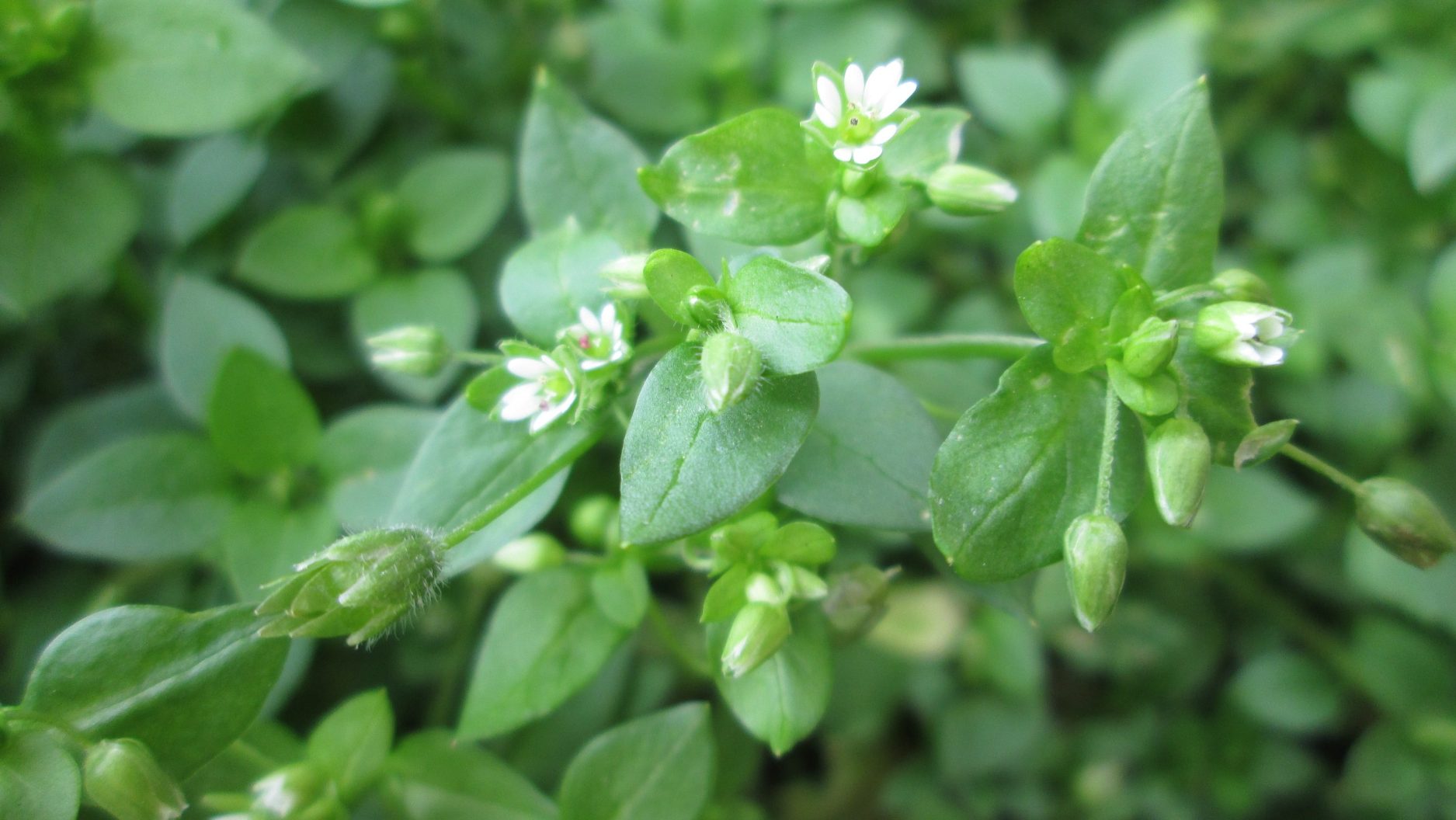
Chickweed
Stellaria media
Common & Folk Names
- Common Chickweed
- Starweed
- Starwort
- Stitchwort
- Winterweed
- Tongue Grass
- White Bird’s Eye
Plant Family
Caryophyllaceae
Geographic Location
Native to Europe but now naturalised and widespread throughout temperate regions worldwide, including North America, Asia, Australia, and New Zealand. One of the most cosmopolitan weeds, found on every continent except Antarctica. Thrives in disturbed soils, gardens, agricultural land, lawns, and waste areas in temperate and subtropical climates.
Habitat
Grows in disturbed soils, gardens, lawns, agricultural fields, waste areas, and along roadsides. Prefers moist, fertile soil with partial shade to full sun. Tolerates a wide range of conditions but grows most vigorously in cool, moist environments. Often appears as a winter annual or cool-season weed, thriving in spring and autumn when other plants are dormant.
Growing Conditions
Sun: Full sun to partial shade; tolerates various light conditions
Soil: Moist, fertile soil; grows in most soil types; pH 6.0-7.5; prefers consistent moisture
Propagation: Self-seeds prolifically; grows readily from seed scattered on soil surface; can root from stem nodes touching soil
Care: Requires minimal care; keeps soil consistently moist for best growth; spreads readily and can become weedy; harvest regularly to prevent excessive spreading; typically treated as a weed but valuable as food and medicine
NZ Planting Calendar
Sowing (seed): Autumn (March-May) or spring (August-October); seeds germinate readily with moisture
Propagation (cuttings/division): Stems root readily at nodes when in contact with moist soil; division possible but usually unnecessary as plants self-seed prolifically
Planting: Not typically deliberately planted; appears voluntarily in gardens and disturbed areas; can be encouraged by keeping areas moist and partially shaded
Growth: Annual or short-lived perennial depending on climate; grows rapidly in cool, moist conditions; forms dense, low-growing mats
Flowering: Year-round in mild climates; primarily spring to autumn (September-May) with small white star-shaped flowers
Harvest: Harvest aerial parts year-round when plant is lush and green; best before flowering for culinary use; can harvest during flowering for medicinal use
Note: Widespread throughout NZ as a common garden “weed”; thrives in lawns, gardens, and disturbed areas; particularly abundant in cool, moist seasons; extremely easy to find and harvest; considered a beneficial weed by many gardeners for its edible and medicinal properties; completely frost-hardy; grows through winter in many NZ regions
Harvesting Guidelines
Harvest aerial parts (stems, leaves, flowers) when the plant is fresh, green, and lush. For culinary use, harvest before flowering when foliage is most tender and mild. For medicinal use, harvest throughout the growing season, including during flowering. Cut stems with scissors or pinch off tender growth, taking care not to pull up roots (unless intentionally removing the plant). Harvest from clean areas away from roadsides, dog-walking areas, and sprayed lawns. The plant is at its best in spring and autumn when cool, moist conditions support lush growth. Use fresh for maximum nutritional and medicinal value. Chickweed can be dried for later use—spread in thin layers in well-ventilated area out of direct sunlight; properly dried chickweed retains green colour and stores in airtight containers for several months. Fresh chickweed is far superior to dried for both culinary and medicinal applications. The abundance of chickweed makes regular harvesting of fresh material practical.
Parts Used
- Aerial parts (stems, leaves, flowers – entire above-ground portion)
- Primarily used fresh; occasionally dried
Constituents & their Actions
Chickweed’s therapeutic properties arise from saponins, vitamins, minerals, and other compounds that provide demulcent, cooling, anti-inflammatory, and nutritive effects.
Saponins:
Soap-like compounds that contribute to many of chickweed’s therapeutic effects. The main saponins in chickweed include various triterpene saponins.
The main actions of these saponins are:
- Provide demulcent, soothing effects on tissues
- Support lymphatic drainage and reduce fluid retention
- Exhibit mild diuretic properties
- Contribute to anti-inflammatory effects
- May support fat metabolism and weight management
Vitamins and Minerals:
Chickweed is nutritionally rich, containing various vitamins and minerals. Key nutrients include:
- Vitamin C (ascorbic acid)
- Vitamin A (beta-carotene)
- B vitamins
- Calcium
- Magnesium
- Potassium
- Iron
- Phosphorus
- Manganese
- Zinc
The main actions of these nutrients are:
- Provide nutritive support
- Support immune function (vitamin C)
- Support skin health (vitamins A and C)
- Support bone health (calcium, magnesium)
- Support overall vitality and health
Flavonoids and Phenolic Compounds:
Plant compounds with antioxidant and anti-inflammatory effects.
The main actions of these compounds are:
- Provide antioxidant protection
- Exhibit anti-inflammatory effects
- Support vascular health
- Contribute to tissue healing
Mucilage:
Soothing, gel-like polysaccharides.
The main actions of mucilage are:
- Provide demulcent, soothing effects on tissues
- Support skin healing and tissue repair
- Reduce inflammation and irritation
Actions with Mechanisms
Demulcent and Emollient:
Chickweed provides exceptionally soothing effects on irritated, inflamed, or damaged tissues. The saponins and mucilage create a protective, soothing coating over tissues, which in turn reduces irritation, pain, and inflammation. This demulcent action benefits both internal tissues (digestive tract, respiratory passages) and external tissues (skin). The emollient effects soften and soothe skin, reducing dryness, itching, and discomfort. The combination of moisturising, soothing, and anti-inflammatory properties makes chickweed one of the premier herbs for skin conditions characterised by heat, inflammation, dryness, or irritation.
Anti-inflammatory (Internal and External):
Multiple constituents reduce inflammation through various pathways. The flavonoids and saponins inhibit inflammatory mediators and reduce inflammatory responses in affected tissues, which in turn decreases redness, swelling, heat, and pain. The mechanisms involve modulation of inflammatory cytokines, prostaglandins, and other inflammatory pathways. The anti-inflammatory effects are particularly pronounced when chickweed is applied topically to inflamed skin but also benefit internal inflammatory conditions. Research demonstrates reduced inflammation in various models, supporting traditional use for inflammatory conditions.
Vulnerary (Wound Healing):
Chickweed supports tissue repair and wound healing through multiple mechanisms. The nutritive constituents (particularly vitamins A and C) support collagen synthesis and tissue regeneration, which in turn accelerates wound closure and healing. The anti-inflammatory effects create optimal conditions for healing by reducing excessive inflammation that can impair tissue repair. The demulcent properties keep tissues moist and protected during healing. The mild antimicrobial effects help prevent infection in minor wounds. Traditional use includes both internal use to support systemic healing and topical application as poultices for wounds, ulcers, and slow-healing sores.
Cooling:
Chickweed has pronounced cooling properties, making it valuable for hot, inflamed, irritated conditions. The cooling effects are evident both internally (reducing heat and inflammation in digestive tract, respiratory system) and externally (cooling inflamed, itchy, hot skin). This cooling quality makes chickweed particularly suitable for conditions characterised by excess heat—inflammatory skin conditions (eczema, psoriasis with heat), hot flushes, inflammatory digestive complaints, and general feelings of being overheated. The cooling nature complements the anti-inflammatory effects.
Lymphatic and Alterative:
Chickweed supports lymphatic drainage and function, helping move stagnant lymph and reduce swelling. The saponins appear to enhance lymphatic circulation, which in turn reduces fluid retention, supports detoxification, and improves tissue health. The alterative properties (gradually improving overall health and clearing metabolic waste) make chickweed valuable for chronic conditions requiring gentle, sustained support. Traditional herbalists consider chickweed a “blood purifier” and use it for conditions involving metabolic disturbance, toxin accumulation, or poor elimination. These properties support weight management, reduce water retention, and address skin conditions linked to poor elimination.
Nutritive Tonic:
The rich vitamin and mineral content makes chickweed a valuable nutritive herb. Regular consumption supplies essential nutrients including vitamin C, vitamin A, calcium, magnesium, iron, and various trace minerals, which in turn supports overall health, energy, and vitality. The gentle, nourishing nature makes chickweed suitable for convalescence, pregnancy (in moderation as food), general debility, and anyone needing gentle nutritive support. The combination of being highly nutritious yet cooling and non-stimulating makes chickweed valuable for building strength without aggravating heat or inflammation.
Mild Diuretic:
The saponins produce gentle diuretic effects, increasing urine production without causing significant electrolyte loss. This supports fluid balance, reduces oedema (fluid retention), and assists elimination of metabolic wastes, which in turn supports urinary tract health, weight management, and detoxification. The diuretic effects are gentle enough for long-term use without the harsh effects of stronger diuretics.
Antipruritic (Anti-Itch):
Chickweed excels at relieving itching, particularly when applied topically. The combination of cooling, anti-inflammatory, and demulcent properties addresses the underlying irritation causing itch whilst providing immediate symptomatic relief. This makes chickweed valuable for eczema, insect bites, rashes, allergic skin reactions, and any itchy skin condition. The soothing effects calm overactive nerve endings whilst the anti-inflammatory effects address tissue irritation.
Main Use
Chickweed is primarily valued as a cooling, soothing herb for inflammatory skin conditions and as a nutritive wild food. For skin conditions, chickweed excels at addressing eczema, psoriasis, dermatitis, rashes, insect bites, minor burns, and any hot, itchy, inflamed skin complaint. The herb can be used topically as poultices, creams, salves, or oils, and internally as tea or food to support skin health from within. The cooling, anti-inflammatory, and antipruritic properties provide relief from itching, burning, and discomfort whilst supporting tissue healing. Chickweed is gentle enough for frequent, long-term use and suitable for sensitive skin.
As a nutritive wild food, chickweed provides delicious, highly nutritious greens. The mild, pleasant flavour and tender texture make it suitable for salads, sandwiches, pesto, soups, and various culinary applications. Regular consumption supplies vitamins, minerals, and other nutrients whilst providing gentle lymphatic support and cooling, anti-inflammatory effects. Foraging chickweed from clean areas provides free, abundant, highly nutritious food throughout much of the year in temperate climates.
For internal inflammatory conditions, chickweed addresses digestive inflammation, respiratory irritation, and urinary tract inflammation. The demulcent properties soothe irritated tissues whilst the anti-inflammatory effects reduce inflammation. The herb is particularly useful when heat and irritation are present.
Chickweed supports weight management through gentle lymphatic drainage, mild diuretic effects, and potentially through effects on fat metabolism. Traditional use includes chickweed for obesity, particularly when accompanied by fluid retention. The nutritive properties ensure weight management support doesn’t create nutritional deficiency.
The herb addresses oedema and fluid retention through gentle diuretic effects and lymphatic support. This makes it valuable for swollen legs, hands, or feet, particularly when related to poor lymphatic drainage rather than serious organ dysfunction.
Chickweed’s abundance and ease of identification make it an ideal beginner’s herb for both foraging and herbal medicine. The plant is safe, gentle, and versatile, allowing experimentation with minimal risk.
Preparations
Fresh Food: Use fresh chickweed in salads (young, tender growth), sandwiches, smoothies, pesto, or lightly steamed as greens. This is the most nutritious and traditional preparation. Harvest from clean areas and wash thoroughly.
Infusion/Tea: Steep 2-3 tablespoons (10-15g) of fresh or 1-2 tablespoons (5-10g) dried chickweed in 250ml freshly boiled water for 10-15 minutes; strain and drink. The tea is mild and pleasant. Drink 2-3 cups daily.
Juice: Juice fresh chickweed (alone or with other greens) for concentrated nutritive and therapeutic effects. Dilute if too strong.
Tincture (1:2 fresh, 50% alcohol or 1:5 dried, 40% alcohol): 3-5ml (60-100 drops), 3 times daily. Less common than fresh use but provides convenient year-round access.
Poultice (Fresh): Crush or chew fresh chickweed to release juices and apply directly to affected skin; cover with clean cloth. Leave for 20-30 minutes or longer. Provides immediate relief for itching, inflammation, and irritation.
Infused Oil: Pack jar loosely with fresh, wilted chickweed (wilt for 12-24 hours to reduce moisture content); cover with oil; infuse for 2-4 weeks using solar method or 4-8 hours using gentle heat method; strain and use for skin conditions.
Salve/Cream: Combine chickweed-infused oil with beeswax to create salve, or blend into cream base. Apply to affected skin 2-4 times daily as needed.
Bath: Add strong chickweed infusion (made with large quantity of herb) to bathwater for overall skin soothing and cooling. Particularly beneficial for widespread skin conditions or general inflammation.
Dosage
Fresh Food: Use liberally in diet; 50-100g+ fresh chickweed daily as food is safe and beneficial
Tea (fresh herb): 10-15g fresh herb in 250ml water; drink 2-3 cups daily
Tea (dried herb): 5-10g dried herb in 250ml water; drink 2-3 cups daily
Tincture (1:2 fresh, 50% alcohol): 3-5ml (60-100 drops), 3 times daily
Poultice (fresh): Apply to affected area as needed; reapply every few hours
Infused Oil/Salve (topical): Apply to affected area 2-4 times daily as needed
Juice: 30-60ml fresh juice daily, diluted if desired
Note: Chickweed is extremely safe and can be used liberally. Fresh use provides maximum benefits.
Safety & Drug Interactions
Chickweed has an excellent safety profile and is one of the safest herbs in the materia medica. It has been consumed as food and used medicinally for thousands of years with minimal adverse effects reported.
General Safety: Safe during pregnancy and lactation when used as food in normal dietary amounts; the long history of culinary use supports safety. Safe for children, elders, and sensitive individuals. The gentle, nourishing nature makes chickweed suitable for virtually everyone.
Side Effects: Extremely rare. Some individuals may experience mild digestive upset with very large quantities (uncommon). Allergic reactions possible but very rare.
Contraindications: None documented. The gentle nature makes chickweed suitable for virtually all conditions and individuals.
Drug Interactions:
- No significant drug interactions documented
- The mild diuretic effects are unlikely to cause clinically significant interactions
- The nutritive content is beneficial rather than problematic
Other Considerations:
- Harvest from clean areas away from pesticides, herbicides, roadways, and animal waste
- Wash thoroughly before use, particularly when using as food
- Ensure correct identification, though chickweed is distinctive and difficult to confuse with anything harmful
- Some people may find chickweed causes loose stools with very large quantities; reduce amount if this occurs
The outstanding safety profile makes chickweed ideal for self-care, family use, and as an introduction to herbal medicine.
Scientific Evidence
Anti-inflammatory and Skin-Soothing Effects: Traditional use is extensive across many cultures. Laboratory studies demonstrate anti-inflammatory effects and support for wound healing. Research on saponins confirms anti-inflammatory mechanisms. While clinical trials specifically on chickweed are limited, the mechanisms are well-characterised and traditional use is well-documented.
Nutritional Composition: Analysis confirms chickweed is nutritionally rich, containing significant vitamins (particularly vitamin C and carotenoids), minerals (calcium, magnesium, iron, potassium), and other nutrients. The nutritional profile supports traditional use as a wild food and nutritive tonic.
Antimicrobial Activity: Some research demonstrates antimicrobial effects against various bacteria and fungi. The activity is mild but supports traditional use for preventing infection in wounds and the internal use for inflammatory conditions.
Antioxidant Activity: Research confirms antioxidant effects of chickweed extracts. Studies demonstrate free radical scavenging activity, supporting the anti-inflammatory and tissue-protective properties.
Lymphatic and Diuretic Effects: Traditional use is well-documented though scientific research on these specific effects is limited. The presence of saponins provides a plausible mechanism for lymphatic and diuretic effects.
Western Energetics
Temperature: Cooling. Chickweed’s cooling nature is one of its defining characteristics. The herb reduces heat and inflammation, soothes hot, irritated tissues, and addresses conditions characterised by excess heat. This cooling quality is particularly evident in skin applications where chickweed provides immediate cooling relief to hot, inflamed skin.
Moisture: Moistening. Chickweed’s demulcent, mucilaginous nature provides gentle moistening to dry, depleted tissues. The herb restores moisture to dried-out skin, mucous membranes, and internal tissues. This moistening quality complements the cooling effects.
Tissue State: Particularly indicated for heat and excitation—conditions characterised by inflammation, irritation, redness, and overactive responses. Chickweed excels at calming overheated, overactive tissues and reducing excessive responses. Also valuable for atrophy and dryness when tissues are depleted, dry, and irritated, as the moistening and nutritive properties rebuild whilst the cooling effects calm irritation.
Taste
Mild, Pleasant: Chickweed has a very mild, pleasant taste that is neither strongly flavoured nor off-putting. This makes it accessible for culinary use and palatable as medicine.
Slightly Sweet: A subtle sweetness reflects the nutritive, nourishing properties and contributes to the pleasant flavour.
Fresh, Green: A clean, fresh, slightly grassy flavour is characteristic of young chickweed. This freshness makes it appealing in salads and raw preparations.
Slightly Mucilaginous: A gentle, slippery quality (more noticeable when chewed well) reflects the demulcent properties.
Corn-like: Some people detect a subtle corn-like or pea-like flavour, which is mild and pleasant.
Plant Lore
Chickweed’s common name derives from its popularity with chickens and other birds, who readily eat the seeds and foliage. The plant has been used as poultry food for centuries, providing nutritious greens particularly valuable in winter when other fresh food is scarce.
The genus name Stellaria and common name “starweed” refer to the star-shaped white flowers, which have five deeply notched petals that appear as ten petals at first glance. The delicate, star-like blooms are charming despite their small size.
In European folk medicine, chickweed has been used for thousands of years. Ancient texts document its use for inflammation, wounds, and skin conditions. The herb appears in various European herbals and was valued as both food and medicine. The famous herbalist Nicholas Culpeper (17th century) recommended chickweed for inflammation and to “cool the blood.”
Chickweed’s year-round availability in mild climates made it a valuable winter green when other vegetables were unavailable. The tender foliage provided fresh greens during cold months, supplying vitamin C and other nutrients that prevented scurvy and maintained health through winter. This winter hardiness contributed to the common name “winterweed.”
In Traditional Chinese Medicine, a related species (Stellaria dichotoma) called “yin chai hu” is used, though for somewhat different purposes than Western uses of S. media. This demonstrates that the therapeutic value of Stellaria species has been recognised across diverse cultures.
Various cultures have recognised chickweed’s cooling, soothing properties. In folk medicine across Europe, Asia, and regions where chickweed was introduced, similar applications for inflammation, skin conditions, and as cooling food are documented.
The ease with which chickweed grows and spreads made it both a blessing (free food and medicine) and sometimes a curse (persistent garden weed). Modern understanding of chickweed’s benefits has led many gardeners to view it as a beneficial weed worth encouraging rather than eradicating.
Chickweed has been associated with birds not just through its name but through observed interactions. The plant provides food for various birds through its seeds, whilst the dense mat-like growth provides shelter for ground-dwelling birds and beneficial insects.
The plant’s prolific seeding and ability to produce multiple generations per year mean a single chickweed plant can produce thousands of seeds, ensuring its persistence and spread. This reproductive success contributes to chickweed’s status as one of the world’s most successful weeds.
Some folklore suggests chickweed opening its flowers wide on sunny days and closing them before rain, making it a simple weather predictor. While the accuracy varies, the flowers do respond to light and weather conditions.
Additional Information
Chickweed is often one of the first wild foods and medicinal herbs that beginning foragers learn to identify and use. The plant is distinctive, abundant, safe, and versatile, making it ideal for developing foraging skills and confidence with wild plants.
Identification Tips: Chickweed is easily identified by:
- Low, sprawling, mat-forming growth
- Opposite leaves (arranged in pairs along stems)
- Small white star-shaped flowers with five deeply notched petals
- Distinctive “line of hairs” running along one side of the stem (rotating around the stem between leaf pairs)
- Tender, succulent stems and leaves
The “line of hairs” is a definitive identification feature that distinguishes chickweed from similar-looking plants. Learn this feature to ensure correct identification.
Culinary Uses: Fresh chickweed has countless culinary applications:
- Salad greens (use tender tips and young growth)
- Sandwich filling (alone or with other ingredients)
- Pesto (substitute some or all of basil with chickweed)
- Smoothie ingredient (adds nutrients and mild flavour)
- Soup addition (add near end of cooking to preserve nutrients)
- Steamed greens (very quick steaming for tender greens)
- Chickweed juice (nutrient-dense green juice)
The mild flavour means chickweed can be used in large quantities without overpowering other flavours, making it easy to incorporate substantial amounts into the diet.
Growing and Harvesting: While chickweed often appears uninvited, it can be encouraged by:
- Maintaining moist, fertile soil
- Providing partial shade (though full sun works)
- Allowing some plants to go to seed
- Avoiding excessive weeding of chickweed
Regular harvesting keeps plants productive and prevents excessive spreading. The more you harvest, the more the plant produces tender new growth.
Preservation: Fresh use is always best for chickweed. However, preservation options include:
- Drying (loses much nutritional value but maintains some medicinal properties)
- Freezing (blanch briefly, freeze in portions)
- Infused oil (preserves properties for skin use)
- Tincture (preserves for year-round internal use)
Chickweed vs. Similar Plants: Ensure proper identification:
- Stellaria media (common chickweed) – tender, edible, medicinal
- Similar-looking but different species may exist in various regions
- The line of hairs is definitive for S. media
- When in doubt, consult reliable field guides or experienced foragers
Sustainability: Chickweed’s aggressive growth means there are no sustainability concerns with harvesting. The plant grows so readily that it’s virtually impossible to over-harvest. Feel free to harvest generously, as this actually benefits the garden by keeping chickweed from becoming overly abundant.
Companion Planting: Some gardeners deliberately allow chickweed to grow as a living mulch under taller plants. The dense growth suppresses other weeds whilst providing edible greens. When chickweed becomes too abundant, simply harvest it for food or compost.
Sources
Bone, K., & Mills, S. (2013). Principles and Practice of Phytotherapy: Modern Herbal Medicine (2nd ed.). Churchill Livingstone.
Hoffman, D. (2003). Medical Herbalism: The Science and Practice of Herbal Medicine. Healing Arts Press.
Grieve, M. (1931). A Modern Herbal. Dover Publications (1971 reprint).
Duke, J. A., & Ayensu, E. S. (1985). Medicinal Plants of China. Reference Publications.
Harrington, H. D. (1967). Edible Native Plants of the Rocky Mountains. University of New Mexico Press.
Uphof, J. C. T. (1968). Dictionary of Economic Plants (2nd ed.). Verlag von J. Cramer.
Thayer, S. (2006). The Forager’s Harvest: A Guide to Identifying, Harvesting, and Preparing Edible Wild Plants. Forager’s Harvest Press.
Parsons, W. T., & Cuthbertson, E. G. (2001). Noxious Weeds of Australia (2nd ed.). CSIRO Publishing.
Facciola, S. (1998). Cornucopia II: A Source Book of Edible Plants. Kampong Publications.
Kunkel, G. (1984). Plants for Human Consumption. Koeltz Scientific Books.
Quattrocchi, U. (2012). CRC World Dictionary of Medicinal and Poisonous Plants: Common Names, Scientific Names, Eponyms, Synonyms, and Etymology. CRC Press.
Phillips, R., & Foy, N. (1990). Herbs. Pan Books.
Simopoulos, A. P., Norman, H. A., & Gillaspy, J. E. (1995). Purslane in human nutrition and its potential for world agriculture. World Review of Nutrition and Dietetics, 77, 47-74. [Note: While this specifically references purslane, similar nutritional analysis methods apply to chickweed]
Foster, S., & Duke, J. A. (2000). A Field Guide to Medicinal Plants and Herbs of Eastern and Central North America (2nd ed.). Houghton Mifflin.
Disclaimer: This monograph is for educational purposes only and is not medical advice. Please consult with a qualified healthcare practitioner before using any herbal remedy, especially if you are pregnant, nursing, taking medication, or have a known medical condition. Always ensure correct plant identification and harvest from clean, unsprayed areas.