
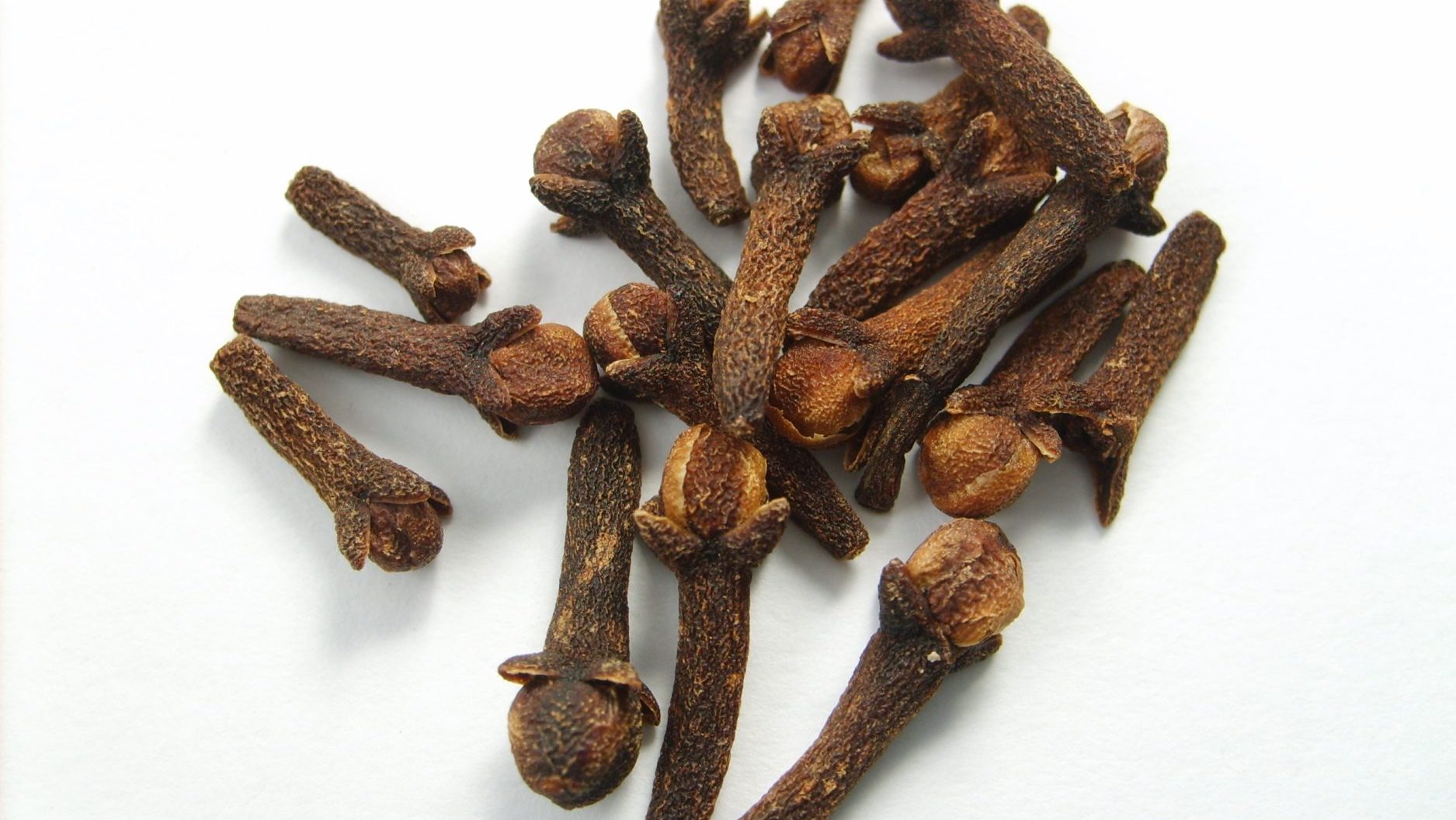
Clove
Syzygium aromaticum
Common & Folk Names
- Clove Bud
- Ding Xiang (Chinese – “Nail Fragrance”)
- Lavanga (Ayurvedic/Sanskrit)
- Clavos (Spanish)
- Girofle (French)
- Kruidnagel (Dutch)
- Qaranfal (Arabic)
Plant Family
Myrtaceae (Myrtle Family)
Geographic Location
Clove is native to the Maluku Islands (Moluccas) of Indonesia, formerly known as the Spice Islands. Today, cloves are cultivated throughout tropical regions, with Indonesia and Madagascar being the world’s largest producers. Cloves are also grown commercially in Tanzania (particularly Zanzibar and Pemba), Sri Lanka, India (Kerala), Malaysia, and parts of South America and the Caribbean.
Habitat
The clove tree grows in humid tropical climates with consistent warmth and rainfall. In its native habitat, it thrives in coastal areas and volcanic soils at elevations from sea level to 300 metres. Trees prefer partial shade when young but tolerate full sun once established. They require high humidity, consistent moisture, and protection from strong winds.
Growing Conditions
Sun: Young trees prefer partial shade; mature trees tolerate full sun. Best growth occurs with dappled sunlight or morning sun with afternoon shade.
Soil: Requires deep, fertile, well-drained volcanic or loamy soil rich in organic matter. Prefers slightly acidic soil (pH 5.5-6.5). Good drainage is essential as trees cannot tolerate waterlogged conditions.
Propagation: Primarily propagated from seed, though germination can be challenging and slow (seeds lose viability quickly). Seedlings take 4-5 years to produce flowers. Can also be propagated by cuttings, though success rates are lower. Grafting onto rootstock is sometimes used.
Care: Requires tropical climate with temperatures between 20-30°C year-round, high humidity (70-90%), and 150-250 cm annual rainfall. Young trees need shade and consistent moisture. Trees begin flowering at 6-8 years and reach full production at 15-20 years. Can live and produce for 80-100 years or more.
Harvesting Guidelines
Harvest the unopened pink flower buds before they bloom, typically twice per year depending on location and climate. The optimal harvest time is just before the buds open when they have turned from green to pink-red but remain tightly closed. This is when eugenol content is highest.
Buds are hand-picked carefully to avoid damaging the tree. Timing is critical – buds picked too early lack full aromatic development, while buds that have opened lose essential oil content and quality. After picking, the buds and their stems are separated. Traditionally, buds are sun-dried on mats for 4-5 days until they turn dark reddish-brown and become hard and nail-like in appearance. The stems (clove stems) are also dried and used commercially, though they contain less eugenol.
Properly dried cloves should be hard, oily, and intensely aromatic. They should sink when placed in water (indicating high essential oil content). Store in airtight containers away from light and heat to preserve volatile oils.
Parts Used
- Flower buds (primary part used – these are “cloves”)
- Essential oil (steam-distilled from buds)
- Leaves (used for essential oil production, less commonly in herbalism)
- Stems (lower eugenol content, used commercially in lower-grade products)
Constituents & their Actions
Volatile Oils (Essential Oil):
These aromatic compounds comprise 14-21% of dried clove buds and are responsible for clove’s intense aroma and most of its medicinal effects. The essential oil is dominated by eugenol. Some of the main volatile oils in clove are:
- Eugenol (70-90% of essential oil – the dominant compound)
- Eugenyl acetate (acetyl eugenol, 4-15%)
- β-Caryophyllene (5-14%)
- α-Humulene
- Methyl salicylate
- 2-Heptanone
The main actions of these volatile oils are:
- Analgesic (pain-relieving) – particularly eugenol
- Local anaesthetic (numbing)
- Antimicrobial (antibacterial, antifungal, antiviral)
- Anti-inflammatory
- Antispasmodic
- Antioxidant
- Carminative (relieves intestinal gas)
Tannins:
These astringent compounds contribute 10-20% of clove’s dry weight and provide tissue-toning properties. Some of the tannins in clove include:
- Gallotannins
- Condensed tannins
- Gallic acid derivatives
The main actions of tannins are:
- Strong astringent (tissue tightening and toning)
- Antimicrobial
- Anti-diarrhoeal
- Wound healing support
Flavonoids:
These polyphenolic compounds contribute to clove’s antioxidant capacity and therapeutic effects. Some of the main flavonoids in clove are:
- Eugenin
- Kaempferol
- Quercetin
- Rhamnetin
The main actions of these flavonoids are:
- Antioxidant
- Anti-inflammatory
- Antiviral
- Vascular protective
Triterpenes:
These compounds contribute to clove’s anti-inflammatory and hepatoprotective effects. A key triterpene in clove is:
- Oleanolic acid
The main actions of triterpenes are:
- Anti-inflammatory
- Hepatoprotective (liver protective)
- Potential anti-tumour activity
Sterols:
Plant sterols contribute to clove’s overall therapeutic profile.
The main action of sterols is:
- Anti-inflammatory
Actions with Mechanisms
Analgesic & Local Anaesthetic (Numbing):
This is clove’s most renowned and clinically validated action. Eugenol acts as a potent local anaesthetic through multiple mechanisms. It acts as an agonist of the TRPV1 (transient receptor potential vanilloid 1) receptor, the same receptor activated by capsaicin from chili peppers, which in turn initially produces a sensation of warmth followed by a prolonged desensitisation of peripheral nerve endings. This desensitisation effectively blocks pain signal transmission from the affected area to the brain, which in turn provides significant pain relief. Eugenol also inhibits voltage-gated sodium channels in nerve cells, which in turn blocks the generation and propagation of action potentials required for pain signal transmission. β-Caryophyllene acts as a selective agonist of CB2 cannabinoid receptors (without psychoactive effects), which in turn modulates pain perception and reduces inflammatory pain. This multi-mechanism analgesic effect makes clove exceptionally effective for toothache, oral pain, and topical pain relief. A 2006 clinical trial found clove oil as effective as benzocaine (a pharmaceutical topical anaesthetic) for dental pain relief.
Antimicrobial (Antibacterial, Antifungal, Antiviral):
Eugenol demonstrates broad-spectrum antimicrobial activity through disruption of microbial cell membranes and inhibition of microbial enzyme systems. The lipophilic (fat-loving) nature of eugenol allows it to penetrate bacterial cell membranes, which in turn disrupts membrane integrity and causes leakage of cellular contents, ultimately leading to cell death. Eugenol also inhibits bacterial enzymes essential for energy production and protein synthesis, which in turn impairs microbial metabolism and replication. Against fungi, eugenol disrupts ergosterol biosynthesis (similar to pharmaceutical antifungals like fluconazole), which in turn compromises fungal cell membrane integrity. Clove oil has demonstrated efficacy against numerous oral pathogens including Streptococcus mutans (primary cause of dental caries), Staphylococcus aureus, Escherichia coli, Candida albicans, Aspergillus species, and various viruses. This makes clove valuable for dental infections, oral hygiene, wound infections, and respiratory infections.
Anti-inflammatory:
Eugenol and β-caryophyllene provide a dual-mechanism anti-inflammatory effect. Eugenol inhibits COX-2 (cyclooxygenase-2), an enzyme that produces prostaglandins responsible for pain, inflammation, and fever, which in turn reduces inflammatory mediator production. It also inhibits the NF-κB (nuclear factor kappa-B) signaling pathway, a key regulator of inflammatory gene expression, which in turn suppresses the production of pro-inflammatory cytokines such as TNF-α and IL-1β. β-Caryophyllene activates CB2 cannabinoid receptors, which in turn triggers anti-inflammatory pathways and reduces immune cell activation. Together, these mechanisms provide potent anti-inflammatory effects useful for conditions ranging from dental inflammation to arthritis and inflammatory gastrointestinal conditions.
Antioxidant:
Clove consistently ranks at the top of antioxidant capacity measurements (ORAC – Oxygen Radical Absorbance Capacity) among all foods and spices, primarily due to its high eugenol and polyphenol content. Eugenol acts as a powerful free radical scavenger, donating electrons to unstable molecules, which in turn neutralises them and prevents oxidative damage to cells, lipids, proteins, and DNA. The flavonoids and phenolic acids provide additional antioxidant support by directly scavenging reactive oxygen species and by upregulating endogenous antioxidant enzyme systems (superoxide dismutase, catalase, glutathione peroxidase), which in turn provides sustained cellular protection. This antioxidant activity protects against oxidative stress implicated in aging, chronic disease, and cellular degeneration.
Digestive & Carminative (Relieves Gas):
Eugenol stimulates the secretion of digestive enzymes and increases gastric motility, which in turn improves digestion and helps food move through the digestive tract more efficiently. The volatile oils relax smooth muscle in the gastrointestinal tract through direct antispasmodic effects, which in turn allows trapped gas to be expelled and relieves bloating, cramping, and flatulence. Clove also stimulates appetite and can help relieve nausea. The antimicrobial effects reduce pathogenic bacteria in the gut that produce gas, which in turn further supports digestive comfort. This makes clove useful for indigestion, intestinal gas, bloating, nausea, and sluggish digestion.
Circulatory Stimulant (Warming):
Clove is one of the most warming herbs in the materia medica. The pungent volatile oils, particularly eugenol, stimulate peripheral circulation by promoting vasodilation and increasing blood flow to the extremities and internal organs, which in turn brings warmth to cold conditions and improves tissue oxygenation and nutrient delivery. This warming action is particularly valuable for cold, stagnant conditions such as poor circulation, cold hands and feet, and cold-type digestive complaints. The circulatory stimulation also supports clove’s use in respiratory congestion by promoting expectoration.
Respiratory Expectorant & Antimicrobial:
The penetrating aromatic volatile oils help loosen and expel mucus from the respiratory tract, which in turn relieves congestion and promotes productive coughing. The antispasmodic effects calm spasmodic coughing, which in turn provides relief from dry, irritating coughs. The antimicrobial action fights respiratory infections caused by bacteria and viruses, which in turn supports recovery from colds, flu, bronchitis, and sinusitis. Clove is particularly useful for cold-type respiratory conditions with profuse, thin, clear mucus, where its warming and drying properties help resolve dampness.
Antiplatelet & Potential Anticoagulant:
Eugenol has been shown to inhibit platelet aggregation (clumping) by interfering with thromboxane synthesis and calcium mobilisation in platelets, which in turn reduces the tendency for blood clot formation. This effect is dose-dependent and more pronounced with higher doses or prolonged use, which in turn explains clove’s potential interaction with anticoagulant medications. While this may offer cardiovascular benefits at culinary doses, it necessitates caution in people with bleeding disorders or those taking blood-thinning medications.
Main Use
Clove’s primary use in modern herbalism is as a potent topical analgesic and local anaesthetic for dental pain – particularly toothache, sensitive teeth, post-extraction pain, and oral ulcers. It is the traditional “first aid” remedy for sudden dental emergencies when professional dental care is not immediately available. The combination of numbing, pain-relieving, antimicrobial, and anti-inflammatory properties makes it uniquely suited to oral pain conditions.
Clove bud oil applied topically to the affected tooth and surrounding gum provides rapid (within minutes) and significant pain relief that can last several hours. While this is a temporary measure and does not treat the underlying dental problem (which requires professional dental attention), it provides valuable relief until dental care can be accessed.
Beyond dentistry, clove is extensively used as a warming digestive stimulant and carminative for sluggish, cold-type digestion with gas, bloating, indigestion, and nausea. The combination of digestive enzyme stimulation, smooth muscle relaxation, antimicrobial effects, and warming properties makes it particularly useful for weak digestion associated with cold, damp conditions.
Clove is also valued as a respiratory antimicrobial and expectorant for respiratory infections, particularly those characterised by profuse mucus production. The warming, drying, antimicrobial, and expectorant properties support recovery from colds, flu, bronchitis, and sinusitis.
Preparations
Whole Cloves (Culinary): Liberal use in cooking is the safest and most common way to incorporate clove’s benefits. Add whole cloves to stews, soups, baked goods, chai tea, mulled wine, and other dishes. One or two cloves can be chewed for immediate digestive or breath-freshening benefits, though the intense taste is not pleasant for most people.
Tea/Decoction: Crush 1-2 whole cloves (approximately 1 gram) and simmer in 1 cup of water for 10-15 minutes. Strain and drink for digestive support, nausea, or as part of a cold/flu treatment. Can be sweetened with honey. Maximum 3 times daily. The tea is warming and aromatic but very strong-tasting.
Powder: Ground clove can be added to food, mixed with honey, or made into capsules. Use ¼-½ teaspoon (approximately 0.5-1 gram) per dose. Maximum 2-3 times daily.
Note: Powdered clove is easier to overdose on than whole cloves – use conservatively.
Tincture: (1:5 in 60% alcohol). Take 1-2 mL (approximately 20-40 drops), up to 3 times daily. The high alcohol content helps extract and preserve the volatile oils. Useful for digestive complaints and as an internal antimicrobial.
Essential Oil (Topical for Toothache): CRITICAL: Never use undiluted essential oil. Always dilute clove essential oil before use. For toothache: Mix 1-2 drops of clove essential oil with ½ teaspoon (2.5 mL) of carrier oil (coconut oil, olive oil, or sweet almond oil). Apply a small amount to a cotton swab or cotton ball and gently apply to the affected tooth and surrounding gum. Leave in place for 10-15 minutes. Can be reapplied every 2-3 hours as needed. This provides temporary relief only – seek dental care for the underlying problem.
Essential Oil (Diluted for Other Uses): For topical pain relief (muscle aches, joint pain): Dilute to 1-2% (2-4 drops per 10 mL/2 teaspoons of carrier oil). For diffuser use (respiratory support, antimicrobial air cleansing): 2-3 drops in diffuser. Never take essential oil internally unless under professional supervision.
Gargle/Mouthwash: Crush 3-4 cloves and steep in 1 cup hot water for 15 minutes. Cool to lukewarm, strain, and use as a gargle for sore throat or mouthwash for oral hygiene and gum inflammation. Can be used 2-3 times daily. Do not swallow.
Steam Inhalation: Add 1-2 drops of clove essential oil to a bowl of steaming water. Tent head with towel and inhale the vapors for 5-10 minutes to help clear respiratory congestion. Keep eyes closed during inhalation as the vapours can irritate eyes.
Dosage
Whole Cloves: 1-2 cloves (approximately 1 gram) per use, up to 3 times daily.
Powdered Clove: 0.5-1 gram (approximately ¼-½ teaspoon) per dose, maximum 2-3 grams daily.
Tea/Decoction: 1 cup (made with 1-2 crushed cloves), up to 3 times daily.
Tincture (1:5, 60% alcohol): 1-2 mL (approximately 20-40 drops), up to 3 times daily.
Essential Oil (Topical, Diluted): 1-2 drops mixed with ½ teaspoon carrier oil, applied to affected area. For toothache, can reapply every 2-3 hours as needed.
Maximum Safe Oral Dose: Clove essential oil is categorised as “Generally Recognised as Safe” (GRAS) by the FDA in oral doses up to 2.5 mg/kg body weight. However, internal use of essential oil should only be under professional supervision.
Safety & Drug Interactions
Generally Safe in Culinary Amounts: Clove used as a culinary spice in normal food quantities is safe for most people and has a long history of use without adverse effects.
Essential Oil Toxicity – CRITICAL WARNING: Never use undiluted clove essential oil. Undiluted clove oil is caustic and can cause severe tissue damage, burns to mucous membranes, and local irritation. Never swallow clove essential oil except under professional supervision – ingestion of concentrated essential oil can cause nausea, vomiting, liver damage, kidney damage, seizures, and coma in overdose situations. Even small amounts of undiluted oil can be harmful. Always dilute appropriately before use.
Allergic Reactions: Some individuals are allergic to eugenol and may experience contact dermatitis, skin irritation, or hypersensitivity reactions. Symptoms can range from mild redness and itching to more severe reactions including swelling of the mouth, throat, face, difficulty breathing, or anaphylaxis. Always perform a patch test before widespread topical use: apply diluted oil to a small area of skin on the inner forearm, cover with a bandage, and check for reaction after 24 hours.
Pregnancy & Lactation: Culinary amounts are considered safe. Avoid therapeutic/medicinal doses during pregnancy due to potential emmenagogue effects (may stimulate menstruation) and lack of safety data. While traditionally used to induce labor, this should only be under professional midwifery/medical supervision. Safety during lactation is not well established – avoid therapeutic doses while breastfeeding.
Children: Clove in culinary amounts is safe for children. Do not use undiluted essential oil on or around children. Clove oil can be toxic to young children and infants if ingested or applied undiluted. Use only appropriately diluted preparations and with caution in children under 2 years old. Keep essential oil out of reach of children.
Drug Interactions:
Anticoagulants/Antiplatelets (Warfarin (Coumadin), Aspirin, Clopidogrel (Plavix/Plavitor), Heparin): Eugenol inhibits platelet aggregation and may potentiate blood-thinning effects, increasing bleeding risk. Avoid therapeutic doses of clove (doses beyond culinary use) if taking these medications. Discontinue use at least 2 weeks before scheduled surgery.
Hypoglycaemic Drugs (Diabetes Medications): May enhance blood sugar-lowering effects. Monitor blood glucose closely if using therapeutic doses alongside diabetes medications.
Contraindications:
- Known bleeding disorders (hemophilia, von Willebrand disease)
- Scheduled surgery within 2 weeks (discontinue use due to antiplatelet effects)
- Eugenol allergy or sensitivity
- Severe liver disease (use cautiously as high doses can be hepatotoxic)
Tissue Irritation: Prolonged contact with undiluted or highly concentrated clove oil can cause tissue necrosis (death of tissue), chemical burns, and permanent damage to oral mucosa, gums, or skin. Limit contact time to 10-15 minutes and rinse mouth after use when applying to teeth/gums.
Dental Cautions: While clove oil provides effective temporary pain relief for toothache, it does not treat the underlying dental problem (cavity, infection, abscess, cracked tooth, etc.). It only masks symptoms. Seek professional dental care promptly – delays can lead to serious complications including abscess formation, systemic infection, and tooth loss. Clove oil is a first aid measure, not a cure.
Scientific Evidence
Dental Analgesia: A 2006 randomised controlled trial (Alqareer et al.) involving 73 adults found that clove gel was as effective as benzocaine gel (a pharmaceutical topical anaesthetic) for providing pain relief during dental procedures. Both were significantly more effective than placebo. This validates centuries of traditional use for dental pain. The numbing effect typically begins within 2-5 minutes of application.
Antimicrobial Activity Against Oral Pathogens: Numerous in vitro studies confirm clove oil’s broad-spectrum antimicrobial activity. Clove oil effectively inhibits Streptococcus mutans (the primary bacteria causing dental caries and tooth decay), Staphylococcus aureus, E. coli, Candida albicans, and other oral pathogens. A 2013 study found clove oil more effective than erythromycin (an antibiotic) against S. mutans in vitro. Multiple studies support clove’s use for oral hygiene, prevention of dental caries, and management of periodontal disease.
Anti-inflammatory Mechanisms: Research confirms that eugenol inhibits COX-2 enzyme activity (reducing prostaglandin synthesis) and suppresses NF-κB activation (reducing pro-inflammatory cytokine production). β-Caryophyllene’s activity at CB2 receptors provides complementary anti-inflammatory effects. Animal studies show significant reduction in inflammation and edema (swelling) with clove/eugenol administration.
Antioxidant Capacity: Chemical assays (ORAC, DPPH, FRAP) consistently show clove as having one of the highest antioxidant capacities of any spice or food, attributed to its high eugenol and polyphenol content. This provides rationale for clove’s traditional use as a food preservative and its potential protective effects against oxidative stress-related diseases.
CB2 Receptor Activation: Research published in Proceedings of the National Academy of Sciences (Gertsch et al., 2008) confirmed thatβ-caryophyllene is a dietary cannabinoid that selectively activates CB2 receptors, providing anti-inflammatory and analgesic effects without psychoactive properties (CB1 receptors cause psychoactive effects; CB2 do not). This represents a unique mechanism among dietary compounds.
Safety Profile: While generally safe at culinary doses, multiple case reports document adverse effects from excessive use or undiluted essential oil exposure, including hepatotoxicity (liver damage), contact dermatitis, and acute systemic toxicity with overdose. The FDA has downgraded eugenol’s status, stating insufficient evidence for formal medical approval, though it remains GRAS for food use.
Western Energetics
Temperature: Extremely Hot. Clove is one of the most warming herbs in the entire materia medica, strongly stimulating circulation and metabolism throughout the body. It brings intense heat to cold conditions and is contraindicated in hot, inflammatory conditions without cold or damp components.
Moisture: Very Drying. Clove powerfully reduces dampness and fluid stagnation. It dries excessive mucus, reduces diarrhea, and resolves damp-cold conditions. Contraindicated in dry conditions or when tissues need moisture.
Tissue State: Primarily indicated for Cold/Depression (sluggish metabolism, weak digestion, cold extremities, low vitality, hypothyroid-type conditions) and Damp/Stagnation (excessive mucus, chronic infection, fungal overgrowth, edema, lymphatic congestion). Also useful for Atrophy/Exhaustion when tissues are cold and need warming stimulation. Contraindicated in pure Heat/Excitation without cold or damp elements.
Taste
Pungent: The dominant and overwhelming taste, arising from eugenol and other volatile oils. This intense pungency indicates clove’s powerfully dispersing, warming, and circulating properties. The taste is so strong that most people find it difficult to tolerate for more than a few seconds.
Astringent: A strong drying, puckering sensation from the high tannin content, indicating tissue-tightening and toning properties. This contributes to clove’s ability to stop diarrhea and excessive secretions.
Sweet: A subtle sweet undertone beneath the pungency, indicating some nourishing and harmonising properties.
Bitter: A very faint bitter quality, contributing to digestive stimulation and hepatic effects.
Plant Lore
Clove has one of the most dramatic and tumultuous histories of any spice, driving centuries of exploration, trade wars, colonialism, and economic development. The spice was so highly prized in the ancient world that it commanded prices comparable to gold.
In 200 BCE, Chinese court officials were required to hold cloves in their mouths to sweeten their breath when addressing the emperor – this is one of the earliest documented uses of cloves. The practice reflects the high status of cloves and their association with refinement and respect.
Arab traders brought cloves to Europe in the 4th century CE but kept their source a closely guarded secret to maintain their monopoly on the trade. The mystery surrounding the origin of cloves lasted for over a thousand years, with fantastical stories told to discourage others from seeking the source.
The name “clove” comes from the Latin word clavus, meaning “nail,” which the dried flower bud resembles. The French name clou de girofle (“nail of gillyflower”) reflects the same imagery.
In the 16th century, the Portuguese discovered the Maluku Islands and violently seized control of the clove trade. They were followed by the Dutch East India Company, which engaged in one of history’s most ruthless trade monopolies. The Dutch systematically destroyed clove trees on all islands except Ambon and several smaller islands under their direct control, and enforced the death penalty for anyone caught smuggling clove seeds or seedlings. This artificial scarcity kept clove prices extraordinarily high for European markets. The Dutch monopoly lasted nearly 200 years and was only broken when the French successfully smuggled clove seedlings to Mauritius and Réunion in the 1770s, later establishing plantations in Madagascar and Zanzibar.
These “spice wars” over cloves (and nutmeg) directly contributed to centuries of colonial violence and exploitation in Southeast Asia, demonstrating how valuable these aromatic flower buds were considered.
In Traditional Chinese Medicine, clove is known as Ding Xiang (“Nail Fragrance”) and is classified as a warm, acrid herb that warms the Middle Burner (digestive system), directs rebellious Qi downward (stops hiccups, vomiting, belching), and warms the Kidney Yang (supports vital fire and yang energy). It treats impotence, cold lower back pain, and cold-type diarrhea.
In Ayurvedic medicine, clove is known as Lavanga and is considered pungent, heating, and drying. It pacifies Kapha (reduces cold, damp conditions) but can aggravate Pitta (increase heat) if overused. It kindles digestive fire (agni), eliminates ama (toxins), and treats weak digestion, respiratory congestion, and dental problems.
Throughout medieval Europe, cloves were considered a luxury item available only to the wealthy. They were used not only as a spice but also as a medicine, perfume, and status symbol. Cloves were ingredients in medieval “pomanders” – perforated balls filled with aromatic substances worn or carried to ward off disease (particularly plague) and mask unpleasant odors.
In some folk traditions, cloves were used in protection and prosperity charms, believed to attract money and ward off negative energies. Studding an orange with whole cloves creates a traditional “pomander” still made today for festive decorations and natural room fragrance.
Additional Information
Essential Oil Safety – Critical Emphasis:
This cannot be overstated: undiluted clove essential oil is dangerous. It is one of the most caustic essential oils and can cause severe tissue damage, chemical burns, and systemic toxicity if ingested. Multiple case reports document serious adverse events from improper use. Always dilute appropriately before any use, never apply undiluted to skin or mucous membranes, and never swallow the essential oil. Even a small amount of undiluted oil can cause serious harm, particularly to children.
Dental First Aid, Not Dental Treatment:
While clove oil is extraordinarily effective for temporary toothache relief, it’s crucial to understand that it only masks pain – it does not heal cavities, treat infections, or repair damaged teeth. Delayed dental treatment due to reliance on clove oil can lead to serious complications including abscess formation (pus-filled infection), systemic infection that can spread to other parts of the body, and eventual tooth loss. Always seek professional dental care promptly. Clove oil is a bridge to get you to the dentist, not a substitute for the dentist.
Culinary Applications:
Cloves are widely used in both sweet and savory cooking worldwide. They’re essential in:
- Indian garam masala and biryani
- Chinese five-spice powder
- Mexican mole sauces
- European mulled wine and spiced cider
- American pumpkin spice blends
- Baked ham (studded with whole cloves)
- Indonesian kretek (clove cigarettes, though these are harmful)
Quality Considerations:
High-quality whole cloves should be:
- Hard and nail-like in texture
- Dark reddish-brown in color
- Intensely aromatic when crushed
- Heavy for their size (indicating high oil content)
- Able to sink in water (high-quality cloves sink; low-quality float)
Essential oil quality varies significantly. Look for:
- 100% pure clove bud oil (not diluted or adulterated)
- Steam-distilled
- From reputable suppliers with GC/MS testing available
- Dark brown in color
- Intense, characteristic clove aroma
New Zealand Availability:
Clove cannot be grown commercially in New Zealand due to climatic requirements (needs tropical conditions).
- Whole cloves: Widely available in supermarkets and spice shops in various sizes.
- Ground clove: Available in supermarkets in various sizes.
- Essential oil: Available from aromatherapy suppliers, pharmacies, and health food stores. Quality varies significantly between brands.
- Clove oil for dental use: Sometimes available in pharmacies in diluted preparations specifically for toothache.
Storage:
Whole cloves retain potency much longer than ground cloves. Store whole cloves in airtight containers in a cool, dark place – they can last 3-4 years. Ground cloves lose potency within 6-12 months. Essential oil should be stored in dark glass bottles away from heat and light; properly stored, it maintains potency for 3-5 years.
Combinations:
Cloves work well combined with:
- For digestion: Ginger, cardamom, cinnamon, fennel
- For respiratory conditions: Thyme, eucalyptus, peppermint
- For pain relief: Cayenne, ginger, turmeric
- In chai tea: Black tea, cinnamon, cardamom, ginger, black pepper
Sources
Alqareer, A., Alyahya, A., & Andersson, L. (2006). The effect of clove and benzocaine versus placebo as topical anesthetics. Journal of Dentistry, 34(10), 747-750. https://doi.org/10.1016/j.jdent.2006.01.009
Cai, L., & Wu, C. D. (1996). Compounds from Syzygium aromaticum possessing growth inhibitory activity against oral pathogens. Journal of Natural Products, 59(10), 987-990. https://doi.org/10.1021/np960451q
Gertsch, J., Leonti, M., Raduner, S., Racz, I., Chen, J. Z., Xie, X. Q., et al. (2008). Beta-caryophyllene is a dietary cannabinoid. Proceedings of the National Academy of Sciences, 105(26), 9099-9104. https://doi.org/10.1073/pnas.0803601105
Khalil, A. A., ur Rahman, U., Khan, M. R., Sahar, A., Mehmood, T., & Khan, M. (2017). Essential oil eugenol: Sources, extraction techniques and nutraceutical perspectives. RSC Advances, 7(52), 32669-32681. https://doi.org/10.1039/C7RA04803C
Daniel, A. N., Sartoretto, S. M., Schmidt, G., Caparroz-Assef, S. M., Bersani-Amado, C. A., & Cuman, R. K. N. (2009). Anti-inflammatory and antinociceptive activities of eugenol essential oil in experimental animal models. Revista Brasileira de Farmacognosia, 19(1B), 212-217. https://doi.org/10.1590/S0102-695X2009000200006
Cortés-Rojas, D. F., de Souza, C. R., & Oliveira, W. P. (2014). Clove (Syzygium aromaticum): A precious spice. Asian Pacific Journal of Tropical Biomedicine, 4(2), 90-96. https://doi.org/10.1016/S2221-1691(14)60215-X
Ghosh, R., Nadiminty, N., Fitzpatrick, J. E., Alworth, W. L., Slaga, T. J., & Kumar, A. P. (2005). Eugenol causes melanoma growth suppression through inhibition of E2F1 transcriptional activity. Journal of Biological Chemistry, 280(7), 5812-5819. https://doi.org/10.1074/jbc.M411429200
Carrasco, F. R., Schmidt, G., Romero, A. L., Sartoretto, J. L., Caparroz-Assef, S. M., Bersani-Amado, C. A., & Cuman, R. K. N. (2009). Immunomodulatory activity of Zingiber officinale Roscoe, Salvia officinalis L. and Syzygium aromaticum L. essential oils: Evidence for humour- and cell-mediated responses. Journal of Pharmacy and Pharmacology, 61(7), 961-967. https://doi.org/10.1211/jpp/61.07.0017
Mittal, M., Gupta, N., Parashar, P., Mehra, V., & Khatri, M. (2014). Phytochemical evaluation and pharmacological activity of Syzygium aromaticum: A comprehensive review. International Journal of Pharmacy and Pharmaceutical Sciences, 6(8), 67-72.
Batiha, G. E., Alkazmi, L. M., Wasef, L. G., Beshbishy, A. M., Nadwa, E. H., & Rashwan, E. K. (2020). Syzygium aromaticum L. (Myrtaceae): Traditional uses, bioactive chemical constituents, pharmacological and toxicological activities. Biomolecules, 10(2), 202. https://doi.org/10.3390/biom10020202
Bone, K., & Mills, S. (2013). Principles and practice of phytotherapy: Modern herbal medicine (2nd ed.). Churchill Livingstone Elsevier.
Grieve, M. (1931). A modern herbal (Volume 1). Jonathan Cape.
Chevallier, A. (1996). The encyclopedia of medicinal plants. DK Publishing.
Hoffmann, D. (2003). Medical herbalism: The science and practice of herbal medicine. Healing Arts Press.
Mills, S., & Bone, K. (2005). The essential guide to herbal safety. Churchill Livingstone.
Tisserand, R., & Young, R. (2014). Essential oil safety: A guide for health care professionals (2nd ed.). Churchill Livingstone Elsevier.
Holmes, P. (1989). The energetics of Western herbs: Treatment strategies integrating Western and Oriental herbal medicine (Volume 1). Snow Lotus Press.
Williamson, E. M., Driver, S., & Baxter, K. (Eds.). (2013). Stockley’s herbal medicines interactions. Pharmaceutical Press.
Bensky, D., Clavey, S., & Stöger, E. (2004). Chinese herbal medicine: Materia medica (3rd ed.). Eastland Press.
Lad, V., & Frawley, D. (1986). The yoga of herbs: An Ayurvedic guide to herbal medicine. Lotus Press.
Bartram, T. (1998). Bartram’s encyclopedia of herbal medicine. Robinson Publishing.
Disclaimer: This monograph is for educational purposes only and is not medical advice. The internal use of undiluted clove essential oil is dangerous and can cause severe adverse effects. Clove oil provides temporary symptomatic relief for toothache but does not treat underlying dental problems – always seek professional dental care promptly. Please consult with a qualified healthcare practitioner before using any herbal remedy, especially if you are pregnant, nursing, taking medication, or have a known medical condition.