
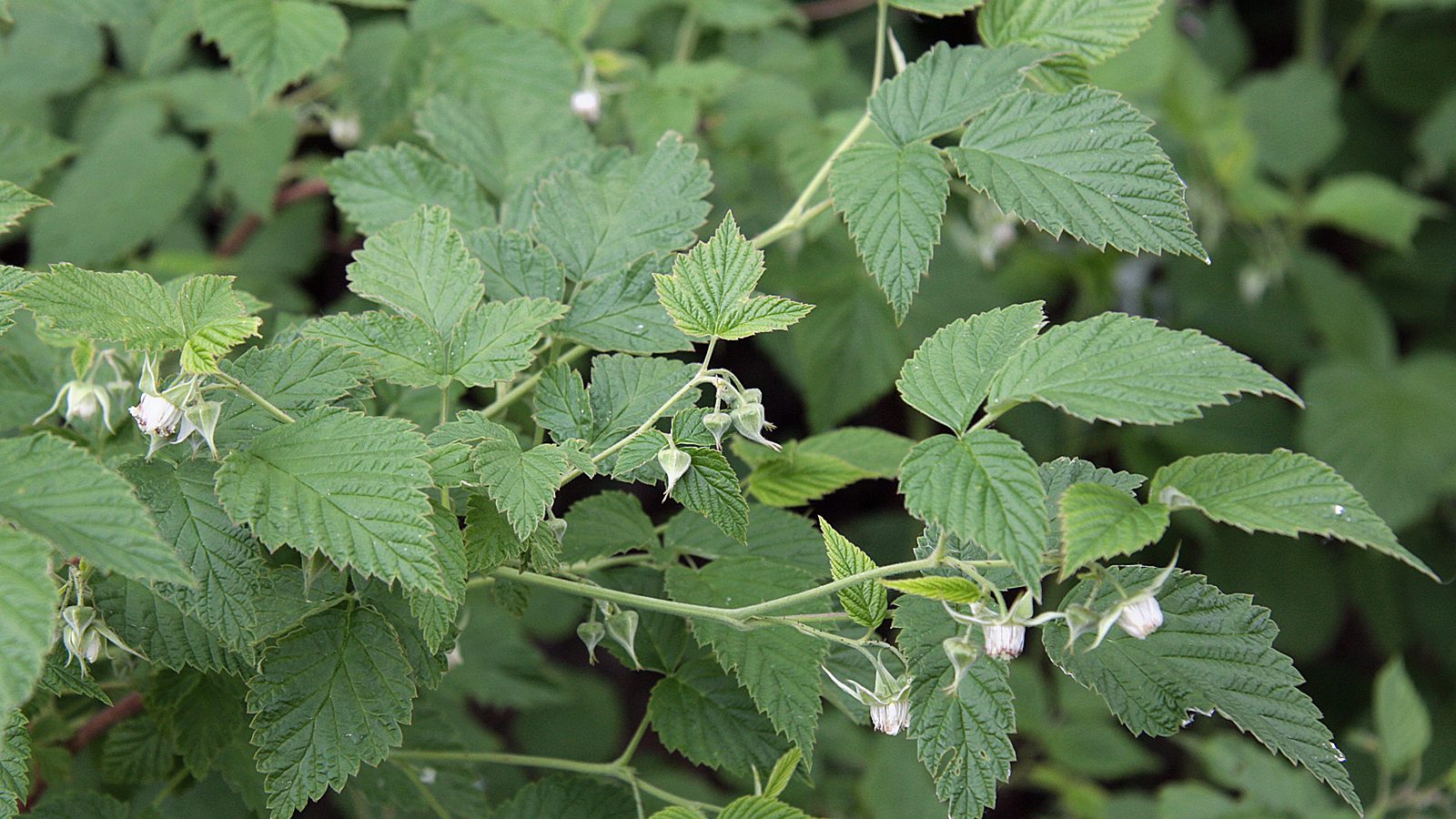
Red Raspberry Leaf
Rubus idaeus
Common & Folk Names
- Red Raspberry Leaf
- Raspberry Leaf
- European Raspberry
- Garden Raspberry
Plant Family
Rosaceae
Geographic Location
Native to Europe and northern Asia, from Britain and Scandinavia south to North Africa and east to central Asia. Now cultivated worldwide in temperate regions for fruit production. Thrives in cool to moderate temperate climates with adequate moisture. Widely grown in NZ for both fruit and medicinal leaf harvest.
Habitat
Naturally grows in woodland clearings, hedgerows, forest margins, and disturbed areas. Prefers partial shade to full sun with moist, well-draining soil. Tolerates various soil types but grows best in fertile, slightly acidic conditions. Found from lowlands to moderate elevations.
Growing Conditions
Sun: Full sun to partial shade; produces best fruit in full sun but tolerates shade
Soil: Well-draining, fertile soil rich in organic matter; pH 5.5-6.5 (slightly acidic); consistent moisture but good drainage essential
Propagation: Spreads via underground runners (suckers); divide established plants in winter; also grown from root cuttings or purchased canes
Care: Water regularly, especially during fruit production; mulch to retain moisture and suppress weeds; prune old canes after fruiting; can be vigorous and spread aggressively; benefits from support (trellis or wires); generally pest and disease-free though birds love the fruit
NZ Planting Calendar
Sowing (seed): Not typically grown from seed; propagate vegetatively
Propagation (cuttings/division): Divide suckers or take root cuttings in winter (June-August); purchase bare-root canes in winter
Planting: Winter (June-August) for bare-root canes; spring (September-November) for potted plants
Growth: Perennial; canes biennial (produce fruit in second year then die back); sends up new canes each year; can spread vigorously via runners
Flowering: Spring to early summer (October-December in NZ) with small white or pale pink flowers
Harvest: Leaves harvested in spring to summer (October-March) before or during flowering for maximum potency; fruit harvested in summer (January-March) when ripe
Note: Grows exceptionally well throughout NZ; suited to most regions with adequate moisture; commonly grown for fruit with leaves as beneficial byproduct; can become invasive if not managed; excellent dual-purpose plant (fruit and medicine); easy to grow and maintain; tolerates NZ conditions well
Harvesting Guidelines
Leaves: Harvest leaves in spring through summer, ideally before or during flowering when constituent levels are highest. Select healthy, green leaves without disease or insect damage. Young to mature leaves are suitable; avoid very old or yellowing leaves. Cut individual leaves or small leafy stem sections. Use fresh or dry for storage. Dry quickly in well-ventilated, shaded area at temperatures not exceeding 35°C. Properly dried leaves retain good green colour and characteristic slight fruity scent. Store dried leaves in airtight containers away from light and moisture. High-quality raspberry leaf has pleasant, slightly fruity, mildly astringent taste.
Sustainable Harvesting: Raspberry plants regenerate readily, making sustainable harvesting straightforward. Leave enough foliage for plant health. The vigorous growth means harvesting actually helps control spread. Many growers have more leaves than needed, making this abundant medicine.
Fruit: Harvest ripe berries in summer when they pull easily from the receptacle. Use fresh, freeze, or process for preserves. The fruit is culinary rather than medicinal.
Parts Used
- Leaves (primary medicinal part – dried or fresh)
- Occasionally fruit (culinary, minimal medicinal use)
Constituents & their Actions
Red raspberry leaf’s therapeutic properties arise from tannins, flavonoids, minerals, and other compounds that provide tonic, astringent, and nutritive effects, particularly for female reproductive health.
Tannins (Ellagitannins and Others):
Astringent polyphenolic compounds present in significant amounts.
The main actions of these tannins are:
- Provide astringent effects, toning tissues (particularly uterine and pelvic tissues)
- Demonstrate anti-inflammatory properties
- Support wound healing
- Exhibit antimicrobial activity
- Contribute to overall therapeutic effects
Flavonoids:
Various plant compounds with physiological effects. Some of the main flavonoids include:
- Quercetin
- Kaempferol
- Various glycosides
The main actions of these flavonoids are:
- Provide antioxidant protection
- Support anti-inflammatory effects
- Contribute to vascular health
- Support uterine toning (mechanism not fully understood)
Fragarine:
An alkaloid-like compound (though classification is debated) traditionally believed to tone uterine muscles.
The main action attributed to fragarine is:
- May contribute to uterine toning effects (though modern research questions this traditional attribution)
- Exact mechanisms and significance remain unclear
Minerals and Vitamins:
Red raspberry leaf is notably nutritive, containing:
- Iron
- Calcium
- Magnesium
- Potassium
- Vitamins A, C, E, and B-complex
The main actions of these nutrients are:
- Provide nutritional support, particularly valuable during pregnancy
- Support overall health and vitality
- Contribute to bone health, blood health, and cellular function
Phenolic Acids:
Including ellagic acid and others.
The main actions of these compounds are:
- Provide antioxidant effects
- Demonstrate anti-inflammatory properties
- Support overall health
Actions with Mechanisms
Uterine Tonic:
Red raspberry leaf is renowned as a uterine tonic, though the exact mechanisms remain incompletely understood. Traditional use and clinical observation suggest the herb tones and strengthens uterine muscles, which in turn may support more effective contractions during labour, facilitate efficient uterine involution (return to pre-pregnancy size) after birth, and support overall uterine health. The tannins provide astringent effects that tone tissues, whilst flavonoids and other constituents may affect smooth muscle function. Importantly, raspberry leaf does not stimulate labour or cause contractions in normal pregnancy—it appears to support uterine muscle efficiency without triggering premature labour. This makes it valuable as a pregnancy tonic when used appropriately. The traditional attribution to “fragarine” is questioned by modern phytochemistry, which finds minimal or no fragarine in raspberry leaf, suggesting the uterine effects arise from the overall constituent profile rather than a single compound.
Astringent:
The significant tannin content provides pronounced astringent effects. Astringents tone and tighten tissues, reduce excessive secretions, and support tissue integrity, which in turn benefits various conditions. The astringent properties make raspberry leaf valuable for diarrhoea, excessive menstrual flow, mouth and gum inflammations (as gargle), sore throats, and minor wounds. The toning effects extend to mucous membranes throughout the body, making raspberry leaf useful for conditions involving tissue laxity or excessive secretions.
Nutritive Tonic:
Red raspberry leaf provides significant nutritional support, particularly valuable during pregnancy when nutritional demands increase. The minerals (iron, calcium, magnesium) support blood health, bone health, and muscle function, whilst vitamins support overall vitality and cellular health. The nutritive effects make raspberry leaf a valuable general tonic for building vitality, supporting recovery from illness, and providing nutritional support during demanding periods. The pleasant taste encourages regular consumption as a nourishing tea.
Digestive Support:
The astringent tannins support digestive health by toning digestive tract tissues and reducing inflammation. Raspberry leaf addresses diarrhoea through astringent effects that reduce excessive secretions and tone bowel tissues. The mild nature makes it suitable for all ages, including children with digestive upset. The gentle digestive support complements the herb’s other properties.
Anti-inflammatory:
Tannins, flavonoids, and phenolic acids provide anti-inflammatory effects through various pathways. The anti-inflammatory properties support use for inflammatory conditions including mouth and gum inflammation, sore throats, skin inflammation, and general inflammatory states. The effects are gentle but meaningful, making raspberry leaf suitable for long-term use.
Parturient (Labour Support):
Traditional midwifery use includes raspberry leaf for supporting labour. The belief is that regular use during pregnancy (typically starting in second or third trimester) supports more efficient labour with effective contractions, potentially reducing labour duration and intervention rates. Research shows mixed results—some studies demonstrate modest benefits including reduced need for forceps delivery and shorter second stage of labour, whilst others show no significant effects. The safety profile supports use even if benefits are modest. Importantly, raspberry leaf does not initiate labour or cause premature birth when used appropriately.
Galactagogue (Mild):
Some traditional sources suggest raspberry leaf supports milk production, though this action is less established than uterine toning. The nutritive properties certainly support overall maternal health and recovery, which indirectly benefits lactation.
Main Use
Red raspberry leaf is primarily used as a pregnancy tonic and parturient herb, supporting uterine health during pregnancy and facilitating labour. Traditional midwifery has valued raspberry leaf for generations as safe, nourishing support for pregnant individuals. Modern use typically involves daily consumption of raspberry leaf tea starting in the second or third trimester (often week 24-32 onwards) and continuing through labour and postpartum recovery.
For pregnancy support, raspberry leaf provides nutritional benefits (iron, calcium, magnesium, vitamins), tones uterine muscles in preparation for labour, and supports overall maternal health. The pleasant taste makes it easy to drink regularly. Many pregnant individuals report subjective benefits including feeling stronger, healthier, and better prepared for birth. Research support is modest but suggests possible benefits including reduced need for instrumental delivery (forceps, vacuum) and shorter second stage of labour, with no increased risks.
During labour, raspberry leaf tea can be sipped to provide hydration, nutritional support, and continued uterine toning. The familiar, comforting taste provides psychological support during an intense experience.
Postpartum, raspberry leaf supports uterine involution (return to pre-pregnancy size), provides nutritional replenishment, and may support milk production. The astringent effects help tone tissues recovering from birth. Traditional use includes raspberry leaf for several weeks postpartum to support complete recovery.
For menstrual support, raspberry leaf’s astringent and toning effects benefit heavy menstrual flow, menstrual cramping (through smooth muscle toning), and general menstrual irregularities. The nutritive properties support overall reproductive health. Regular use may help regulate cycles and reduce excessive bleeding.
As a digestive astringent, raspberry leaf addresses diarrhoea, particularly in children. The gentle, pleasant taste makes it acceptable to young children, whilst the astringent effects provide relief without harsh action.
For mouth and throat conditions, raspberry leaf makes an effective gargle for sore throats, mouth ulcers, gum inflammation, and general oral health. The astringent and anti-inflammatory effects soothe inflamed tissues.
Beyond specific therapeutic uses, raspberry leaf serves as a pleasant, nutritive beverage tea suitable for daily consumption by most people. The mild, slightly fruity taste is enjoyable, whilst the nutritional content provides gentle tonic support.
CRITICAL SAFETY NOTE: Whilst generally very safe, raspberry leaf should be used appropriately during pregnancy. Most practitioners recommend starting in second or third trimester rather than first trimester, though evidence for harm in first trimester is lacking. Individuals with previous premature labour or pregnancy complications should seek professional guidance.
Preparations
Infusion/Tea: Steep 1-2 tablespoons (5-10g) of dried leaves in 250ml freshly boiled water for 10-15 minutes; strain and drink. This is the most common and recommended preparation. The tea has a pleasant, slightly fruity, mildly astringent taste. During pregnancy, typically 1-3 cups daily starting in second or third trimester.
Tincture (1:5, 25% alcohol): 2-5ml (40-100 drops), 2-3 times daily. Less common than tea but provides convenient dosing.
Infusion (Strong, for Gargle): Use double strength tea as gargle for mouth and throat conditions. Do not swallow; gargle and spit.
Blend: Often combined with other herbs for pregnancy support (nettle for minerals, oatstraw for nervous system support) or menstrual support (cramp bark for cramping, vitex for hormone balance).
Cold Infusion: Some prefer cold infusion, steeping leaves in cold water overnight. This may extract fewer tannins whilst preserving vitamins and minerals.
Dosage
Dried Leaf (tea/infusion): 5-10g daily (approximately 1-2 tablespoons); typically consumed as 1-3 cups of tea daily
During Pregnancy: 1-3 cups daily starting in second or third trimester (week 24-32 onwards)
During Labour: Sip as desired for hydration and support
Postpartum: 2-4 cups daily for several weeks
Tincture (1:5, 25% alcohol): 2-5ml (40-100 drops), 2-3 times daily
For Menstrual Support: 1-3 cups daily throughout cycle or during menstruation
For Diarrhoea: 1-2 cups as needed
IMPORTANT NOTES:
- Pleasant taste encourages regular consumption
- Can be consumed hot or cold (makes excellent iced tea)
- Safe for long-term use
- Start gradually during pregnancy to assess tolerance
Safety & Drug Interactions
Red raspberry leaf has an excellent safety profile and is one of the safest herbs for pregnancy when used appropriately.
General Safety: Generally considered safe during pregnancy (particularly second and third trimesters), lactation, and for all ages including children. Extensive traditional use and modern safety data support excellent tolerability. One of the most widely used pregnancy herbs globally.
Pregnancy Safety: The debate about raspberry leaf in pregnancy centres on timing rather than overall safety:
- First Trimester: Some practitioners recommend caution and suggest waiting until second trimester, though evidence of harm is lacking. Conservative approach is to start after 12-16 weeks.
- Second and Third Trimesters: Widely used and considered safe. Most evidence suggests starting around 24-32 weeks.
- No Evidence of Harm: Studies show no increased risk of premature labour, pregnancy complications, or fetal harm.
- Possible Benefits: Some research suggests reduced need for forceps delivery and shorter second stage of labour.
Contraindications:
- Previous Premature Labour: Use cautiously or avoid; professional guidance recommended
- Pregnancy Complications: Seek professional guidance if high-risk pregnancy, multiple pregnancy, or specific complications present
- Scheduled Caesarean: No contraindication, though uterine toning benefits may be less relevant
Side Effects: Extremely rare. Possible mild effects include:
- Loose stools (from high tannin content in very large amounts)
- Mild nausea (rare)
- Braxton Hicks contractions (practice contractions; normal in pregnancy, not caused by raspberry leaf but sometimes noticed when starting the tea)
Drug Interactions:
- No significant drug interactions documented
- Iron supplements: Tannins theoretically may reduce iron absorption; take iron supplements separately from tea if concerned, though the iron content in raspberry leaf itself is beneficial
Other Considerations:
- Safe for children in appropriate doses (typically half adult dose)
- Safe during lactation
- Can be consumed long-term without concerns
- Pleasant taste encourages compliance
Quality Considerations:
- Choose organic when possible (conventional raspberry farming may use pesticides)
- Ensure proper drying and storage to prevent mould
- Fresh, high-quality leaves have good green colour and pleasant scent
Scientific Evidence
Pregnancy and Labour: Research shows mixed but generally encouraging results. A systematic review concluded that raspberry leaf may reduce the need for forceps delivery and shorten the second stage of labour, with no adverse effects or increased risk of complications. Other studies show no significant effects. The safety data is consistent—no harm demonstrated even when benefits are unclear. Most research uses 1.2-2.4g of dried leaf daily from 32 weeks onwards.
Uterine Effects: In vitro studies show both stimulant and relaxant effects on uterine muscle depending on experimental conditions. The mechanisms remain incompletely understood. Clinical observation and traditional use suggest overall toning and normalising effects rather than simple stimulation or relaxation.
Nutritive Content: Analysis confirms significant mineral content (iron, calcium, magnesium) and vitamin content, supporting traditional use as nutritive tonic.
Safety Studies: Extensive safety data from clinical trials and observational studies demonstrate excellent safety profile in pregnancy. No increased risk of premature labour, complications, or adverse fetal outcomes with appropriate use.
Antioxidant and Anti-inflammatory Activity: Laboratory studies confirm antioxidant and anti-inflammatory effects of raspberry leaf extracts, supporting traditional anti-inflammatory uses.
Western Energetics
Temperature: Neutral to slightly cooling. The astringent nature and gentle action create balanced thermal effects, making raspberry leaf suitable for most constitutional types.
Moisture: Drying. The astringent tannins provide drying effects, toning tissues and reducing excessive secretions. This makes raspberry leaf valuable for damp, boggy conditions with tissue laxity or excessive discharges.
Tissue State: Particularly indicated for atrophy and laxity—tissues that are weak, flaccid, or lacking tone. Raspberry leaf excels at toning and strengthening relaxed tissues, particularly in the reproductive and digestive systems. The nutritive properties support depleted states (atrophy/depression tissue states), whilst the astringent effects address laxity. The balancing nature makes raspberry leaf suitable for various conditions.
Taste
Mildly Astringent: A pleasant, gentle astringency creates slight drying sensation without being harsh or puckering
Slightly Fruity: A subtle fruity quality reminiscent of raspberry fruit (though much milder)
Green/Herbaceous: A fresh, green, herbaceous quality characteristic of leaf teas
Slightly Sweet: An underlying sweetness balances the astringency
Pleasant and Mild: Overall, the taste is agreeable and mild, making raspberry leaf one of the most palatable medicinal teas
The pleasant taste is a significant advantage, encouraging regular consumption. Many people genuinely enjoy raspberry leaf tea as a beverage beyond its medicinal benefits.
Plant Lore
Raspberry has been valued for thousands of years in Europe and Asia. The fruit was enjoyed by ancient peoples, with archaeological evidence of raspberry consumption dating to Paleolithic times. The medicinal use of leaves developed later but has been documented for centuries.
In European folk medicine, raspberry leaf was traditionally used for childbirth support, menstrual complaints, digestive issues, and as a general tonic. Midwives passed down raspberry leaf knowledge through generations, establishing it as essential pregnancy support.
The name “Rubus” comes from Latin “ruber” (red), referring to the fruit colour. “Idaeus” refers to Mount Ida, where raspberries supposedly grew abundantly in ancient times (there are multiple Mount Idas—one in Crete, one in Turkey).
In medieval Europe, raspberry was cultivated in monastery gardens for both fruit and medicinal purposes. The plant appears in medieval herbals and was valued by herbalists including Nicholas Culpeper, who recommended it for various women’s health issues.
Native American tribes discovered raspberry independently in North America (American raspberry, Rubus strigosus, is closely related) and used it similarly for women’s health, digestive issues, and as food.
The modern resurgence of raspberry leaf as a pregnancy herb occurred in the 20th century, particularly with the natural childbirth movement. Midwives and herbalists promoted raspberry leaf as safe, effective pregnancy support, leading to widespread use.
Different regions have specific raspberry varieties and local traditions. European red raspberry (Rubus idaeus) is most common medicinally, though other Rubus species have similar properties.
The vigorous growth and tendency to spread via runners made raspberry both valued (for abundant fruit and medicine) and sometimes problematic (can become invasive). The plant’s resilience reflects the strengthening, tonic properties attributed to its leaves.
Additional Information
Pregnancy Use Protocols: Various approaches exist for raspberry leaf during pregnancy:
- Conservative: Start at 32 weeks, 1 cup daily, gradually increase to 3 cups
- Moderate: Start at 24 weeks, 1-2 cups daily, increase to 3 cups by 36 weeks
- Traditional: Use throughout pregnancy, though most modern practitioners recommend second/third trimester onwards
- During Labour: Sip as desired
There is no single “correct” protocol—approaches vary among practitioners. The key is consistent use over weeks to months rather than starting right before labour.
Combining with Other Pregnancy Herbs: Raspberry leaf combines well with:
- Nettle (nutritive, iron-rich)
- Oatstraw (nervous system support, minerals)
- Alfalfa (nutritive, vitamin K)
- Rose hips (vitamin C)
These create comprehensive pregnancy tea blends providing nutritional and tonic support.
Beyond Pregnancy: Whilst most famous for pregnancy use, raspberry leaf benefits many people:
- Menstruating individuals (menstrual support)
- Children (digestive upset)
- Anyone (nutritive tonic, pleasant beverage)
Don’t limit raspberry leaf to pregnancy—it’s a valuable general tonic.
Cultivation for Medicine: Growing raspberry for medicine:
- Easy to grow in most NZ gardens
- Dual purpose (fruit and leaves)
- Harvest leaves without harming fruit production
- May spread vigorously—contain with barriers if desired
- Leaves often abundant “waste product” of fruit growing
- Organic cultivation recommended for medicinal use
Commercial vs. Home-Grown: Commercial raspberry leaf tea is widely available and convenient. Home-grown offers:
- Quality control
- Freshness
- Cost savings
- Connection to your medicine
Both options are valid—choose based on your situation.
Taste Enhancement: Already pleasant, raspberry leaf can be enhanced:
- Blend with peppermint, spearmint, or lemon balm
- Add lemon juice
- Sweeten with honey
- Combine with fruit pieces
- Serve iced in summer
Male Use: Whilst traditionally associated with women’s health, raspberry leaf’s nutritive, astringent, and tonic properties benefit everyone. The minerals support overall health, the astringent effects benefit digestive issues, and the pleasant taste makes it an enjoyable daily tea for anyone.
Storage: Dried raspberry leaf stores well:
- Keep in airtight containers
- Store in cool, dark place
- Properly stored, remains good for 1-2 years
- Fresh leaves can be frozen for tea (though drying is more common)
Sources
Bone, K., & Mills, S. (2013). Principles and Practice of Phytotherapy: Modern Herbal Medicine (2nd ed.). Churchill Livingstone.
Mills, S., & Bone, K. (2005). The Essential Guide to Herbal Safety. Elsevier.
Hoffman, D. (2003). Medical Herbalism: The Science and Practice of Herbal Medicine. Healing Arts Press.
Parsons, M., Simpson, M., & Ponton, T. (1999). Raspberry leaf and its effect on labour: Safety and efficacy. Australian College of Midwives Incorporated Journal, 12(3), 20-25.
Simpson, M., Parsons, M., Greenwood, J., & Wade, K. (2001). Raspberry leaf in pregnancy: Its safety and efficacy in labor. Journal of Midwifery & Women’s Health, 46(2), 51-59.
Bamford, D. S., Percival, R. C., & Tothill, A. U. (1970). Raspberry leaf tea: A new aspect to an old problem. British Journal of Pharmacology, 40(1), 161P-162P.
Nordeng, H., & Havnen, G. C. (2004). Use of herbal drugs in pregnancy: A survey among 400 Norwegian women. Pharmacoepidemiology and Drug Safety, 13(6), 371-380.
Holst, L., Nordeng, H., & Haavik, S. (2009). Use of herbal drugs during early pregnancy in relation to maternal characteristics and pregnancy outcome. Pharmacoepidemiology and Drug Safety, 18(2), 151-159.
Zheng, J., Kallio, H., & Yang, B. (2016). Sea buckthorn (Hippophaë rhamnoides ssp. sinensis) leaves as valuable source of phenolic antioxidants. Journal of Agricultural and Food Chemistry, 64(46), 8820-8828.
McFarlin, B. L., Gibson, M. H., O’Rear, J., & Harman, P. (1999). A national survey of herbal preparation use by nurse-midwives for labor stimulation. Review of the literature and recommendations for practice. Journal of Nurse-Midwifery, 44(3), 205-216.
Holst, L., Wright, D., Haavik, S., & Nordeng, H. (2009). The use and the user of herbal remedies during pregnancy. Journal of Alternative and Complementary Medicine, 15(7), 787-792.
Dante, G., Pedrielli, G., Annessi, E., & Facchinetti, F. (2013). Herb remedies during pregnancy: A systematic review of controlled clinical trials. Journal of Maternal-Fetal and Neonatal Medicine, 26(3), 306-312.
Patel, S., Sharma, V., Chauhan, N. S., & Dixit, V. K. (2014). An updated review on the parasympathomimetic effect of Rubus idaeus L. Zhong Xi Yi Jie He Xue Bao, 12(4), 611-620.
Johnson, J. R., Makaji, E., Ho, S., Boya, X., Creed, M., Landon, C., Langford, C., & Sobkowicz, A. (2009). Effect of Rubus idaeus on labour: A randomized controlled trial. Journal of Obstetrics and Gynaecology Canada, 31(8), 741-746.
Disclaimer: This monograph is for educational purposes only and is not medical advice. Please consult with a qualified healthcare practitioner before using any herbal remedy, especially if you are pregnant, nursing, taking medication, or have a known medical condition. Whilst raspberry leaf has an excellent safety profile, pregnant individuals should seek professional guidance, particularly if high-risk pregnancy or previous complications.