
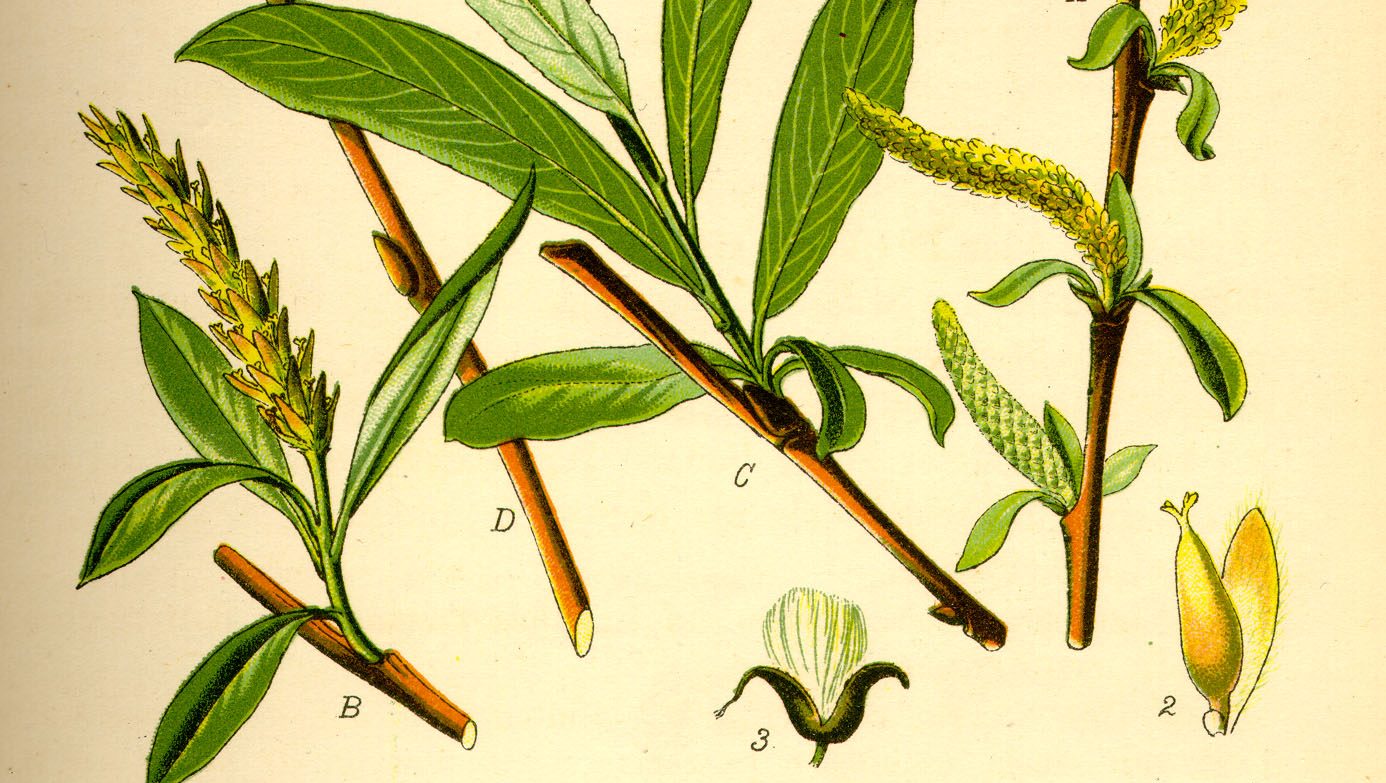
Willow
Salix alba
Common & Folk Names
- White Willow
- European Willow
- Salicin Willow
- Withy
- Withe
- Saille (Irish)
- Saugh (Scottish)
Plant Family
Salicaceae
Geographic Location
Salix alba is native to Europe, western Asia, and North Africa. Found throughout temperate regions from Britain and Scandinavia south to North Africa and east to central Asia. Now naturalised and cultivated in temperate zones worldwide including North America, Australia, and New Zealand. Numerous other Salix species exist globally (over 400 species), many with similar medicinal properties, including native species in NZ.
Habitat
Naturally grows along riverbanks, streams, lakeshores, wetlands, and other moist areas. Prefers full sun and wet to moist soil. Tolerates periodic flooding and waterlogged conditions. Found from sea level to moderate elevations in areas with adequate moisture. Often forms thickets along waterways.
Growing Conditions
Sun: Full sun to partial shade; grows best in full sun
Soil: Moist to wet soil; tolerates waterlogged conditions and periodic flooding; adaptable to various soil types including clay, loam, or sandy soils if moisture is adequate; pH 5.5-8.0 (acidic to alkaline); thrives in consistently moist or wet conditions
Propagation: Extremely easy from hardwood cuttings taken in winter; cuttings root readily when stuck directly into moist soil; also grows from seed (though cuttings are easier and faster)
Care: Water generously during establishment; thrives with consistent moisture or wet conditions; fast-growing; can be coppiced (cut back to ground level) for continuous harvest of young stems; generally pest and disease-free; vigorous growth may require management to prevent spreading
NZ Planting Calendar
Sowing (seed): Spring (September-November); seeds have very short viability and must be sown fresh
Propagation (cuttings/division): Take hardwood cuttings in winter (June-August); cuttings 20-30cm long root readily when stuck directly into moist soil
Planting: Winter (June-August) for cuttings; can plant year-round if watering adequately
Growth: Deciduous tree or large shrub; extremely fast-growing, producing harvestable stems within 1-2 years; can reach 10-25 metres if left to grow as tree
Flowering: Spring (September-October) with catkins appearing before or with new leaves
Harvest: Bark harvested from 2-3 year old stems in spring when sap is rising (September-October); this is when salicin content is highest; young stems can be harvested year-round for basketry
Note: Salix alba and other willow species naturalised throughout NZ; common along waterways, wetlands, and in plantings for erosion control; several willow species present in NZ including crack willow (S. fragilis), weeping willow (S. babylonica), and grey willow (S. cinerea); willows have become invasive in some NZ waterways, causing ecological concerns; abundant and easily accessible for medicinal harvest; fast growth and easy propagation make cultivation straightforward
Harvesting Guidelines
Bark: Harvest bark from young stems (2-3 years old) in spring when sap is rising (September-October in NZ). This is when salicin content is highest. Select healthy, vigorous stems approximately 2-5cm in diameter. Cut stems and strip bark from freshly cut wood—bark is easier to remove when fresh. The bark should peel relatively easily when harvested at the right time. Cut the bark into strips or small pieces. Dry quickly in well-ventilated area out of direct sunlight at temperatures not exceeding 40°C. Properly dried bark should be greyish-brown on the outer surface, reddish-brown on the inner surface, and break with a fibrous fracture. Store dried bark in airtight containers away from light and moisture. High-quality willow bark has a distinctly bitter taste when chewed (indicating salicin content).
Sustainable Harvesting: Willows regenerate vigorously from coppicing (cutting stems back to near ground level), making sustainable harvesting straightforward. Regular coppicing actually benefits willow by promoting vigorous new growth. In NZ, where some willow species are considered invasive in waterways, harvest can even serve an ecological benefit by controlling spread.
Leaves: Young leaves can be harvested in spring and summer, though bark is more commonly used medicinally. Leaves also contain salicin but in lower concentrations than bark.
Parts Used
- Bark (primary medicinal part, from young 2-3 year old stems)
- Occasionally leaves (contain salicin but in lower concentrations)
- Traditionally, the wood and flexible young stems used for basketry and tools (non-medicinal uses)
Constituents & their Actions
Willow’s therapeutic properties, particularly its pain-relieving and anti-inflammatory effects, arise primarily from salicin and related salicylates, along with flavonoids and other compounds.
Salicin and Salicylates:
These phenolic glycosides are the primary active constituents responsible for willow’s analgesic and anti-inflammatory effects. Some of the main salicylates in willow bark are:
- Salicin (the primary compound, converted to salicylic acid in the body)
- Salicortin
- Tremulacin
- Fragilin
- Populin
The main actions of these salicylates are:
- Provide analgesic (pain-relieving) effects
- Exhibit potent anti-inflammatory properties
- Demonstrate antipyretic (fever-reducing) effects
- Provide mild antiplatelet effects (reduce blood clotting)
- Act as the natural precursor to synthetic aspirin (acetylsalicylic acid)
CRITICAL NOTE: Salicin is converted to salicylic acid in the intestines and liver after ingestion. This is the same compound that inspired the development of aspirin. Willow provides similar effects to aspirin but with a slower onset and generally gentler action.
Flavonoids:
Plant compounds with antioxidant and anti-inflammatory effects. Some of the main flavonoids in willow are:
- Quercetin
- Kaempferol
- Catechin
- Naringenin
The main actions of these flavonoids are:
- Provide antioxidant protection
- Support anti-inflammatory effects
- Contribute to pain relief
- Support vascular health
Tannins:
Astringent polyphenolic compounds.
The main actions of tannins are:
- Provide astringent effects
- Support anti-inflammatory actions
- Contribute to wound healing properties
Phenolic Acids:
Including various hydroxycinnamic acid derivatives.
The main actions of phenolic acids are:
- Provide antioxidant effects
- Support anti-inflammatory properties
- Contribute to overall therapeutic effects
Actions with Mechanisms
Analgesic (Pain Relief):
Willow bark provides significant pain relief through mechanisms similar to aspirin but gentler and slower-acting. Salicin is converted to salicylic acid in the body, which inhibits cyclooxygenase (COX) enzymes (particularly COX-2), which in turn reduces production of prostaglandins—inflammatory mediators that sensitise pain receptors and cause pain. Unlike aspirin, which inhibits COX enzymes rapidly and completely, willow’s effects develop more gradually and may be less complete, resulting in effective pain relief with potentially fewer gastrointestinal side effects. The analgesic effects are particularly pronounced for musculoskeletal pain, headaches, and inflammatory pain. Research demonstrates significant pain reduction comparable to low-dose aspirin or NSAIDs for various pain conditions.
Anti-inflammatory:
Multiple constituents reduce inflammation through complementary mechanisms. Salicylic acid (from salicin conversion) inhibits COX enzymes, which in turn reduces prostaglandin production and decreases inflammation. The flavonoids provide additional anti-inflammatory effects through inhibition of inflammatory pathways and reduction of inflammatory cytokines. Tannins contribute astringent and anti-inflammatory properties. These combined mechanisms produce potent anti-inflammatory effects valuable for arthritis, inflammatory pain, and general inflammatory conditions. The anti-inflammatory action develops more slowly than synthetic NSAIDs but may be sustained longer and cause fewer side effects.
Antipyretic (Fever-Reducing):
Willow reduces fever through similar mechanisms to aspirin. Salicylic acid acts on the hypothalamus (the brain’s temperature-regulation centre), which in turn reduces the elevated temperature set-point during fever and promotes heat dissipation through sweating and vasodilation. The antipyretic effects make willow valuable for fevers associated with infections, though modern herbalists typically use other febrifuge herbs that don’t carry aspirin-like contraindications.
Antiplatelet (Mild Blood-Thinning):
Salicylic acid produces mild antiplatelet effects by inhibiting thromboxane synthesis and platelet aggregation, which in turn reduces blood clot formation. The effect is much milder than therapeutic doses of aspirin but still clinically relevant, particularly regarding drug interactions and bleeding risk. This antiplatelet action may contribute to cardiovascular benefits but also creates contraindications and requires caution with bleeding disorders and anticoagulant medications.
Antioxidant:
Flavonoids and phenolic compounds provide antioxidant protection, scavenging free radicals and reactive oxygen species, which in turn protects cells from oxidative damage. The antioxidant effects support overall health, reduce oxidative stress contributing to inflammation, and protect tissues during inflammatory conditions.
Astringent:
Tannins provide astringent effects, which in turn tone tissues, reduce excessive secretions, and support wound healing. The astringent properties are less pronounced than willow’s analgesic and anti-inflammatory effects but contribute to the overall therapeutic profile.
Main Use
Willow bark serves as nature’s aspirin, providing pain relief and anti-inflammatory effects for various conditions. The herb excels at addressing musculoskeletal pain including lower back pain, osteoarthritis, rheumatoid arthritis, muscle pain, and general inflammatory pain. Clinical research demonstrates significant pain reduction and improved function in osteoarthritis and low back pain, with effects comparable to low-dose aspirin or NSAIDs. The slower onset of action (typically 1-2 hours compared to 30 minutes for aspirin) is balanced by potentially longer duration and fewer gastrointestinal side effects.
For headaches, particularly tension headaches and migraine, willow provides relief through pain-relieving and anti-inflammatory mechanisms. Traditional use includes willow for various types of headache, and some research supports effectiveness.
Willow addresses acute musculoskeletal injuries, sprains, strains, and inflammatory conditions where pain and inflammation are primary concerns. The herb reduces both the pain and underlying inflammation whilst supporting healing.
For arthritis (both osteoarthritis and rheumatoid arthritis), willow provides valuable long-term support. Regular use reduces pain, stiffness, and inflammation whilst improving joint function and mobility. The gentler action compared to NSAIDs may make willow suitable for long-term use in chronic arthritis when pharmaceutical NSAIDs cause side effects or are contraindicated.
Historically, willow was used for fevers and was the original source of salicin that led to aspirin’s development in the 19th century. While modern herbalism typically uses other herbs for fever due to willow’s aspirin-like contraindications, the antipyretic effects are well-established.
CRITICAL SAFETY NOTE: Because willow contains salicin (converted to salicylic acid, the basis of aspirin), it shares many of aspirin’s contraindications and interactions. Never give willow to children or teenagers with viral infections due to Reye’s syndrome risk (same as aspirin). Use with extreme caution in individuals taking anticoagulants, with bleeding disorders, before surgery, during pregnancy, or with aspirin sensitivity.
Preparations
Decoction: Simmer 1-2 teaspoons (2-4g) of dried willow bark in 250ml water for 10-15 minutes; strain and drink. This is the traditional preparation method. The tea is quite bitter. Drink 2-3 times daily.
Tincture (1:5, 40-60% alcohol): 2-5ml (40-100 drops), 2-3 times daily. Provides convenient dosing and bypasses the bitter taste.
Capsules/Tablets: Dried, powdered bark in capsules or tablets provides standardised, convenient dosing. Commercial products often standardise to salicin content (typically 60-120mg salicin per dose).
Standardised Extract: Extracts standardised to salicin content (typically 15% salicin) provide reliable, research-backed dosing. Follow manufacturer’s instructions; typical dose provides 120-240mg salicin daily.
Cold Infusion: Some herbalists prefer cold water extraction, soaking bark in cold water for several hours or overnight, then straining and drinking. This may extract salicin whilst leaving some tannins behind, potentially reducing bitterness and astringency.
Improving Palatability: Willow bark is very bitter. Combining with pleasant-tasting herbs (mint, liquorice, cinnamon), adding honey, or using capsules/tinctures helps with compliance.
Dosage
Dried Bark (decoction): 2-4g (approximately 1-2 teaspoons), 2-3 times daily
Tincture (1:5, 40-60% alcohol): 2-5ml (40-100 drops), 2-3 times daily
Standardised Extract (15% salicin): 240mg extract (providing approximately 36mg salicin), 2-3 times daily; clinical research typically uses 120-240mg salicin daily
Capsules/Tablets: Follow manufacturer’s instructions; typical dose provides 60-120mg salicin per dose, 2-3 times daily
IMPORTANT NOTES:
- Effects develop more slowly than aspirin (1-2 hours vs. 30 minutes)
- Full anti-inflammatory benefits may require several days to weeks of consistent use
- For chronic conditions, regular daily use is more effective than occasional use
- Do not exceed recommended doses
- Use lowest effective dose for shortest duration necessary
Safety & Drug Interactions
CRITICAL SAFETY WARNING: Willow bark contains salicylates and shares many contraindications and interactions with aspirin. The following precautions are essential.
Absolute Contraindications:
- Children and Teenagers with Viral Infections: NEVER give willow to children or teenagers (under 18 years) with flu, chickenpox, or other viral infections due to risk of Reye’s syndrome—a rare but potentially fatal condition associated with aspirin use during viral illness. This is a critical safety concern.
- Aspirin Allergy or Sensitivity: Anyone allergic or sensitive to aspirin or salicylates should avoid willow bark.
- Active Peptic Ulcers or Gastrointestinal Bleeding: Salicylates can irritate the stomach lining and increase bleeding risk; avoid with active ulcers or GI bleeding.
Strong Contraindications (Use Only Under Professional Supervision if at All):
- Pregnancy: Avoid during pregnancy, particularly third trimester, due to effects on prostaglandins important for labour and potential bleeding risks.
- Lactation: Salicylates pass into breast milk; avoid or use only under professional supervision.
- Bleeding Disorders: Willow has antiplatelet effects; contraindicated in haemophilia and other bleeding disorders.
- Upcoming Surgery: Discontinue willow at least 2 weeks before scheduled surgery due to bleeding risk and potential anaesthesia interactions.
- Severe Kidney or Liver Disease: Salicylates require metabolism and excretion; use with extreme caution or avoid in severe kidney or liver impairment.
- Asthma: Some individuals with asthma are sensitive to salicylates; use cautiously and discontinue if breathing difficulties occur.
- Gout: Salicylates may affect uric acid levels; use cautiously in gout.
Drug Interactions (CRITICAL):
- Anticoagulants and Antiplatelet Drugs: MAJOR interaction with warfarin, aspirin, clopidogrel, and other blood thinners; significantly increases bleeding risk; avoid combination or use only under close professional supervision with monitoring.
- NSAIDs (Ibuprofen, Naproxen, etc.): Combining with NSAIDs increases risk of gastrointestinal ulceration and bleeding; avoid combination.
- Corticosteroids: Combination increases risk of gastric ulceration; use cautiously if combining.
- Methotrexate: Salicylates may increase methotrexate toxicity; avoid combination.
- Diabetes Medications: May enhance blood glucose-lowering effects; monitor blood sugar if combining.
- Blood Pressure Medications: May reduce effectiveness of some blood pressure medications; monitor blood pressure.
- Diuretics: May reduce effectiveness of some diuretics; use cautiously.
- Alcohol: Increases risk of gastric irritation and bleeding; avoid combining.
Side Effects:
Generally well-tolerated when used appropriately, but potential side effects include:
- Gastrointestinal upset, nausea, or gastric irritation (usually milder than aspirin but still possible)
- Allergic reactions in sensitive individuals (rash, itching)
- Tinnitus (ringing in ears) with very high doses
- Increased bleeding tendency
Monitoring and Precautions:
- Watch for unusual bruising, bleeding gums, black stools, or other signs of bleeding
- Discontinue use if allergic symptoms develop
- Start with lower doses to assess tolerance
- Take with food to reduce gastric irritation
- Inform all healthcare providers about willow use, particularly before procedures or when starting new medications
Scientific Evidence
Osteoarthritis and Low Back Pain: Multiple randomised controlled trials demonstrate willow bark extract’s effectiveness for osteoarthritis and chronic low back pain. A systematic review concluded that willow bark extract shows moderate evidence for treating chronic low back pain and osteoarthritis. Studies typically use standardised extracts providing 120-240mg salicin daily for 2-6 weeks. Pain reduction and functional improvement are comparable to low-dose NSAIDs with potentially fewer gastrointestinal side effects.
Mechanisms of Action: Extensive research confirms that salicin is converted to salicylic acid in the body, which inhibits COX enzymes and reduces prostaglandin production. The mechanisms are well-characterised and closely related to aspirin’s mechanisms, supporting traditional pain-relieving and anti-inflammatory uses.
Safety Studies: Clinical trials demonstrate generally good tolerability with fewer gastrointestinal side effects than aspirin or NSAIDs at equi-analgesic doses. However, the same cautions regarding bleeding risk, Reye’s syndrome in children, and drug interactions apply.
Comparative Studies: Studies comparing willow bark to conventional NSAIDs show similar pain-relieving effects with potentially better gastrointestinal tolerability. The slower onset but potentially longer duration of action distinguishes willow from rapid-acting pharmaceutical options.
Historical Validation: The development of aspirin directly from willow bark salicin represents one of the clearest examples of traditional herbal knowledge leading to modern pharmaceutical development. The story validates both traditional use and the power of isolating and modifying plant compounds.
Western Energetics
Temperature: Cooling. Willow’s cooling nature is evident in its anti-inflammatory and antipyretic effects. The herb reduces heat and inflammation, addresses hot, inflamed conditions, and cools feverish states. The cooling quality makes willow particularly suitable for hot, acute inflammatory conditions.
Moisture: Drying to neutral. The astringent tannins provide mild drying effects, whilst the overall action is not strongly drying. Willow neither significantly moistens nor dries most tissues.
Tissue State: Particularly indicated for heat and excitation—conditions characterised by acute inflammation, redness, pain, and overactive inflammatory responses. Willow excels at cooling inflamed tissues, reducing pain, and addressing hot, irritated states. Also valuable for tension when pain and inflammation create physical and energetic constriction. The pain-relieving effects address both the physical discomfort and the energetic holding patterns that pain creates.
Taste
Intensely Bitter: The dominant taste is very bitter, arising from salicin and other compounds. This bitterness is pronounced and can be quite unpleasant, which affects compliance and explains the preference for capsules or well-flavoured preparations.
Astringent: A noticeable astringent quality from tannins creates a drying, puckering sensation in the mouth.
Slightly Sweet (Aftertaste): Some people detect a slight sweetness after the initial bitterness, though this is subtle and often overwhelmed by the bitter taste.
Plant Lore
Willow has profound significance across diverse cultures and throughout human history. The tree’s association with water, flexibility, grief, and healing spans millennia and continents.
In ancient Greece and Rome, willow was recognised for pain-relieving properties. The Greek physician Hippocrates (5th century BCE) recommended willow bark for pain and fever. The Roman naturalist Pliny the Elder documented willow’s medicinal uses. Ancient texts from various cultures reference willow for pain, inflammation, and fever.
The name “Salix” comes from Celtic “sal” (near) and “lis” (water), referencing willow’s affinity for wet areas. Many cultures recognised this water-loving characteristic and associated willows with rivers, streams, and water deities.
In Celtic tradition, willow was one of the sacred trees, associated with the moon, water, and the feminine. The tree represented intuition, dreaming, and connection to the emotional realm. Willow was linked to the Goddess in various forms and used in rituals and ceremonies.
The development of aspirin from willow represents a landmark in pharmaceutical history. In 1828, a German chemist isolated salicin from willow bark. In 1897, a chemist at Bayer created acetylsalicylic acid (aspirin) by modifying salicylic acid to reduce side effects. Aspirin became one of the world’s most widely used drugs. This progression from willow bark to modern pharmaceutical demonstrates both the wisdom of traditional use and the pharmaceutical industry’s debt to plant medicine.
In Chinese medicine, various willow species have been used for pain, inflammation, and other conditions. The flexible nature of willow branches made them symbols of resilience—”the willow bends but does not break.”
The weeping willow (Salix babylonica) became associated with grief and mourning in many cultures. The drooping branches suggested sorrow, and willows were often planted in cemeteries. This association with grief may relate to the tree’s emotional, moon-connected energetics in some traditions.
Willows have immense practical importance beyond medicine. The flexible young stems have been used for basketry for thousands of years across many cultures. Willow withies (flexible shoots) create strong, beautiful baskets. This traditional craft continues today.
In European folklore, willows had various associations—some saw them as protective, others as unlucky. The tree’s connection to water and the moon gave it mystical significance. Some traditions warned against sleeping under willows or bringing willow into homes, whilst others valued the tree’s protective qualities.
The ability of willow cuttings to root easily made willows symbols of life, regeneration, and resilience. A living fence post made from willow would often root and grow, creating “living fences.” This extraordinary vitality impressed many cultures.
Different cultures recognised different willow species’ value. Native Americans used various native willow species for pain, fever, and other conditions, demonstrating independent discovery of willows’ medicinal properties across continents.
Additional Information
Multiple Willow Species: Over 400 Salix species exist globally, with many sharing similar properties. Salix alba (white willow) is most commonly referenced in European herbalism, but other species including S. purpurea (purple willow), S. fragilis (crack willow), and S. nigra (black willow) have similar salicin content and can be used similarly. In NZ, several introduced willow species are present and can be used medicinally.
Salicin Content Variation: Salicin content varies between species, growing conditions, harvest timing, and plant parts. Bark from young (2-3 year old) stems harvested in spring contains highest salicin levels. Standardised commercial extracts ensure consistent dosing, whilst traditional bark preparations have more variable potency.
Willow vs. Aspirin:
Similarities:
- Both provide pain relief, anti-inflammatory, and antipyretic effects
- Both inhibit COX enzymes and reduce prostaglandins
- Both have antiplatelet effects
- Both share contraindications and many interactions
Differences:
- Willow has slower onset (1-2 hours vs. 30 minutes)
- Willow may have gentler gastrointestinal effects at equi-analgesic doses
- Willow contains multiple compounds (salicin, flavonoids, tannins) vs. aspirin’s single compound
- Willow requires conversion to salicylic acid in body; aspirin is acetylsalicylic acid
- Willow dosing less precise than pharmaceutical aspirin
Environmental Considerations in NZ: Willows in NZ present complex environmental issues:
- Provide erosion control along waterways
- Fast-growing and easily established
- BUT can become invasive, displacing native riparian vegetation
- Can alter stream flow and ecology
- Management efforts aim to balance benefits and ecological impacts
- Some regions actively remove willows to restore native riparian ecosystems
- Harvesting invasive willows for medicine can support ecological management goals
Quality Considerations: When purchasing willow bark:
- Ensure correct species (Salix alba or other high-salicin species)
- Look for bark from young stems (not old tree trunk bark with low salicin)
- Standardised extracts specify salicin content
- Organic certification helps ensure quality
- Fresh bark has more intense bitter taste than old bark
Cultivation for Medicine: Growing willows for medicinal harvest is straightforward:
- Take hardwood cuttings in winter
- Plant in moist area or provide irrigation
- Harvest bark from 2-3 year old stems in spring
- Coppice regularly for continuous supply of young stems
- Fast growth provides abundant medicine quickly
Combining with Other Herbs: Willow combines well with:
- Willow + Meadowsweet for pain and inflammation (both contain salicylates)
- Willow + Devil’s Claw for arthritis
- Willow + Turmeric for anti-inflammatory effects
- Note: Be aware of additive effects and contraindications when combining
Modern Relevance: Despite aspirin’s availability, willow remains relevant:
- For those seeking natural alternatives
- For individuals with aspirin sensitivities who tolerate willow better
- For holistic approaches valuing whole-plant medicine
- As a reminder of pharmaceutical debt to traditional plant medicine
Sources
Bone, K., & Mills, S. (2013). Principles and Practice of Phytotherapy: Modern Herbal Medicine (2nd ed.). Churchill Livingstone.
Mills, S., & Bone, K. (2005). The Essential Guide to Herbal Safety. Elsevier.
Hoffman, D. (2003). Medical Herbalism: The Science and Practice of Herbal Medicine. Healing Arts Press.
Grieve, M. (1931). A Modern Herbal. Dover Publications (1971 reprint).
Chrubasik, S., Eisenberg, E., Balan, E., Weinberger, T., Luzzati, R., & Conradt, C. (2000). Treatment of low back pain exacerbations with willow bark extract: A randomized double-blind study. American Journal of Medicine, 109(1), 9-14.
Schmid, B., Lüdtke, R., Selbmann, H. K., Kötter, I., Tschirdewahn, B., Schaffner, W., & Heide, L. (2001). Efficacy and tolerability of a standardized willow bark extract in patients with osteoarthritis: Randomized placebo-controlled, double blind clinical trial. Phytotherapy Research, 15(4), 344-350.
Vlachojannis, J. E., Cameron, M., & Chrubasik, S. (2009). A systematic review on the effectiveness of willow bark for musculoskeletal pain. Phytotherapy Research, 23(7), 897-900.
Nahrstedt, A., Schmidt, M., Jäggi, R., Metz, J., & Khayyal, M. T. (2007). Willow bark extract: The contribution of polyphenols to the overall effect. Wiener Medizinische Wochenschrift, 157(13-14), 348-351.
Khayyal, M. T., El-Ghazaly, M. A., Abdallah, D. M., Nassar, N. N., Okpanyi, S. N., & Kreuter, M. H. (2005). Mechanisms involved in the anti-inflammatory effect of a standardized willow bark extract. Arzneimittel-Forschung, 55(11), 677-687.
Shara, M., & Stohs, S. J. (2015). Efficacy and safety of white willow bark (Salix alba) extracts. Phytotherapy Research, 29(8), 1112-1116.
Fiebich, B. L., Chrubasik, S., & Weiser, T. (2001). Efficacy and safety of willow bark extract. Phytomedicine, 8(6), 458-467.
Biegert, C., Wagner, I., Lüdtke, R., Kötter, I., Lohmuller, C., Günaydin, I., Taxis, K., & Heide, L. (2004). Efficacy and safety of willow bark extract in the treatment of osteoarthritis and rheumatoid arthritis: Results of 2 randomized double-blind controlled trials. Journal of Rheumatology, 31(11), 2121-2130.
Beer, A. M., & Lukanov, J. (2008). Pharmacological aspects of willow bark extract standardized to salicin. Wiener Medizinische Wochenschrift, 158(15-16), 398-403.
Uehleke, B., Müller, J., Stange, R., Kelber, O., & Melzer, J. (2013). Willow bark extract STW 33-I in the long-term treatment of outpatients with rheumatic pain mainly osteoarthritis or back pain. Phytomedicine, 20(11), 980-984.
Disclaimer: This monograph is for educational purposes only and is not medical advice. Please consult with a qualified healthcare practitioner before using any herbal remedy, especially if you are pregnant, nursing, taking medication, or have a known medical condition. CRITICAL: Willow bark contains salicylates similar to aspirin. NEVER give to children or teenagers with viral infections due to Reye’s syndrome risk. Use with extreme caution with anticoagulants, bleeding disorders, before surgery, or with aspirin allergy. Shares many of aspirin’s contraindications and drug interactions.