
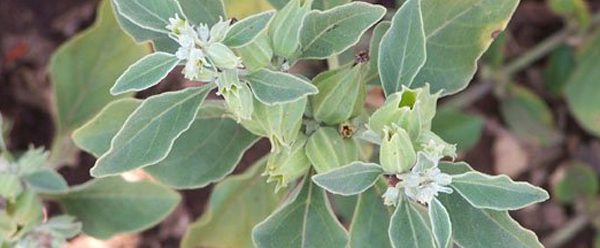
Ashwagandha
Withania somnifera
Common & Folk Names
- Indian Ginseng
- Winter Cherry
- Indian Winter Cherry
- Poison Gooseberry
- Ajagandha
- Samm Al Ferakh
- Clustered Wintercherry
Plant Family
Solanaceae (Nightshade family)
Geographic Location
Native to India, Pakistan, Sri Lanka, and parts of the Middle East and Africa, particularly in dry regions. Widely distributed across the Indian subcontinent from the Mediterranean to China. Now cultivated in India (particularly Rajasthan, Gujarat, Maharashtra, and Madhya Pradesh), Nepal, Yemen, and parts of Africa. Introduced to other warm, dry regions for cultivation.
Habitat
Naturally grows in dry regions, stony, rocky soils, waste places, and disturbed ground. Tolerates poor soils and drought conditions once established. Found from sea level to moderate elevations, particularly in semi-arid and subtropical zones. Thrives in areas with dry seasons and minimal rainfall.
Growing Conditions
Sun: Full sun; requires at least 6-8 hours of direct sunlight daily
Soil: Well-draining sandy or loamy soil; tolerates poor, rocky soils; prefers neutral to slightly alkaline pH (7.0-8.0); drought-tolerant once established; sensitive to waterlogging
Propagation: Sow seeds in spring after frost danger has passed; direct sowing or starting indoors both work; seeds germinate readily in warm conditions
Care: Water regularly during establishment, then reduce watering (drought-tolerant); minimal fertiliser needed; protect from frost; may need support in windy areas; generally pest and disease-free
NZ Planting Calendar
Sowing (seed): Spring (October-November) after all frost danger has passed; requires warm soil (15°C+) for germination
Propagation (cuttings/division): Not typically propagated vegetatively; seed propagation is standard
Planting: Spring (October-November) in warmest regions only; transplant seedlings after last frost
Growth: Tender perennial shrub, typically grown as annual in NZ; frost-sensitive; may survive mild winters in warmest regions (Northland, Bay of Plenty) with protection
Flowering: Summer to autumn (January-April) with small, greenish-yellow bell-shaped flowers
Harvest: Roots harvested in autumn (April-May) of first or second year after foliage begins to die back; leaves and berries harvested during growing season if needed
Note: Not native to NZ; requires warm, frost-free growing conditions; challenging to grow in most NZ regions due to frost sensitivity; best suited to warmest areas (Northland, Auckland) with frost protection; may require greenhouse cultivation in cooler regions; roots are primary medicinal part and require at least one full growing season to develop
Harvesting Guidelines
Harvest roots in late autumn of the first or second year, preferably after the plant has begun to die back naturally and constituents have concentrated in the roots. The plant should be at least 150-180 days old for optimal alkaloid content. Carefully dig roots to preserve the main taproot and lateral roots. Wash roots thoroughly to remove all soil. Traditional preparation involves cutting roots into pieces and drying them slowly in shade at temperatures not exceeding 40°C to preserve alkaloid content. Properly dried roots should be hard, brittle, and break with a clean snap. The roots have a characteristic horsey smell, which intensifies during drying (this odour gives rise to the Sanskrit name “ashwagandha,” meaning “smell of horse”). Store dried roots in airtight containers away from light and moisture. Leaves can be harvested during the growing season if needed, though roots are the primary medicinal part. Commercial ashwagandha often uses standardised root extracts.
Parts Used
- Roots (primary medicinal part, highest concentration of withanolides)
- Occasionally leaves (used in some traditional preparations)
- Berries (rarely used medicinally, though edible when ripe)
Constituents & their Actions
Ashwagandha’s therapeutic properties arise from a complex mixture of steroidal lactones (withanolides), alkaloids, and other compounds that provide adaptogenic, anti-inflammatory, immunomodulating, and rejuvenating effects.
Withanolides (Steroidal Lactones):
These are the primary active constituents responsible for ashwagandha’s adaptogenic and therapeutic effects. Some of the main withanolides in ashwagandha are:
- Withaferin A
- Withanolide A
- Withanolide D
- Withanone
- Withanoside IV and V
The main actions of these withanolides are:
- Modulate stress response by regulating cortisol and stress hormones
- Exhibit potent anti-inflammatory effects through NF-κB pathway inhibition
- Provide neuroprotective effects and support cognitive function
- Demonstrate anticancer properties in laboratory studies
- Support immune system function through multiple pathways
- Exhibit antioxidant activity protecting cells from oxidative damage
Alkaloids:
Nitrogen-containing compounds that contribute to ashwagandha’s therapeutic profile. Some of the main alkaloids in ashwagandha are:
- Withanine
- Somniferine
- Somnine
- Anaferine
- Isopelleterine
The main actions of these alkaloids are:
- Contribute to sedative and anxiolytic effects
- Provide mild muscle-relaxant properties
- Support the adaptogenic effects of withanolides
- May contribute to cardiovascular benefits
Saponins (Sitoindosides):
Glycosidic compounds with various physiological effects. Some of the main saponins in ashwagandha are:
- Sitoindoside VII-X
- Withanosides
The main actions of these saponins are:
- Contribute to adaptogenic properties
- Support immune function
- Exhibit anti-stress effects
- Work synergistically with withanolides
Phenolic Compounds and Flavonoids:
Antioxidant compounds that support overall health. Some of the main phenolic compounds in ashwagandha are:
- Gallic acid
- Catechin
- Kaempferol
The main actions of these phenolic compounds are:
- Provide antioxidant protection
- Support anti-inflammatory effects
- Contribute to neuroprotective properties
- Enhance cardiovascular health
Iron:
Ashwagandha root contains significant amounts of bioavailable iron.
The main actions related to iron content are:
- Support healthy red blood cell formation
- Address iron deficiency and anaemia
- Contribute to the herb’s traditional use as a tonic and rejuvenative
Actions with Mechanisms
Adaptogen:
Ashwagandha is a premier adaptogenic herb that helps the body adapt to various stressors—physical, chemical, biological, and psychological. Withanolides modulate the hypothalamic-pituitary-adrenal (HPA) axis, the body’s central stress response system, which in turn helps normalize cortisol levels that may be either too high (chronic stress) or too low (adrenal fatigue). The herb appears to buffer the stress response, reducing excessive cortisol release during acute stress whilst supporting adequate cortisol production during chronic stress or adrenal exhaustion. This bidirectional effect helps restore homeostasis rather than simply stimulating or suppressing the stress response. Multiple studies demonstrate reduced cortisol levels, improved stress resilience, and decreased subjective stress measures in individuals taking ashwagandha during stressful periods.
Anxiolytic:
Multiple constituents work synergistically to reduce anxiety through several mechanisms. Withanolides modulate GABA (gamma-aminobutyric acid) receptors in the brain, enhancing the calming effects of this primary inhibitory neurotransmitter, which in turn reduces neural excitability and anxiety. The alkaloids contribute additional anxiolytic effects through mild sedative properties. The adaptogenic regulation of stress hormones reduces the physiological anxiety response (racing heart, rapid breathing, muscle tension). Clinical trials demonstrate significant anxiety reduction comparable to pharmaceutical anxiolytics but without the side effects or dependency risks. The anxiolytic effects develop over several weeks of consistent use rather than providing immediate relief.
Neuroprotective and Cognitive Enhancement:
Ashwagandha protects nerve cells and supports cognitive function through multiple pathways. Withanolides, particularly withanolide A and withaferin A, promote the growth of nerve cell dendrites and axons, which in turn enhances neural connectivity and may support recovery from neurodegenerative conditions. The herb increases acetylcholine levels by inhibiting acetylcholinesterase, the enzyme that breaks down this memory-critical neurotransmitter. Antioxidant constituents protect neurons from oxidative damage, whilst anti-inflammatory effects reduce neuroinflammation that impairs cognitive function. Studies show improvements in memory, executive function, attention, and information processing speed. The neuroprotective properties suggest potential applications for age-related cognitive decline and neurodegenerative diseases.
Anti-inflammatory:
Withanolides provide potent anti-inflammatory effects through multiple mechanisms. These compounds inhibit nuclear factor kappa-B (NF-κB), a key regulator of inflammatory gene expression, which in turn reduces the production of pro-inflammatory cytokines, chemokines, and enzymes. Withanolides also inhibit cyclooxygenase (COX) enzymes, reducing prostaglandin production. The combination of these mechanisms creates significant anti-inflammatory effects demonstrated in numerous studies on arthritis, inflammatory bowel conditions, and general inflammation. The anti-inflammatory action contributes to many of ashwagandha’s therapeutic effects, as chronic inflammation underlies numerous disease processes.
Immunomodulating:
Ashwagandha modulates immune function, enhancing appropriate immune responses whilst preventing excessive or misdirected immunity. Withanolides increase the production and activity of natural killer cells, which in turn enhances the body’s ability to identify and destroy infected or abnormal cells. The herb stimulates the production of immune cells including macrophages and lymphocytes, strengthening both innate and adaptive immunity. Simultaneously, ashwagandha prevents excessive inflammatory immune responses that characterise autoimmune conditions, demonstrating bidirectional immune regulation consistent with its adaptogenic nature. Studies show enhanced resistance to infections and improved immune markers.
Thyroid Modulating:
Ashwagandha appears to support thyroid function, particularly in cases of subclinical hypothyroidism. The mechanisms are not fully understood but may involve stimulation of thyroid hormone synthesis and conversion of T4 to the more active T3 form, which in turn increases metabolic rate and energy production. Studies show increased thyroid hormone levels in individuals with subclinical hypothyroidism, whilst effects in individuals with normal thyroid function are minimal. This suggests ashwagandha helps normalize thyroid function rather than simply stimulating it. Those with hyperthyroidism should use caution, and thyroid medication users require professional supervision.
Antioxidant:
Multiple constituents, including withanolides, phenolic compounds, and flavonoids, provide potent antioxidant protection. These compounds scavenge free radicals and reactive oxygen species, which in turn protects cellular structures including lipids, proteins, and DNA from oxidative damage. Ashwagandha also enhances the activity of endogenous antioxidant enzymes including superoxide dismutase (SOD), catalase, and glutathione peroxase, strengthening the body’s own antioxidant defenses. The antioxidant effects contribute to neuroprotection, cardiovascular protection, anti-aging effects, and general cellular health.
Cardioprotective:
Ashwagandha supports cardiovascular health through multiple mechanisms. The herb reduces cholesterol and triglyceride levels whilst potentially increasing HDL (beneficial cholesterol), which in turn improves lipid profiles and reduces cardiovascular disease risk. Anti-inflammatory and antioxidant effects protect blood vessels from damage and atherosclerosis development. Some studies suggest mild blood pressure-lowering effects. The cardioprotective properties make ashwagandha valuable as part of a comprehensive approach to cardiovascular health, particularly when stress is a contributing factor.
Muscle Strength and Recovery:
Ashwagandha enhances muscle strength, increases muscle mass, and supports recovery from exercise. The mechanisms may involve increased testosterone levels in men (which supports muscle development), enhanced protein synthesis, reduced exercise-induced muscle damage through anti-inflammatory effects, and improved energy production in muscle cells. Studies in athletes and active individuals show significant increases in muscle strength, muscle size, and exercise recovery when combined with resistance training. These effects make ashwagandha popular among athletes and those engaged in strength training.
Mild Sedative and Sleep Support:
The botanical name “somnifera” means “sleep-inducing,” reflecting traditional use for sleep support. Withanolides and alkaloids provide mild sedative effects that promote relaxation and improve sleep quality, which in turn helps individuals fall asleep more easily and experience deeper, more restorative sleep. The anxiolytic effects reduce the racing thoughts and anxiety that often interfere with sleep. Unlike strong sedatives, ashwagandha’s sleep-promoting effects are gentle and don’t typically cause morning grogginess. The herb appears to normalize sleep patterns rather than forcing sedation.
Main Use
Ashwagandha serves as a premier adaptogenic and rejuvenative herb in Ayurvedic medicine, valued for supporting the body’s resilience to stress and promoting vitality across multiple systems. The herb excels at addressing chronic stress, adrenal fatigue, and stress-related health conditions. Clinical research demonstrates significant reductions in perceived stress, cortisol levels, and anxiety symptoms in individuals experiencing chronic stress. Ashwagandha helps restore balance to the stress response system, supporting recovery from periods of intense or prolonged stress.
For anxiety disorders, ashwagandha provides gentle, effective relief without the side effects or dependency risks of pharmaceutical anxiolytics. The herb works best with consistent use over several weeks, reducing generalised anxiety, worry, and stress-related symptoms.
Cognitive function and neuroprotection represent key therapeutic areas. Ashwagandha supports memory, concentration, information processing, and executive function. The neuroprotective properties suggest applications for age-related cognitive decline, though more research is needed for specific neurodegenerative conditions.
As a rejuvenative tonic, ashwagandha addresses fatigue, weakness, debility following illness, and general lack of vitality. The herb supports recovery from exhaustion, builds strength and endurance, and promotes overall resilience. The traditional classification as a “rasayana” (rejuvenative) reflects its broad-spectrum supportive effects.
For athletes and active individuals, ashwagandha enhances muscle strength and mass, improves exercise performance, and speeds recovery from training. The herb supports testosterone production in men, which may explain some of its strength-building and vitality-enhancing effects.
Ashwagandha addresses hypothyroidism and subclinical thyroid dysfunction, though professional supervision is essential for thyroid conditions. The herb supports immune function, provides anti-inflammatory benefits for arthritis and inflammatory conditions, and offers cardiovascular protection.
Sleep support represents another valuable application, particularly when stress or anxiety interferes with sleep. The gentle sedative effects improve sleep quality without causing dependence or morning grogginess.
Preparations
Decoction: Simmer 1-2 teaspoons (3-6g) of dried, powdered root in 250ml milk or water for 10-15 minutes; strain if desired and drink. Traditional Ayurvedic preparation often uses milk to enhance absorption and reduce the herb’s slightly bitter taste.
Powder (Churna): Traditionally, ashwagandha root is dried, powdered finely, and taken mixed with warm milk, honey, or ghee. Typical dose: 1-2 teaspoons (3-6g) once or twice daily. This is the most traditional preparation method.
Tincture (1:5, 50% alcohol): Standard tincture preparation using dried root; the alcohol extracts withanolides and alkaloids effectively.
Capsules/Tablets: Dried, powdered root or standardised extract in capsule or tablet form. Standardised extracts typically contain 1.5-5% withanolides. This is the most convenient modern preparation and ensures consistent dosing.
Ashwagandha Ghee: Traditional Ayurvedic preparation involving cooking ashwagandha powder in clarified butter (ghee); used for rejuvenation and nourishment. More complex to prepare but valued in traditional use.
Golden Milk/Moon Milk: Popular modern preparation combining ashwagandha powder with warm milk, turmeric, honey, and spices. Taken before bed for relaxation and sleep support.
Dosage
Dried Root Powder: 3-6g daily in divided doses (typically 1-2 teaspoons twice daily)
Standardised Extract (1.5-5% withanolides): 300-500mg, once or twice daily (600-1000mg total daily dose)
Tincture (1:5, 50% alcohol): 2-4ml (40-80 drops), 2-3 times daily
Decoction: 3-6g root simmered in 250ml liquid; drink once or twice daily
Traditional Milk Preparation: 3-6g powder mixed in warm milk, taken before bed or in morning
Note: Ashwagandha works best with consistent daily use over several weeks to months. Effects are cumulative rather than immediate. Many clinical studies use 8-12 weeks of supplementation. Traditionally taken long-term as a rejuvenative tonic.
Safety & Drug Interactions
Ashwagandha has a good safety profile when used appropriately, though certain populations should exercise caution. Clinical trials using standardised extracts at recommended doses for 8-12 weeks show minimal adverse effects.
Common side effects are generally mild and may include digestive upset, nausea, or diarrhoea, particularly at higher doses or when first beginning use. Taking with food, particularly milk, often reduces digestive effects. Some individuals may experience drowsiness, particularly with evening doses; this can be beneficial for sleep but may be undesirable if experienced during the day.
CRITICAL – Pregnancy and Lactation: Contraindicated during pregnancy due to potential abortifacient effects. Traditional and animal studies suggest ashwagandha may stimulate uterine contractions. Avoid during lactation due to insufficient safety data, though traditional use in postnatal care (under supervision) suggests it may be safe; professional guidance is essential.
Not recommended for children under 12 years without professional supervision, though traditional Ayurvedic practice includes use in children for specific conditions under qualified guidance.
Individuals with hyperthyroidism or Graves’ disease should avoid ashwagandha, as it may increase thyroid hormone levels and exacerbate the condition. Those taking thyroid hormone medications require professional supervision and monitoring of thyroid function, as ashwagandha may necessitate dose adjustments.
Individuals with autoimmune diseases (rheumatoid arthritis, lupus, multiple sclerosis, etc.) should use ashwagandha cautiously and under professional supervision, as the immune-stimulating effects may theoretically exacerbate autoimmune conditions, though some research suggests immunomodulating rather than simply stimulating effects.
Those scheduled for surgery should discontinue ashwagandha at least 2 weeks beforehand due to potential effects on blood sugar, blood pressure, and central nervous system function that could interact with anaesthesia.
Individuals with stomach ulcers should use cautiously, as ashwagandha may irritate the gastrointestinal tract in some people.
Drug Interactions:
- Sedatives and CNS (Central Nervous System) Depressants: May enhance sedative effects of benzodiazepines, barbiturates, and other sedative medications; use together cautiously
- Thyroid Medications: May enhance effects of levothyroxine and other thyroid hormones; requires monitoring and possible dose adjustment
- Immunosuppressants: May reduce effectiveness of immunosuppressant drugs due to immune-stimulating effects; avoid combination
- Diabetes Medications: May enhance blood glucose-lowering effects; monitor blood sugar and adjust medication as needed
- Blood Pressure Medications: May enhance hypotensive effects; monitor blood pressure
- Anticonvulsants: Limited evidence suggests possible interaction; use with caution
As a member of the Solanaceae (nightshade) family, individuals with nightshade sensitivities should use ashwagandha cautiously, though allergic reactions are rare.
Scientific Evidence
Stress and Anxiety Reduction: Multiple randomised controlled trials demonstrate significant reductions in stress and anxiety with ashwagandha supplementation. A systematic review and meta-analysis of clinical trials found ashwagandha superior to placebo for reducing stress and anxiety symptoms. Studies show reductions in cortisol levels, improved stress resilience scores, and decreased anxiety measures. Dosages of 240-600mg standardised extract daily for 60 days show consistent benefits.
Cognitive Function: Clinical trials demonstrate improvements in memory, executive function, attention, and information processing speed in both healthy adults and those with mild cognitive impairment. Studies show enhanced immediate and general memory, improved reaction time, and better task performance. The evidence is strongest for memory enhancement, with emerging evidence for other cognitive domains.
Sleep Quality: Clinical studies show improvements in sleep quality, sleep onset latency, and total sleep time with ashwagandha supplementation. Research demonstrates benefits for both individuals with insomnia and those with sleep difficulties related to stress or anxiety.
Physical Performance and Muscle Strength: Multiple studies in athletes and active individuals show significant increases in muscle strength, muscle mass, and endurance with ashwagandha supplementation combined with resistance training. Studies report increases in bench press and leg extension strength, increased muscle size, reduced exercise-induced muscle damage, and improved recovery. Effects appear more pronounced in untrained or moderately trained individuals.
Thyroid Function: Clinical trials in individuals with subclinical hypothyroidism show significant increases in T3 and T4 levels with ashwagandha supplementation. A study using 600mg daily for 8 weeks showed normalisation of thyroid hormone levels in subclinical hypothyroid participants. Effects in individuals with normal thyroid function are minimal.
Testosterone and Male Fertility: Studies in men with infertility or low testosterone show significant increases in testosterone levels, sperm count, sperm motility, and semen volume with ashwagandha supplementation. The herb also shows stress-reducing effects that may indirectly improve fertility outcomes.
Anti-inflammatory and Antioxidant Effects: Extensive laboratory and animal studies confirm potent anti-inflammatory and antioxidant properties. Research demonstrates inhibition of inflammatory pathways, reduction in inflammatory markers, and enhanced antioxidant enzyme activity.
Neuroprotection: Animal and laboratory studies show significant neuroprotective effects, including promotion of nerve cell growth, prevention of nerve cell death, and improvements in models of neurodegenerative diseases. Human studies are limited but promising.
Western Energetics
Temperature: Warming to neutral. Ashwagandha’s warming nature is evident in its traditional use for cold, depleted conditions and its ability to kindle vitality and metabolism. The herb warms the system gently without causing overheating, making it suitable for most constitutional types. The warming quality supports its use in building strength and addressing deficiency.
Moisture: Neutral to slightly moistening. Ashwagandha nourishes and builds tissues without being excessively drying or moistening. The traditional preparation with milk enhances the moistening, nourishing quality.
Tissue State: Particularly indicated for atrophy, depletion, and deficiency states where tissues lack vitality, strength, and resilience. Ashwagandha excels at building and restoring depleted systems, nourishing exhausted tissues, and rekindling diminished vitality. Also valuable for depression (in the tissue state sense—sinking, withdrawn, lacking vital force) and weakness. The herb’s rejuvenative properties address the underlying deficiency whilst the adaptogenic effects support the body’s ability to respond to stressors.
Taste
Bitter: A noticeable bitter quality stimulates digestive function and contributes to ashwagandha’s cleansing and anti-inflammatory effects. The bitterness is characteristic but not overwhelming.
Sweet: An underlying sweetness reflects the herb’s nourishing, building, and tonifying properties. This sweet quality supports ashwagandha’s use as a rejuvenative and its ability to build strength and vitality.
Astringent: A subtle astringent quality contributes to tissue-toning effects and supports the herb’s ability to consolidate and strengthen tissues.
Pungent/Heating: A mild pungent quality contributes to the warming energetics and stimulating effects on metabolism and circulation.
Plant Lore
Ashwagandha holds a position of supreme importance in Ayurvedic medicine, where it is classified as one of the most important “rasayana” herbs—substances that promote longevity, prevent disease, and enhance vitality. The herb has been used in India for over 3,000 years, with references in ancient Ayurvedic texts including the Charaka Samhita and Sushruta Samhita.
The Sanskrit name “ashwagandha” translates to “smell of horse,” referring both to the root’s distinctive horsey odour and to the traditional belief that consuming the herb would give one the strength and vitality of a horse. This association with equine strength reflects ashwagandha’s reputation as a powerful tonic and strengthening herb.
In Ayurvedic tradition, ashwagandha is particularly associated with supporting “ojas”—the subtle essence that maintains life, supports immunity, and provides vitality. Ojas represents the finest product of digestion and metabolism, responsible for strength, immunity, and lustrous complexion. Ashwagandha’s reputation for building ojas makes it one of the most valued rejuvenatives.
The herb was traditionally used to support longevity and prevent premature aging. Ayurvedic practitioners prescribed it for elderly individuals to maintain vitality, for young people to build strength and stamina, and for those recovering from illness to restore health and vigor. The traditional preparation with milk, ghee, and honey enhanced its nourishing, building properties.
Ashwagandha features prominently in traditional formulations including “Ashwagandharishta” (a fermented preparation) and “Ashwagandha Ghrita” (ashwagandha in clarified butter). These compound preparations combine ashwagandha with other herbs to enhance specific effects.
In traditional use, ashwagandha was considered particularly valuable for men’s health, supporting vitality, strength, and reproductive function. However, it was also used for women (outside of pregnancy) to support strength, vitality, and recovery from childbirth.
The plant grows in harsh, dry conditions—rocky, poor soils with minimal water—yet produces potent medicine. This resilience in adversity metaphorically reflects the herb’s ability to help humans withstand and adapt to various stressors and challenges.
Different regional traditions have their own names and uses for ashwagandha. In Unani medicine (traditional medicine of the Middle East), it is known as “Asgandh” and used similarly for weakness, debility, and male reproductive health.
The modern scientific validation of ashwagandha’s traditional uses has made it one of the most studied and popular adaptogenic herbs globally. The herb bridges ancient wisdom and modern research, with traditional uses being confirmed and refined through contemporary clinical investigation.
Additional Information
Ashwagandha represents one of the best examples of traditional herbal wisdom validated by modern science. The ancient Ayurvedic understanding of ashwagandha as a rejuvenative, adaptogenic, and strengthening herb aligns remarkably well with contemporary research showing stress reduction, enhanced physical performance, cognitive support, and broad-spectrum health benefits.
The standardisation of ashwagandha extracts to withanolide content (typically 1.5-5%) provides consistency in commercial products. However, traditional whole-root powder contains the full spectrum of constituents and their synergistic interactions. Both approaches have merit—standardised extracts ensure consistent dosing and are used in most clinical trials, whilst traditional preparations honour the holistic wisdom of traditional use.
Quality varies significantly among ashwagandha products. Look for:
- Organic certification (important due to potential pesticide contamination)
- Standardised withanolide content (for consistent dosing)
- Products specifying Withania somnifera
- Reputable manufacturers with quality testing
- Products that specify root rather than leaf (roots are traditional and more researched)
Ashwagandha combines well with other adaptogens and tonic herbs:
- Ashwagandha + Rhodiola for energy and stamina
- Ashwagandha + Holy Basil (Tulsi) for stress and immunity
- Ashwagandha + Shatavari (for women’s health in traditional formulations)
- Ashwagandha + Gotu Kola for cognitive support
The herb’s effects are cumulative and develop over weeks to months of consistent use. Patience is important—ashwagandha builds resilience gradually rather than providing immediate effects. Most clinical studies use 8-12 weeks of supplementation, and traditional use involves even longer periods.
The distinctive smell and taste can be off-putting to some. The traditional preparation with warm milk and honey or modern capsule forms help address this. Some find that once they experience the benefits, they develop appreciation for the herb despite the flavour.
As with all adaptogens, ashwagandha is best used during periods of stress or to build resilience in anticipation of stressful periods. The herb supports the body’s stress response systems, and consistent use during challenging times maximises benefits.
Growing ashwagandha in New Zealand is challenging due to frost sensitivity and need for warm, dry conditions. However, gardeners in warmer regions may succeed with careful site selection and frost protection. The plant is attractive, with small greenish flowers and orange-red berries, making it ornamental as well as medicinal.
When purchasing ashwagandha, whole dried roots can be powdered at home for maximum freshness, or pre-powdered root or capsules provide convenience. Store in airtight containers away from light and moisture to preserve potency.
The growing global popularity of ashwagandha has raised sustainability concerns. Ensure products are sourced from cultivated rather than wild-harvested plants, and choose suppliers committed to fair trade and sustainable practices.
Sources
Bone, K., & Mills, S. (2013). Principles and Practice of Phytotherapy: Modern Herbal Medicine (2nd ed.). Churchill Livingstone.
Mills, S., & Bone, K. (2005). The Essential Guide to Herbal Safety. Elsevier.
Singh, N., Bhalla, M., de Jager, P., & Gilca, M. (2011). An overview on ashwagandha: A Rasayana (rejuvenator) of Ayurveda. African Journal of Traditional, Complementary and Alternative Medicines, 8(5 Suppl), 208-213.
Chandrasekhar, K., Kapoor, J., & Anishetty, S. (2012). A prospective, randomized double-blind, placebo-controlled study of safety and efficacy of a high-concentration full-spectrum extract of ashwagandha root in reducing stress and anxiety in adults. Indian Journal of Psychological Medicine, 34(3), 255-262.
Choudhary, D., Bhattacharyya, S., & Bose, S. (2017). Efficacy and safety of ashwagandha (Withania somnifera (L.) Dunal) root extract in improving memory and cognitive functions. Journal of Dietary Supplements, 14(6), 599-612.
Langade, D., Kanchi, S., Salve, J., Debnath, K., & Ambegaokar, D. (2019). Efficacy and safety of ashwagandha (Withania somnifera) root extract in insomnia and anxiety: A double-blind, randomized, placebo-controlled study. Cureus, 11(9), e5797.
Wankhede, S., Langade, D., Joshi, K., Sinha, S. R., & Bhattacharyya, S. (2015). Examining the effect of Withania somnifera supplementation on muscle strength and recovery: A randomized controlled trial. Journal of the International Society of Sports Nutrition, 12(1), 43.
Sharma, A. K., Basu, I., & Singh, S. (2018). Efficacy and safety of ashwagandha root extract in subclinical hypothyroid patients: A double-blind, randomized placebo-controlled trial. Journal of Alternative and Complementary Medicine, 24(3), 243-248.
Ahmad, M. K., Mahdi, A. A., Shukla, K. K., Islam, N., Rajender, S., Madhukar, D., Shankhwar, S. N., & Ahmad, S. (2010). Withania somnifera improves semen quality by regulating reproductive hormone levels and oxidative stress in seminal plasma of infertile males. Fertility and Sterility, 94(3), 989-996.
Pratte, M. A., Nanavati, K. B., Young, V., & Morley, C. P. (2014). An alternative treatment for anxiety: A systematic review of human trial results reported for the Ayurvedic herb ashwagandha (Withania somnifera). Journal of Alternative and Complementary Medicine, 20(12), 901-908.
Mishra, L. C., Singh, B. B., & Dagenais, S. (2000). Scientific basis for the therapeutic use of Withania somnifera (ashwagandha): A review. Alternative Medicine Review, 5(4), 334-346.
Kuboyama, T., Tohda, C., & Komatsu, K. (2005). Neuritic regeneration and synaptic reconstruction induced by withanolide A. British Journal of Pharmacology, 144(7), 961-971.
Cooley, K., Szczurko, O., Perri, D., Mills, E. J., Bernhardt, B., Zhou, Q., & Seely, D. (2009). Naturopathic care for anxiety: A randomized controlled trial ISRCTN78958974. PLoS ONE, 4(8), e6628.
Lopresti, A. L., Smith, S. J., Malvi, H., & Kodgule, R. (2019). An investigation into the stress-relieving and pharmacological actions of an ashwagandha (Withania somnifera) extract: A randomized, double-blind, placebo-controlled study. Medicine, 98(37), e17186.
Disclaimer: This monograph is for educational purposes only and is not medical advice. Please consult with a qualified healthcare practitioner before using any herbal remedy, especially if you are pregnant, nursing, taking medication, or have a known medical condition.