
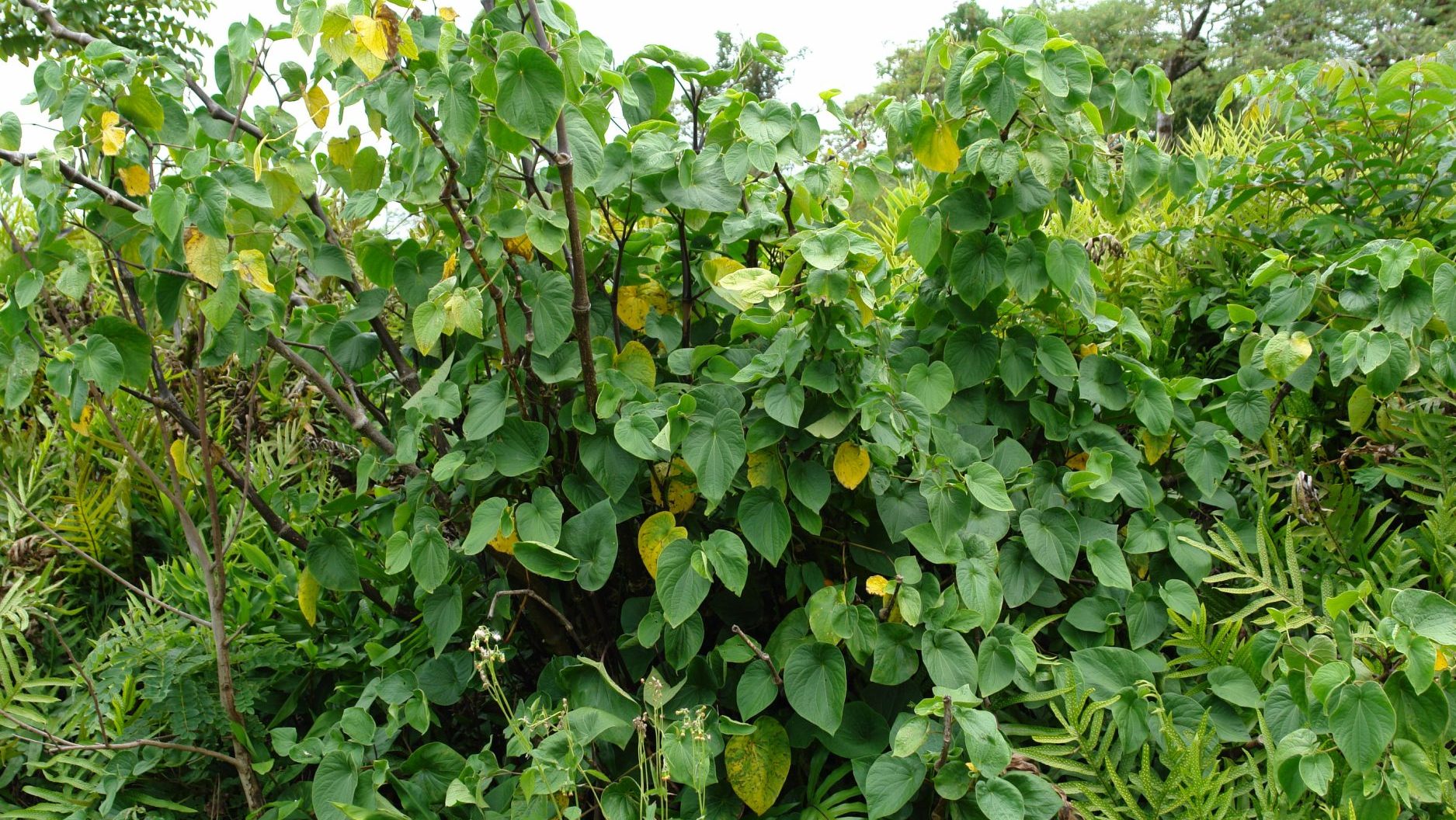
Kava
Piper methysticum
Common & Folk Names
- Kava Kava
- Awa (Polynesian)
- Yaqona (Fijian)
- Sakau (Pohnpeian)
- Intoxicating Pepper
- Kawa (Tongan)
Plant Family
Piperaceae
Geographic Location
Native to the Pacific Islands, particularly Vanuatu, Fiji, Samoa, Tonga, Hawaii, and other islands of Melanesia, Micronesia, and Polynesia. The exact origin is uncertain, though Vanuatu is often cited as a likely centre of origin. Kava does not grow wild; it exists only in cultivation and has been cultivated for over 3,000 years. Now grown in various tropical and subtropical regions including Hawaii, Papua New Guinea, and some parts of Australia and other Pacific rim countries.
Habitat
In cultivation, grows in rich, well-draining soil with high humidity and consistent moisture. Prefers partial shade to filtered sunlight. Thrives in tropical and subtropical climates with high rainfall and warm temperatures year-round. Cannot tolerate frost or temperatures below 10°C.
Growing Conditions
Sun: Partial shade to filtered sunlight; tolerates full sun in very humid climates but generally prefers some shade
Soil: Rich, well-draining, fertile soil; requires consistent moisture but good drainage; pH 5.5-6.5 (slightly acidic); benefits from organic matter
Propagation: Grown from stem cuttings only; kava is sterile and does not produce viable seeds (this supports the theory of ancient cultivation and selection)
Care: Water consistently to maintain moist soil; requires high humidity; protect from strong winds; slow-growing, taking 3-5 years to develop harvestable roots; generally pest and disease-free in suitable climates; requires warm temperatures year-round
NZ Planting Calendar
Sowing (seed): Not applicable; kava does not produce viable seeds
Propagation (cuttings/division): Take stem cuttings year-round in warm climates; root in moist, warm conditions
Planting: Plant rooted cuttings in spring (October-November) in warmest regions only
Growth: Perennial shrub; slow-growing; requires 3-5 years to develop substantial roots for harvest
Flowering: Rarely flowers and does not produce viable seed
Harvest: Roots harvested after 3-5+ years; older plants (5+ years) produce higher quality kava
Note: Extremely challenging to grow in NZ due to cold winters and frost; only possible in warmest, most protected locations (far northern areas with frost protection); requires greenhouse or indoor cultivation in most of NZ; most NZ users purchase imported dried root rather than attempting cultivation; kava cultivation is culturally significant in Pacific Island communities
Harvesting Guidelines
CRITICAL NOTE: Due to liver toxicity concerns, many jurisdictions have restricted kava use. Ensure compliance with local regulations. In NZ, consult current regulations regarding kava importation and use.
Traditional kava harvesting involves digging roots after 3-5+ years of growth. Older plants (5-7+ years) produce higher concentrations of kavalactones and are considered superior quality. The entire root system (including lateral roots and stumps) is harvested. Fresh roots are cleaned, and the outer bark/skin is typically removed (though some traditions include it). The root is then processed immediately when fresh or dried for storage. Traditional preparation uses fresh root pounded or chewed to release kavalactones, mixed with water. Commercial products typically use dried root ground to powder.
Quality Considerations: Noble kava varieties (traditional cultivars used for centuries) are preferred over “tudei” (two-day) varieties, which cause longer-lasting effects and more side effects. Noble varieties produce effects lasting a few hours, whilst tudei varieties can cause effects lasting into the next day. The distinction is important for safety and quality.
Parts Used
- Roots and rhizomes (rootstock)
- Occasionally stumps (basal stems just above roots)
- Aerial parts are NOT used medicinally
Constituents & their Actions
Kava’s therapeutic effects arise primarily from kavalactones (also called kavapyrones), a unique class of compounds found almost exclusively in kava.
Kavalactones:
These are the primary active constituents responsible for kava’s anxiolytic and relaxant effects. Some of the main kavalactones in kava are:
- Kavain
- Dihydrokavain
- Methysticin
- Dihydromethysticin
- Yangonin
- Desmethoxyyangonin
The main actions of these kavalactones are:
- Provide anxiolytic (anti-anxiety) effects through multiple mechanisms
- Produce muscle relaxation
- Exhibit anticonvulsant properties
- Demonstrate analgesic effects
- Support sleep through sedative effects
- May have neuroprotective properties
The kavalactone profile varies between kava varieties (chemotypes), influencing effects and quality.
Flavokavains:
Minor constituents with potential biological activity.
The main actions of flavokavains are:
- May contribute to overall effects
- Some research suggests potential toxicity concerns with certain flavokavains
- Present in higher amounts in aerial parts and poor-quality kava
Actions with Mechanisms
Anxiolytic (Anti-Anxiety):
Kava provides potent anxiolytic effects comparable to pharmaceutical anxiolytics but through different mechanisms. The kavalactones modulate GABA (gamma-aminobutyric acid) receptors, enhancing GABAergic neurotransmission, which in turn reduces neural excitability and produces calming effects. Unlike benzodiazepines (which directly bind GABA receptors), kavalactones appear to act through allosteric modulation and other mechanisms, which may explain the different side effect profile. Kavalactones also affect other neurotransmitter systems including dopamine and serotonin, contributing to mood-stabilising effects. Additionally, kava appears to inhibit noradrenaline reuptake and may affect voltage-gated ion channels. These multiple mechanisms produce significant anxiety reduction without the dependency, tolerance, or cognitive impairment associated with benzodiazepines. Clinical trials demonstrate effectiveness for generalised anxiety disorder (GAD) comparable to pharmaceutical anxiolytics.
Sedative and Hypnotic:
Kava promotes relaxation and sleep through its effects on GABA and other neurotransmitter systems. The sedative effects are dose-dependent—lower doses provide relaxation and anxiety relief without significant sedation, whilst higher doses produce more pronounced sedative and sleep-promoting effects, which in turn helps individuals fall asleep more easily and may improve sleep quality. Unlike many pharmaceutical sedatives, kava typically does not cause morning grogginess or hangover effects when used appropriately. The sleep-promoting effects are particularly useful when anxiety or nervous tension interferes with sleep.
Muscle Relaxant:
Kavalactones produce skeletal muscle relaxation through effects on voltage-gated sodium and calcium channels in muscles and nerves, which in turn reduces muscle tension, spasms, and pain associated with muscle tightness. The muscle relaxant effects are particularly valuable for tension-related muscle pain, muscle spasms, and conditions where anxiety manifests as physical tension. The mechanism is distinct from pharmaceutical muscle relaxants, providing effective muscle relaxation without the severe sedation or impairment often associated with pharmaceutical options.
Analgesic (Pain Relief):
Kava demonstrates analgesic effects through multiple mechanisms. Local anaesthetic effects (particularly with fresh kava causing oral numbness) involve sodium channel blockade, whilst central analgesic effects involve modulation of pain perception in the nervous system. The muscle relaxant and anxiolytic effects contribute additional pain relief by addressing muscle tension and the anxiety that often accompanies chronic pain. Traditional use includes kava for various pain conditions including headaches, muscle pain, and general pain relief.
Anticonvulsant:
Research demonstrates anticonvulsant effects of various kavalactones. The mechanisms involve GABA enhancement, modulation of ion channels, and neuroprotective effects, which in turn raise the seizure threshold and reduce seizure activity. Whilst not typically used as primary anticonvulsant treatment in modern practice, the anticonvulsant properties support kava’s safety profile and suggest potential applications in seizure disorders under professional supervision.
Neuroprotective:
Some research suggests kavalactones may provide neuroprotective effects, protecting neurons from damage through antioxidant effects, modulation of cellular stress responses, and other mechanisms. These properties are less well-characterised than kava’s anxiolytic effects but suggest potential benefits beyond symptom relief.
Main Use
CRITICAL SAFETY WARNING: Kava has been associated with rare but serious cases of liver toxicity, including liver failure requiring transplantation and resulting in death. Many countries have banned or restricted kava products. Use only under professional supervision and with regular liver function monitoring. Never use kava if you have liver disease, consume alcohol regularly, or take medications that affect the liver.
Kava is primarily used for anxiety disorders, particularly generalised anxiety disorder (GAD). Clinical research demonstrates significant anxiety reduction comparable to pharmaceutical anxiolytics (benzodiazepines and buspirone) but without dependency, tolerance, or cognitive impairment. The anxiolytic effects develop relatively quickly (within hours to days) compared to some anxiolytics that require weeks to become effective. Kava addresses the psychological symptoms of anxiety (worry, fear, racing thoughts) and the physical manifestations (muscle tension, restlessness, nervous stomach). The herb is particularly valuable for individuals seeking anxiety relief without the side effects or dependency risks of pharmaceutical options.
For insomnia related to anxiety or stress, kava promotes relaxation and sleep without causing morning grogginess or next-day impairment when used appropriately. The sleep-promoting effects are most pronounced when anxiety or nervous tension interferes with sleep onset or quality.
Kava addresses muscle tension, spasms, and tension-related pain through its muscle relaxant properties. This makes it valuable for stress-related muscle tension, tension headaches, and conditions where anxiety manifests as physical tightness.
In Pacific Island cultures, kava has profound social, ceremonial, and medicinal significance. Traditional use involves communal kava drinking for social bonding, ceremonial occasions, conflict resolution, and as a general relaxant and medicinal herb. The cultural context of traditional use differs significantly from Western medicinal use, with different preparation methods, social settings, and patterns of consumption.
Due to liver toxicity concerns, kava should only be used:
- Under professional supervision with regular liver function monitoring
- For limited durations (typically no more than 3 months without medical reassessment)
- With awareness of early signs of liver problems (jaundice, dark urine, unusual fatigue, nausea)
- When safer alternatives have been considered or proven insufficient
Preparations
CRITICAL: Only use preparations made from peeled roots of noble kava varieties. Avoid products made from aerial parts, leaves, or stems, as these contain potentially hepatotoxic compounds in higher concentrations.
Traditional Water Extract: Traditional preparation involves grinding or pounding fresh or dried root, mixing with water, and straining. The resulting liquid is consumed. This water-based extraction is the traditional method and may be safer than alcohol extracts (though this is debated).
Standardised Extract (Capsules/Tablets): Commercial preparations standardised to kavalactone content (typically 30-70% kavalactones). These provide consistent dosing. Most clinical research uses standardised extracts.
Tincture: Kava extracted in alcohol. Some concerns exist that alcohol extraction may increase hepatotoxicity risk, though evidence is unclear. If using tincture, use products from reputable manufacturers using only peeled roots of noble varieties.
Instant Kava: Commercially available powdered kava that dissolves in water. Convenience product maintaining some traditional preparation aspects.
CRITICAL PREPARATION NOTES:
- Use only products made from peeled roots (peelings contain potentially toxic compounds)
- Use only noble kava varieties (not tudei/two-day varieties)
- Avoid products made from aerial parts (leaves, stems)
- Choose reputable manufacturers with quality testing
- Water extraction may be safer than alcohol extraction
Dosage
CRITICAL: Use only under professional supervision with regular liver function monitoring.
Standardised Extract (70mg kavalactones per capsule): 210-300mg kavalactones daily in divided doses (typically 3 capsules daily)
Traditional Preparation: Varies widely by tradition; traditional ceremonial doses can be quite high, but medicinal use should be conservative
Tincture: Follow manufacturer’s instructions carefully; typical dose 2-4ml, 2-3 times daily
CRITICAL DOSING NOTES:
- Start with lowest effective dose
- Do not exceed recommended dosages
- Use for shortest duration necessary (typically no more than 3 months without reassessment)
- Never combine with alcohol or other liver-stressing substances
- Discontinue immediately if any signs of liver problems appear
Safety & Drug Interactions
CRITICAL LIVER TOXICITY WARNING:
Kava has been associated with rare but severe cases of liver toxicity, including:
- Hepatitis (liver inflammation)
- Cirrhosis (liver scarring)
- Fulminant liver failure requiring transplantation
- Deaths attributed to liver failure
The mechanism of hepatotoxicity is not fully understood. Proposed factors include:
- Individual genetic susceptibility (possibly involving CYP450 enzymes)
- Quality issues (use of aerial parts, poor-quality kava, tudei varieties)
- Extraction methods (alcohol vs. water extraction)
- Combination with other hepatotoxic substances (alcohol, medications)
- Contamination or adulteration
ABSOLUTE CONTRAINDICATIONS:
- Liver Disease: Never use kava if you have any liver disease or elevated liver enzymes
- Alcohol Use: Never combine kava with alcohol or use if you regularly consume alcohol
- Pregnancy and Lactation: Contraindicated due to safety concerns
- Children: Not recommended for children
- Before Surgery: Discontinue at least 2 weeks before surgery due to effects on CNS (central nervous system) and potential drug interactions
WARNING SIGNS – DISCONTINUE IMMEDIATELY AND SEEK MEDICAL ATTENTION:
- Jaundice (yellowing of skin or eyes)
- Dark urine
- Unusual fatigue or weakness
- Nausea or loss of appetite
- Abdominal pain (particularly upper right abdomen)
- Light-coloured stools
Drug Interactions (CRITICAL):
- Alcohol: NEVER combine; increases liver toxicity risk and CNS depression
- Benzodiazepines and Sedatives: May have additive sedative effects; avoid combination
- Medications Metabolised by Liver (CYP450 substrates): Kava affects liver enzymes; potential for numerous drug interactions
- Antidepressants: Case reports of adverse reactions when combined with some antidepressants; use with extreme caution under professional supervision
- Anticonvulsants: May interact; use only under professional supervision
- Levodopa (for Parkinson’s Disease): May reduce effectiveness; avoid combination
- Antiplatelet/Anticoagulant Drugs: Theoretical interaction; use cautiously
Other Safety Concerns:
- Driving and Operating Machinery: Kava can impair coordination, reaction time, and judgment; do not drive or operate machinery
- “Kava Dermopathy”: Chronic heavy use causes dry, scaly skin (ichthyosis); resolves with discontinuation
- Eye Effects: Chronic heavy use may cause visual disturbances; resolves with discontinuation
- Dependency: While physical dependency is not typically reported with medicinal doses, psychological dependency can occur
Regulations:
- Kava has been banned or restricted in many countries due to hepatotoxicity concerns
- Check current regulations in your jurisdiction
- In NZ, regulations may restrict importation or sale; verify current legal status
Scientific Evidence
Anxiety Disorders: Multiple randomised controlled trials and meta-analyses support kava’s effectiveness for generalised anxiety disorder. A Cochrane review concluded that kava extract shows promise for treating anxiety, though concerns about adverse effects led to cautious recommendations. Studies typically use standardised extracts (WS 1490 or similar) containing 210-300mg kavalactones daily for 4-24 weeks. Effect sizes are comparable to benzodiazepines but without dependency or tolerance. However, liver toxicity concerns have limited enthusiasm for kava despite efficacy evidence.
Sleep and Insomnia: Some research supports benefits for sleep quality and sleep onset latency, particularly when anxiety contributes to insomnia. Evidence is less robust than for anxiety.
Mechanisms of Action: Extensive research characterises kavalactones’ effects on GABA receptors, ion channels, neurotransmitter systems, and cellular mechanisms. The anxiolytic mechanisms are well-understood and support therapeutic use.
Hepatotoxicity: Case reports and case series document liver toxicity associated with kava use. However, causation is sometimes unclear due to confounding factors (alcohol use, other medications, pre-existing liver disease). Traditional use in Pacific Island cultures over thousands of years suggests safety when used appropriately (water extraction, noble varieties, no alcohol combination), though traditional use patterns differ from Western medicinal use.
Quality and Safety Research: Studies identifying potentially hepatotoxic compounds in aerial parts and examining differences between noble and tudei varieties support the importance of using only high-quality, properly prepared kava from roots of noble varieties.
Western Energetics
Temperature: Cooling to neutral. Kava’s cooling properties are evident in its ability to calm heat and agitation, reduce inflammation (mild anti-inflammatory effects), and address hot, tense conditions.
Moisture: Neutral to slightly drying. Kava neither significantly moistens nor dries, making it broadly applicable energetically.
Tissue State: Particularly indicated for excitation and tension—conditions characterised by overactivity, agitation, muscle tension, and nervous hyperactivity. Kava excels at calming excessive nervous system activity, reducing muscle tension, and addressing the physical and mental manifestations of stress and anxiety. The deeply relaxing effects address both mental agitation and physical tension.
Taste
Fresh Kava:
- Pungent: A pronounced pungent, almost peppery quality characteristic of the Piperaceae family
- Bitter: Noticeable bitterness contributes to the overall flavour profile
- Numbing: Distinctive numbing sensation in the mouth (local anaesthetic effect) is immediate and characteristic; the tongue and mouth become numb within moments of chewing fresh kava
Prepared Kava Drink:
- Earthy: Strong earthy, muddy flavour that many find unpleasant
- Bitter: Bitterness is pronounced in traditional preparations
- Peppery: The pungent quality persists
- Mouth-Numbing: The characteristic numbing effect is prominent
The flavour is generally not pleasant to those unfamiliar with kava, and the numbing sensation can be disconcerting. Traditional users develop tolerance for the flavour.
Plant Lore
Kava holds profound cultural, social, and spiritual significance throughout Pacific Island cultures, where it has been cultivated and used ceremonially and medicinally for over 3,000 years. The plant features prominently in mythology, social customs, and traditional medicine across Polynesia, Melanesia, and Micronesia.
In many Pacific cultures, kava drinking is a sacred ceremonial practice. Kava ceremonies mark important occasions including births, deaths, marriages, political negotiations, welcoming visitors, conflict resolution, and religious observances. The preparation and serving of kava follows elaborate protocols varying by culture, with specific rituals, bowl designs, serving orders, and ceremonial language. Breaking kava etiquette can be a serious breach of social norms.
Different Pacific cultures have distinct kava traditions. In Fiji, the “yaqona” ceremony is central to social and political life. In Tonga, “kava clubs” are important social institutions. In Vanuatu, kava (“kava bars” or “nakamals”) consumption is a nightly social ritual. In Samoa, kava ceremonies welcome chiefs and honoured guests. Each culture has specific varieties, preparation methods, and social contexts for kava use.
Various myths explain kava’s origin. In many Polynesian cultures, legends tell of kava arising from the body of a sacrificed person, making the plant sacred and connecting it to themes of sacrifice, transformation, and the relationship between humans and plants. The details vary between cultures, but the association with sacrifice and sacredness is widespread.
Kava’s botanical peculiarity—being sterile and unable to reproduce sexually—supports the theory that it was developed through careful selection and vegetative propagation over thousands of years of cultivation. The plant exists only in cultivation, representing one of humanity’s ancient horticultural achievements.
The importance of kava in traditional societies extended beyond ceremony to diplomacy and conflict resolution. “Kava circles” provided neutral spaces for discussion, negotiation, and reconciliation. The calming, social effects of kava facilitated difficult conversations and promoted peaceful resolution of disputes.
Traditional medicine throughout the Pacific used kava for various ailments including pain relief, muscle relaxation, urinary tract problems, respiratory complaints, and general wellness. The ceremonial and medicinal uses were intertwined, with healing often occurring in social and spiritual contexts.
The introduction of kava to Western markets in the late 20th century as an anxiolytic herb represents a dramatic shift from traditional use. The transformation from communal, ceremonial beverage to individual, medicinal capsule illustrates the complex dynamics of traditional knowledge entering global markets.
The liver toxicity controversy that led to bans and restrictions in many countries devastated kava industries in Pacific Island nations, where kava cultivation and export represented important income sources. This economic impact affected communities dependent on kava production.
Additional Information
Quality is Critical for Safety: Given hepatotoxicity concerns, quality is paramount:
- Use only products from reputable manufacturers with rigorous quality control
- Ensure products use only peeled roots of noble kava varieties
- Avoid products containing aerial parts or stems
- Look for third-party testing confirming noble variety status
- Choose products that specify the chemotype (kavalactone profile)
Noble vs. Tudei Varieties: Noble varieties (traditional cultivars) produce effects lasting a few hours with pleasant effects and minimal side effects. Tudei (two-day) varieties produce longer-lasting effects (into the next day), more nausea, and more side effects. Only noble varieties should be used medicinally. Analytical testing can distinguish varieties.
Traditional Use vs. Medicinal Use: Traditional Pacific Island use differs significantly from Western medicinal use:
- Traditional: water extraction, social/ceremonial context, fresh or recently dried root, specific varieties, no alcohol combination
- Western medicinal: standardised extracts (often alcohol-based), individual therapeutic use, capsules/tablets, variable quality control
These differences may explain some toxicity issues, as traditional use over millennia suggests safety when done properly.
The Liver Toxicity Debate: Controversy exists regarding kava hepatotoxicity.
Some argue that:
- Traditional use over thousands of years demonstrates safety when used properly
- Cases often involve confounding factors (alcohol, medications, poor-quality kava)
- Hepatotoxicity may result from use of aerial parts, poor extraction methods, or non-noble varieties
- Individual genetic susceptibility may predispose some people to liver reactions
Others argue that:
- The mechanism of toxicity is not fully understood
- Individual susceptibility makes risk unpredictable
- The potential severity (liver failure, death) warrants extreme caution
- Safer alternatives exist for anxiety treatment
Current Perspective: Most healthcare providers and regulatory agencies recommend extreme caution with kava, use only under professional supervision with liver function monitoring, and preference for safer alternatives when possible.
Alternatives to Kava: Given safety concerns, consider these alternatives for anxiety:
- Passionflower (gentler anxiolytic without liver concerns)
- Valerian (for anxiety and sleep, excellent safety profile)
- Lemon balm (mild anxiolytic and sleep aid)
- Ashwagandha (adaptogenic anxiety and stress support)
- Skullcap (nervine and anxiolytic)
These herbs have excellent safety profiles and can be used long-term without the concerns associated with kava.
Sources
Bone, K., & Mills, S. (2013). Principles and Practice of Phytotherapy: Modern Herbal Medicine (2nd ed.). Churchill Livingstone.
Mills, S., & Bone, K. (2005). The Essential Guide to Herbal Safety. Elsevier.
Pittler, M. H., & Ernst, E. (2003). Kava extract for treating anxiety. Cochrane Database of Systematic Reviews, 2003(1), CD003383.
Sarris, J., LaPorte, E., & Schweitzer, I. (2011). Kava: A comprehensive review of efficacy, safety, and psychopharmacology. Australian & New Zealand Journal of Psychiatry, 45(1), 27-35.
Teschke, R., Sarris, J., & Lebot, V. (2011). Kava hepatotoxicity solution: A six-step approach. Phytomedicine, 18(6), 464-474.
Clouatre, D. L. (2004). Kava kava: Examining new reports of toxicity. Toxicology Letters, 150(1), 85-96.
Singh, Y. N., & Singh, N. N. (2002). Therapeutic potential of kava in the treatment of anxiety disorders. CNS Drugs, 16(11), 731-743.
Whitton, P. A., Lau, A., Salisbury, A., Whitehouse, J., & Evans, C. S. (2003). Kava lactones and the kava-kava controversy. Phytochemistry, 64(3), 673-679.
Stevinson, C., Huntley, A., & Ernst, E. (2002). A systematic review of the safety of kava extract in the treatment of anxiety. Drug Safety, 25(4), 251-261.
Russmann, S., Barguil, Y., Cabalion, P., Kritsanida, M., Duhet, D., & Lauterburg, B. H. (2003). Hepatic injury due to traditional aqueous extracts of kava root in New Caledonia. European Journal of Gastroenterology & Hepatology, 15(9), 1033-1036.
Lebot, V., & Lévesque, J. (1989). The origin and distribution of kava (Piper methysticum Forst. f., Piperaceae): A phytochemical approach. Allertonia, 5(2), 223-280.
Fu, P. P., Xia, Q., Guo, L., Yu, H., & Chan, P. C. (2008). Toxicity of kava kava. Journal of Environmental Science and Health, Part C, 26(1), 89-112.
Mathews, J. D., Riley, M. D., Fejo, L., Munoz, E., Milns, N. R., Gardner, I. D., Powers, J. R., Ganygulpa, E., & Gununuwawuy, B. J. (1988). Effects of the heavy usage of kava on physical health: Summary of a pilot survey in an Aboriginal community. Medical Journal of Australia, 148(11), 548-555.
Teschke, R., Qiu, S. X., & Lebot, V. (2011). Herbal hepatotoxicity by kava: Update on pipermethystine, flavokavain B, and mould hepatotoxins as primarily assumed culprits. Digestive and Liver Disease, 43(9), 676-681.
Disclaimer: This monograph is for educational purposes only and is not medical advice. Please consult with a qualified healthcare practitioner before using any herbal remedy, especially if you are pregnant, nursing, taking medication, or have a known medical condition.
CRITICAL: Kava has been associated with serious liver toxicity including liver failure and death. Use only under professional supervision with regular liver function monitoring. Never use if you have liver disease, consume alcohol, or take medications affecting the liver. Check current legal status in your jurisdiction.