
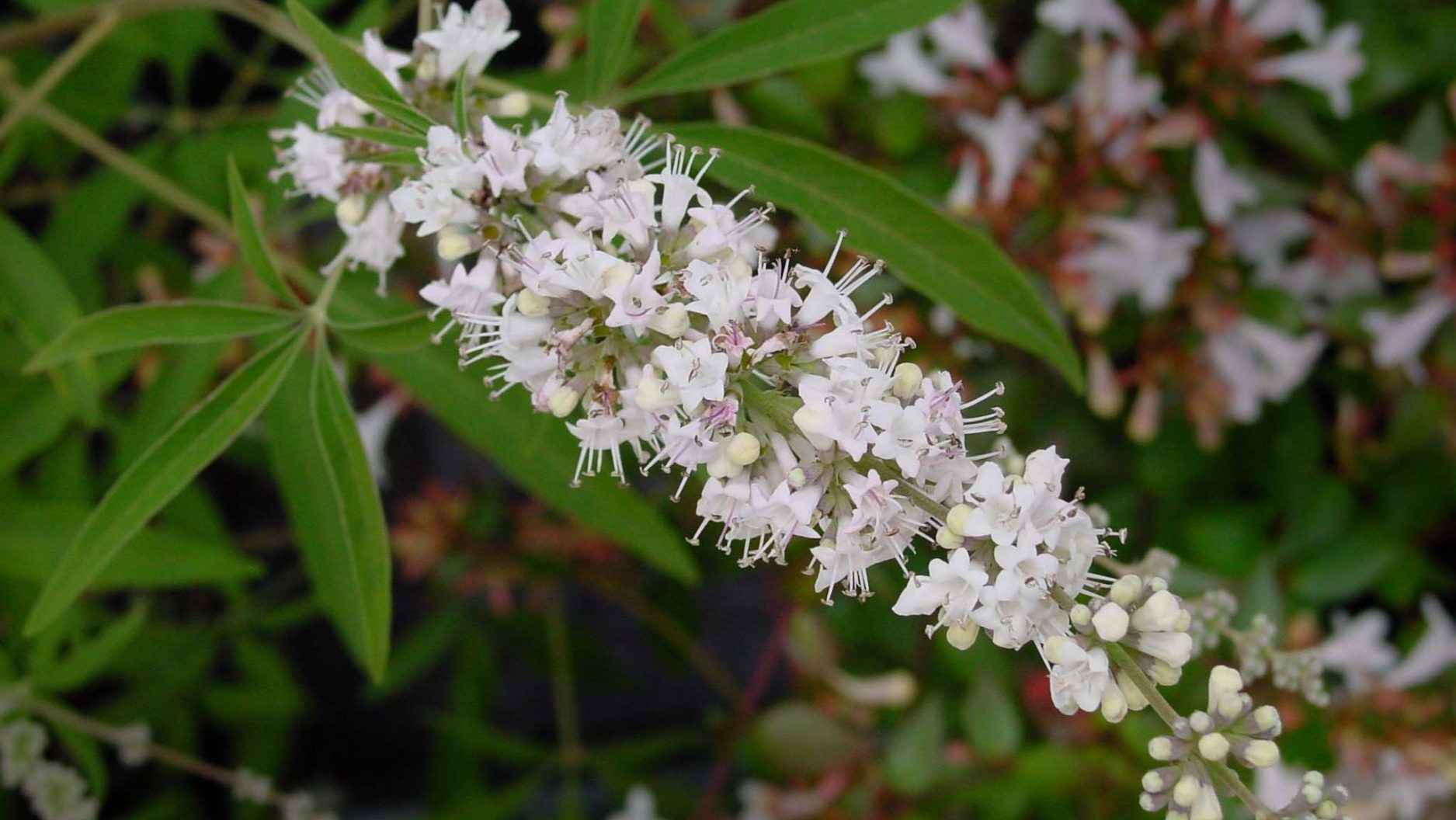
Vitex
Vitex agnus-castus
Common & Folk Names
- Chasteberry
- Chaste Tree
- Monk’s Pepper
- Abraham’s Balm
- Wild Pepper
- Sage Tree (unrelated to actual Sage)
Plant Family
Lamiaceae (Mint family) – though some taxonomic systems place it in Verbenaceae
Geographic Location
Native to Mediterranean regions and western Asia, from southern Europe through North Africa and the Middle East to Central Asia. Widely naturalised in warm temperate and subtropical regions worldwide. Cultivated in southern Europe, parts of Asia, Australia, and to a limited extent in New Zealand.
Habitat
Grows naturally along stream banks, river edges, and moist areas in warm temperate climates. Also found in drier habitats once established. Prefers full sun and tolerates a wide range of soil conditions but thrives in well-drained soils.
Growing Conditions
Sun: Full sun essential. Tolerates part shade but flowers and fruit production diminish
Soil: Adaptable to most soil types. Prefers well-drained, fertile loam but tolerates poor, sandy, or clay soils once established. pH 6.0-8.0. Drought-tolerant once mature
Propagation: Seeds (require stratification and germinate slowly), semi-hardwood cuttings in summer, or purchased plants. Seeds benefit from soaking in warm water 24 hours before planting
Care: Low-maintenance once established. Prune in late winter/early spring to maintain shape and encourage new growth. Can grow 2-4 metres tall and equally wide if not pruned. In New Zealand, grows well in northern regions, Hawke’s Bay, Nelson/Marlborough, and other warm areas with Mediterranean-like climates. May struggle in cold, wet southern regions
New Zealand Planting Calendar
Warm/Subtropical Regions (Northland, Auckland, Coastal Bay of Plenty, Gisborne):
- Spring (Sept-Nov): Ideal planting time for container plants. Sow stratified seeds in early spring. Take semi-hardwood cuttings in late spring
- Summer (Dec-Feb): Continue planting container-grown plants. Maintain moisture for establishing plants. Harvest flowers and developing berries
- Autumn (Mar-May): Plant container-grown specimens. Harvest ripe berries in autumn. Collect seeds for propagation
- Winter (Jun-Aug): Prune established plants in late winter. Plan propagation for spring
Temperate Regions (Waikato, Taranaki, Manawatu, Hawke’s Bay, Nelson, Canterbury coastal):
- Spring (Sept-Nov): Best planting window. Sow seeds after last frost. Take cuttings
- Summer (Dec-Feb): Establish young plants. Water during dry periods. Harvest flowers/berries
- Autumn (Mar-May): Plant before first frost. Collect ripe berries
- Winter (Jun-Aug): Prune in late winter. Mulch around plants in colder areas
Cool/Highland Regions (Central Plateau, Otago, Southland):
- Vitex is marginal in these regions and may not thrive. If attempting, plant in warmest, most protected location with excellent drainage. Expect slow growth and limited fruiting
Harvesting Guidelines
The ripe berries (fruits) are the primary medicinal part. Harvest berries in autumn when fully ripe – they change from green to dark purple/black and have a pepper-like appearance. Berries should be fully coloured but not shriveled. Harvest entire flower clusters when berries are ripe, then strip berries from stems. Dry berries thoroughly in a well-ventilated area out of direct sunlight until completely dry and hard. Properly dried berries can be stored whole or ground as needed. Store in airtight containers away from light and moisture. Dried berries maintain potency for 1-2 years. Some herbalists also harvest the leaves, though berries are far more commonly used and studied.
Parts Used
- Berries/Fruits (primary and preferred medicinal part)
- Leaves (occasionally, though less common and less studied)
Constituents & their Actions
Vitex’s therapeutic properties arise from a complex mixture of iridoid glycosides, diterpenes, flavonoids, and essential oils that work synergistically to modulate the hypothalamic-pituitary-gonadal axis and balance reproductive hormones, particularly through dopaminergic pathways.
Iridoid Glycosides:
These compounds are considered key actives contributing to hormonal modulation effects. Some of the main iridoid glycosides in vitex are:
- Aucubin
- Agnuside (characteristic compound)
- Eurostoside
The main actions of these iridoid glycosides are:
- Dopaminergic activity (bind to dopamine receptors)
- Anti-inflammatory effects
- Antioxidant properties
- Contribute to prolactin-lowering effects
Diterpenes:
Complex compounds with significant biological activity. Some of the main diterpenes in vitex are:
- Rotundifuran
- Vitexilactone
- 6β,7β-diacetoxy-13-hydroxy-labda-8,14-diene
The main actions of these diterpenes are:
- Bind to dopamine D2 receptors (central to therapeutic effects)
- Opioid receptor binding (μ and κ receptors)
- Modulate neurotransmitter systems
- Anti-inflammatory activity
Flavonoids:
Polyphenolic compounds with antioxidant and various physiological effects. Some of the main flavonoids in vitex are:
- Casticin (characteristic compound)
- Penduletin
- Chrysosplenol D
- Isovitexin
- Orientin
The main actions of these flavonoids are:
- Antioxidant protection
- Anti-inflammatory effects
- Possible dopaminergic activity
- General vascular and tissue support
Essential Oil (0.5-2% of dried berries):
Volatile compounds contributing to aroma and activity. Main components include:
- 1,8-cineole (eucalyptol)
- Limonene
- Sabinene
- α-pinene
- β-pinene
The main actions of essential oils are:
- Aromatherapeutic effects
- Mild antimicrobial properties
- Contribute to overall pharmacological profile
- Pleasant peppery aroma
Linolenic Acid and Other Fatty Acids:
Found in the seed/fruit oil. The main action is:
- Nutritive support
- May contribute to anti-inflammatory effects
Actions with Mechanisms
Dopaminergic and Prolactin-Lowering (Primary Mechanism):
This is vitex’s most important and well-characterised action. The diterpenes (particularly rotundifuran and related compounds) and some iridoid glycosides act as dopamine D2 receptor agonists, meaning they bind to and activate dopamine receptors in the brain, particularly in the anterior pituitary gland, which in turn mimics the effects of dopamine. Dopamine physiologically inhibits prolactin secretion from the anterior pituitary – this is the normal regulatory mechanism. When vitex compounds activate D2 receptors, they suppress excessive prolactin release, which in turn brings elevated prolactin levels back toward normal. This prolactin-lowering effect is crucial because hyperprolactinemia (excess prolactin) can cause irregular menstrual cycles, absent ovulation, luteal phase defects, breast tenderness, PMS symptoms, and fertility issues. By normalising prolactin levels, vitex helps restore normal menstrual cycles, supports healthy ovulation, improves luteal phase function, and alleviates PMS symptoms related to excess prolactin. Importantly, vitex appears to act as a dopaminergic amphoteric – it modulates dopamine activity bidirectionally, increasing it when low and potentially modulating it when excessive, which in turn helps achieve hormonal balance rather than simply suppressing or stimulating.
Progesterone-Supporting and Corpus Luteum Function:
While vitex does NOT contain progesterone or directly supply progesterone, it supports the body’s own progesterone production through the prolactin-lowering mechanism described above. High prolactin levels interfere with corpus luteum function (the corpus luteum is the structure formed after ovulation that produces progesterone during the luteal phase), which in turn leads to inadequate progesterone production and luteal phase defects. By reducing excessive prolactin, vitex allows the corpus luteum to function properly, which in turn enhances progesterone production during the luteal phase. Research demonstrates that vitex increases progesterone levels in women with luteal phase defects, normalises luteal phase length, and improves the progesterone to estrogen ratio. This progesterone-supporting effect is indirect but clinically significant – vitex helps the body produce its own progesterone more effectively rather than providing exogenous hormones.
Menstrual Cycle Regulator:
Vitex helps regulate irregular menstrual cycles through multiple mechanisms. The prolactin-lowering effect addresses hormonal imbalances that disrupt normal cycling. The support for proper ovulation and corpus luteum function ensures the hormonal signals necessary for regular menstruation. Vitex appears to modulate the hypothalamic-pituitary-ovarian axis, which in turn helps coordinate the complex hormonal interplay required for normal menstrual cycling. Studies show vitex effective for treating amenorrhea (absent periods), oligomenorrhea (infrequent periods), polymenorrhea (too-frequent periods), and anovulatory cycles. The effects are gradual – typically requiring 2-3 months of consistent use to see significant cycle regulation, and optimal benefits often appear after 6 months of use. This delayed response reflects the time needed to re-establish normal hormonal patterns and ovulatory function.
PMS and PMDD Symptom Relief:
Multiple high-quality clinical trials demonstrate vitex’s effectiveness for premenstrual syndrome (PMS) and premenstrual dysphoric disorder (PMDD). The prolactin-lowering effect addresses breast tenderness, bloating, and mood symptoms that correlate with elevated prolactin. The progesterone-supporting action helps balance the estrogen dominance that contributes to PMS symptoms. The dopaminergic activity may directly improve mood symptoms through effects on neurotransmitter balance. A landmark randomised controlled trial by Schellenberg et al. (2012) found that vitex extract significantly reduced total PMS symptoms compared to placebo, with particular effectiveness for irritability, mood changes, anger, headache, breast fullness, and bloating. Response rates showed that over 60% of women experienced at least 50% reduction in PMS symptoms. The effects build over time, with increasing benefits over 3 cycles of use.
Fertility Support (Particularly for Luteal Phase Defects):
Vitex supports fertility primarily in women with luteal phase defects – when the luteal phase (the time between ovulation and menstruation) is too short (less than 10 days) or progesterone production is inadequate to support early pregnancy. By enhancing corpus luteum function and progesterone production, vitex helps create hormonal conditions conducive to conception and early pregnancy maintenance. Research by Gerhard et al. (1998) demonstrated that vitex significantly improved fertility in women with luteal phase defects and hyperprolactinemia, with pregnancy rates more than double those of placebo. Vitex is particularly valuable for women with recurrent early miscarriage potentially related to luteal phase insufficiency. However, it’s important to note that vitex addresses specific hormonal patterns (primarily excess prolactin and luteal phase defects) rather than being a general fertility tonic – effectiveness depends on the underlying cause of infertility.
Mastalgia (Breast Pain) Relief:
Vitex is highly effective for cyclic mastalgia (breast pain and tenderness related to the menstrual cycle), which is often associated with elevated prolactin and hormonal imbalance. A randomised controlled trial by Halaska et al. (1999) demonstrated that vitex significantly reduced breast pain intensity and duration compared to placebo, with clinical improvement seen in over 70% of women taking vitex. The prolactin-lowering mechanism directly addresses the hormonal cause of cyclic breast tenderness. Effects typically appear within 1-2 menstrual cycles, with continued improvement over time. Vitex is less effective for non-cyclic mastalgia (breast pain unrelated to menstrual cycles), as this often has different underlying causes.
Anti-inflammatory and Antioxidant:
The flavonoids, iridoid glycosides, and other phenolic compounds provide anti-inflammatory effects by inhibiting pro-inflammatory mediators, reducing oxidative stress, and protecting tissues from inflammatory damage, which in turn supports overall reproductive health and may contribute to alleviating menstrual cramps and pelvic discomfort. The antioxidant properties protect reproductive tissues from oxidative damage, which in turn supports healthy ovarian function and egg quality.
Mild Sedative and Anxiolytic (Secondary Effect):
The opioid receptor binding activity of some diterpenes may contribute mild sedative and anxiolytic (anti-anxiety) effects, which in turn may help address PMS-related anxiety, irritability, and sleep disturbances. However, this is a secondary rather than primary use, and vitex is primarily valued for hormonal rather than nervine effects.
Main Use
Vitex’s primary use is for treating premenstrual syndrome (PMS) and premenstrual dysphoric disorder (PMDD), where it addresses the full spectrum of physical and emotional symptoms including irritability, mood swings, anger, anxiety, breast tenderness, bloating, headaches, and sleep disturbances. Multiple well-designed clinical trials support this use, showing significant symptom reduction in 60-70% of women, particularly for breast tenderness, mood symptoms, and overall PMS severity. Vitex is most effective when used consistently for at least 3 menstrual cycles, with benefits often continuing to improve over 6 months of use.
For menstrual irregularities, vitex helps regulate cycles in women experiencing amenorrhea (absent periods), oligomenorrhea (infrequent, irregular periods), or polymenorrhea (too-frequent periods), particularly when these irregularities stem from luteal phase defects, mild hyperprolactinemia, or hormonal imbalance rather than structural problems. The herb supports the body’s natural hormonal rhythms, encouraging regular ovulation and balanced menstrual cycling.
Vitex supports fertility in specific contexts – primarily in women with luteal phase defects, mild hyperprolactinemia, or irregular/anovulatory cycles. It helps create optimal hormonal conditions for conception and early pregnancy maintenance by supporting progesterone production and corpus luteum function. However, vitex is not a cure-all for infertility and works best when the underlying issue is hormonal imbalance rather than structural problems, advanced age-related fertility decline, or male factor infertility.
For cyclic mastalgia (menstrual-related breast pain and tenderness), vitex provides significant relief by reducing prolactin levels and supporting hormonal balance. This is one of vitex’s most reliably effective applications.
Vitex is also used to support the transition off hormonal birth control, helping the body re-establish natural hormonal rhythms and regular menstrual cycles after years of contraceptive use. It can help address post-pill amenorrhea and hormonal imbalances that sometimes occur when discontinuing contraceptives.
The herb has traditional use for managing perimenopause symptoms, particularly irregular cycles and hormonal fluctuations that occur during the transition to menopause, though research for this application is more limited than for PMS.
Preparations
Standardised Extract (Preferred for Clinical Applications): Commercial vitex supplements typically provide 20-40mg of standardised extract equivalent to 120-240mg of dried fruit. Follow manufacturer’s recommendations. This is the preparation used in most clinical research
Tincture: Fresh or dried berries, 1:5 in 60-70% alcohol. Take 2-5 mL (40-100 drops) once daily, preferably in the morning. Consistent daily use is important
Decoction: 1-2 teaspoons (2-5 grams) of dried, crushed berries per cup of water. Simmer 10-15 minutes. Drink 1 cup daily in the morning. The peppery taste can be strong
Capsules/Tablets: 500-1000mg of dried berry powder daily, or follow manufacturer’s recommendations for standardised products
Powder: Ground dried berries can be mixed into food or taken in capsules. 500-1000mg daily
Timing: Take vitex once daily in the morning for best results. Consistent daily use regardless of menstrual cycle phase is recommended (do not start and stop with the cycle)
Dosage
Standardised Extract: 20-40mg daily (equivalent to 120-240mg dried fruit), typically taken as a single morning dose
Dried Berries (Decoction or Capsules): 500-1000mg daily
Tincture (1:5, 60-70% alcohol): 2-5 mL (40-100 drops) once daily in the morning
Duration: Effects are cumulative and gradual. Minimum 3 months recommended to assess effectiveness. Many practitioners recommend 6 months to 1 year for optimal benefits, particularly for fertility support and menstrual cycle regulation. For PMS, some improvement may be seen after 1-2 cycles, but benefits typically increase over 3+ cycles
Long-term Use: Vitex can be used long-term (months to years) under professional guidance. Some practitioners recommend periodic breaks (e.g., 1 month off every 6-12 months) though this is not universally agreed upon
Safety & Drug Interactions
Vitex has an excellent safety profile with minimal side effects in most users. However, certain precautions must be observed.
Pregnancy – Generally Contraindicated, Nuanced:
The traditional approach is to discontinue vitex once pregnancy is confirmed. This conservative recommendation exists because vitex’s effects on hormones during pregnancy are not well-studied, and it’s considered prudent to avoid any potential interference with pregnancy hormones. HOWEVER, some European practitioners continue vitex through the first trimester in women with recurrent early miscarriage potentially related to luteal phase defects, under close medical supervision. The rationale is that vitex’s progesterone-supporting effects may help sustain early pregnancy. This is a clinical decision that should only be made with qualified medical supervision. The safest general recommendation is: discontinue vitex once pregnancy is confirmed unless specifically advised otherwise by a healthcare provider familiar with both your history and herbal medicine.
Lactation:
Vitex’s effects during breastfeeding are complex. Because vitex lowers prolactin, and prolactin is essential for milk production, there is theoretical concern that vitex could reduce milk supply. HOWEVER, clinical experience is mixed – some women report no change in supply, and traditional European use includes vitex to help regulate post-partum hormones. The safest recommendation is to avoid vitex during established breastfeeding unless working with a qualified practitioner. Once breastfeeding is being phased out and return to normal menstrual cycles is desired, vitex may be appropriate.
Hormonal Medications and Birth Control:
Vitex may interact with hormonal contraceptives (birth control pills, patches, rings, IUDs with hormones), potentially reducing their effectiveness or causing irregular bleeding. Because vitex modulates the hypothalamic-pituitary-ovarian axis, it can interfere with the suppression of natural hormonal cycling that contraceptives aim to achieve. Do not use vitex while on hormonal contraceptives without medical supervision. If using vitex to transition off birth control, wait until after completely discontinuing contraceptives before starting vitex. Vitex may also interact with hormone replacement therapy (HRT) – use only under medical supervision in this context.
Dopamine Agonist/Antagonist Medications:
Because vitex acts as a dopamine D2 receptor agonist, it may interact with medications that affect dopamine pathways:
- Dopamine antagonists (antipsychotics including haloperidol, risperidone, olanzapine, quetiapine; metoclopramide for nausea; domperidone): Vitex may oppose their effects. Do not combine without medical supervision
- Dopamine agonists (pramipexole, ropinirole for Parkinson’s disease; cabergoline, bromocriptine for hyperprolactinemia): Potential additive effects. Medical supervision required
- Parkinson’s medications (levodopa, carbidopa): Theoretical interaction. Consult healthcare provider
Hormone-Sensitive Conditions:
Use caution with vitex in cases of:
- Hormone-sensitive cancers (breast, uterine, ovarian): While vitex does not contain estrogen, its effects on the hormonal axis warrant caution. Consult oncologist before use
- Endometriosis, uterine fibroids: Theoretical hormonal effects suggest caution, though some practitioners use vitex for these conditions. Professional guidance recommended
- Polycystic ovary syndrome (PCOS): Vitex may benefit some PCOS presentations (particularly with elevated prolactin) but not others. Professional assessment recommended
In Vitro Fertilisation (IVF) and Assisted Reproduction:
Discontinue vitex at least 1-2 months before starting IVF protocols, as it may interfere with the precise hormonal control required for assisted reproduction. Consult with fertility specialist.
Men:
While vitex is traditionally associated with women’s health, men have also used it historically (hence “monk’s pepper” – supposedly used to reduce libido in celibate monks). The hormonal effects in men are not well-studied. Some practitioners use vitex for male hyperprolactinemia, but this should only be done under professional supervision.
Side Effects:
Most people tolerate vitex very well. Possible mild side effects include:
- Digestive upset, nausea (take with food to minimise)
- Headache (usually transient)
- Skin rash or acne (rare)
- Changes in menstrual flow (usually normalisation, but occasionally temporary irregularity as the body adjusts)
- Dizziness (very rare)
If side effects persist or are bothersome, reduce dose or discontinue use.
Duration Considerations:
Vitex is considered safe for long-term use (many months to years), though some practitioners recommend periodic breaks. If using for more than 12-18 months continuously, consult with an herbalist or healthcare provider for reassessment.
Quality Concerns:
Purchase vitex from reputable suppliers. Some products may be adulterated or contain incorrect species. Look for products with third-party testing and quality assurance.
Scientific Evidence
Premenstrual Syndrome (PMS) and PMDD: Multiple high-quality randomised controlled trials support vitex’s effectiveness for PMS. A large study by Schellenberg et al. (2012) published in the BMJ Open found that vitex extract significantly reduced total PMS symptoms compared to placebo, with response rates over 60% (defined as ≥50% symptom reduction). The study showed particular effectiveness for irritability, mood swings, anger, headache, and breast tenderness. A systematic review and meta-analysis by Dante and Facchinetti (2011) concluded that vitex is an effective treatment for PMS, with clinical improvement seen in 50-70% of women across multiple trials. A double-blind RCT by Atmaca et al. (2003) demonstrated vitex’s effectiveness specifically for PMDD, showing significant improvement in psychological symptoms including depression, anxiety, and mood swings.
Mastalgia (Breast Pain): Research by Halaska et al. (1999) demonstrated that vitex significantly reduced cyclic mastalgia intensity compared to placebo, with clinical improvement in over 70% of women. The effects were attributed to prolactin-lowering mechanisms. Multiple European studies confirm these findings.
Fertility and Luteal Phase Defects: Gerhard et al. (1998) conducted a study showing that vitex significantly improved fertility in women with luteal phase defects and secondary amenorrhea, with pregnancy rates twice as high in the vitex group compared to placebo. Another study by Westphal et al. (2006) found that vitex increased progesterone levels and luteal phase length in women with luteal insufficiency.
Menstrual Cycle Irregularities: Several clinical studies demonstrate vitex’s effectiveness for regulating menstrual cycles in women with oligomenorrhea, amenorrhea, and polymenorrhea. The effects appear related to normalisation of prolactin levels and support for healthy ovulatory cycles.
Mechanisms of Action: The dopaminergic activity and D2 receptor binding of vitex constituents (particularly diterpenes) has been confirmed in multiple laboratory studies. The prolactin-lowering effect has been demonstrated in both animal and human research. The herb’s ability to increase luteal phase progesterone has been documented in clinical trials measuring hormone levels directly.
Safety Studies: Long-term safety studies in Germany (where vitex is widely used) demonstrate excellent tolerability with minimal side effects. A large observational study of over 1,500 women using vitex showed side effect rates around 1-2%, with most effects being mild and transient.
Western Energetics
Temperature: Slightly warming to neutral. Vitex is not strongly heating or cooling, making it suitable for most constitutional types. The warming quality supports circulation and helps move stagnation
Moisture: Drying. Vitex has gentle drying properties through its astringent and regulating actions, making it suitable for damp, congested conditions but potentially requiring balancing herbs in very dry individuals
Tissue State: Primarily indicated for stagnation and tension, particularly when hormonal imbalance creates congestion, spasm, and blocked flow in the reproductive system. Vitex excels at moving stuck hormonal patterns, releasing tension in the pelvic region, and restoring proper flow and rhythm to menstrual cycles. Also addresses atrophy/depletion when luteal phase defects create inadequate progesterone and poor corpus luteum function – the herb supports the body’s capacity to produce adequate progesterone rather than supplying it externally
Taste
Pungent/Peppery: The dominant taste is distinctly pungent and peppery, explaining the common name “monk’s pepper.” This pungent quality contributes to vitex’s ability to move stagnation, stimulate circulation, and enhance activity in sluggish systems
Bitter: A clear bitter component supports vitex’s regulatory and clearing actions. Bitter taste stimulates, clears, and regulates, appropriate for addressing hormonal stagnation and excess
Aromatic: The essential oil content provides an aromatic quality that contributes to the pungent character and overall therapeutic profile
Slightly Warming: A gentle warming sensation reflects the herb’s warming energetic and circulatory-enhancing properties
The pungent, bitter, aromatic taste profile aligns perfectly with vitex’s therapeutic actions – moving stagnation, regulating excess, and restoring proper flow and rhythm.
Plant Lore
Vitex has a fascinating history spanning thousands of years across Mediterranean and Middle Eastern cultures, with uses ranging from sacred ritual to sexual suppression to women’s health support.
The genus name “Vitex” may derive from the Latin “vieo” meaning “to weave” or “to bind,” referring to the flexible branches used in basket-making and wattle construction. The species name “agnus-castus” translates to “chaste lamb,” reflecting the plant’s reputation as an anaphrodisiac (libido suppressant).
Ancient Greek writings mention vitex extensively. In Homer’s Iliad, the plant is associated with chastity and purity. The Greeks called it agnos (chaste, pure) and lygos (pliant twig). Women celebrating the festival of Thesmophoria in honour of Demeter would strew their beds with vitex branches and consume the fruits, believing it would help them remain chaste during the sacred period of the festival.
The common name “Monk’s Pepper” derives from medieval European monastic tradition. Monks reportedly consumed vitex berries believing they would reduce sexual desire and help maintain celibacy. The peppery-tasting berries were ground and used as a seasoning (replacing expensive black pepper) and supposedly as an anaphrodisiac. Whether vitex genuinely suppressed libido or whether the association came from its ritual use in contexts requiring chastity remains unclear – modern research doesn’t support significant libido-suppressing effects.
Dioscorides, the famous Greek physician (40-90 CE), recommended vitex for inflammation and swelling of the spleen and uterus. He described its “cooling” effects and use for promoting menstruation. Pliny the Elder (23-79 CE) wrote extensively about vitex’s uses in his Natural History, mentioning its ability to check “venereal desires.”
In medieval European herbalism, vitex was associated with the Virgin Mary and purity. It was grown in monastery gardens both for its symbolic association with chastity and its practical uses. The flexible branches were woven into wreaths and garlands for religious ceremonies.
The shift to vitex’s modern use for women’s hormonal health appears to have developed primarily in German phytotherapy during the early-to-mid 20th century. German physicians began using vitex extract systematically for menstrual disorders, PMS, and fertility issues, which in turn led to the clinical research that forms the evidence base today. This evidence-based application represents a departure from the ancient anaphrodisiac use and demonstrates how traditional uses can evolve as understanding deepens.
In traditional symbolism, vitex represents purity, protection, and chastity. In some Mediterranean cultures, branches were placed above doorways for protection or used in purification rituals.
Interestingly, the historical focus on chastity and sexual suppression contrasts sharply with modern use for fertility support – a reminder that traditional uses may reflect cultural values as much as pharmacological effects.
Additional Information
Vitex Species Confusion:
Several Vitex species exist worldwide, but Vitex agnus-castus is the species used medicinally in Western herbalism and the subject of clinical research. Vitex negundo (five-leaved chaste tree) is used in traditional Asian medicine but has different constituents and uses – it is NOT interchangeable. Vitex trifolia (simpleleaf chastetree) is another Asian species with distinct applications. Always ensure you’re using Vitex agnus-castus for the applications described in this monograph.
Growing Vitex in New Zealand:
Vitex grows successfully in warm, sunny New Zealand regions including Northland, Auckland, Bay of Plenty, Gisborne, Hawke’s Bay, and Nelson/Marlborough. It requires full sun and good drainage. Once established, it’s drought-tolerant and low-maintenance. The shrub/small tree produces attractive spikes of lavender-blue flowers in summer, followed by small peppery berries in autumn. It can be pruned as a shrub (2-3 metres) or allowed to grow as a small tree (3-5 metres). Not recommended for cold, wet southern regions.
Harvesting for Personal Use:
If growing vitex for personal herbal medicine, harvest fully ripe berries in autumn (typically March-May in New Zealand) when they’ve turned dark purple/black. Dry thoroughly and store whole, crushing or grinding as needed for preparations. Home-grown vitex can provide effective medicine, though commercial standardised extracts are used in clinical research and may be preferred for specific therapeutic applications.
Combination Strategies:
Vitex combines well with other hormonal-balancing herbs:
- For PMS: Vitex + dong quai + white peony for comprehensive support
- For perimenopause: Vitex + black cohosh + sage for hormonal transition
- For fertility (luteal phase support): Vitex + red clover + lady’s mantle
- For menstrual regulation: Vitex + cinnamon + ginger for warming support
Timing of Effects:
Understanding realistic timelines is important for vitex use. Some women notice reduced breast tenderness after 1-2 cycles. PMS improvements typically appear after 2-3 cycles, continuing to increase over 3-6 cycles. Menstrual cycle regulation often requires 3-6 months. Fertility support may take 6-12 months of consistent use. Patience and consistent daily use are essential – vitex is not a quick fix but rather supports gradual normalisation of hormonal patterns.
New Zealand Availability:
Vitex is widely available in New Zealand from:
- Health food stores: Capsules, tablets, and tinctures (approximately NZD $20-45 for a month’s supply)
- Herbal suppliers: Dried berries, tinctures, and liquid extracts
- Online retailers: Various formulations and brands
- Pharmacies: Some carry vitex supplements, particularly standardised extracts
Look for products standardised to provide consistent doses and tested for quality.
Discontinuation:
When discontinuing vitex after long-term use (6+ months), some practitioners recommend tapering gradually rather than stopping abruptly, though this isn’t strictly necessary. If menstrual irregularities return after stopping vitex, this suggests the underlying hormonal imbalance persists and may require further support.
Storage:
Dried vitex berries store well in airtight containers away from light and moisture, maintaining potency for 1-2 years. Tinctures and liquid extracts maintain potency for several years when stored properly. Capsules and tablets should be used within the expiration date indicated by manufacturer.
Sources
Bone, K., & Mills, S. (2013). Principles and Practice of Phytotherapy: Modern Herbal Medicine (2nd ed.). Churchill Livingstone.
Mills, S., & Bone, K. (2005). The Essential Guide to Herbal Safety. Churchill Livingstone.
Romm, A. (2010). Botanical Medicine for Women’s Health. Churchill Livingstone.
Schellenberg, R., Zimmermann, C., Drewe, J., Hoexter, G., & Zahner, C. (2012). Dose-dependent efficacy of the Vitex agnus castus extract Ze 440 in patients suffering from premenstrual syndrome. Phytomedicine, 19(14), 1325-1331. https://doi.org/10.1016/j.phymed.2012.08.006
Dante, G., & Facchinetti, F. (2011). Herbal treatments for alleviating premenstrual symptoms: A systematic review. Journal of Psychosomatic Obstetrics & Gynecology, 32(1), 42-51. https://doi.org/10.3109/0167482X.2010.538102
Atmaca, M., Kumru, S., & Tezcan, E. (2003). Fluoxetine versus Vitex agnus castus extract in the treatment of premenstrual dysphoric disorder. Human Psychopharmacology: Clinical and Experimental, 18(3), 191-195. https://doi.org/10.1002/hup.470
Halaska, M., Beles, P., Gorkow, C., & Sieder, C. (1999). Treatment of cyclical mastalgia with a solution containing a Vitex agnus castus extract: Results of a placebo-controlled double-blind study. The Breast, 8(4), 175-181. https://doi.org/10.1054/brst.1999.0039
Gerhard, I., Patek, A., Monga, B., Blank, A., & Gorkow, C. (1998). Mastodynon® bei weiblicher Sterilität. Forschende Komplementärmedizin, 5(6), 272-278. https://doi.org/10.1159/000021299
Westphal, L. M., Polan, M. L., & Trant, A. S. (2006). Double-blind, placebo-controlled study of Fertilityblend: A nutritional supplement for improving fertility in women. Clinical and Experimental Obstetrics & Gynecology, 33(4), 205-208.
Meier, B., Berger, D., Hoberg, E., Sticher, O., & Schaffner, W. (2000). Pharmacological activities of Vitex agnus-castus extracts in vitro. Phytomedicine, 7(5), 373-381. https://doi.org/10.1016/S0944-7113(00)80058-6
Wuttke, W., Jarry, H., Christoffel, V., Spengler, B., & Seidlová-Wuttke, D. (2003). Chaste tree (Vitex agnus-castus) – Pharmacology and clinical indications. Phytomedicine, 10(4), 348-357. https://doi.org/10.1078/094471103322004866
van Die, M. D., Burger, H. G., Teede, H. J., & Bone, K. M. (2013). Vitex agnus-castus extracts for female reproductive disorders: A systematic review of clinical trials. Planta Medica, 79(7), 562-575. https://doi.org/10.1055/s-0032-1327831
Jarry, H., Spengler, B., Porzel, A., Schmidt, J., Wuttke, W., & Christoffel, V. (2003). Evidence for estrogen receptor β-selective activity of Vitex agnus-castus and isolated flavones. Planta Medica, 69(10), 945-947. https://doi.org/10.1055/s-2003-45105
Cerqueira, R. O., Frey, B. N., Leclerc, E., & Brietzke, E. (2017). Vitex agnus castus for premenstrual syndrome and premenstrual dysphoric disorder: A systematic review. Archives of Women’s Mental Health, 20(6), 713-719. https://doi.org/10.1007/s00737-017-0791-0
Disclaimer: This monograph is for educational purposes only and is not medical advice. Please consult with a qualified healthcare practitioner before using any herbal remedy, especially if you are pregnant, nursing, taking medication, or have a known medical condition.