
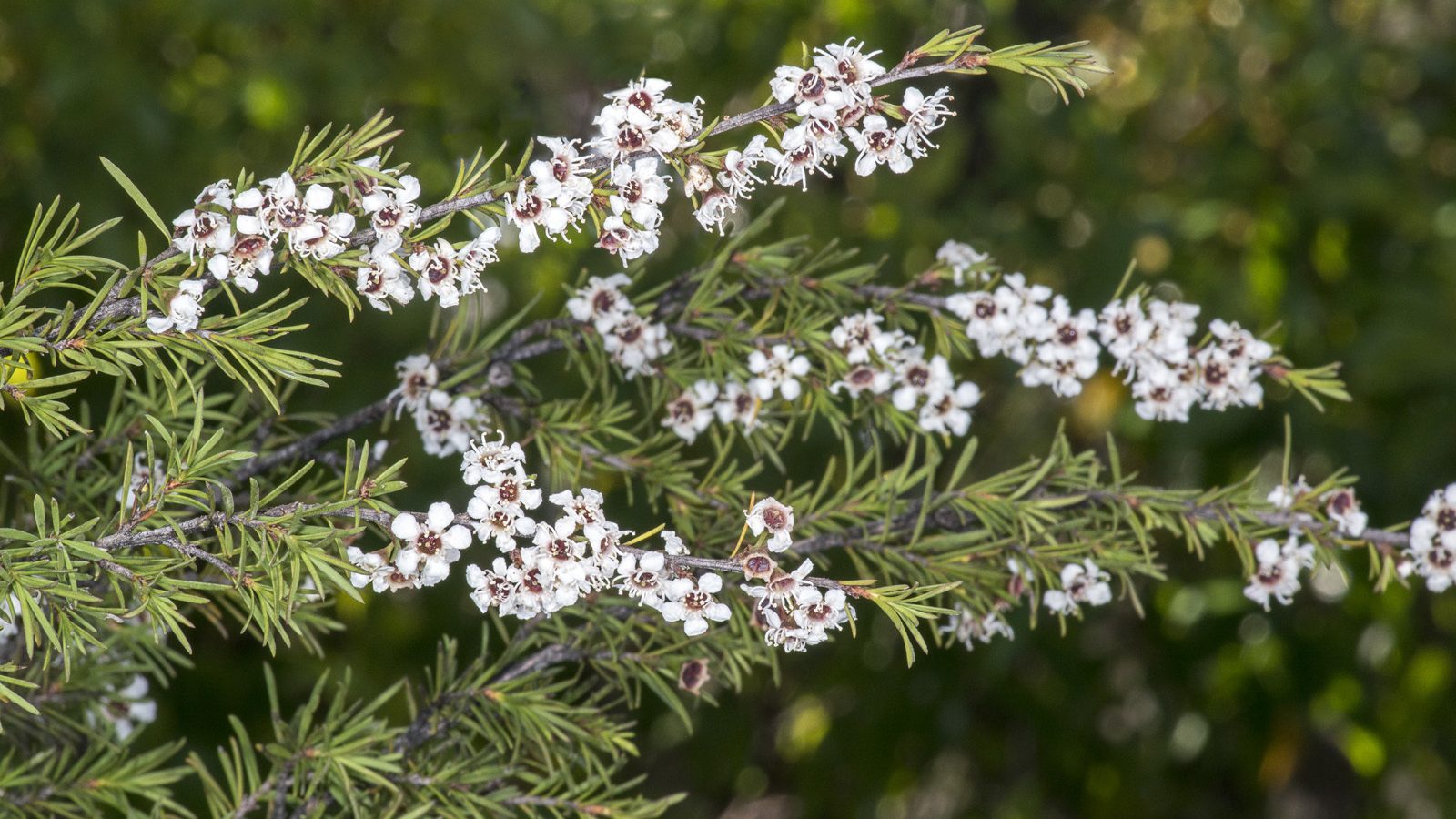
Kānuka
Kunzea ericoides (A.Rich.) Joy Thomps.
Common & Folk Names
- Kānuka (Māori name – most commonly used)
- White Tea Tree (distinguishing it from mānuka)
- White Manuka (older name, now less preferred to avoid confusion)
- Burgan (Australian regions where similar species grow)
Taxonomic Note: Kānuka was originally classified as Leptospermum ericoides but was reclassified in 1983 as Kunzea ericoides. Recent taxonomic work (de Lange 2014) has further subdivided the species complex, with Kunzea robusta now recognised as a distinct species covering much of what was previously called K. ericoides. For medicinal purposes, both species have similar properties and traditional uses.
Plant Family
Myrtaceae (Myrtle Family) – the same family as mānuka (Leptospermum scoparium), Australian tea tree (Melaleuca alternifolia), eucalyptus, clove, and other aromatic medicinal plants
Geographic Location
Kānuka is endemic to New Zealand, found throughout both the North and South Islands from coastal areas to montane zones up to approximately 1,000 metres elevation. The species grows prolifically through both islands, with particular abundance in areas undergoing succession from grassland or scrubland to forest. Kānuka is one of New Zealand’s most widespread native shrubs/small trees, occupying a broader ecological niche than its more famous relative, mānuka. While mānuka tends to prefer wetter, more acidic sites, Kānuka colonises drier, more exposed locations and tolerates a wider range of soil conditions. This wider distribution makes Kānuka more accessible for sustainable harvesting and cultivation compared to some rarer endemic species.
Habitat
In its natural habitat, Kānuka grows as a shrub or small tree typically reaching 5-15 metres in height (can occasionally reach 30 metres in favorable conditions). The plant is a pioneering species that colonises disturbed sites, grasslands, cutover bush, and areas cleared by fire or landslips. Kānuka characteristically forms dense stands in early to mid-successional vegetation, playing a crucial ecological role as a “nurse” species that provides shelter and improves soil conditions for other native plants to establish underneath. These dense Kānuka stands eventually give way to taller forest as succession progresses. Kānuka grows in a wide variety of habitats including lowland scrubland and forest margins, hill country and montane regions, riverbanks and stream sides, regenerating farmland and cutover areas, and coastal to inland locations. The plant tolerates exposure to wind, sun, and moderately dry conditions better than many other native species, making it valuable for erosion control and land restoration.
Growing Conditions
Sun: Full sun to partial shade; flowers and grows most vigorously in sunny locations but tolerates some shade
Soil: Tolerates a wide range of soil types from sandy to clay; prefers well-drained soils but adapts to moderately heavy soils; less particular about soil acidity than mānuka (pH 5.0-7.5); can grow in relatively poor, infertile soils
Propagation: Easy from seed (collect fresh seeds from mature capsules in late summer/autumn, sow in spring; germination rates are good); can also be propagated from semi-hardwood cuttings taken in summer/autumn; widely available from native plant nurseries throughout NZ
Care: Very easy to grow and low-maintenance; water during establishment but becomes quite drought-tolerant once established; minimal fertiliser needed; prune if desired to control shape or maintain as shrub rather than tree; generally pest and disease-free; frost-hardy; fast-growing compared to many native species (can grow 50cm-1m per year in favorable conditions)
Lifespan: Relatively short-lived for a tree (typical lifespan 50-100 years), reflecting its role as a pioneering/successional species
NZ Planting Calendar
Sowing (seeds): September–November (spring) – collect fresh seed capsules in February–April
Propagation (cuttings): January–April (summer/autumn) – semi-hardwood cuttings
Planting: August–October (spring) for best establishment
Flowering: November–February (late spring through summer) – masses of white to pale pink flowers
Harvest (leaves): Year-round (evergreen); spring through early autumn for optimal essential oil content
Harvest (flowers): November–February during full bloom
Note: Endemic NZ native; fast-growing (50cm-1m/year); reaches 5-15m tall; widely available from native nurseries
Harvesting Guidelines
Kānuka leaves, young shoots, and flowers all have medicinal properties, with leaves being the primary harvested part for most applications. The essential oil is extracted commercially through steam distillation of fresh leaves, though home herbalists typically use leaves and flowers in teas, infusions, and topical preparations.
Sustainable Harvesting:
Kānuka’s abundance and rapid growth make it one of the more sustainable native plants to harvest, but respectful practices remain important. Harvest from multiple trees rather than repeatedly taking from the same individual. Take only what you need—typically, a few handfuls of leaves/young shoots are sufficient for personal medicinal use. Leave the majority of each tree’s foliage intact to maintain tree health and vitality. Space harvests from the same location at least 6-12 months apart.
Leaf and Young Shoot Harvesting:
Leaves can be harvested year-round as Kānuka is evergreen, though some herbalists prefer harvesting when trees are in active growth (spring through early autumn) for optimal vitality. Harvest mature leaves and young shoots from branch tips—these tend to have higher concentrations of essential oils than older leaves. Fresh leaves have a characteristic aromatic scent when crushed (fresh, herbaceous, slightly pine-like). The leaves are small, narrow, and needle-like (similar in appearance to mānuka but often distinguishable by being softer and more pliable).
Flower Harvesting:
Kānuka produces masses of small white to pale pink flowers in clusters from late spring through summer (November-February in New Zealand). Flowers can be harvested when in full bloom for use in preparations. The flowers are fragrant with a honey-like scent and attract abundant bees and other pollinators.
Drying:
To dry Kānuka leaves and flowers, spread in a single thin layer on screens in a warm, dark, well-ventilated location (or use a dehydrator at low temperature, 35-40°C). Properly dried Kānuka retains its green color (though darker than fresh), feels crisp, and maintains aromatic scent. Store dried Kānuka in airtight containers away from light and moisture. Properly stored dried leaves maintain potency for approximately 1-2 years.
Distinguishing Kānuka from Mānuka:
Kānuka and mānuka often grow in proximity and can be confused, though they have distinct characteristics:
- Leaves: Kānuka leaves are softer and more pliable; mānuka leaves are pricklier and stiffer
- Flowers: Kānuka flowers are white/pale pink, smaller (5-6mm diameter), and appear in clusters; mānuka flowers are larger (8-15mm), often pink-white, and more solitary
- Bark: Kānuka bark flakes off in small thin scales; mānuka bark comes off in thicker, more papery sheets
- Seeds: Kānuka seed capsules are smaller and rounder; mānuka capsules are larger and more woody
- Growth habit: Kānuka grows taller and more tree-like; mānuka is typically more shrubby
Both species have valuable medicinal properties, though mānuka has received far more research attention and commercial development.
Parts Used
- Leaves (fresh or dried) – primary medicinal part, rich in essential oils
- Young shoots (often harvested with leaves)
- Flowers (fresh or dried) – aromatic and medicinal, though less commonly used than leaves
- Essential oil (steam-distilled from fresh leaves) – commercially produced, highly concentrated
Constituents & their Actions
Kānuka’s therapeutic properties arise primarily from a distinctive essential oil profile rich in monoterpenes, which differs notably from mānuka’s sesquiterpene-rich chemistry.
Essential Oil:
Kānuka leaves contain essential oil (yield approximately 0.5-2% depending on plant genetics, location, and season) with a chemical composition distinctly different from mānuka despite their close relationship.
Main essential oil components in Kānuka:
- α-Pinene (37-60% of essential oil): Dominant component, much higher than in mānuka
- p-Cymene (10-15%): Significant component
- 1,8-Cineole (eucalyptol) (5-10%): Present in notable amounts
- Viridiflorol (<10%): Sesquiterpene alcohol
- Viridiflorene: Sesquiterpene
- Limonene: Present in smaller amounts
- γ-Terpinene: Present in smaller amounts
- α-Selinene: Sesquiterpene component
Notable Absence: Unlike mānuka, Kānuka essential oil contains no (or only trace amounts of) β-triketones (flavesone, iso-leptospermone, leptospermone), which are the compounds that give high-grade mānuka oil its exceptional antimicrobial potency. This chemical difference means Kānuka and mānuka have overlapping but distinct therapeutic applications.
The main actions of Kānuka essential oil are:
- Anti-inflammatory (particularly strong, possibly superior to mānuka in some studies)
- Antimicrobial (antibacterial, antifungal, antiviral)
- Analgesic (pain-relieving)
- Antispasmodic (relaxes smooth muscle)
- Decongestant (respiratory support)
- Antiseptic
Flavonoids:
Present in Kānuka, contributing to antioxidant and anti-inflammatory effects. Recent research has identified specific flavanones from Kānuka with anti-pathogen activity.
Main flavonoids include:
- Quercetin and derivatives
- Kaempferol and derivatives
- Various flavanones (recently identified in K. robusta)
The main actions of these flavonoids are:
- Antioxidant
- Anti-inflammatory
- Antimicrobial
- Vascular protective
Phloroglucinols:
These compounds contribute to antimicrobial and possibly other therapeutic effects.
Tannins:
Present in moderate amounts, providing astringent and anti-inflammatory properties.
The main actions of tannins are:
- Astringent
- Anti-inflammatory
- Antimicrobial
Actions with Mechanisms
Anti-inflammatory (Particularly Potent):
Kānuka demonstrates exceptionally strong anti-inflammatory effects, with some research suggesting it may be superior to mānuka for anti-inflammatory applications. The high α-Pinene and p-cymene content, combined with 1,8-cineole and flavonoids, create comprehensive anti-inflammatory activity through multiple mechanisms. These compounds inhibit inflammatory mediators including cyclooxygenase (COX) enzymes, lipoxygenase (LOX) enzymes, and pro-inflammatory cytokines, which in turn reduces production of inflammatory prostaglandins, leukotrienes, and cytokines that drive pain, swelling, and tissue damage. The compounds suppress activation of NF-κB, a master regulator of inflammatory gene expression, which in turn provides broad-spectrum anti-inflammatory effects. Research demonstrates Kānuka essential oil significantly reduces inflammatory markers in both in vitro and animal studies. These potent anti-inflammatory effects make Kānuka valuable for chronic inflammatory conditions including rheumatoid arthritis, osteoarthritis, fibromyalgia, inflammatory skin conditions (eczema, psoriasis), inflammatory bowel conditions, and respiratory inflammation. Topical application provides localised anti-inflammatory and pain-relieving effects for muscle soreness, joint pain, sprains, strains, and inflammatory skin conditions. A recent clinical trial (Shortt et al. 2022) demonstrated that 3% Kānuka oil cream significantly improved moderate-to-severe eczema compared to vehicle control, validating traditional use for inflammatory skin conditions.
Antimicrobial (Antibacterial, Antifungal, Antiviral):
Kānuka demonstrates broad-spectrum antimicrobial activity against various bacteria, fungi, and viruses, though the activity profile differs from mānuka due to the absence of triketones. The high α-Pinene content and other monoterpenes disrupt microbial cell membranes and interfere with microbial metabolism, which in turn inhibits growth and replication of pathogens. Research demonstrates activity against common bacterial pathogens including Staphylococcus aureus, Escherichia coli, and others. Antifungal activity is present, though some studies suggest Kānuka’s antibacterial activity is stronger relative to its antifungal activity (the inverse of mānuka, which shows particularly strong antifungal effects). The antimicrobial effects support traditional use for wound healing, skin infections, respiratory infections, and general infection prevention. While mānuka honey has become famous for antimicrobial wound healing, Kānuka also has significant potential in this area, particularly when anti-inflammatory effects are beneficial alongside antimicrobial action.
Analgesic (Pain-Relieving):
The essential oil components, particularly α-Pinene and other monoterpenes, provide pain-relieving effects through multiple mechanisms. These compounds modulate pain signaling pathways, reduce inflammation that amplifies pain signals, and create local numbing/counter-irritant effects when applied topically. Traditional use for muscle aches, joint pain, general aches and pains, and injuries reflects these reliable analgesic properties. Topical Kānuka oil preparations provide localised pain relief, making them valuable for arthritis, muscle soreness, back pain, sports injuries, and chronic pain conditions. The combination of pain relief with anti-inflammatory effects creates comprehensive support for painful inflammatory conditions.
Antispasmodic (Smooth Muscle Relaxant):
Research demonstrates that Kānuka essential oil relaxes smooth muscle in the digestive tract and possibly respiratory tract, though with some interesting nuances. Studies on guinea pig ileum showed Kānuka produced an initial contraction followed by a spasmolytic (muscle-relaxing) effect, with the relaxation being the dominant therapeutic effect. This antispasmodic action supports traditional use for digestive cramping and discomfort, respiratory conditions with bronchospasm, and as a relaxant in aromatherapy. The smooth muscle relaxation may contribute to the respiratory decongestant effects and digestive-soothing properties.
Respiratory Decongestant and Expectorant:
The high α-Pinene and 1,8-cineole content make Kānuka valuable for respiratory support, particularly for congestion, cough, and breathing difficulty. These compounds act as decongestants that open airways and facilitate breathing, mucolytics that thin mucus and facilitate expectoration, antimicrobials that address respiratory infections, and anti-inflammatories that reduce airway inflammation. Traditional Māori use included treating colds, flu, and respiratory complaints. Steam inhalation with Kānuka leaves or essential oil provides direct respiratory benefits by delivering volatile compounds to airways. Kānuka tea supports respiratory health from within. The combination of decongestant, antimicrobial, and anti-inflammatory effects makes Kānuka comprehensive respiratory support for colds, flu, bronchitis, sinusitis, and chronic respiratory conditions.
Antiseptic and Wound Healing:
Applied topically, Kānuka provides antiseptic effects that prevent infection while supporting wound healing through antimicrobial activity combined with anti-inflammatory effects. The compounds reduce infection risk, decrease inflammation that can impede healing, and support tissue repair. Traditional Māori use included applying Kānuka preparations to wounds, sores, cuts, and skin infections. Modern research supports this traditional application, with Kānuka showing promise for wound care, particularly when inflammation is a significant component of the wound pathology.
Antioxidant:
The flavonoids and other phenolic compounds provide antioxidant effects that protect cells and tissues from oxidative damage. While not Kānuka’s primary therapeutic focus, antioxidant activity contributes to overall health support, skin protection, and anti-inflammatory effects (as oxidative stress amplifies inflammation).
Skin-Soothing and Healing:
Beyond antimicrobial and anti-inflammatory effects, Kānuka demonstrates specific benefits for skin health. The recent clinical trial showing significant improvement in eczema with Kānuka cream validates traditional use for various skin conditions including eczema and psoriasis, acne and inflamed skin, minor wounds and burns, insect bites and stings, rashes and irritation, and dry or itchy skin. Kānuka’s gentleness combined with effectiveness makes it particularly suitable for sensitive skin conditions.
Main Use
Kānuka is primarily valued in rongoā Māori and modern herbal practice for its exceptional anti-inflammatory and antimicrobial properties, particularly for inflammatory skin conditions, musculoskeletal pain and inflammation, respiratory infections and congestion, and wound healing. The plant deserves recognition beyond its status as “the other New Zealand tea tree” alongside mānuka—Kānuka has unique therapeutic properties that make it valuable in its own right, particularly for inflammatory conditions.
Primary Applications:
Inflammatory Skin Conditions: The clinical trial demonstrating significant improvement in moderate-to-severe eczema with 3% Kānuka oil cream establishes Kānuka as an evidence-based treatment for inflammatory skin disorders. Topical Kānuka preparations (creams, oils, salves) provide relief for eczema, psoriasis, dermatitis, inflammatory acne, rosacea, and other inflammatory skin conditions. The combination of anti-inflammatory, antimicrobial, and skin-soothing properties addresses multiple aspects of inflammatory skin disease.
Musculoskeletal Pain and Inflammation: Kānuka’s potent anti-inflammatory and analgesic effects make it valuable for rheumatoid arthritis (topical application to inflamed joints), osteoarthritis (pain and inflammation relief), fibromyalgia (widespread pain and inflammation), muscle soreness and sports injuries, back pain and sciatica, and sprains and strains. Topical application of Kānuka-infused oil or cream provides localised relief. The essential oil can be added to massage oils for therapeutic massage.
Respiratory Support: For colds, flu, and respiratory infections with congestion, Kānuka provides decongestant, antimicrobial, and anti-inflammatory support. Steam inhalation with Kānuka essential oil or fresh/dried leaves delivers volatile compounds directly to airways. Kānuka tea supports respiratory health from within. Traditional Māori use for colds and respiratory complaints is well-documented.
Wound Healing and Skin Infections: Topical application to minor wounds, cuts, abrasions, burns (minor), skin infections (bacterial or fungal), and as a general antiseptic. Kānuka preparations cleanse wounds while reducing infection risk and supporting healing.
General Infection Prevention and Immune Support: The antimicrobial properties make Kānuka useful as a general infection-preventive, particularly during cold and flu season. Diffusing Kānuka essential oil may help purify air and reduce airborne pathogens.
Aromatherapy: The fresh, herbaceous, uplifting scent of Kānuka essential oil provides aromatherapeutic benefits including energising and uplifting mood, calming and grounding (paradoxically both uplifting and calming), respiratory support through inhalation, and creating a clean, fresh atmosphere.
Cultural Note: In traditional rongoā Māori, Kānuka was used for treating diarrhea, colds, inflammation, digestive complaints, and various infections. Māori lore describes Kānuka as the “male” tree and mānuka as the “female,” reflecting observed relationships between the two species in the landscape. The strong wood was used for making agricultural implements, weapons, and tools.
Preparations
Infusion (Tea): Use 1-2 teaspoons (2-5g) of fresh or dried Kānuka leaves per 250ml of freshly boiled water. Cover immediately to retain volatile oils and steep for 10-15 minutes. Strain. The tea has a fresh, slightly pine-like, herbaceous flavor with mild astringency. For respiratory support and immune support, drink 1-2 cups two to three times daily. The tea provides internal antimicrobial and anti-inflammatory support.
Steam Inhalation (for Respiratory Congestion): Place a large handful of fresh Kānuka leaves or 1-2 tablespoons of dried leaves in a large bowl. Pour freshly boiled water over leaves. Create a tent with a towel over your head and the bowl, lean over (not too close to avoid burns), and inhale the aromatic steam for 5-10 minutes. Can add 2-3 drops of Kānuka essential oil to water for enhanced effect. Repeat 2-3 times daily for congestion, colds, sinusitis. The volatile oils are delivered directly to respiratory passages.
Decoction (Stronger Preparation): Simmer 2-3 tablespoons of Kānuka leaves in 500ml water for 10-15 minutes, then remove from heat and steep covered for additional 10 minutes. Strain. This stronger preparation can be used internally (drink 1/2 to 1 cup two to three times daily) or as a wash for wounds and skin infections.
Tincture: Use fresh or dried Kānuka leaves in 60% alcohol. Standard ratio is 1:5 (1 part herb to 5 parts liquid). Macerate for 4-6 weeks, shaking regularly, then strain. For immune support and internal antimicrobial effects, take 2-4ml (40-80 drops) diluted in water two to three times daily. Tinctures provide concentrated, convenient dosing.
Infused Oil (for Topical Use): Infuse dried Kānuka leaves in a carrier oil (olive, sweet almond, or jojoba oil) using the gentle heat method (50-60°C for 4-6 hours) or cold infusion (4-6 weeks). Strain thoroughly. Apply to sore muscles, arthritic joints, inflammatory skin conditions, or minor wounds 2-3 times daily. The infused oil carries anti-inflammatory and antimicrobial properties to skin and underlying tissues.
Cream or Salve: Kānuka-infused oil can be incorporated into cream or salve bases (using beeswax, shea butter, and/or emulsifying wax) for easier application. This is the preferred form for treating eczema and other inflammatory skin conditions based on clinical research. Apply to affected areas 2-3 times daily or as needed.
Essential Oil (Professional/External Use): Kānuka essential oil is available commercially, produced through steam distillation. NEVER take essential oil internally except under professional guidance. For topical use, dilute appropriately (2-3% dilution = 12-18 drops per 30ml carrier oil) and apply to muscles, joints, or skin as needed. For aromatherapy, use 3-5 drops in a diffuser or add 2-3 drops to bath water. Essential oil provides concentrated effects.
Poultice (Traditional): Fresh Kānuka leaves can be crushed or bruised and applied directly to wounds, sores, or inflamed areas as a poultice, covered with clean cloth. The fresh leaves release volatile oils and provide direct antimicrobial and anti-inflammatory effects. This traditional method is simple and effective for first aid.
Dosage
For Respiratory Infections and Congestion:
- Infusion: 1 cup (250ml) two to three times daily
- Steam Inhalation: 5-10 minutes, 2-3 times daily until symptoms improve
- Tincture: 2-4ml three times daily
For Inflammatory Conditions (Internal Support):
- Infusion: 1-2 cups daily
- Tincture: 2-4ml three times daily
For Inflammatory Skin Conditions (Topical):
- Kānuka cream/salve (2-3% essential oil concentration): Apply to affected areas 2-3 times daily; the clinical trial showing eczema improvement used 3% Kānuka oil cream applied twice daily
- Infused oil: Apply as needed, 2-3 times daily
For Muscle and Joint Pain (Topical):
- Kānuka-infused oil or diluted essential oil (2-3%): Massage into affected areas 2-3 times daily or as needed
- Can be used before or after physical activity for prevention and recovery
For Wound Healing:
- Decoction (as wash): Clean wound 2-3 times daily
- Infused oil or cream: Apply to clean wound 1-2 times daily after initial healing begins
Aromatherapy:
- Diffuser: 3-5 drops of essential oil
- Bath: 2-3 drops diluted in carrier oil or dispersant, add to bath water
Duration of Use:
- Generally safe for extended use at normal doses
- For acute conditions (colds, respiratory infections), use until symptoms resolve
- For chronic inflammatory conditions (arthritis, eczema), can be used long-term
- No known concerns about prolonged external or internal use at recommended doses
Important Notes:
- Essential oil should never be taken internally without professional guidance
- Always dilute essential oil properly for topical use (2-3% maximum for body; lower concentrations for facial use)
- Start with lower doses and increase as needed
Safety & Drug Interactions
Kānuka is generally safe with a long history of traditional use and no reports of serious adverse effects. The essential oil requires appropriate dilution and handling as with all essential oils.
General Safety:
- Well-tolerated by most individuals at recommended doses
- Long history of traditional Māori use without significant adverse effect reports
- Recent clinical trial (Shortt et al. 2022) using 3% Kānuka oil cream showed no serious adverse effects
- No known toxicity at reasonable therapeutic doses
Essential Oil Safety:
- NEVER take Kānuka essential oil internally—concentrated essential oils can cause serious toxicity if ingested
- Always dilute essential oil properly for topical use (2-3% maximum concentration for body applications; 1% or less for facial use and children)
- Undiluted essential oil can cause skin irritation or sensitisation in some individuals
- Perform patch test before widespread topical application if concerned about sensitivity
Pregnancy and Lactation:
- Insufficient safety data for internal use during pregnancy and lactation
- Aromatherapy use (inhalation) and properly diluted topical use are generally considered safe, though some sources recommend caution with all essential oils during first trimester as a precaution
- The smooth muscle relaxant effects raise theoretical concerns about internal use during pregnancy (though traditional use does not suggest uterine-specific effects)
- As a precaution, avoid medicinal doses internally during pregnancy; topical and aromatherapy use likely safe
Medical Conditions:
- Generally safe for most individuals without contraindications
- Individuals with severe asthma or reactive airways should introduce aromatherapy cautiously as concentrated vapors can trigger bronchospasm in sensitive individuals (though Kānuka is actually used to support breathing for most people)
Allergies:
- Allergic reactions are uncommon but possible
- Individuals with known allergies to plants in the Myrtaceae family (tea tree, eucalyptus, clove) should approach Kānuka cautiously
- Contact dermatitis from essential oil is possible in sensitive individuals; always dilute properly and patch test if concerned
Drug Interactions:
- No significant drug interactions documented in the available literature
- Theoretically, the smooth muscle relaxant effects might have additive effects with antispasmodic medications, though no specific interactions are reported
- Theoretically, the anti-inflammatory effects might have additive effects with NSAIDs or other anti-inflammatory medications, though this is typically not problematic and may be beneficial
- As always, inform healthcare providers about all herbs being used alongside conventional medications
Topical Use:
- Generally very safe when properly diluted
- Test on small area first if concerned about sensitivity
- Avoid contact with eyes, mucous membranes, and broken skin (unless specifically treating wounds, in which case use appropriately diluted preparations)
- Wash hands after handling essential oil
Quality and Sourcing:
- Purchase Kānuka products from reputable New Zealand suppliers
- Essential oil quality varies; choose suppliers who provide GC-MS analysis showing chemical composition
- East Cape region of New Zealand’s North Island is known for producing particularly potent Kānuka oil (trade name “Kanex”)
- Support suppliers who harvest sustainably and engage appropriately with Māori communities
Distinguishing from Mānuka:
- Ensure correct identification when wild-harvesting—both Kānuka and mānuka are safe, but they have somewhat different properties and traditional applications
- Commercial products should be clearly labeled with botanical name
Scientific Evidence
Anti-inflammatory Effects: Kānuka’s anti-inflammatory properties are well-supported by research. Studies demonstrate significant inhibition of inflammatory mediators in laboratory assays. The recent clinical trial by Shortt et al. (2022) demonstrated that 3% Kānuka oil cream significantly improved moderate-to-severe eczema compared to vehicle control, providing strong clinical evidence for anti-inflammatory effects on inflammatory skin conditions. This represents one of the few rigorous clinical trials of a New Zealand native medicinal plant.
Essential Oil Composition: Extensive chemical analysis by Porter and Wilkins (1999) and others has thoroughly characterised Kānuka essential oil, identifying α-Pinene as the dominant component (>50%), distinguishing it clearly from mānuka’s sesquiterpene-rich profile. This research explains why Kānuka and mānuka have overlapping but distinct therapeutic applications.
Antimicrobial Activity: Multiple studies (Lis-Balchin et al. 2000; Chen et al. 2016; Prosser et al. 2016) demonstrate Kānuka’s antimicrobial activity against various bacteria, fungi, and viruses. While antimicrobial activity is present, research suggests Kānuka’s antibacterial effects are stronger relative to antifungal effects compared to mānuka. Recent research (Burgess et al. 2021) identified specific flavanones from Kānuka (K. robusta) with potent anti-Phytophthora activity, representing novel antimicrobial compounds.
Smooth Muscle Effects: Research by Lis-Balchin and Hart (1998) demonstrated that Kānuka essential oil relaxes smooth muscle (spasmolytic effect) after an initial contraction, supporting traditional use for digestive complaints and as a relaxant. The study also noted important differences between Kānuka, mānuka, and Australian tea tree in their pharmacological profiles, highlighting the importance of using correctly identified oils for specific therapeutic purposes.
Antispasmodic Activity: Studies on guinea pig ileum confirmed Kānuka’s antispasmodic effects, though the precise mechanism remains under investigation. The research suggests the relaxant effects do not involve adrenergic receptors or simple calcium/potassium channel mechanisms, indicating a more complex mode of action.
Radiation-Induced Mucositis Study: A feasibility study by Maddocks-Jennings et al. (2009) evaluated Kānuka for radiation-induced mucositis (mouth inflammation from cancer radiation therapy). While the small study showed promising trends, larger trials are needed to confirm efficacy for this specific application.
Comparison with Mānuka: Research consistently shows that Kānuka and mānuka have distinct chemical profiles and somewhat different therapeutic applications. While mānuka has received far more research attention (particularly regarding honey and triketone-rich essential oils), Kānuka demonstrates superior anti-inflammatory effects in some studies and offers unique therapeutic benefits.
Traditional Use Documentation: Extensive documentation of traditional Māori use exists in ethnobotanical literature including works by Riley (1994) and Brooker, Cambie, and Cooper (1981), describing use for respiratory conditions, digestive complaints, inflammation, and wound healing.
Evidence Level Summary: Strong chemical characterisation; Good in vitro antimicrobial and anti-inflammatory evidence; Excellent clinical trial evidence for eczema (rare for NZ native plants); Solid traditional use documentation; Need for more clinical trials for other applications.
Western Energetics
Temperature: Cooling to neutral. Kānuka has a generally cooling to neutral temperature energetics, making it appropriate for inflammatory/”hot” conditions without being excessively cooling. The anti-inflammatory effects indicate cooling properties, while the respiratory decongestant and antimicrobial effects work across temperature spectrums. This relatively balanced thermal nature allows Kānuka to address both hot inflammatory conditions and neutral infectious/congestive states.
Moisture: Drying (mild). The aromatic, volatile oil-rich nature and astringent tannins create mild drying effects. This makes Kānuka appropriate for “damp” conditions with excess mucus (respiratory congestion), weeping or oozing skin conditions, and boggy, waterlogged tissue states. However, the drying quality is gentler than strongly aromatic or astringent herbs, and the anti-inflammatory effects can actually help “cool and dry” hot, inflamed tissues that have become congested with inflammatory exudate.
Tissue State: Kānuka primarily addresses heat/excitation tissue states characterised by inflammation, irritation, infection with heat signs, and hyperactive immune responses. The cooling anti-inflammatory and antimicrobial effects calm overactive, irritated, inflamed tissues and reduce excess heat. Additionally, Kānuka addresses damp/stagnation components when there is respiratory mucus congestion, weeping or oozing wounds/skin, and accumulation of inflammatory exudates. The aromatic, drying, antimicrobial nature helps clear accumulated substances and resolve infection. The combination makes Kānuka particularly appropriate for “hot, damp” conditions—inflammatory states with congestion, exudate, or infection.
Taste
Aromatic: The dominant taste characteristic of Kānuka is intensely aromatic, reflecting the high volatile oil content concentrated in the leaves. This aromatic quality creates the characteristic fresh, herbaceous, pine-like flavor when leaves are made into tea or chewed. In traditional energetics, aromatic tastes indicate volatile, penetrating compounds that reach throughout the body, disperse stagnation, move energy, and have antimicrobial effects. The aromatic nature makes Kānuka particularly suited to respiratory applications where volatile oils can be directly inhaled and to topical uses where aromatherapeutic effects combine with physical medicine.
Slightly Bitter: A mild bitter undertone from flavonoids and tannins contributes to digestive-stimulating effects and provides some cooling balance. The bitterness is subtle and not overwhelming, making Kānuka tea more palatable than many strongly bitter medicinal plants.
Slightly Astringent: A mild astringent quality from tannin content provides gentle tissue-toning and drying effects. This astringency contributes to wound-healing properties and helps “tighten” and dry weeping or oozing conditions.
Fresh, Pine-like, Herbaceous: The overall taste and scent impression is fresh, clean, slightly pine-like (from α-Pinene), and herbaceous—quite distinct from mānuka’s heavier, earthier, more medicinal aroma. Many people find Kānuka’s scent more pleasant and accessible than mānuka’s, making it potentially more suitable for aromatherapy applications where user preference matters.
Plant Lore
Kānuka holds important but often overlooked cultural and ecological significance in Aotearoa New Zealand, living somewhat in the shadow of its more famous relative, mānuka.
Traditional Māori Knowledge and Use:
In rongoā Māori, Kānuka was recognised as a valuable medicinal plant with antiseptic, anti-inflammatory, and healing properties. Traditional applications included treating colds, flu, and respiratory complaints (steam inhalation, drinking infusions), diarrhea and digestive upset (infusions), wounds, sores, and infections (poultices, washes), and inflammation and pain (various applications). The bark, leaves, and seeds were all used in different traditional preparations.
Māori lore describes an interesting relationship between Kānuka and mānuka, with Kānuka being considered the “male” tree and mānuka the “female.” This gender attribution reflects observed ecological relationships—Kānuka often colonises sites first and grows taller, while mānuka tends to establish in the understory or in different microhabitats. The two species frequently grow together in mixed stands, with each occupying slightly different niches.
Ecological Importance – The “Nurse” Species:
Kānuka plays a crucial ecological role as a pioneering species that facilitates forest succession and regeneration. After land is cleared by fire, farming, or landslips, Kānuka is typically one of the first woody species to colonise open ground. These fast-growing trees form dense stands that provide shelter from wind and sun, improve soil through nitrogen-fixing mycorrhizal associations, add organic matter through leaf fall, and create favorable conditions for other native plants to establish underneath. Over time, shade-tolerant species like tawa, rimu, and other forest trees grow up through the Kānuka canopy, eventually overtopping and replacing it. Kānuka’s relatively short lifespan (50-100 years) aligns with this successional role—it’s not meant to be a permanent forest canopy tree but rather a pioneer that facilitates the return of mature forest.
This ecological function makes Kānuka extremely valuable for land restoration, erosion control, and reforestation projects throughout New Zealand. The species’ ability to thrive in poor soils and exposed conditions where other natives struggle makes it an ideal first step in returning farmland or degraded land to native vegetation.
Practical Uses – The Versatile Wood:
Beyond medicine, Kānuka’s strong, hard wood had many traditional and historical uses. Māori used Kānuka wood for making agricultural implements (digging sticks, other tools), weapons (clubs, spears), and general construction where strong, durable wood was needed. European settlers adopted Kānuka for fencing, tool handles, and fuel wood. Today, Kānuka remains a popular, sustainable source of firewood in New Zealand due to its abundance, rapid growth (making harvesting sustainable), high density (burns hot and long), and availability. Some modern craftspeople use Kānuka for turning and small woodwork projects.
Distinction from Mānuka – Identity and Recognition:
Kānuka has long struggled with identity issues related to mānuka. Historically called “white manuka” (due to white flowers vs. mānuka’s pink-white), Kānuka was often seen simply as an inferior or less valuable version of its famous relative. The tremendous commercial success of mānuka honey, combined with extensive research into mānuka’s medicinal properties, has further overshadowed Kānuka.
However, this perception is changing as research reveals Kānuka’s unique properties and advantages. The recent clinical trial showing significant eczema improvement with Kānuka cream provides evidence that Kānuka deserves recognition in its own right, not merely as “the other tea tree.” For some applications—particularly inflammatory skin conditions—Kānuka may actually be superior to mānuka. The chemical differences between the two species mean each has unique strengths and optimal applications.
Commercial Development:
Kānuka essential oil has been commercially produced in New Zealand for several decades, though on a much smaller scale than mānuka. The East Cape region of the North Island produces oil marketed as “Kanex,” which has been used in research studies. Some New Zealand companies are developing Kānuka-based skincare products following the promising eczema research.
Interestingly, Kānuka honey (produced by bees visiting Kānuka flowers) exists but receives little attention compared to mānuka honey. Some research suggests Kānuka honey has valuable properties, though it lacks the high Unique Mānuka Factor (UMF) that makes mānuka honey commercially valuable. This represents another area where Kānuka has been overlooked despite potential.
Conservation Status:
Unlike many endemic New Zealand species, Kānuka is not threatened—it grows prolifically throughout both main islands and regenerates rapidly in suitable habitat. This abundance makes Kānuka an excellent candidate for sustainable use and commercial development without conservation concerns. The species actually benefits from some forms of disturbance and readily colonises appropriate sites.
Modern Recognition:
In recent years, herbalists, aromatherapists, and researchers have begun giving Kānuka the recognition it deserves as a distinct and valuable medicinal plant. The clinical evidence for eczema treatment, combined with research showing potent anti-inflammatory effects, positions Kānuka as a uniquely effective New Zealand medicinal plant worthy of further research and development.
The story of Kānuka is one of an overlooked treasure hiding in plain sight—a widespread, accessible, fast-growing native plant with exceptional medicinal properties that has simply not received the research attention and commercial development its famous relative has enjoyed.
Additional Information
Kānuka vs. Mānuka – Chemical and Therapeutic Distinctions:
Understanding the key differences helps explain optimal applications for each species:
Kānuka:
- α-Pinene dominant (>50% of essential oil)
- No (or minimal) triketones
- Particularly strong anti-inflammatory effects
- Excellent for eczema and inflammatory skin conditions (clinical evidence)
- Fresh, clean, pine-like scent
- More accessible and sustainable (widespread, fast-growing)
Mānuka:
- Sesquiterpene-rich essential oil
- High triketone content (in some chemotypes)
- Exceptional antimicrobial effects (especially honey)
- Famous for wound healing (honey)
- Earthier, more medicinal scent
- More particular about growing conditions
Both species have valuable medicinal properties—the choice depends on the specific application and availability.
Growing in Gardens:
Kānuka makes an excellent garden addition for those interested in growing medicinal natives. Benefits include fast growth (creates shelter and privacy quickly), attractive masses of white flowers (excellent for bees and beneficial insects), provides sustainable medicine supply, hardy and low-maintenance, excellent for erosion control on slopes, supports native biodiversity, and can be coppiced or harvested for firewood while maintaining medicinal leaf harvests. Kānuka is widely available from native nurseries throughout NZ.
Essential Oil Production:
Commercial Kānuka essential oil is produced through steam distillation of fresh leaves and young shoots. Oil yield is typically 0.5-2% depending on plant genetics, season, and location. The East Cape region of the North Island is known for producing particularly potent oil. Home distillation is possible with appropriate equipment but typically not economically viable given the abundance of commercially available oil.
Sustainability:
Kānuka’s rapid growth, widespread distribution, and pioneering ecology make it one of the most sustainable native medicinal plants to harvest and use. Unlike rarer or slower-growing species where harvesting pressure is a concern, appropriate Kānuka harvesting can be part of land management without harming populations. This sustainability makes Kānuka an ideal candidate for commercial development and increased use.
Taxonomic Complexity:
Recent taxonomic work has subdivided what was traditionally called Kunzea ericoides into multiple species including K. robusta, K. serotina, K. sinclairii, and others. For medicinal purposes, these closely related species appear to have similar properties and can generally be used interchangeably, though subtle chemical differences may exist.
Relationship to Australian Species:
Kānuka is endemic to New Zealand, though similar Kunzea species occur in Australia. The taxonomic relationships and whether any populations are shared between countries remains somewhat controversial. Medicinally, New Zealand Kānuka is distinct from Australian tea tree (Melaleuca alternifolia) despite both being called “tea tree.”
Sources
Shortt, N., Martin, A., Kerse, K., Shortt, G., Vakalalabure, I., Barker, L., … & Semprini, A. (2022). Efficacy of a 3% kānuka oil cream for the treatment of moderate-to-severe eczema: A single blind randomised vehicle-controlled trial. EClinicalMedicine, 51, 101561.
Porter, N. G., & Wilkins, A. L. (1999). Chemical, physical and antimicrobial properties of essential oils of Leptospermum scoparium and Kunzea ericoides. Phytochemistry, 50(3), 407-415.
Lis-Balchin, M., Hart, S. L., & Deans, S. G. (2000). Pharmacological and antimicrobial studies on different tea-tree oils (Melaleuca alternifolia, Leptospermum scoparium or Manuka and Kunzea ericoides or Kānuka), originating in Australia and New Zealand. Phytotherapy Research, 14(8), 623-629.
Lis-Balchin, M., & Hart, S. L. (1998). An investigation of the actions of the essential oils of Manuka (Leptospermum scoparium) and Kānuka (Kunzea ericoides), Myrtaceae on guinea-pig smooth muscle. Journal of Pharmacy and Pharmacology, 50(7), 809-811.
Chen, C. C., Yan, S. H., Yen, M. Y., Wu, P. F., Liao, W. T., Huang, T. S., … & Wang, H. M. (2016). Investigations of Kānuka and manuka essential oils for in vitro treatment of disease and cellular inflammation caused by infectious microorganisms. Journal of Microbiology, Immunology and Infection, 49(1), 104-111.
Maddocks-Jennings, W., Wilkinson, J. M., Cavanagh, H. M., & Shillington, D. (2009). Evaluating the effects of the essential oils Leptospermum scoparium (manuka) and Kunzea ericoides (Kānuka) on radiotherapy induced mucositis: A randomized, placebo controlled feasibility study. European Journal of Oncology Nursing, 13(2), 87-93.
Burgess, E. J., Latta, R., Hofmann, R. W., & Albert, N. W. (2021). Mātauranga-guided screening of New Zealand native plants reveals flavonoids from kānuka (Kunzea robusta) with anti-Phytophthora activity. Frontiers in Plant Science, 12, 718538.
Prosser, J. A., Eichholz, J. M., & Wagner, M. T. (2016). Antimicrobial and antibiofilm activity of honey-derived compounds against Gram-negative bacteria. Unpublished thesis research. [General reference for NZ Myrtaceae antimicrobial research]
Riley, M. (1994). Māori healing and herbal: New Zealand ethnobotanical sourcebook. Paraparaumu: Viking Sevenseas NZ Ltd.
Brooker, S. G., Cambie, R. C., & Cooper, R. C. (1981). New Zealand medicinal plants. Auckland: Heinemann Publishers.
de Lange, P. J. (2014). A revision of the New Zealand Kunzea ericoides (Myrtaceae) complex. PhytoKeys, 40, 1-185.
Perry, N. B., van Klink, J. W., Brennan, N. J., Harris, W., Anderson, R. E., Douglas, M. H., & Smallfield, B. M. (1997). Essential oils from New Zealand manuka and Kānuka: Chemotaxonomy of Kunzea. Phytochemistry, 44(8), 1485-1494.
Allan, H. H. (1961). Flora of New Zealand, Volume I. Wellington: Government Printer.
Connor, H. E., & Edgar, E. (1985). Name changes in the indigenous New Zealand flora, 1960-1985 and Nomina Nova IV, 1985. New Zealand Journal of Botany, 25, 115-170.
Best, E. (1905). Māori medical lore. Journal of the Polynesian Society, 14, 1-32.
Brooker, S. G., Cain, B. F., & Cambie, R. C. (1963). Leptospermone: A new β-triketone from Leptospermum scoparium. Tetrahedron, 19(6), 925-928.
Bone, K., & Mills, S. (2013). Principles and practice of phytotherapy: Modern herbal medicine (2nd ed.). Edinburgh: Churchill Livingstone.
Mills, S., & Bone, K. (2005). The essential guide to herbal safety. St. Louis: Churchill Livingstone.
Williamson, E. M., Driver, S., & Baxter, K. (Eds.). (2013). Stockley’s herbal medicines interactions (2nd ed.). London: Pharmaceutical Press.
New Zealand Plant Conservation Network. Kunzea species fact sheets. Retrieved from www.nzpcn.org.nz
Disclaimer: This monograph is for educational purposes only and is not medical advice. Please consult with a qualified healthcare practitioner before using any herbal remedy, especially if you are pregnant, nursing, taking medication, or have a known medical condition. Kānuka essential oil should never be taken internally. This monograph acknowledges Kānuka as a taonga plant of rongoā Māori tradition and recognises Māori as the original knowledge holders regarding this endemic New Zealand species.