
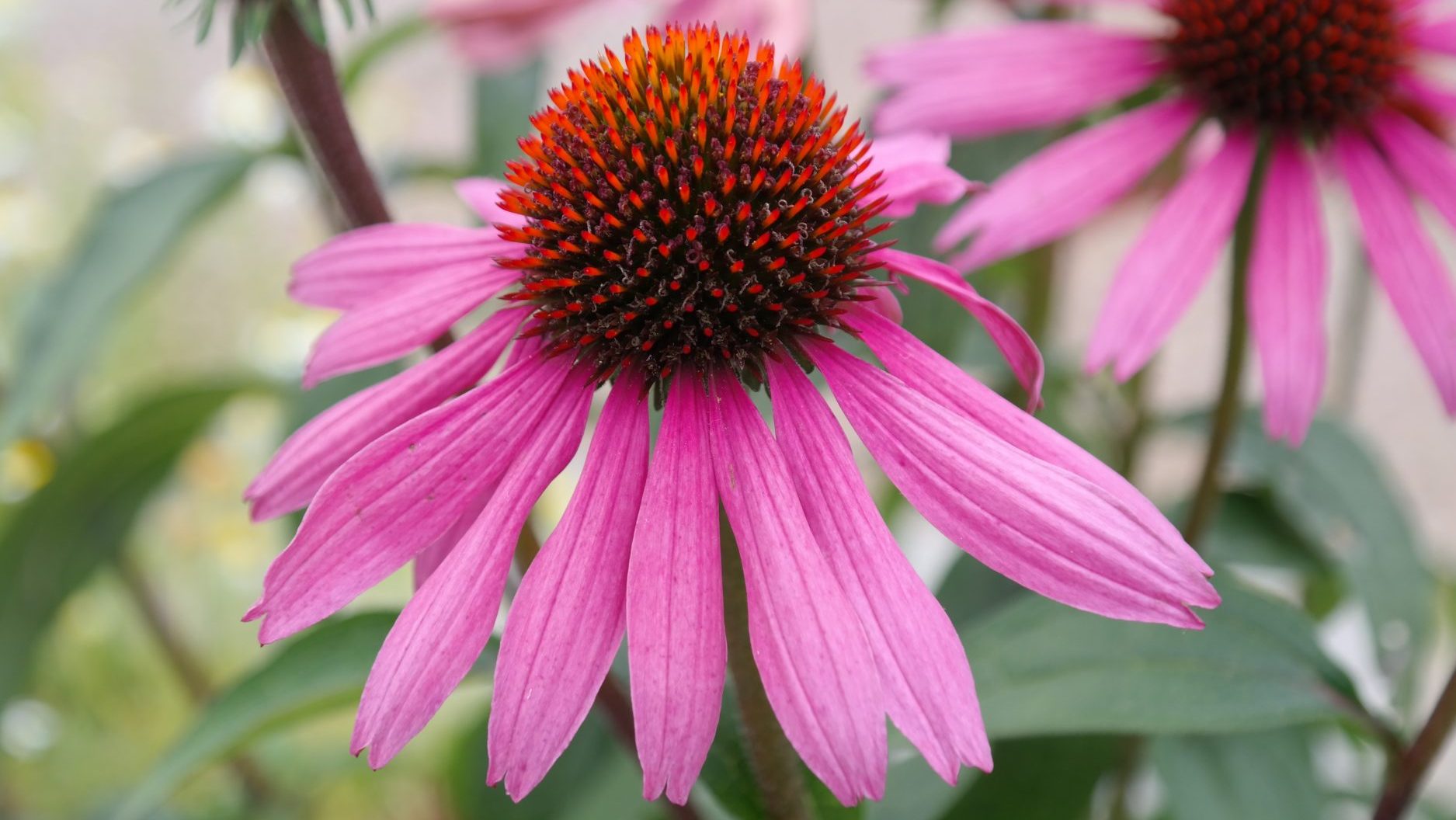
Echinacea
Echinacea purpurea, E. angustifolia, E. pallida
Common & Folk Names
- Purple Coneflower (E. purpurea)
- Narrow-Leaved Coneflower (E. angustifolia)
- Pale Purple Coneflower (E. pallida)
- Echinacea
- American Coneflower
- Black Sampson
- Snakeroot
Plant Family
Asteraceae (formerly Compositae)
Geographic Location
Native to North America, particularly the central and eastern United States and the prairies. Echinacea purpurea ranges from the eastern United States to the Great Plains. E. angustifolia is native to the Great Plains and western prairies. E. pallida grows in the central and southern United States. All three species prefer open prairies, woodlands, and grasslands. Now cultivated worldwide for medicinal and ornamental purposes. Thrives in temperate climates with well-draining soil.
Habitat
Naturally grows in prairies, open woodlands, rocky glades, and roadsides. Prefers well-draining soil with full sun to partial shade. Tolerates drought once established. Found from lowlands to moderate elevations in native range. Adapted to continental climates with hot summers and cold winters.
Growing Conditions
Sun: Full sun to partial shade; grows best in full sun
Soil: Well-draining, moderately fertile soil; tolerates clay, loam, or sandy soils if drainage is adequate; pH 6.0-7.0 (slightly acidic to neutral); intolerant of waterlogged conditions
Propagation: Grow from seed (requires cold stratification for best germination) or divide established plants in spring or autumn; root cuttings possible
Care: Water regularly during establishment; once established, drought-tolerant; benefits from occasional fertilisation; deadhead spent flowers to prolong blooming or leave for birds (goldfinches love the seeds); generally pest and disease-free; can be short-lived (3-5 years) but self-seeds readily; cut back in autumn or leave standing for winter interest and wildlife
NZ Planting Calendar
Sowing (seed): Autumn (March-May) or late winter (July-August) after cold stratification; seeds need cold period to germinate well
Propagation (cuttings/division): Divide established plants in early spring (August-September) or autumn (March-April); carefully separate root sections
Planting: Spring (September-November) or autumn (March-May); plant in well-draining soil in sunny to partially shaded position
Growth: Perennial; dies back to roots in winter; re-emerges in spring; typically grows 60-120cm tall depending on species
Flowering: Summer (December-March in NZ) with distinctive purple-pink (or white) daisy-like flowers with prominent cone-shaped centres
Harvest: Roots harvested in autumn (March-May) after 3-4 years of growth; aerial parts (flowers, leaves) harvested during flowering (December-March)
Note: Grows well in most of NZ with adequate drainage; suited to areas with distinct seasons; popular ornamental plant in NZ gardens; attracts bees, butterflies, and beneficial insects; relatively easy to cultivate; E. purpurea most commonly grown in NZ gardens and most readily available medicinally; excellent cut flower; provides winter seed heads for birds; generally hardy and low-maintenance in suitable conditions
Harvesting Guidelines
Roots: Harvest in autumn after 3-4 years of growth when plants are dormant. Older plants (3-5 years) contain higher concentrations of active constituents. Carefully dig entire root system, shake off soil, and wash thoroughly. The roots should be thick and fleshy. E. purpurea roots are fibrous with a strong, distinctive taste. E. angustifolia and E. pallida have taproots. Cut roots into pieces whilst fresh (they become very hard when dried). Dry quickly in well-ventilated area at temperatures not exceeding 40°C. Properly dried roots are hard, brittle, and retain characteristic sharp, tingling taste (particularly E. purpurea and E. angustifolia). Store dried roots in airtight containers away from light and moisture.
Aerial Parts (Flowers, Leaves, Stems): Harvest during flowering when flowers are fully open. Cut flowering stems, leaving enough plant for recovery. The distinctive purple-pink coneflowers are easily identified. Use fresh for maximum potency (fresh plant tinctures are preferred by many herbalists) or dry for later use. Dry in well-ventilated, shaded area. Properly dried aerial parts retain good colour and aroma.
Quality Indicators: High-quality echinacea has a characteristic sharp, tingling sensation on the tongue (particularly fresh root and E. angustifolia). This “tingle test” indicates the presence of alkylamides, important active constituents. Fresh plant material is generally more potent than dried.
Parts Used
- Roots (primary medicinal part for E. angustifolia and E. pallida; also used for E. purpurea)
- Aerial parts (flowers, leaves, stems – particularly for E. purpurea)
- Whole plant preparations (combining roots and aerial parts)
Constituents & their Actions
Echinacea’s therapeutic properties arise from multiple groups of compounds that work synergistically to provide immune-stimulating, anti-inflammatory, and antimicrobial effects. The exact constituent profile varies between species.
Alkylamides (Alkamides):
These lipophilic compounds are considered among the most important active constituents. Some of the main alkylamides in echinacea are:
- Dodeca-2E,4E,8Z,10E/Z-tetraenoic acid isobutylamides
- Various other alkamides (composition varies by species)
The main actions of these alkylamides are:
- Provide immunomodulating effects
- Create the characteristic tingling sensation on the tongue
- Demonstrate anti-inflammatory properties
- May have analgesic effects
- Contribute significantly to therapeutic activity
- Note: E. purpurea and E. angustifolia are particularly rich in alkylamides; E. pallida contains fewer
Polysaccharides:
Complex carbohydrates with immune-stimulating properties.
The main actions of these polysaccharides are:
- Activate macrophages and other immune cells
- Stimulate immune system
- Demonstrate immunomodulating effects
- Support complement activation (part of immune response)
- Contribute to overall immune enhancement
Caffeic Acid Derivatives (Phenolic Compounds):
Including cichoric acid, echinacoside, and others. The profile varies significantly between species.
The main actions of these caffeic acid derivatives are:
- Provide antioxidant protection
- Exhibit antiviral activity (particularly against certain viruses)
- Support anti-inflammatory effects
- Demonstrate antimicrobial properties
- Note: E. purpurea is rich in cichoric acid; E. angustifolia and E. pallida contain more echinacoside
Glycoproteins:
Proteins with carbohydrate groups attached.
The main actions of glycoproteins are:
- Support immune stimulation
- Contribute to overall therapeutic effects
Essential Oils:
Present in small amounts, contributing to aromatic properties.
The main actions of essential oils are:
- Provide mild antimicrobial effects
- Contribute to overall therapeutic profile
Actions with Mechanisms
Immunostimulant and Immunomodulator:
Echinacea is renowned for its immune-enhancing properties. Multiple constituents activate various components of the immune system. The polysaccharides and alkylamides stimulate macrophages (white blood cells that engulf pathogens), which in turn enhances the body’s ability to fight infections. The herb increases production of various immune signalling molecules including interferons and interleukins, coordinating more effective immune responses. Natural killer (NK) cell activity increases, strengthening the immune system’s ability to identify and destroy infected or abnormal cells. The effects encompass both innate immunity (immediate, non-specific defences) and aspects of adaptive immunity (targeted responses to specific pathogens). Research demonstrates increased phagocytosis (immune cells engulfing pathogens), enhanced antibody production, and improved overall immune function. These immunostimulating effects make echinacea valuable for preventing and treating infections, particularly upper respiratory tract infections.
Anti-Inflammatory:
Multiple constituents reduce inflammation through various pathways. The alkylamides inhibit cyclooxygenase (COX) enzymes and other inflammatory mediators, which in turn reduces production of pro-inflammatory prostaglandins and cytokines. The caffeic acid derivatives provide additional anti-inflammatory effects through antioxidant mechanisms and direct inhibition of inflammatory pathways. Research demonstrates reduced inflammation in various models, supporting traditional use for inflammatory conditions. The anti-inflammatory effects complement the immune-stimulating properties, creating balanced immune support that enhances defence without causing excessive inflammation.
Antimicrobial and Antiviral:
Echinacea demonstrates activity against various bacteria, fungi, and viruses. The mechanisms involve both direct antimicrobial effects (caffeic acid derivatives and other compounds act directly on microbes) and indirect effects through immune enhancement (stronger immune responses clear infections more effectively). Research shows particular activity against respiratory viruses and bacteria. The antiviral effects appear most pronounced for certain viruses including respiratory viruses and herpes simplex virus. The combination of direct antimicrobial effects and immune enhancement makes echinacea valuable for infectious conditions.
Wound Healing and Tissue Repair:
Traditional Native American use included echinacea for wounds, burns, insect bites, and snake bites (applied topically and taken internally). The immune-stimulating effects enhance wound healing by supporting immune function at wound sites, the anti-inflammatory effects reduce swelling and promote healing, and the antimicrobial properties prevent infection. Modern research supports wound-healing effects, validating traditional topical applications. The polysaccharides appear particularly important for wound-healing effects.
Antioxidant:
Caffeic acid derivatives and other phenolic compounds provide potent antioxidant protection, scavenging free radicals and protecting cells from oxidative damage. The antioxidant effects support overall health, contribute to anti-inflammatory actions, and protect tissues during infections (when oxidative stress increases).
Lymphatic:
Some herbalists consider echinacea a lymphatic herb, supporting lymphatic drainage and function. The mechanisms may involve immune stimulation in lymphoid tissues and reduction of lymphatic congestion. Traditional use includes echinacea for swollen lymph nodes and lymphatic conditions.
Main Use
Echinacea is primarily used for preventing and treating upper respiratory tract infections including the common cold, flu, and sinusitis. Extensive research demonstrates that echinacea can reduce the incidence, severity, and duration of colds when used preventively or at the first signs of infection. The immune-stimulating effects enhance the body’s ability to fight viral and bacterial respiratory infections. Clinical trials show mixed but generally supportive results—some studies demonstrate significant benefits whilst others show modest or no effects, likely due to differences in echinacea species, preparations, dosing, and study design. Meta-analyses generally support modest benefits for cold prevention and treatment.
For cold prevention, echinacea can be taken daily during cold season or when exposure risk is high (though continuous use beyond 8-12 weeks is not typically recommended). The preventive effects reduce cold incidence by enhancing baseline immune function.
When used at the first signs of a cold (tickle in throat, early congestion, initial malaise), echinacea can reduce symptom severity and duration. The key is early intervention—starting echinacea after symptoms are fully established is less effective. Frequent dosing during acute infection (every 2-3 hours initially, then 3-4 times daily) provides best results.
For recurring infections, including chronic sinusitis, chronic respiratory infections, and general susceptibility to infections, echinacea provides immune support that reduces infection frequency and severity. Short courses (2-3 weeks) repeated as needed are typical for this application.
Echinacea addresses skin infections, wounds, burns, and insect bites both topically (as cream, salve, or wash) and internally. The combination of antimicrobial, anti-inflammatory, and wound-healing properties supports tissue repair and prevents infection.
For urinary tract infections, echinacea provides immune support and direct antimicrobial effects. However, echinacea is typically combined with specific urinary antiseptics (uva ursi, cranberry) rather than used alone for UTIs.
Some research suggests benefits for chronic fatigue syndrome, where immune dysfunction may play a role. The immune-modulating effects may help rebalance disturbed immune function.
The excellent safety profile and strong traditional and research support make echinacea one of the most widely used herbal medicines globally for immune support and infection prevention/treatment.
Preparations
Tincture (Fresh Plant, 1:2, 70-90% alcohol OR Dried Root, 1:5, 60% alcohol): Fresh plant tinctures are preferred by many herbalists for maximum potency. 2-5ml (40-100 drops), 3-5 times daily for acute infections; 2-3ml, 2-3 times daily for prevention. The tincture should cause a tingling sensation on the tongue.
Decoction (Dried Root): Simmer 1-2 teaspoons (3-5g) of dried root in 250ml water for 10-15 minutes; strain and drink. 2-3 cups daily.
Infusion (Dried Aerial Parts): Steep 1-2 teaspoons of dried flowers and leaves in 250ml boiling water for 10-15 minutes; strain and drink. 2-3 cups daily.
Capsules/Tablets (Dried Herb or Standardised Extract): Follow manufacturer’s instructions. Typical dose is 300-500mg, 3 times daily. Look for standardised products specifying echinacea species and constituent levels.
Fresh Juice: Freshly pressed juice from aerial parts of E. purpurea. 2-3ml, 3 times daily. Some commercial products use this preparation.
Glycerite (Alcohol-Free Tincture): For those avoiding alcohol; less potent than alcohol tincture but suitable alternative. Follow manufacturer’s instructions.
Topical (Cream, Salve, Wash): Apply to affected skin 2-3 times daily for wounds, infections, or inflammation.
Dosage
For Acute Infections (Cold, Flu):
- Tincture: 2-5ml (40-100 drops), every 2-3 hours initially (first day), then 3-5 times daily for 7-10 days
- Capsules/Tablets: 300-500mg, 3-5 times daily for 7-10 days
- Decoction/Infusion: 3-4 cups daily for 7-10 days
For Prevention:
- Tincture: 2-3ml (40-60 drops), 2-3 times daily
- Capsules/Tablets: 300-500mg, 2-3 times daily
- Duration: Use for 8-12 weeks maximum, then take a break; some protocols alternate periods of use (e.g., 3 weeks on, 1 week off)
For Children (Over 2 Years):
- Reduce adult dose proportionally based on weight
- Typically, half adult dose for children 6-12 years
- Professional guidance recommended for children
IMPORTANT NOTES:
- Start at first signs of infection for best results
- Frequent dosing during acute infections is key
- Avoid continuous long-term use (beyond 12 weeks) without breaks
- Fresh plant preparations generally more potent than dried
- Look for products that cause tongue tingling (indicates alkylamide content)
Safety & Drug Interactions
Echinacea has an excellent safety profile with minimal adverse effects, even with regular use. Millions of people use echinacea annually with very few problems.
General Safety: Generally considered safe during pregnancy and lactation based on extensive use, though professional guidance is recommended. Safe for children over 2 years in appropriate doses. Safe for elderly individuals. The long history of use and modern safety studies support excellent tolerability.
Side Effects: Rare and generally mild when they occur. Possible side effects include:
- Mild gastrointestinal upset (rare)
- Allergic reactions in individuals sensitive to Asteraceae family plants (chamomile, ragweed, chrysanthemum, etc.)—rash, itching, in rare cases anaphylaxis
- Dizziness or headache (very rare)
- Unpleasant taste (some find echinacea’s taste strong or unpleasant)
Contraindications and Cautions:
Autoimmune Diseases: Previously, echinacea was contraindicated in autoimmune conditions (rheumatoid arthritis, lupus, multiple sclerosis, etc.) due to concerns that immune stimulation might worsen autoimmune responses. However, modern understanding suggests echinacea’s effects are more immunomodulatory than purely stimulating, and the contraindication is likely overstated. Nevertheless, many practitioners still recommend caution or avoidance in active autoimmune disease. Professional guidance essential.
Progressive Systemic Diseases: Traditionally contraindicated in tuberculosis, HIV/AIDS, and other progressive systemic diseases, though modern evidence suggests these contraindications may be overly cautious. Professional supervision essential for these conditions.
Allergies to Asteraceae Family: Individuals allergic to other Asteraceae plants (ragweed, chamomile, chrysanthemum, sunflower) may react to echinacea. Use cautiously or avoid if family allergies are known.
Duration of Use: Avoid continuous use beyond 8-12 weeks without breaks. The “pulsed” approach (periods of use followed by breaks) prevents potential tolerance and maintains effectiveness.
Drug Interactions:
- Immunosuppressants: Theoretical interaction with medications used to suppress immune system (organ transplant drugs, etc.); avoid combination
- Caffeine and Medications Metabolised by CYP1A2: Some evidence suggests echinacea may affect caffeine metabolism and other CYP1A2 substrates; clinical significance uncertain
- No significant interactions documented with most common medications
Pregnancy and Lactation: Extensive use during pregnancy and lactation with no adverse effects reported. Several safety studies support use. However, professional guidance recommended.
Children: Safe for children over 2 years. Not recommended for children under 2 years due to theoretical allergy concerns.
Scientific Evidence
Cold Prevention and Treatment: Extensive research with mixed results. Multiple systematic reviews and meta-analyses demonstrate modest benefits for preventing colds and reducing symptom duration/severity. A Cochrane review concluded that some echinacea products are more effective than placebo for treating colds. The variability in results likely reflects differences in echinacea species, preparations, dosing, and study quality. Overall, evidence supports modest benefits, particularly when used early and at adequate doses.
Immune System Effects: Comprehensive research demonstrates immunomodulating effects. Studies show activation of macrophages, increased phagocytosis, enhanced NK cell activity, and increased production of immune signalling molecules. The immunological mechanisms are well-characterised and support traditional use.
Antimicrobial and Antiviral Activity: Laboratory studies demonstrate activity against various bacteria, fungi, and viruses. The mechanisms are documented though clinical significance for some activities remains under investigation.
Anti-Inflammatory Effects: Research demonstrates anti-inflammatory activity through multiple mechanisms. Studies show reduced inflammatory markers in various models.
Safety Studies: Extensive safety research and clinical trial safety data demonstrate excellent tolerability. Adverse effects are rare and generally mild. Studies specifically address pregnancy and lactation safety, supporting traditional use.
Species and Preparation Differences: Research demonstrates that different echinacea species and preparations have different constituent profiles and potentially different effects. E. purpurea aerial parts, E. angustifolia root, and E. pallida root all have research support, though with different chemical profiles.
Western Energetics
Temperature: Cooling to neutral. Echinacea’s anti-inflammatory effects and traditional use for “hot” infections reflect cooling properties. However, the herb is not strongly cooling, making it suitable for most constitutional types.
Moisture: Neutral to slightly drying. Echinacea neither strongly moistens nor dries, contributing to broad applicability.
Tissue State: Particularly indicated for heat and excitation—acute infections characterised by inflammation, redness, heat, and overactive responses. Echinacea excels at modulating excessive inflammatory responses whilst enhancing appropriate immune function. Also valuable for atrophy and depression (tissue state sense) when poor immune function creates vulnerability to infections. The immunomodulating effects can both calm excessive responses and strengthen deficient ones, making echinacea suitable for various tissue states.
Taste
The taste varies somewhat between species and preparations:
Slightly Sweet (Initially): A subtle initial sweetness may be detected
Sharp/Pungent: A sharp, somewhat pungent quality develops
Tingling/Numbing: The characteristic tingling or numbing sensation on the tongue is distinctive and indicates presence of alkylamides (important active constituents). This “tingle test” is used to assess quality—good echinacea should cause tongue tingling
Slightly Bitter: A mild bitterness may be present
Earthy: An earthy, herbal quality contributes to the overall profile
The tingling sensation is most pronounced with fresh E. purpurea root and E. angustifolia preparations. Some find the taste and sensation unpleasant, whilst others don’t mind it.
Plant Lore
Echinacea has profound significance in Native American medicine, where it was one of the most widely used medicinal plants. Plains Indian tribes including the Sioux, Cheyenne, and Comanche used various echinacea species extensively for infections, wounds, snakebites, insect stings, toothache, and many other conditions. The plant was considered a “cure-all” by some tribes.
Traditional uses included chewing roots for toothache and gum infections (the numbing effects provided pain relief), applying poultices to wounds and snakebites, and taking internally for various infections and ailments. Different tribes had specific preparation methods and applications passed down through generations.
European settlers learned about echinacea from Native Americans in the 19th century. By the late 1800s, echinacea became popular in both folk medicine and among eclectic physicians (a school of American herbalism). Dr. H.C.F. Meyer, a traveling medicine salesman, created “Meyer’s Blood Purifier” containing echinacea and promoted it enthusiastically, making exaggerated claims that eventually damaged echinacea’s credibility.
In the early 20th century, echinacea was listed in the U.S. National Formulary (1916-1950) as a recognized medicine. However, with the rise of antibiotics and synthetic drugs, echinacea use declined in America by mid-20th century.
Ironically, whilst American interest waned, European (particularly German) researchers began intensive study of echinacea in the 1930s-1950s. German research established echinacea’s immune-stimulating properties and led to commercial development of echinacea products in Europe. This European research ultimately revived American interest in echinacea in the 1980s-1990s.
The resurgence of echinacea in the 1990s made it one of the best-selling herbal medicines globally. The herb became synonymous with immune support and cold prevention/treatment in public awareness.
The name “echinacea” derives from Greek “echinos” (hedgehog), referring to the spiky, cone-shaped seed head that resembles a hedgehog. “Coneflower” similarly describes this distinctive feature.
The purple-pink flowers make echinacea popular as an ornamental plant, with numerous cultivars developed for gardens. The medicinal and ornamental value combine in this useful plant.
Conservation concerns arose in the late 20th century as wild echinacea populations, particularly E. angustifolia, faced overharvesting pressure from the herbal medicine trade. Sustainable cultivation has largely replaced wild harvesting, though conservation awareness remains important.
Additional Information
Species Differences: The three primary medicinal echinacea species have different traditional uses and chemical profiles:
- E. purpurea: Most commonly grown, used (aerial parts and roots), and researched; rich in alkylamides and cichoric acid
- E. angustifolia: Traditional Native American species; root used; rich in alkylamides and echinacoside; considered by some herbalists to be most potent
- E. pallida: Less commonly used; root used; different chemical profile with less alkylamides
All three species have research support, though most modern studies use E. purpurea. Some herbalists prefer E. angustifolia root based on traditional use, whilst others favour E. purpurea due to ease of cultivation and research support.
Fresh vs. Dried: Many herbalists prefer fresh plant preparations (particularly fresh root tincture) for maximum potency. The alkylamides that cause tongue tingling degrade over time in dried material. If using dried echinacea, ensure it’s recently dried and properly stored. The “tingle test” (tongue tingling) indicates quality regardless of preparation type.
Quality Considerations: Echinacea products vary enormously in quality. Issues include:
- Mislabeling (wrong species or no echinacea at all)
- Low levels of active constituents
- Use of inappropriate plant parts
- Adulteration
Choose products from reputable manufacturers that:
- Specify echinacea species
- Provide constituent analysis (alkylamide and/or polyphenol content)
- Use appropriate plant parts
- Provide third-party testing when possible
Cultivation for Medicine: Growing echinacea for home medicine:
- Relatively easy in suitable conditions
- E. purpurea easiest to grow
- Requires 3-4 years for root harvest
- Aerial parts can be harvested in first flowering year
- Beautiful ornamental with medicinal value
- Attracts pollinators and beneficial insects
Combining with Other Herbs: Echinacea combines well with:
- Echinacea + Goldenseal for infections (though goldenseal is overharvested; consider alternatives like Oregon grape)
- Echinacea + Elderberry for colds and flu
- Echinacea + Astragalus for immune support (use astragalus preventively, echinacea acutely)
- Echinacea + Vitamin C for enhanced immune support
Controversy and Research Challenges: Echinacea research faces challenges:
- Multiple species with different properties
- Different plant parts used (roots, aerial parts, whole plant)
- Various extraction methods (fresh vs. dried, alcohol vs. water)
- Different dosing regimens
- Use for prevention vs. treatment
This variability explains why some studies show strong effects whilst others show minimal effects. Comparing studies is like comparing different herbs.
Modern Clinical Use: Despite mixed research, echinacea remains one of the most popular herbal medicines globally. Many people report subjective benefits even when research is equivocal. The excellent safety profile means trying echinacea carries minimal risk for most people.
Sources
Bone, K., & Mills, S. (2013). Principles and Practice of Phytotherapy: Modern Herbal Medicine (2nd ed.). Churchill Livingstone.
Mills, S., & Bone, K. (2005). The Essential Guide to Herbal Safety. Elsevier.
Hoffman, D. (2003). Medical Herbalism: The Science and Practice of Herbal Medicine. Healing Arts Press.
Karsch-Völk, M., Barrett, B., Kiefer, D., Bauer, R., Ardjomand-Woelkart, K., & Linde, K. (2014). Echinacea for preventing and treating the common cold. Cochrane Database of Systematic Reviews, 2014(2), CD000530.
Shah, S. A., Sander, S., White, C. M., Rinaldi, M., & Coleman, C. I. (2007). Evaluation of echinacea for the prevention and treatment of the common cold: A meta-analysis. Lancet Infectious Diseases, 7(7), 473-480.
Barrett, B. (2003). Medicinal properties of Echinacea: A critical review. Phytomedicine, 10(1), 66-86.
Bauer, R. (1999). Chemistry, analysis and immunological investigations of Echinacea phytopharmaceuticals. In H. Wagner (Ed.), Immunomodulatory Agents from Plants (pp. 41-88). Birkhäuser.
Woelkart, K., & Bauer, R. (2007). The role of alkamides as an active principle of echinacea. Planta Medica, 73(7), 615-623.
Goel, V., Lovlin, R., Barton, R., Lyon, M. R., Bauer, R., Lee, T. D., Basu, T. K., Kouwen, K., Saleem, A., Ottevanger, C., Sawyer, J., & Macpherson, D. W. (2004). Efficacy of a standardized echinacea preparation (Echinilin) for the treatment of the common cold: A randomized, double-blind, placebo-controlled trial. Journal of Clinical Pharmacy and Therapeutics, 29(1), 75-83.
Percival, S. S. (2000). Use of echinacea in medicine. Biochemical Pharmacology, 60(2), 155-158.
Barnes, J., Anderson, L. A., Gibbons, S., & Phillipson, J. D. (2005). Echinacea species (Echinacea angustifolia (DC.) Hell., Echinacea pallida (Nutt.) Nutt., Echinacea purpurea (L.) Moench): A review of their chemistry, pharmacology and clinical properties. Journal of Pharmacy and Pharmacology, 57(8), 929-954.
Schapowal, A., Klein, P., & Johnston, S. L. (2015). Echinacea reduces the risk of recurrent respiratory tract infections and complications: A meta-analysis of randomized controlled trials. Advances in Therapy, 32(3), 187-200.
Giles, J. T., Palat, C. T., Chien, S. H., Chang, Z. G., & Kennedy, D. T. (2000). Evaluation of echinacea for treatment of the common cold. Pharmacotherapy, 20(6), 690-697.
Binns, S. E., Hudson, J., Merali, S., & Arnason, J. T. (2002). Antiviral activity of characterized extracts from echinacea spp. (Heliantheae: Asteraceae) against herpes simplex virus (HSV-I). Planta Medica, 68(9), 780-783.
Disclaimer: This monograph is for educational purposes only and is not medical advice. Please consult with a qualified healthcare practitioner before using any herbal remedy, especially if you are pregnant, nursing, taking medication, or have a known medical condition. Individuals with allergies to Asteraceae family plants should use echinacea cautiously.