
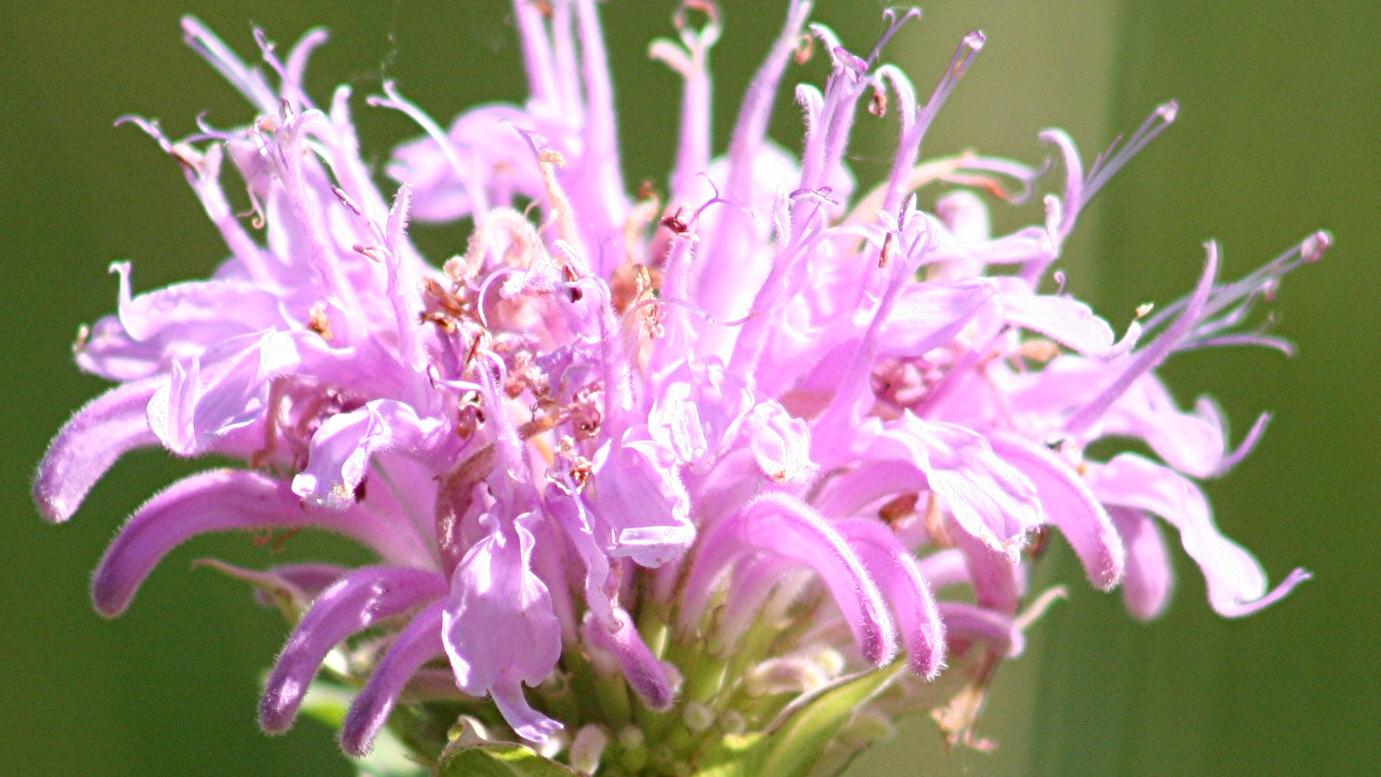
Bee Balm
Monarda spp.
Common & Folk Names
- Bee Balm
- Wild Bergamot (M. fistulosa)
- Scarlet Bee Balm (M. didyma)
- Oswego Tea
- Horsemint
- Mountain Balm
- Sweet Leaf
- Indian Nettle
- Red Bergamot
Plant Family
Lamiaceae – The Mint family
Geographic Location
Native to North America, where numerous species grow wild from southern Canada through the United States to northern Mexico. Wild bergamot (Monarda fistulosa) has the widest natural range, found from Quebec to British Columbia and south to Georgia, Texas, and Arizona. Scarlet bee balm (M. didyma) is native to the eastern United States from New York to Georgia. Now widely cultivated as ornamental and medicinal plants throughout temperate regions worldwide, including Europe, Asia, Australia, and New Zealand.
Habitat
Monarda species thrive in diverse habitats including prairies, meadows, woodland edges, thickets, roadsides, and open fields. Wild bergamot (M. fistulosa) prefers drier conditions and is highly drought-resistant, whilst scarlet bee balm (M. didyma) prefers moister soils and partial shade. Both species grow naturally at elevations below 1,500 metres (5,000 feet).
Growing Conditions
Sun: Full sun to partial shade; M. didyma tolerates more shade than M. fistulosa
Soil: Well-drained, moderately fertile soil; pH 6.0–7.0; M. fistulosa tolerates poorer, drier soils; M. didyma prefers consistently moist, humus-rich soil
Propagation: Division in spring or autumn, stem cuttings in summer, or from seed (sow in spring)
Care: Spreads by rhizomes to form clumps; divide every 3–4 years to maintain vigour; susceptible to powdery mildew in humid conditions (improve air circulation, avoid overhead watering); deadhead to prolong flowering; cut back after flowering. In NZ: Grows well throughout most regions with adequate summer moisture; in Auckland and northern regions, ensure consistent watering during dry spells; Canterbury and Otago plants benefit from afternoon shade during hot summers.
NZ Planting Calendar
Sowing/Propagation: Sow seeds September–November (spring); take cuttings December–February (summer); divide plants March–April (autumn) or September–October (spring)
Harvest: December–February (midsummer) when plants are in full bloom for peak volatile oil content
Harvesting Guidelines
Leaves and Flowering Tops (primary medicinal parts): Harvest when plants are in full bloom, typically mid to late summer (December–February in New Zealand), as this is when volatile oil content peaks. Harvest on a sunny morning after dew has evaporated but before midday heat causes volatile oils to dissipate. Cut the top 15–30 cm of stems, including flowers and leaves. Dry quickly in a well-ventilated, shaded area away from direct sunlight to preserve essential oils and colour. Spread in a single layer or tie in small bundles and hang upside down. Properly dried bee balm should remain aromatic and retain colour. Store in airtight glass containers away from light and heat.
For Fresh Use: Harvest leaves anytime during the growing season for teas or poultices. Flowers are edible and make attractive garnishes for salads and desserts.
Parts Used
- Leaves
- Flowers
- Flowering tops (combined leaves and flowers – most common medicinal preparation)
Constituents & their Actions
Bee balm’s medicinal properties arise from a potent combination of volatile oils, phenolic compounds, and flavonoids that work synergistically to produce powerful antimicrobial, anti-inflammatory, and carminative effects.
Volatile Oils (Essential Oil):
The aerial parts contain 0.6–1.2% essential oil by weight, with composition varying significantly amongst species, varieties, and growing conditions. The volatile oil is responsible for bee balm’s characteristic aroma and most of its antimicrobial and carminative properties. Some of the main volatile compounds in Bee Balm are:
Thymol Chemotype (primarily M. fistulosa):
- Thymol – 12–78% (depending on variety)
- Carvacrol – 3–24%
- p-Cymene – 9–32%
- γ-Terpinene – trace to 12%
Geraniol Chemotype (some M. fistulosa varieties):
- Geraniol – up to 92%
- Geranial – up to 20%
- Neral – trace amounts
Mixed Chemotypes (common in M. didyma):
- Thymol – variable
- Carvacrol – variable
- Linalool – up to 67% in some cultivars
- 1,8-Cineole – 4–22%
- β-Myrcene – 2–6%
- α-Pinene – 2–8%
- β-Pinene – 2–6%
- Sabinene hydrate
The main actions of these volatile oils are:
- Potent antimicrobial (antibacterial, antifungal, antiviral)
- Carminative (relieving intestinal gas)
- Antispasmodic (relaxing smooth muscle)
- Expectorant (clearing respiratory mucus)
- Diaphoretic (promoting sweating)
- Analgesic (pain-relieving)
Phenolic Acids:
These aromatic compounds provide significant antioxidant and anti-inflammatory activity whilst also contributing to antimicrobial effects. The main phenolic acid in Bee Balm is:
- Rosmarinic acid – major compound (can exceed 100 mg/g dry weight)
- Caffeic acid
- Chlorogenic acid
- Ferulic acid
The main actions of these phenolic acids are:
- Powerful antioxidant activity
- Anti-inflammatory (multiple pathways)
- Antimicrobial support
- Neuroprotective
- Antiallergic
Flavonoids:
These polyphenolic compounds contribute antioxidant, anti-inflammatory, and spasmolytic properties. Some of the main flavonoids in Bee Balm are:
- Luteolin-7-O-glucoside (major flavonoid)
- Apigenin
- Quercetin
- Kaempferol
- Luteolin
- Naringenin
The main actions of these flavonoids are:
- Antioxidant (free radical scavenging)
- Anti-inflammatory
- Antispasmodic
- Anxiolytic (calming)
- Antimicrobial support
Monoterpene Quinones:
These oxidised monoterpenes contribute to bee balm’s anti-inflammatory and potential antioxidant activities. Some of the monoterpene quinones in Bee Balm are:
- Thymoquinone – 2–8% in some varieties
- Thymohydroquinone
The main actions of these monoterpene quinones are:
- Anti-inflammatory
- Antioxidant
- Potential anticancer properties (preliminary research)
Tannins:
These polyphenolic compounds provide mild astringent properties, useful for toning tissues and reducing secretions.
The main action of tannins is:
- Astringent (tissue-toning)
- Antimicrobial support
Actions with Mechanisms
Antimicrobial:
Bee balm exhibits exceptionally powerful broad-spectrum antimicrobial activity, rivalling pharmaceutical antiseptics. The volatile oils, particularly thymol and carvacrol, disrupt microbial cell membranes through their lipophilic (fat-loving) nature, which in turn causes them to integrate into and destabilise the phospholipid bilayer, leading to leakage of intracellular contents, loss of membrane potential, and ultimately cell death. These compounds also inhibit microbial respiration by interfering with ATP synthesis. Studies demonstrate effectiveness against gram-positive bacteria including Staphylococcus aureus (including MRSA strains), Streptococcus species, Bacillus cereus, and gram-negative bacteria such as Escherichia coli, Salmonella typhimurium, Klebsiella pneumoniae, and Pseudomonas aeruginosa. Antifungal activity extends to Candida albicans, Aspergillus species, and dermatophytes. Thymol is so effective that it’s the active ingredient in many commercial mouthwashes. This makes bee balm invaluable for preventing and treating infections both internally and topically.
Diaphoretic:
When consumed as a hot tea, bee balm promotes sweating, which in turn helps break fevers and eliminate toxins during acute infections. The volatile oils stimulate peripheral circulation, bringing blood to the skin surface, whilst also opening sweat pores through direct action on sweat glands. This is a traditional and highly effective use for feverish colds and influenza, particularly when combined with yarrow or elderflower. The warming, stimulating nature makes bee balm most appropriate for “cold” conditions with chills, pallor, and lethargy rather than “hot” fevers with flushing and irritability.
Carminative & Antispasmodic:
The volatile oils relax smooth muscle tissue throughout the gastrointestinal tract through modulation of calcium channels and inhibition of acetylcholine release, which in turn relieves cramping, allows trapped gas to move and be expelled, and eases bloating and colic. Thymol and carvacrol also reduce intestinal spasm through their antispasmodic effects on the muscular walls. This makes bee balm valuable for nervous indigestion, irritable bowel syndrome, gas, bloating, and digestive upset associated with stress or anxiety. The antispasmodic action extends to other smooth muscle, making bee balm useful for menstrual cramps.
Expectorant:
The volatile oils, particularly 1,8-cineole (when present), stimulate mucus secretion from respiratory goblet cells whilst simultaneously reducing mucus viscosity, which in turn loosens thick phlegm and facilitates expectoration. These compounds also have mucolytic properties, breaking down mucopolysaccharides in mucus. The antimicrobial action addresses underlying respiratory infections. Bee balm is traditionally used for bronchitis, sinusitis, and productive coughs with thick, stuck mucus. Steam inhalations are particularly effective, allowing volatile oils to act directly on respiratory tissues.
Anti-inflammatory:
Bee balm reduces inflammation through multiple complementary mechanisms. Rosmarinic acid is a particularly powerful anti-inflammatory compound that inhibits cyclooxygenase (COX) and lipoxygenase (LOX) enzymes, which in turn reduces synthesis of inflammatory prostaglandins and leukotrienes. Flavonoids modulate nuclear factor kappa B (NF-κB) signalling, which decreases expression of pro-inflammatory cytokines including tumour necrosis factor-alpha (TNF-α) and interleukin-6 (IL-6). The volatile oils also stabilise mast cells, which reduces histamine release. Thymoquinone shows promise for inhibiting inflammatory pathways. This broad anti-inflammatory activity benefits both internal conditions (digestive inflammation, respiratory inflammation) and topical applications (insect bites, minor wounds, skin irritation).
Emmenagogue:
Bee balm stimulates menstrual flow through its warming, stimulating properties that increase pelvic circulation and through possible mild uterine stimulant effects. The antispasmodic properties help relieve menstrual cramping. Traditional use includes bringing on delayed menses and easing painful periods. IMPORTANT: This emmenagogue action means bee balm is contraindicated in pregnancy, as it could potentially stimulate uterine contractions.
Analgesic:
The volatile oils, particularly thymol and carvacrol, provide pain relief through multiple mechanisms. Topically, they act as counter-irritants, creating a warming sensation that distracts from deeper pain whilst increasing local blood flow. They may also have mild local anaesthetic properties through modulation of pain receptors. Research shows these compounds activate TRPA1 (transient receptor potential ankyrin 1) ion channels, which in turn produces analgesic and anti-inflammatory effects. Systemically, the anti-inflammatory compounds reduce pain by decreasing inflammatory mediator production. Traditional uses include relief from headaches, muscle aches, joint pain, and toothache.
Nervine (Mild Relaxant):
Whilst not as potent as dedicated nervines like lemon balm or chamomile, bee balm has mild calming properties attributed to its aromatic volatile oils and flavonoids. The pleasant aroma itself has aromatherapeutic effects, reducing stress and promoting relaxation. The antispasmodic effects help relieve tension. Bee balm is particularly useful for digestive complaints worsened by stress or anxiety (nervous dyspepsia).
Antioxidant:
Bee balm provides potent antioxidant protection through its rich phenolic acid and flavonoid content. These compounds directly scavenge free radicals by donating electrons, which in turn stabilises reactive oxygen species before they can damage cellular structures. Rosmarinic acid is a particularly powerful antioxidant. Studies using DPPH, ABTS, and other antioxidant assays show strong free radical scavenging activity with IC50 values as low as 0.285 mg/mL. This antioxidant activity protects against oxidative stress implicated in cardiovascular disease, neurodegenerative conditions, and premature ageing.
Main Use
Bee balm’s primary therapeutic application is as a powerful aromatic antimicrobial for feverish upper respiratory infections. It excels as a hot diaphoretic tea for colds, flu, and fevers, particularly when there is sinus congestion, sore throat, or chest congestion. The combination of antimicrobial, diaphoretic, expectorant, and warming properties makes it ideal for the acute phase of respiratory infections with chills, achiness, and thick mucus.
Internally, bee balm also serves as an effective carminative for digestive complaints, relieving gas, bloating, indigestion, and intestinal cramping, especially when related to stress or nervous tension.
Topically, bee balm is used as an antiseptic and soothing remedy for minor wounds, insect bites and stings, skin irritations, fungal infections, and acne. The crushed fresh leaves applied as a poultice provide immediate relief from bee stings, mosquito bites, and skin irritation.
As a gargle or mouth rinse, bee balm’s antiseptic properties treat sore throats, tonsillitis, gingivitis, and mouth infections.
Preparations
Infusion (Hot Tea): 1–2 teaspoons dried herb (or 2–3 teaspoons fresh herb) per cup of boiling water. Cover and steep 10–15 minutes to preserve volatile oils. Drink hot for diaphoretic and respiratory effects, 3–4 cups daily during acute illness. For digestive support, drink warm or cool after meals.
Steam Inhalation: Handful of dried flowering tops or 3–5 drops essential oil in a large bowl of just-boiled water. Tent head with towel and inhale steam for 5–10 minutes for sinus congestion, bronchitis, or chest colds. Repeat 2–3 times daily.
Tincture: (1:5 in 40–50% alcohol). 2–4 mL (40–80 drops), 3 times daily for systemic antimicrobial and carminative effects.
Gargle/Mouth Rinse: Strong cooled tea or diluted tincture (1–2 mL in ¼ cup warm water). Gargle for 30–60 seconds, 3–4 times daily for sore throat, tonsillitis, or mouth infections.
Poultice: Crush fresh leaves or rehydrate dried herb with a small amount of hot water. Apply directly to insect bites, stings, minor wounds, or fungal infections. Cover with clean cloth. Replace every 2–4 hours.
Infused Oil: Dried flowers and leaves infused in olive oil using the heat method (2–4 hours at 50–70°C) or folk method (2–4 weeks in sunny location). Strain and use for massage of sore muscles or as a base for salves and balms.
Honey: Layer fresh flowers with raw honey in a jar. Leave for 2–4 weeks, strain, and use as a throat-soothing remedy or add to tea.
Essential Oil: For external use only, properly diluted (1–2 drops per teaspoon carrier oil). Not recommended for internal use without professional guidance. Avoid use on or near young children.
Dosage
Dried Herb (as tea): 1–2 grams (1–2 teaspoons), 3–4 times daily
Fresh Herb (as tea): 2–3 teaspoons, 3–4 times daily
Tincture (1:5, 40–50%): 2–4 mL (40–80 drops), 3 times daily
Essential Oil (topical, diluted): 1–2 drops per 5 mL carrier oil; do not exceed 1% dilution
Essential Oil (aromatherapy): 2–4 drops in a diffuser
Safety & Drug Interactions
General Safety Profile: Bee balm used as a culinary herb or medicinal tea at recommended doses is considered safe for most adults for short to moderate-term use. The genus Monarda is not included in any major pharmacopoeia, and comprehensive safety data are limited, though centuries of traditional use suggest general safety.
Pregnancy & Breastfeeding: CONTRAINDICATED in pregnancy. Bee balm is traditionally used as an emmenagogue (promotes menstruation) and may stimulate uterine contractions, which in turn could potentially cause miscarriage. Avoid medicinal use during pregnancy. Culinary amounts in food are likely safe. Safety during breastfeeding has not been established; avoid medicinal doses whilst breastfeeding.
Allergic Reactions: People with known allergies to plants in the Lamiaceae (mint) family may experience allergic reactions to bee balm. Cross-reactivity is possible with other aromatic mints (oregano, thyme, basil, sage). Allergic contact dermatitis has been rarely reported with topical use. Perform a patch test before widespread topical application.
Thyroid Conditions: The high thymol and carvacrol content may theoretically affect thyroid function with very high, prolonged doses (these compounds can be goitrogenic in excess). People with thyroid conditions should use therapeutic doses cautiously and not long-term without professional guidance. Culinary amounts are not a concern.
Essential Oil Cautions: Bee balm essential oil is highly concentrated and potent. The oil must always be properly diluted for topical use (maximum 1% dilution recommended). Never apply undiluted essential oil to skin, as it can cause severe irritation and sensitisation. Do not use essential oil internally without professional guidance. NEVER use bee balm essential oil on or near infants or young children – the high thymol/carvacrol content can cause respiratory depression or other adverse effects in young children.
Children: Weak tea is generally considered safe for children over 2 years for respiratory infections. Avoid medicinal doses in children under 2 years. Never use essential oil on or near children under 10 years due to high phenol content.
Drug Interactions:
- Sedatives/CNS Depressants: Theoretical potential for additive effects due to mild relaxant properties, including benzodiazepines (clonazepam/Rivotril, diazepam/Valium) and sleep medications (zopiclone/Imovane); use together cautiously
- Anticoagulants/Blood Thinners: No significant interactions documented, but theoretical concern due to volatile oil effects on circulation, including warfarin (Coumadin), aspirin, and clopidogrel (Plavix/Plavitor); monitor if using high doses
- Thyroid Medications: May theoretically interact with thyroid hormone replacement at very high doses; monitor thyroid function
- Antihypertensive Medications: The diaphoretic effects could theoretically affect blood pressure; monitor when combining
Surgery: Discontinue medicinal use 2 weeks before scheduled surgery due to theoretical effects on blood pressure and interaction with anaesthesia.
Contraindications:
- Pregnancy (emmenagogue effects)
- Known allergy to Lamiaceae family
- Thyroid disorders (use cautiously, not long-term)
- Young children (medicinal doses and essential oil)
Scientific Evidence
Antimicrobial Activity: Extensive in vitro studies confirm potent broad-spectrum antimicrobial properties. Bee balm essential oil demonstrates significant antibacterial activity against Staphylococcus aureus (including MRSA), E. coli, Salmonella typhimurium, Klebsiella pneumoniae, Listeria monocytogenes, and other pathogens. Minimum inhibitory concentrations (MICs) are comparable to or better than some pharmaceutical antibiotics in laboratory settings. The essential oil also shows strong antifungal activity against Candida albicans, Aspergillus species, and dermatophytes. These effects are attributed primarily to thymol and carvacrol content. Evidence level: Strong in vitro evidence; traditional use for infections well-established.
Anti-inflammatory Activity: Multiple in vitro and animal studies demonstrate significant anti-inflammatory effects. Bee balm extracts reduce lipopolysaccharide-induced interleukin-6 (IL-6) production in macrophages, inhibit COX and LOX inflammatory pathways, and decrease markers of inflammation in induced inflammation models. Rosmarinic acid is particularly well-researched as a potent anti-inflammatory compound. The monoterpenes thymol, carvacrol, and β-myrcene activate TRPA1 channels, which contributes to analgesic and anti-inflammatory effects. Evidence level: Good preclinical evidence; human clinical trials needed.
Antioxidant Capacity: Laboratory studies using DPPH, ABTS, FRAP, and other antioxidant assays consistently show strong free radical scavenging activity. Dry extracts from post-distillation residue show IC50 values of 0.285 mg/mL for DPPH radical scavenging. The high rosmarinic acid and flavonoid content accounts for this potent antioxidant activity. Evidence level: Strong laboratory evidence.
Insect Repellent Properties: Essential oils of M. fistulosa have been shown to effectively repel Aedes aegypti (yellow fever mosquito), with thymol, carvacrol, and eugenol as the active compounds. This supports traditional use for preventing insect bites. Evidence level: Good laboratory evidence.
Diaphoretic & Expectorant Effects: Traditional use as a diaphoretic and expectorant is supported by pharmacological understanding of volatile oil actions and extensive historical use, though direct clinical trials are limited. The mechanisms (stimulation of peripheral circulation, mucolytic properties of volatile oils) are well-established for similar aromatic herbs. Evidence level: Traditional use; mechanistic support; direct clinical trials lacking.
Safety Profile: An acute toxicity study in rats showed that oral administration of bee balm dry extract at doses of 500–5,000 mg/kg produced no adverse effects or mortality, indicating good safety profile at therapeutic doses. Culinary use has centuries of safe traditional use. Emmenagogue properties are documented in traditional literature. Evidence level: Animal safety data positive; traditional use generally safe; human clinical safety data limited.
Western Energetics
Temperature: Warming – strongly stimulates circulation, digestion, and metabolism; dispels cold and promotes sweating
Moisture: Drying – reduces excess moisture in lungs (damp, productive coughs); clears damp conditions in digestion
Tissue State: Primarily for Cold/Depression (lethargy, chills, sluggish digestion, pale complexion, weak circulation) and Damp/Stagnation (thick mucus, congestion, fungal overgrowth, sluggish lymphatics). Less appropriate for Hot/Excitation conditions with fever, flushing, irritability, and dry conditions.
Taste
Pungent/Aromatic: The dominant taste, indicating warming, dispersing, and stimulating properties; moves stagnation and promotes circulation
Bitter: Secondary taste from phenolic compounds; stimulates digestion, clears heat, and reduces dampness
Slightly Warming & Penetrating: Creates a distinctive warming sensation that penetrates deeply into tissues
Plant Lore
The name “Oswego Tea” originates from the Oswego people (Oneida Nation) of what is now upstate New York, who introduced European colonists to bee balm as a medicinal and beverage tea. After the Boston Tea Party in 1773, when American colonists boycotted British tea, Oswego tea became a patriotic substitute beverage, symbolising American independence.
Many Indigenous North American nations recognised bee balm’s medicinal value. The Oneida called it “Number Six” in honour of its status as “the sixth medicine given by the Creator,” reflecting its sacred and medicinal significance. The Menominee, Ojibwe, Winnebago (Ho-Chunk), and other nations used various Monarda species to treat colds, fevers, respiratory infections, digestive complaints, and wounds. Some nations recognised four distinct types of wild bergamot based on aroma differences.
The Winnebago used bee balm tea as a general stimulant. The Blackfoot used it as a treatment for bronchitis and other respiratory ailments. The Hidatsa crushed dried leaves and flowers to perfume their clothing and hair. Several nations used the leaves boiled with meat or made infusions for treating skin conditions.
The common name “bee balm” reflects the plant’s powerful attraction to bees, bumblebees, hummingbirds, and butterflies, making it an essential native pollinator plant. The tubular flowers are particularly adapted for pollination by bees and hummingbirds.
The name “wild bergamot” arises from the plant’s aroma, which resembles that of bergamot orange (Citrus bergamia) used to flavour Earl Grey tea, though the two plants are botanically unrelated and their aromatic compounds differ. The similarity in scent led to this somewhat misleading common name.
The genus name Monarda honours Spanish physician and botanist Nicolás Monardes (1493–1588), who wrote extensively about New World medicinal plants in his work Joyful News Out of the New Found World, though ironically he never visited the Americas himself.
Additional Information
Species Distinctions: The genus Monarda contains approximately 20 species, with M. fistulosa (wild bergamot) and M. didyma (scarlet bee balm) being the most commonly used medicinally. These species have been extensively hybridised to create garden cultivars with various flower colours (pink, purple, red, white, salmon) and growth habits. The essential oil composition varies dramatically amongst species and even amongst different varieties of the same species – some are high in thymol, others in geraniol, linalool, or carvacrol. For medicinal use, thymol-rich varieties (M. fistulosa strains) are generally preferred for their superior antimicrobial properties.
Garden Merit: Beyond medicinal use, bee balm is highly valued as an ornamental plant for its showy, distinctive flowers and excellent pollinator support. It’s particularly important for supporting native bee populations, including threatened bumblebee species. The plant’s square stems (characteristic of the mint family), opposite leaves, and distinctive tubular flowers clustered in dense heads make it easily recognisable. Bee balm can spread vigorously via rhizomes and may require division or containment in garden settings.
Powdery Mildew Susceptibility: Many bee balm varieties are susceptible to powdery mildew, a fungal disease that causes white powder-like growth on leaves. This is primarily cosmetic and doesn’t significantly reduce medicinal properties, though severely affected plants should be avoided for harvest. Prevention includes good air circulation, avoiding overhead watering, and selecting mildew-resistant varieties (many modern hybrids have improved resistance).
Not True Bergamot: Despite common names, bee balm is unrelated to bergamot orange (Citrus bergamia) that flavours Earl Grey tea. The name arises solely from aromatic similarity. This can cause confusion, so botanical names should be used when precision is important.
Confusion with Lemon Balm: Both bee balm (Monarda spp.) and lemon balm (Melissa officinalis) are sometimes called “bee balm” because both attract bees. They are different plants with different properties. Lemon balm has a strong lemon scent, whilst bee balm has a more oregano/thyme-like aroma.
NZ Availability: Bee balm grows well in most parts of New Zealand, particularly in areas with good summer moisture or irrigation. Both M. didyma and M. fistulosa are available from specialty herb nurseries and some garden centres in various sizes. Seeds are less commonly available than live plants. Dried bee balm herb is available from bulk herb suppliers. Essential oil is less common but available from specialty aromatherapy suppliers. Many gardeners grow bee balm primarily as an ornamental pollinator plant without realising its medicinal potential.
Culinary Use: Bee balm leaves and flowers are edible with a distinctive aromatic flavour. Young leaves can be added to salads, used fresh in teas, or cooked with meats. Flowers make attractive edible garnishes. The flavour is quite strong, so use sparingly until you know your tolerance.
Thymol as Medicine: Thymol, the primary constituent of many bee balm varieties, is so medicinally valuable that it’s synthesised for use in pharmaceutical preparations. It’s the active ingredient in many commercial mouthwashes, antiseptic ointments, and vapour rubs. Natural thymol from bee balm provides the same benefits with the added synergy of other plant compounds.
Sources
Fraternale, D., Dufat, H., Albertini, M. C., Bouzidi, C., D’Adderio, R., Coppari, S., Di Giacomo, B., Melandri, D., Ramakrishna, S., & Colomba, M. (2022). Chemical composition, antioxidant and anti-inflammatory properties of Monarda didyma L. essential oil. PeerJ, 10, e14433. https://doi.org/10.7717/peerj.14433
Lawson, S. K., Satyal, P., & Setzer, W. N. (2020). The volatile phytochemistry of Monarda species growing in South Alabama. Plants, 10(5), 482. https://doi.org/10.3390/plants10030482
Katoch, M., Phull, S., Vaid, S., & Singh, S. (2017). Diversity, phylogeny, anticancer and antimicrobial potential of fungal endophytes associated with Monarda citriodora L. BMC Microbiology, 17, 44. https://doi.org/10.1186/s12866-017-0961-2
Shanaida, M., Golembiovska, O., Hudz, N., Wieczorek, P. P., Jasicka-Misiak, I., & Kashchenko, N. (2021). Polyphenols and pharmacological screening of a Monarda fistulosa L. dry extract based on a hydrodistilled residue by-product. Molecules, 26(10), 3019. https://doi.org/10.3390/molecules26103019
Tabanca, N., Demirci, B., Crockett, S. L., Başer, K. H., & Wedge, D. E. (2013). Chemical composition and antifungal activity of Monarda species essential oils. Industrial Crops and Products, 44, 437–445. https://doi.org/10.1016/j.indcrop.2012.11.023
Mazza, G., Kiehn, F. A., & Marshall, H. H. (1993). Monarda: A source of geraniol, linalool, thymol and carvacrol-rich essential oils. In J. Janick & J. E. Simon (Eds.), New Crops (pp. 628–631). Wiley.
Geffre, C., Geibel, M., Seitz, B., Fernandez, J., Bohn, P., & Fournelle, K. (2011). Chemical composition, antioxidant capacity, and antimicrobial activity of Monarda fistulosa essential oil. Undergraduate Research Symposium Proceedings, University of Wisconsin-Stout.
Zhylakova, E. T., Novikov, O. O., Naumenko, E. A., Krichkovskaya, L. V., Kiseleva, T. L., Timoshenko, E. V., Novikova, M. Y., & Litvinov, S. V. (2009). Study of Monarda fistulosa essential oil as a prospective anti-seborrheic agent. Bulletin of Experimental Biology and Medicine, 148(4), 612–614.
Nunes, S., Madureira, A. R., Campos, D., Gomes, A. M., Pintado, M., Reis, F., & Alves, R. C. (2020). Therapeutic and nutraceutical potential of rosmarinic acid—Cytoprotective properties and pharmacokinetic profile. Critical Reviews in Food Science and Nutrition, 60(3), 451–470.
Baser, K. H. C. (2008). Biological and pharmacological activities of carvacrol and carvacrol bearing essential oils. Current Pharmaceutical Design, 14(29), 3106–3119.
Marchese, A., Arciola, C. R., Coppo, E., Barbieri, R., Barreca, D., Chebaibi, S., Sobarzo-Sánchez, E., Nabavi, S. F., Nabavi, S. M., & Daglia, M. (2018). The natural plant compound carvacrol as an antimicrobial and antibiofilm agent: Mechanisms, synergies and bio-inspired anti-infective materials. Biofouling, 34(6), 630–656.
Wilson, G. L., & Scullin, N. (2014). Buffalo Bird Woman’s Garden: Agriculture of the Hidatsa Indians. Minnesota Historical Society Press.
Bone, K., & Mills, S. (2013). Principles and Practice of Phytotherapy: Modern Herbal Medicine (2nd ed.). Churchill Livingstone Elsevier.
Chevallier, A. (1996). The Encyclopedia of Medicinal Plants. DK Publishing.
Grieve, M. (1931). A Modern Herbal. Jonathan Cape.
Hoffmann, D. (2003). Medical Herbalism: The Science and Practice of Herbal Medicine. Healing Arts Press.
Mills, S., & Bone, K. (2005). The Essential Guide to Herbal Safety. Elsevier Churchill Livingstone.
Wood, M. (2008). The Earthwise Herbal: A Complete Guide to Old World Medicinal Plants. North Atlantic Books.
Tilford, G. L. (1997). Edible and Medicinal Plants of the West. Mountain Press Publishing.
Disclaimer: This monograph is for educational purposes only and is not medical advice. Bee balm is contraindicated during pregnancy due to emmenagogue effects. Do not use the essential oil on or near infants or young children. Always properly dilute essential oils before topical use. Please consult with a qualified healthcare practitioner before using bee balm medicinally, especially if you are pregnant, nursing, taking medications, have thyroid conditions, or have a known medical condition. Positive botanical identification is essential.