
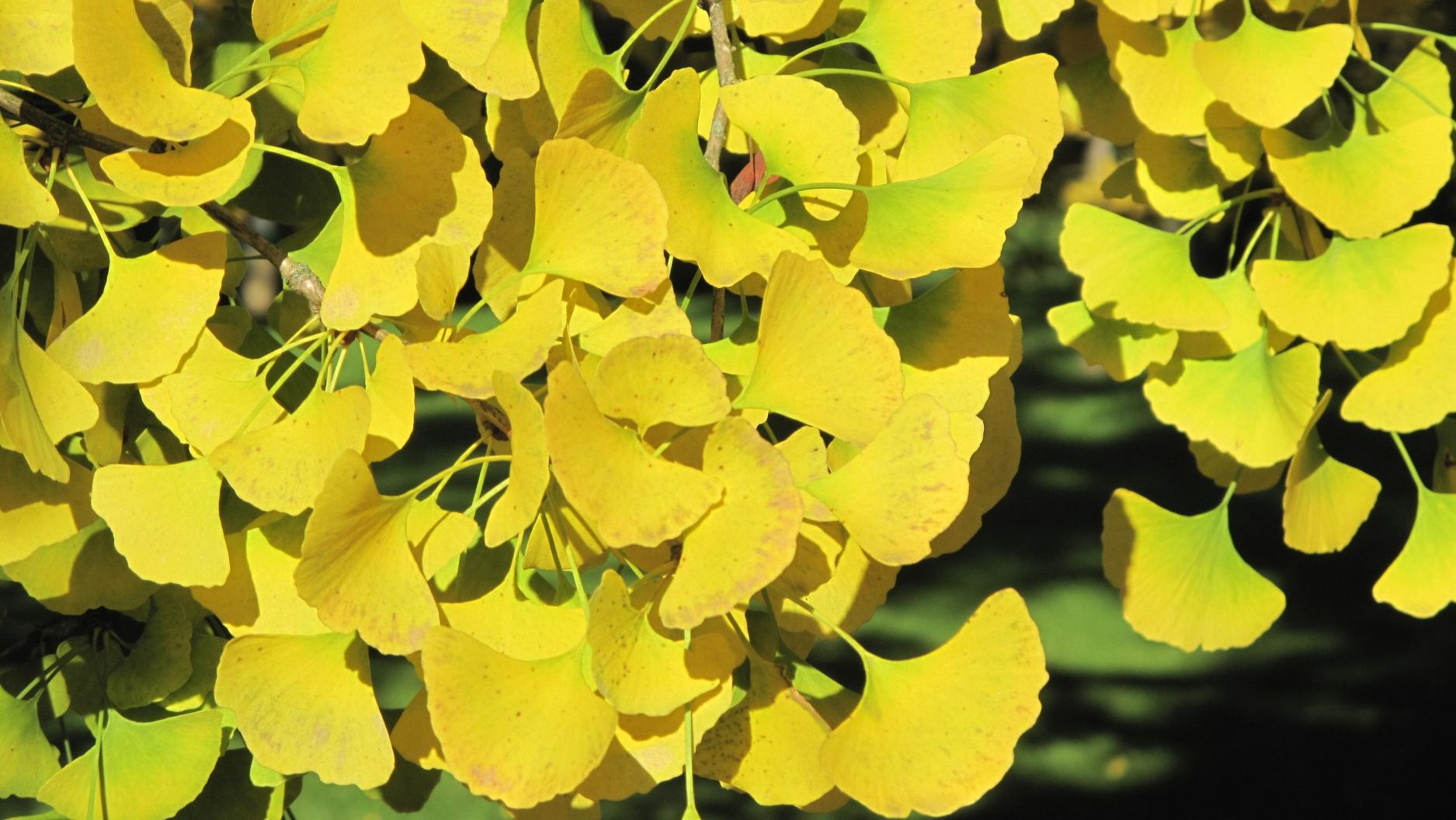
Ginkgo
Ginkgo biloba
Common & Folk Names
- Maidenhair Tree
- Kew Tree
- Fossil Tree
- Bai Guo (Chinese – white fruit)
- Yin Xing (Chinese – silver apricot)
- Living Fossil
Plant Family
Ginkgoaceae (the only living species in this family)
Geographic Location
Native to China, where it has been cultivated for thousands of years, particularly around Buddhist and Taoist temples. Wild populations may survive in remote mountainous areas of eastern China, though most existing trees are cultivated. Now planted worldwide as an ornamental tree in temperate regions including Europe, North America, Japan, Korea, Australia, and New Zealand. Thrives in temperate climates with distinct seasons.
Habitat
In its native range, grows in mixed forests on mountain slopes with well-draining soil. Prefers areas with adequate rainfall and moderate temperatures. In cultivation, adapts to urban conditions remarkably well, tolerating pollution, compacted soil, and various environmental stresses better than most trees. Found from sea level to moderate elevations.
Growing Conditions
Sun: Full sun to partial shade; grows best in full sun
Soil: Deep, moist, well-draining soil; tolerates a wide range of soil types including sandy, loamy, or clay soils; pH 5.0-8.0; adaptable to various conditions
Propagation: Sow fresh seeds in autumn (remove fleshy coating first); take cuttings in summer; grafting is used to propagate male trees for urban planting
Care: Water regularly during establishment; once established, relatively drought-tolerant; slow-growing initially, then moderate growth; very hardy and long-lived (can live over 1,000 years); generally pest and disease-free; minimal pruning required
NZ Planting Calendar
Sowing (seed): Autumn (March-May) using fresh seed with fleshy coating removed; seeds require cold stratification over winter
Propagation (cuttings/division): Take semi-hardwood cuttings in summer (January-February); grafting in winter (July-August)
Planting: Autumn (March-May) or spring (September-October); transplant while dormant
Growth: Deciduous tree; slow initial growth, moderate growth after establishment; can reach 20-35 metres over many decades
Flowering: Not applicable for young trees; mature trees (20+ years) produce flowers/cones in spring, but most cultivated trees are male clones and do not fruit
Harvest: Leaves harvested in autumn (March-April) just as they begin to turn yellow and before they drop; this timing coincides with peak flavonoid content
Note: Not native to NZ; introduced ornamental tree; grows well throughout NZ in suitable conditions; particularly common in urban plantings, parks, and gardens; very hardy and tolerant of NZ conditions; spectacular autumn colour (bright golden yellow); female trees produce fleshy, foul-smelling fruits (most urban plantings use male trees to avoid this); long-lived and slow-growing; well-suited to NZ climate
Harvesting Guidelines
Harvest leaves in autumn when they begin to turn golden yellow but before they drop from the tree. This timing (typically March-April in NZ) coincides with maximum flavonoid and terpenoid content. Select healthy, undamaged leaves from throughout the tree. The leaves should be turning yellow but not yet fully dried or brown. Harvest in dry weather after morning dew has evaporated. Dry leaves quickly in a well-ventilated, shaded area at temperatures not exceeding 40°C to preserve the delicate constituents. Properly dried leaves should retain good golden-green to yellow colour and characteristic fan shape. Store dried leaves in airtight containers away from light and moisture. Most commercial ginkgo products use standardised extracts rather than whole leaf, as the extraction and concentration process ensures consistent levels of active constituents. Seeds (from female trees) are used in Traditional Chinese Medicine but require careful preparation due to potential toxicity.
Parts Used
- Leaves (primary medicinal part in Western herbalism)
- Seeds (nuts) – used in Traditional Chinese Medicine but require cooking and careful preparation due to potential toxicity; not commonly used in Western herbalism
Constituents & their Actions
Ginkgo’s therapeutic properties arise from two primary groups of compounds—flavonoids and terpenoids (ginkgolides and bilobalide)—that work synergistically to provide cognitive enhancement, circulatory support, and antioxidant protection.
Flavonoid Glycosides:
These compounds represent approximately 24% of standardised ginkgo extracts and provide significant antioxidant and circulatory effects. Some of the main flavonoid glycosides in ginkgo are:
- Quercetin glycosides
- Kaempferol glycosides
- Isorhamnetin glycosides
- Rutin
- Luteolin derivatives
The main actions of these flavonoid glycosides are:
- Provide potent antioxidant protection, particularly in neural and vascular tissues
- Support capillary integrity and reduce capillary permeability
- Exhibit anti-inflammatory effects
- Scavenge free radicals and reactive oxygen species
- Support cardiovascular health through multiple mechanisms
Terpenoids (Ginkgolides and Bilobalide):
These unique compounds (found almost exclusively in ginkgo) represent approximately 6% of standardised extracts. Some of the main terpenoids in ginkgo are:
- Ginkgolide A
- Ginkgolide B
- Ginkgolide C
- Ginkgolide J
- Bilobalide
The main actions of these terpenoids are:
- Antagonise platelet-activating factor (PAF), reducing excessive platelet aggregation
- Provide neuroprotective effects
- Improve cerebral and peripheral circulation
- Reduce inflammation
- Protect mitochondrial function
- Support neurotransmitter systems
Proanthocyanidins:
Complex flavonoid polymers with potent antioxidant effects.
The main actions of proanthocyanidins are:
- Provide powerful antioxidant protection
- Support vascular health and integrity
- Enhance the effects of other flavonoids
- Protect collagen and elastin in blood vessel walls
Organic Acids and Other Constituents:
Including ginkgolic acids (which are removed or reduced in quality standardised extracts due to potential allergenic effects).
The main actions of these compounds are:
- Contribute to overall therapeutic profile
- Ginkgolic acids: potential allergens, removed from quality extracts
Actions with Mechanisms
Cognitive Enhancement and Neuroprotection:
Ginkgo supports cognitive function through multiple complementary mechanisms. The terpenoids, particularly ginkgolides and bilobalide, protect neurons from damage through antioxidant effects, support of mitochondrial function, and modulation of neurotransmitter systems, which in turn enhances memory, concentration, and mental clarity. Improved cerebral circulation (discussed below) ensures adequate oxygen and glucose delivery to brain tissues, supporting optimal neural function. The flavonoids protect neurons from oxidative stress, which accumulates with age and contributes to cognitive decline. Ginkgo appears to enhance the efficiency of neurotransmitter systems including acetylcholine, dopamine, and serotonin, which regulate memory, mood, and cognitive function. These mechanisms support ginkgo’s use for age-related cognitive decline, memory enhancement, and potentially for neurodegenerative conditions.
Circulatory Enhancement (Cerebral and Peripheral):
Ginkgo improves blood flow to the brain and extremities through several mechanisms. The terpenoids antagonise platelet-activating factor (PAF), which in turn reduces excessive platelet aggregation, improves blood fluidity, and enhances circulation through small blood vessels. The flavonoids strengthen capillary walls and reduce vascular permeability, supporting healthy circulation. Ginkgo promotes vasodilation (widening of blood vessels) through effects on nitric oxide and other vasodilatory mechanisms, which increases blood flow to tissues. The combined effects improve microcirculation—blood flow through the smallest blood vessels including those in the brain, eyes, ears, and extremities. These circulatory effects explain ginkgo’s benefits for conditions involving poor circulation including claudication (leg pain from poor circulation), Raynaud’s syndrome, and potentially tinnitus and vertigo when these arise from circulatory insufficiency.
Antioxidant:
Ginkgo provides exceptionally potent antioxidant protection, particularly in neural and vascular tissues. The flavonoid glycosides scavenge multiple types of free radicals and reactive oxygen species, which in turn protects cellular structures including lipid membranes, proteins, and DNA from oxidative damage. Bilobalide specifically protects mitochondria (the energy-producing centres of cells) from oxidative stress, supporting cellular energy production and preventing mitochondrial dysfunction that contributes to ageing and neurodegeneration. The antioxidant effects are particularly pronounced in the brain, where high metabolic activity generates substantial oxidative stress. These protective effects slow aspects of ageing, support cardiovascular health, and protect against oxidative stress-related diseases.
Anti-inflammatory:
Multiple constituents reduce inflammation through various pathways. Ginkgolides antagonise PAF, a potent inflammatory mediator, which in turn reduces inflammatory responses in various tissues. The flavonoids inhibit inflammatory enzymes and reduce production of pro-inflammatory cytokines. The anti-inflammatory effects are particularly relevant in vascular tissues and the nervous system, where chronic low-grade inflammation contributes to disease processes. These properties support ginkgo’s use for inflammatory conditions and its protective effects against chronic diseases associated with inflammation.
Platelet-Activating Factor (PAF) Antagonism:
This is one of ginkgo’s unique and important actions. The ginkgolides, particularly ginkgolide B, antagonise PAF receptors, which in turn prevents excessive platelet aggregation (clumping), reduces inflammation, and modulates immune responses. PAF is involved in numerous physiological and pathological processes including blood clotting, inflammation, asthma, and allergic reactions. By antagonising PAF, ginkgo provides circulatory benefits (improved blood flow, reduced clot risk), anti-inflammatory effects, and potential benefits for asthma and allergies. This mechanism is central to many of ginkgo’s therapeutic effects and distinguishes it from other circulatory herbs.
Neuroprotective Against Excitotoxicity:
Ginkgo protects neurons from excitotoxic damage—injury caused by excessive stimulation by neurotransmitters like glutamate. The terpenoids, particularly bilobalide, modulate glutamate receptors and protect neurons from glutamate-induced damage, which in turn prevents neuronal death that occurs in stroke, traumatic brain injury, and neurodegenerative diseases. This neuroprotective effect contributes to ginkgo’s potential benefits for cognitive decline, stroke recovery, and neuroprotection.
Retinal and Ocular Protection:
The antioxidant and circulatory effects extend to the eyes and retina. Ginkgo improves blood flow to the retina and optic nerve, which in turn supports retinal health and visual function. The flavonoids protect retinal cells from oxidative damage, particularly relevant in age-related macular degeneration and diabetic retinopathy. Research suggests potential benefits for glaucoma (possibly through improved optic nerve blood flow) and other ocular conditions involving poor circulation or oxidative damage.
Potential Antidepressant Effects:
Some research suggests ginkgo may provide mood-enhancing and antidepressant effects, particularly in elderly individuals. The mechanisms may involve improved cerebral circulation, neuroprotective effects, modulation of neurotransmitter systems, and reduction of oxidative stress, which in turn supports balanced mood and emotional well-being. The effects appear most pronounced when depression occurs alongside cognitive decline or circulatory insufficiency.
Main Use
Ginkgo is primarily used to support cognitive function and memory, particularly in age-related cognitive decline and early-stage dementia. Research demonstrates that standardised ginkgo extracts improve memory, concentration, mental clarity, and information processing speed in individuals experiencing age-related cognitive changes. The herb appears most effective when cognitive decline is mild to moderate, with evidence supporting use for maintaining cognitive function during ageing. Ginkgo’s neuroprotective and circulatory effects address multiple mechanisms underlying cognitive decline, making it valuable for individuals seeking to maintain mental sharpness as they age.
For circulatory disorders, ginkgo provides significant benefits for peripheral vascular disease, particularly intermittent claudication (leg pain from poor circulation during walking). Clinical trials demonstrate increased walking distance and reduced pain in individuals with claudication. The herb improves circulation to the extremities, making it useful for Raynaud’s syndrome (poor circulation to fingers and toes) and other conditions involving peripheral circulatory insufficiency.
Ginkgo shows promise for tinnitus (ringing in the ears) and vertigo when these conditions arise from circulatory insufficiency or vascular causes. The improvements in cerebral circulation and microcirculation to the inner ear may address underlying causes in some cases, though results vary and not all tinnitus responds to ginkgo.
For eye health, ginkgo supports retinal function and may slow progression of age-related macular degeneration and diabetic retinopathy through improved retinal circulation and antioxidant protection. The herb may benefit glaucoma through improved optic nerve blood flow, though this requires professional supervision.
Ginkgo’s antioxidant and anti-inflammatory properties provide broad-spectrum support for cardiovascular health, healthy ageing, and protection against oxidative stress-related conditions. The herb represents a valuable tool for preventive healthcare and supporting healthy ageing, particularly for the cardiovascular and nervous systems.
CRITICAL SAFETY NOTE: Ginkgo has significant anticoagulant/antiplatelet effects and can increase bleeding risk, particularly when combined with blood-thinning medications. Professional supervision is essential for anyone taking anticoagulants or with bleeding disorders.
Preparations
Standardised Extract (24% flavonoid glycosides, 6% terpenoids): This is the most researched and recommended form. Tablets or capsules containing standardised extract provide consistent, reliable dosing of active constituents. Most clinical research uses these standardised extracts.
Leaf Tea (infusion): Steep 1-2 teaspoons (2-4g) of dried leaves in 250ml freshly boiled water for 10-15 minutes; strain and drink. Significantly less potent than standardised extracts; whole leaf tea contains lower concentrations of active constituents and may contain more ginkgolic acids (potential allergens).
Tincture (1:5, 50% alcohol): 2-4ml (40-80 drops), 2-3 times daily. Provides more concentrated effects than tea but less standardised than commercial extracts.
Fluid Extract: More concentrated than tincture; follow manufacturer’s instructions. Provides standardised dosing in liquid form.
NOTE: Most clinical research and therapeutic use relies on standardised extracts (EGb 761 or similar preparations) rather than whole herb preparations. The standardisation ensures consistent levels of active constituents and removes potentially allergenic ginkgolic acids.
Dosage
Standardised Extract (24/6): 120-240mg daily in divided doses (typically 40-80mg three times daily, or 120mg twice daily); effects develop gradually over 4-12 weeks of consistent use
Dried Leaf (tea): 2-4g, 2-3 times daily; less effective than standardised extract
Tincture (1:5, 50% alcohol): 2-4ml (40-80 drops), 2-3 times daily
Fluid Extract: Follow manufacturer’s instructions, typically 0.5-1ml, 2-3 times daily
IMPORTANT NOTES:
- Ginkgo requires consistent daily use for several weeks to months to achieve full therapeutic effects; this is not a quick-acting herb
- Most clinical studies use 12-52 weeks of treatment; patience is essential
- Standardised extracts provide more reliable and researched effects than whole herb preparations
- Take with food if digestive upset occurs
Safety & Drug Interactions
Ginkgo has a generally good safety profile when used appropriately, but significant drug interactions and bleeding risks require careful consideration.
Common Side Effects: Generally well-tolerated with mild, infrequent side effects including digestive upset, headache, dizziness, or allergic skin reactions. Some individuals experience restlessness or insomnia, particularly if taken late in the day.
Bleeding Risk (CRITICAL): Ginkgo inhibits platelet aggregation and can increase bleeding risk. This is one of the most important safety considerations. Case reports document serious bleeding events (including intracranial haemorrhage) in individuals taking ginkgo, particularly when combined with anticoagulant or antiplatelet medications. Whilst the overall risk is relatively low, the consequences can be severe.
Contraindications:
- Bleeding Disorders: Avoid ginkgo in individuals with haemophilia or other bleeding disorders
- Upcoming Surgery: Discontinue ginkgo at least 2 weeks (preferably 4 weeks) before scheduled surgery due to bleeding risk
- Pregnancy: Avoid during pregnancy due to insufficient safety data and potential effects on bleeding; some traditional concerns about effects on labour
- Lactation: Exercise caution during lactation; limited safety data available
- Epilepsy: Some case reports suggest ginkgo might lower seizure threshold; use cautiously in epilepsy or avoid
Drug Interactions (CRITICAL):
- Anticoagulants and Antiplatelet Drugs: MAJOR interaction with warfarin, aspirin, clopidogrel, and other blood thinners; can significantly increase bleeding risk; requires careful monitoring if combination is deemed necessary; many practitioners recommend avoiding combination
- NSAIDs: May increase bleeding risk when combined with ibuprofen, naproxen, or other non-steroidal anti-inflammatory drugs
- SSRIs and Antidepressants: Potential interaction with selective serotonin reuptake inhibitors; some reports of increased bleeding risk or serotonin syndrome
- Anticonvulsants: May reduce effectiveness of some seizure medications; theoretical concern about lowering seizure threshold
- Diabetes Medications: May affect blood glucose levels; monitor blood sugar if combining
- CYP450 Substrates: Ginkgo affects certain liver enzymes; potential interactions with drugs metabolised by these enzymes
Other Precautions:
- Individuals allergic to poison ivy, poison oak, or cashews may be more likely to develop allergic reactions to ginkgo (cross-reactivity with urushiol-like compounds)
- Contact with fresh seeds or seed pulp can cause severe dermatitis in sensitive individuals
- Choose products with low ginkgolic acid content (standardised extracts have these removed)
- Monitor for unusual bleeding (easy bruising, nosebleeds, etc.)
Scientific Evidence
Cognitive Function and Dementia: Extensive research with mixed results. Some studies show improvements in cognitive function, memory, and activities of daily living in individuals with age-related cognitive decline or Alzheimer’s disease, whilst other large trials show minimal benefits. A Cochrane review concluded that evidence for dementia is inconsistent and unconvincing, whilst other meta-analyses show modest benefits for cognition. The variability may relate to differences in patient populations, extract standardisation, dosage, and duration of treatment. Evidence is strongest for early cognitive decline rather than advanced dementia.
Intermittent Claudication: Multiple clinical trials and meta-analyses support ginkgo’s effectiveness for increasing pain-free walking distance in intermittent claudication. Studies show statistically significant improvements compared to placebo, though effects are modest. Ginkgo appears less effective than supervised exercise programmes but may provide benefits for those unable to exercise.
Tinnitus and Vertigo: Research shows mixed results. Some studies suggest benefits for vascular-origin tinnitus or vertigo, whilst others show no significant effects. The variability likely relates to different underlying causes of these conditions; ginkgo may help when circulation is involved but not for other causes.
Age-Related Macular Degeneration: Preliminary research suggests potential benefits for retinal health and slowing progression of macular degeneration. Studies show improved retinal blood flow and some visual function improvements, though more research is needed.
Mechanisms of Action: Extensive laboratory and animal research confirms antioxidant effects, improved circulation, neuroprotection, PAF antagonism, and anti-inflammatory properties. The mechanisms are well-characterised and support therapeutic applications.
Safety and Bleeding Risk: Case reports document bleeding events with ginkgo use, particularly when combined with anticoagulants. Large safety studies show relatively low overall risk, but the severity of potential complications warrants caution. Studies confirm antiplatelet effects in laboratory tests.
Western Energetics
Temperature: Neutral to slightly cooling. Ginkgo’s energetics are relatively neutral, making it suitable for most constitutional types. The slight cooling quality relates to its anti-inflammatory effects and ability to clear heat from the head and senses.
Moisture: Neutral to slightly moistening. Ginkgo neither significantly dries nor moistens tissues, making it broadly applicable. The circulatory enhancement may provide gentle moistening through improved nutrient and fluid delivery to tissues.
Tissue State: Particularly indicated for stagnation and depletion in the head and upper body. Ginkgo excels at moving stuck circulation, clearing congestion in the brain and senses, and addressing conditions where poor blood flow impairs function. Also valuable for atrophy and depletion when tissues lack adequate circulation and nourishment. The herb’s ability to improve microcirculation addresses the underlying tissue deficiency whilst the neuroprotective effects support tissue resilience and function.
Taste
NOTE: Ginkgo leaves have minimal taste when properly prepared in standardised extracts. The following describes whole leaf preparations:
Slightly Bitter: A mild bitterness is present in leaf preparations, though not pronounced. This bitter quality stimulates and clears, supporting ginkgo’s ability to clear stagnation and improve mental clarity.
Slightly Astringent: A subtle astringent quality contributes to tissue-toning effects and supports vascular integrity.
Relatively Bland: Compared to many medicinal herbs, ginkgo has a relatively neutral, bland taste, making it easy to take. Standardised extracts typically have minimal taste.
Plant Lore
Ginkgo is often called a “living fossil” because it is the sole surviving member of the order Ginkgoales, which was widespread millions of years ago. Fossil records show ginkgo-like trees existed 270 million years ago, making ginkgo one of the oldest living tree species on Earth. The species survived in China whilst becoming extinct elsewhere, preserved largely through cultivation around temples and monasteries.
In China, ginkgo has been revered for thousands of years. Buddhist monks planted ginkgo trees around temples, protecting them through centuries of change. Some of these temple trees are over 1,000 years old. The nuts (seeds) have been used in Traditional Chinese Medicine for over 1,000 years, primarily for respiratory conditions and as a tonic.
The tree’s name comes from the Japanese “gin kyo” (silver apricot), referring to the seeds. The species name “biloba” refers to the distinctive two-lobed (bilobed) fan-shaped leaves that are instantly recognisable.
Ginkgo came to Western attention in the late 17th and early 18th centuries when European botanists in Japan first described it. The tree was introduced to Europe in the 1730s and to North America in the 1780s, where it became popular as an ornamental. The beauty of the fan-shaped leaves and spectacular golden autumn colour made ginkgo a favourite in parks and streetscapes.
Medicinally, Western interest in ginkgo is relatively recent, beginning seriously in the 1960s when German researchers developed standardised leaf extracts and began clinical research. Prior to this, Western herbalism largely ignored ginkgo leaves (though aware of Traditional Chinese Medicine’s use of the seeds). The development of standardised extracts and subsequent clinical research transformed ginkgo into one of the most widely used herbal medicines globally.
Ginkgo became a symbol of resilience and longevity after six ginkgo trees survived the atomic bombing of Hiroshima in 1945. The trees were within 1-2 kilometres of the blast centre but survived and eventually re-sprouted, continuing to grow to this day. This remarkable survival made ginkgo a symbol of hope and endurance.
The tree is dioecious—separate male and female trees. Female trees produce fleshy, foul-smelling fruits (technically not true fruits but fleshy seed coats). The smell is often compared to rancid butter or vomit and is intensely unpleasant. This has led to urban plantings favouring male trees (propagated by grafting or cuttings to ensure sex). The seeds inside the foul-smelling coating are edible when properly prepared and are considered a delicacy in parts of Asia.
Ginkgo’s resistance to pollution, pests, disease, and harsh urban conditions has made it a favourite street tree worldwide. The species’ ancient lineage means it evolved before many modern plant pests and diseases existed, contributing to its remarkable resistance to such problems.
Additional Information
The standardisation of ginkgo extracts represents an important development in herbal medicine. The EGb 761 extract (and similar standardised preparations) ensures consistent levels of active constituents (24% flavonoid glycosides, 6% terpenoids) whilst removing potentially problematic ginkgolic acids. This standardisation allows for reliable dosing and reproducible research results. When purchasing ginkgo, look for products that specify standardisation to 24% flavonoids and 6% terpenoids.
The difference in Traditional Chinese Medicine (TCM) and Western herbal use of ginkgo is notable. TCM primarily uses the seeds (bai guo) for respiratory conditions and as a tonic, though they require careful preparation and dosing due to potential toxicity. Western herbalism focuses exclusively on the leaves, which were not traditionally used medicinally in China until Western research demonstrated their value. This represents an interesting case where Western scientific research revealed therapeutic applications unknown to the plant’s traditional culture of use.
The slow development of ginkgo’s effects requires patience. Unlike herbs that provide immediate symptomatic relief, ginkgo’s benefits develop gradually over weeks to months. This can be frustrating for those expecting quick results, but the cumulative benefits for cognitive function and circulation are worth the wait for appropriate individuals.
Quality of ginkgo products varies significantly. Choose reputable manufacturers who provide standardised extracts with documented constituent levels. Avoid products that don’t specify standardisation or that make unrealistic claims. Organic certification helps ensure quality and absence of pesticides.
Growing ginkgo as an ornamental provides a beautiful, low-maintenance tree with spectacular autumn colour and interesting botanical history. The trees are exceptionally hardy and long-lived. Choose male cultivars to avoid the foul-smelling fruits of female trees. Ginkgo tolerates urban pollution and difficult conditions better than most trees, making it ideal for street plantings and challenging sites.
The fan-shaped leaves are distinctive and beautiful, changing from green to brilliant golden yellow in autumn before dropping. The autumn display is spectacular and brief, with many trees dropping all their leaves within a day or two after frost.
Ginkgo’s status as a living fossil makes it fascinating from both botanical and evolutionary perspectives. The tree has survived mass extinctions, ice ages, and dramatic climate changes over hundreds of millions of years, making it a living link to Earth’s ancient past.
Sources
Bone, K., & Mills, S. (2013). Principles and Practice of Phytotherapy: Modern Herbal Medicine (2nd ed.). Churchill Livingstone.
Mills, S., & Bone, K. (2005). The Essential Guide to Herbal Safety. Elsevier.
Birks, J., & Grimley Evans, J. (2009). Ginkgo biloba for cognitive impairment and dementia. Cochrane Database of Systematic Reviews, 2009(1), CD003120.
Weinmann, S., Roll, S., Schwarzbach, C., Vauth, C., & Willich, S. N. (2010). Effects of Ginkgo biloba in dementia: Systematic review and meta-analysis. BMC Geriatrics, 10(1), 14.
Pittler, M. H., & Ernst, E. (2000). Ginkgo biloba extract for the treatment of intermittent claudication: A meta-analysis of randomised trials. American Journal of Medicine, 108(4), 276-281.
DeFeudis, F. V., & Drieu, K. (2000). Ginkgo biloba extract (EGb 761) and CNS functions: Basic studies and clinical applications. Current Drug Targets, 1(1), 25-58.
Diamond, B. J., Shiflett, S. C., Feiwel, N., Matheis, R. J., Noskin, O., Richards, J. A., & Schoenberger, N. E. (2000). Ginkgo biloba extract: Mechanisms and clinical indications. Archives of Physical Medicine and Rehabilitation, 81(5), 668-678.
Kleijnen, J., & Knipschild, P. (1992). Ginkgo biloba for cerebral insufficiency. British Journal of Clinical Pharmacology, 34(4), 352-358.
Koch, E. (2005). Inhibition of platelet activating factor (PAF)-induced aggregation of human thrombocytes by ginkgolides: Considerations on possible bleeding complications after oral intake of Ginkgo biloba extracts. Phytomedicine, 12(1-2), 10-16.
Bent, S., Goldberg, H., Padula, A., & Avins, A. L. (2005). Spontaneous bleeding associated with Ginkgo biloba: A case report and systematic review of the literature. Journal of General Internal Medicine, 20(7), 657-661.
Le Bars, P. L., Katz, M. M., Berman, N., Itil, T. M., Freedman, A. M., & Schatzberg, A. F. (1997). A placebo-controlled, double-blind, randomised trial of an extract of Ginkgo biloba for dementia. Journal of the American Medical Association, 278(16), 1327-1332.
Kanowski, S., Herrmann, W. M., Stephan, K., Wierich, W., & Hörr, R. (1996). Proof of efficacy of the Ginkgo biloba special extract EGb 761 in outpatients suffering from mild to moderate primary degenerative dementia of the Alzheimer type or multi-infarct dementia. Pharmacopsychiatry, 29(2), 47-56.
Ernst, E., & Pittler, M. H. (1999). Ginkgo biloba for dementia: A systematic review of double-blind placebo-controlled trials. Clinical Drug Investigation, 17(4), 301-308.
Mahadevan, S., & Park, Y. (2008). Multifaceted therapeutic benefits of Ginkgo biloba L.: Chemistry, efficacy, safety, and uses. Journal of Food Science, 73(1), R14-R19.
Disclaimer: This monograph is for educational purposes only and is not medical advice. Please consult with a qualified healthcare practitioner before using any herbal remedy, especially if you are pregnant, nursing, taking medication, or have a known medical condition.
CRITICAL: Ginkgo has significant anticoagulant effects and can increase bleeding risk. Never combine with blood-thinning medications without professional supervision. Discontinue use at least 2 weeks before surgery.