
Finding Nature’s Medicine in the City
You don’t need a vast forest or a rural paddock to be a forager. Plants are resilient and grow wherever they can find a foothold—including cracks in the pavement, abandoned lots, and city parks. Urban foraging is about learning to see your city’s “weed-scape” as both a pharmacy and a pantry.
The Core Urban Rule: In the city, the question isn’t just “Is this plant safe to eat?” but “Is this location safe to harvest from?”
The Urban Forager’s Mindset
Look Down: Your best finds will often be at your feet, not in the manicured shrubbery.
Embrace the “Weeds”: The most common urban medicinals are tough, adaptable plants that thrive in disturbed soil—plantain, dandelion, cleavers. These are the survivors.
Prioritise Safety Over Abundance: A small, clean harvest from a good location is worth far more than a large one from a polluted spot.
Be Realistic: Urban foraging will never replace your garden or the bulk suppliers. It’s about connection, resilience, and finding unexpected abundance in everyday places.
Cultural Context and Scope
This guide addresses urban foraging in Aotearoa New Zealand from a Western herbalism perspective.
Rongoā Māori and Traditional Gathering:
Rongoā Māori has its own traditional gathering practices, protocols (kawa), spiritual frameworks (karakia), and deep cultural relationships with native plants. Foraging in Aotearoa requires understanding and respecting these existing Indigenous practices and connections to whenua (land).
CRITICAL: NZ Native Plant Protocols New Zealand native plants have profound cultural significance:
- Kawakawa, mānuka, horopito, harakeke, karamu and many others are taonga (treasures)
- Traditional protocols (kawa) exist for gathering these plants
- Spiritual practices (karakia) accompany traditional gathering
- DO NOT harvest native plants without:
- Understanding their cultural significance – Consulting with rongoā practitioners – Understanding appropriate tikanga (protocols)
- STRONGLY RECOMMEND: Cultivation over wild harvesting for natives
- Respect rāhui (customary prohibitions) on specific areas/species
- Many areas have iwi/hapū management plans governing plant gathering
This Guide Focuses On:
Western foraging practices for introduced/naturalised medicinal herbs in Aotearoa New Zealand, NZ-specific regulations (DOC, council bylaws), conservation considerations, and identification of common introduced species. When native plants are mentioned, it is for identification/awareness purposes only—harvest guidance applies to introduced species.
Why NZ-Specific Foraging Knowledge Matters:
Unique flora (natives + introduced), specific regulations (DOC land, council bylaws), biosecurity considerations (pest plants), Tiriti o Waitangi obligations (respecting mana whenua), conservation status awareness.
Why Forage in Cities?
It’s Free: Herbs growing in neglected spaces are there for the taking (with appropriate permissions).
It’s Local: You can’t get more local than the plants growing 10 minutes from your house.
It Builds Connection: Noticing which plants grow where teaches you to really see your neighbourhood. That walk to the bus stop becomes a treasure hunt.
It’s Empowering: Learning that the “weed” you’re stepping over can soothe a bee sting is powerful knowledge.
It’s Budget-Friendly: Perfect for people who can’t afford expensive herbs or don’t have garden space.
Top Urban Foraging Targets in NZ
These plants are urban survivors—they thrive in tough conditions and are perfect for city harvesting.
1. Plantain (Plantago major/lanceolata)


Where to Find:
- Compacted soil in parks
- Lawn edges and cracks in footpaths
- Playgrounds
- Anywhere people walk
Identification:
- Broad-leaved (P. major): Oval leaves with distinctive parallel veins radiating from base
- Narrow-leaved (P. lanceolata): Lance-shaped leaves, same parallel veins
- Both have characteristic flower spikes on thin stems
Why This Matters:
Plantain is your urban first-aid kit. Got a mosquito bite while walking in the park? Crush a fresh plantain leaf and apply it directly—instant relief. The compounds in plantain (aucubin, allantoin) reduce inflammation and speed healing.
Urban Use:
- Fresh poultice: For insect bites, stings, minor scrapes (crush leaf, apply)
- Tea: Dried leaves for digestive support
- External preferred in cities: Less risk of contamination when used topically
How to Harvest:
- Pick outer leaves only, leave centre to regrow
- Choose leaves from above ground level (less soil contamination)
- Rinse thoroughly before use
2. Dandelion (Taraxacum officinale)

Where to Find:
- Lawns in parks (non-sprayed areas)
- Edges of car parks
- Untended grass verges (away from roads)
- Community gardens
Identification:
- Bright yellow flowers (turn into white “clocks”)
- Deeply toothed leaves in basal rosette
- Milky white sap when stem broken
- Single hollow flower stem per flower
Why This Matters:
Every part is useful—young leaves are nutrient-dense bitter greens, roots are liver support, flowers make delightful syrup. It’s free, abundant, and grows literally everywhere.
Urban Use:
- Young leaves: Salads (harvest before flowering—less bitter)
- Flowers: Cordial, syrup, fritters
- Roots: Roasted “coffee” substitute (harvest from clean areas only—roots accumulate soil contaminants)
How to Harvest:
- Leaves: Pick before flower stalk appears (spring, autumn)
- Flowers: Sunny morning when fully open
- Roots: Only from areas you’re confident are uncontaminated (or skip entirely in cities)
Urban Caution:
- Avoid roadsides (exhaust particulates stick to leaves)
- Confirm park isn’t sprayed (many councils spray lawns)
- Wash leaves very thoroughly
3. Mallow (Malva spp.)

Where to Find:
- Waste ground and vacant lots
- Edges of car parks and driveways
- Unmanaged park edges
- Growing in gravel or disturbed soil
Identification:
- Rounded, lobed leaves (look like little hands)
- Small pinkish-white or purple flowers
- Distinctive seed pods that look like tiny cheese wheels (hence “cheeses”)
Why This Matters:
Mallow is incredibly soothing. The leaves are packed with mucilage (a slimy, slippery substance) that coats and soothes irritated tissues. Perfect for urban dry throats and coughs from air pollution.
Urban Use:
- Soothing tea: For sore throat, dry cough, digestive irritation
- Poultice: For insect bites (like plantain)
- Fresh greens: Young leaves edible in salads
How to Harvest:
- Pick leaves from healthy plants
- Choose upper leaves (less soil splash)
- Flowers are also usable
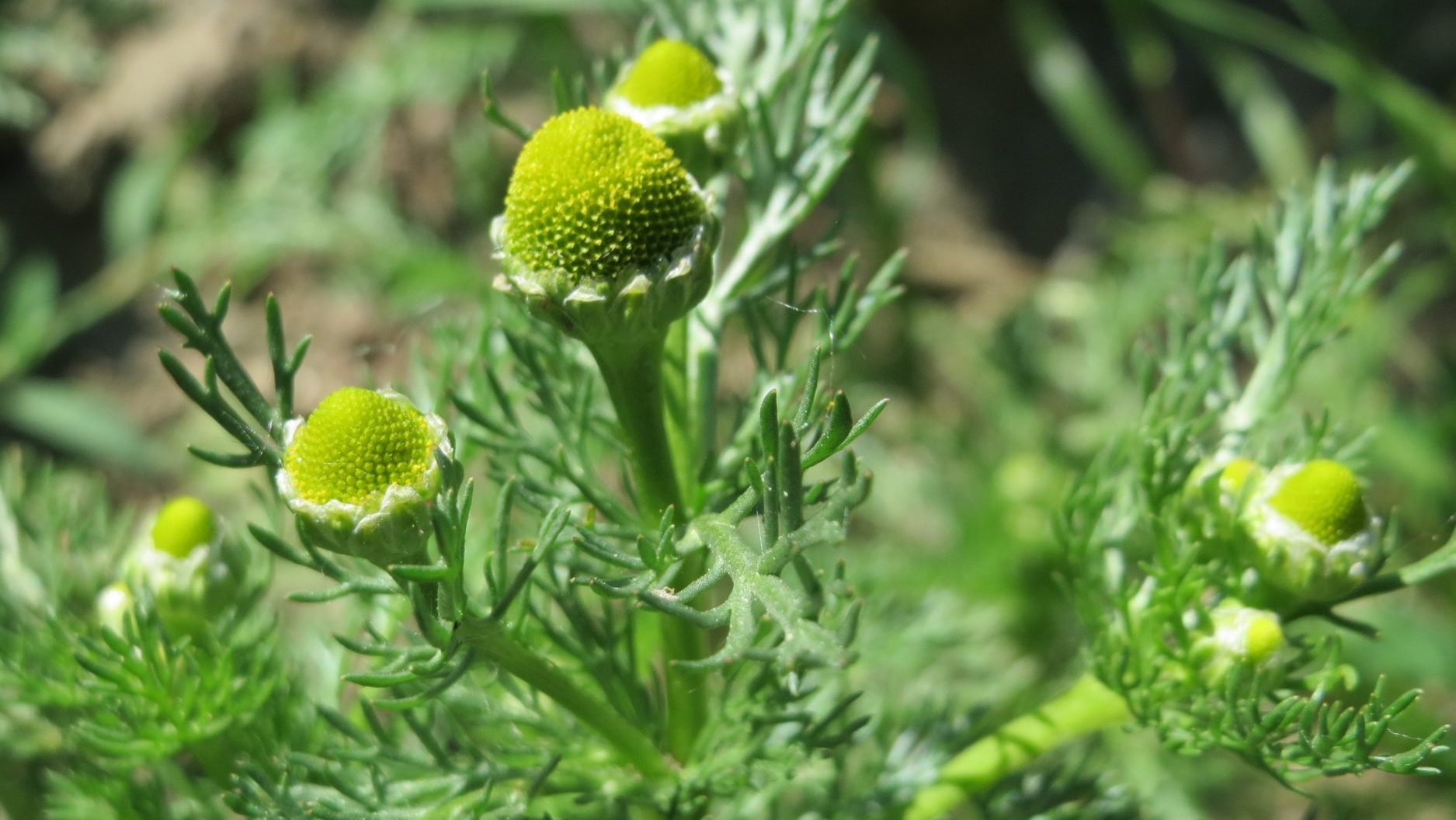
4. Pineapple Weed (Matricaria discoidea)

Where to Find:
- Compacted dirt paths
- Gravel driveways
- Edges of parking lots
- Disturbed soil anywhere
Identification:
- Low-growing plant with feathery, fern-like leaves
- Yellow-green, cone-shaped flower heads (no white petals)
- Distinctive smell: Smells like pineapple when crushed (this is the key!)
Why This Matters:
This is an urban treasure. It’s related to chamomile, tastes delicious, and grows in the most unlikely places—like cracks in concrete. Finding it feels like discovering a secret.
Urban Use:
- Calming tea: Tastes like chamomile with a hint of pineapple, naturally sweet
- Kid-friendly: Safe, tasty, and fun to find
- Nerves and digestion: Gentle calming effect, soothes upset stomach
How to Harvest:
- Pinch off flower heads
- Collect a handful for a cup of tea
- Grows prolifically—regrows quickly
5. Chickweed (Stellaria media)

Where to Find:
- Shady damp corners
- Under trees in parks
- Garden beds (if you know they’re not sprayed)
- Cool, moist spots
Identification:
- Small, oval paired leaves on weak stems
- Tiny white flowers (look like little stars)
- Single line of hairs running up one side of stem (distinctive feature!)
- Often grows in mats
Why This Matters:
Edible, nutritious, and incredibly common in cool months. High in vitamin C and minerals.
Urban Use:
- Fresh salad greens: Mild flavour, slightly succulent
- Skin soother: Poultice for itchy skin, eczema
- Cooling: Traditional use for “hot” conditions (inflammation, overheating)
How to Harvest:
- Pinch off top growth (top 5-10cm)
- Leave roots—it regrows fast
- Best in spring and autumn (dies back in summer heat)
Urban Foraging Safety: The Critical Rules
This is the most important section. Urban foraging carries specific risks that rural foraging doesn’t.
Rule 1: Location, Location, Location
NEVER HARVEST FROM:
Roadsides (Within 10-20 Metres of Busy Roads):
- Why: Vehicle exhaust contains heavy metals (especially from brake dust)
- Particulates settle on plants: Low-growing plants accumulate the most
- Lead is persistent: Even though we banned leaded petrol in 1996, lead remains in soil near old roads
Sprayed Areas:
- Public parks and sports fields (councils routinely spray)
- Corporate lawns and median strips
- Golf courses
- School grounds (many spray regularly)
How to Know: Call your local council and ask about their spray schedules. Many councils have publicly available spray maps.
Industrial Sites:
- Old factories or commercial areas
- Near storage facilities
- Brownfield sites
Why: Soil can be contaminated with heavy metals, petroleum products, industrial chemicals.
SAFE(R) HARVEST LOCATIONS:
Community Gardens (With Permission):
- Generally unsprayed
- Ask the coordinator about their practices
Your Own or Friends’ Gardens:
- You know the spray history
- Full control
Untended Edges:
- Overgrown laneways with no car traffic
- Quiet residential streets (low traffic, no through-roads)
- Edges of unmown reserves (check spray status first)
Parks (Carefully):
- At least 50 metres from roads
- Unmanaged edges (not the manicured lawn)
- Confirm with council they don’t spray
Rule 2: Test Your Soil (If Serious About Urban Foraging)
Free Soil Testing in NZ:
If you have a regular foraging spot (like a community garden or your own garden), consider using Soilsafe Aotearoa—a free soil testing service run by University of Auckland.
What They Test:
- Lead
- Arsenic
- Copper
- Zinc
How It Works:
- Collect a soil sample (size of a cricket ball)
- Generate a sample ID at soilsafe.auckland.ac.nz
- Mail it to them (address on website)
- Get results emailed in ~8 weeks
- Results compared to NZ health standards
Why This Matters:
- Wellington, Auckland, Dunedin all have areas with elevated lead (from old paint and historical leaded petrol)
- Heavy metals concentrate in older urban areas (pre-1960s housing)
- Knowing your soil helps you make informed decisions
If Lead is High:
- Stick to aerial parts (leaves, flowers) rather than roots
- Peel root vegetables if you must harvest them
- Wash everything very thoroughly
Rule 3: Wash Everything Like Your Life Depends On It
Urban plants need serious washing:
Why:
- Dust from roads
- Dog urine/feces contamination (low-growing plants especially)
- Soil splash
- Air pollution particulates
How:
- Rinse: Under running water
- Soak: In water with 1 tablespoon vinegar per litre (helps remove surface contaminants)
- Rinse again: With clean water
- For leafy greens: Do this twice
Pro tip: A spray bottle with diluted vinegar solution helps get into crevices on plants like plantain (the parallel veins trap dirt).
Rule 4: Know the Law
Public Parks:
- Technically, removing plants is often prohibited by council bylaws
- Be discreet, take small amounts, don’t damage ornamental plantings
- Don’t forage from deliberately planted gardens
Private Property:
- Always get permission before foraging
- Trespassing is illegal
Conservation Land:
- DOC land has different rules (see General Foraging Guide)
- Urban parks managed by regional councils have their own bylaws
Practical Approach:
- Foraging common weeds from neglected areas is generally tolerated
- Don’t be obvious or greedy
- Build relationships with community garden coordinators, they often welcome help removing “weeds”
Urban Foraging Kit
Keep it simple and discreet:
Small Scissors or Pocket Knife: For clean cuts
Paper Bag or Small Basket: Breathable container
Reusable Water Bottle: For washing hands or a quick rinse
Phone: For plant ID apps and photos
Optional:
- Small spray bottle with vinegar solution (for field washing)
- Gloves (for nettles, or if you’re concerned about contamination)
NZ Urban Foraging Resources
Urban Foraging Maps:
- Falling Fruit (fallingfruit.org): Global map, some NZ locations
- Urban Foraging NZ (urbanforaging.co.nz): NZ-specific fruit and nut tree map
- Christchurch: Christchurch City Council has a Food Foraging Map showing fruit trees in public spaces
Community Groups:
- Auckland: Food Foraging West Auckland (Facebook group)
- Wellington: Edible Wellington (Community group)
- Christchurch: tautahi Urban Foraging (Active after earthquakes, check current status)
- Nelson/Marlborough: Nelson Marlborough Fruit Map
Soil Testing:
- Soilsafe Aotearoa: soilsafe.auckland.ac.nz (Free testing for As, Cu, Pb, Zn)
- GNS Science: Geochemical atlases for Wellington, Auckland, Dunedin showing contamination patterns
Council Resources:
- Contact your local council to ask about:
- Spray schedules for parks – Bylaws regarding foraging – Community garden locations
What NOT to Forage in Cities
Roots (Generally):
Heavy metals accumulate in roots. Unless you have soil test results showing safe levels, avoid harvesting roots from urban areas.
Plants Right Next to Buildings:
Old houses (pre-1960s) may have lead-based paint flakes in soil at the dripline.
Water Plants from Urban Waterways:
Streams and ponds in cities can be contaminated from upstream sources. Skip the watercress unless you’re confident of water quality.
Anything in Soil You Don’t Know:
If you can’t verify the location is unsprayed and uncontaminated, don’t harvest.
Urban Foraging Mindset: Connection Over Volume
Urban foraging isn’t about filling baskets. It’s about:
Noticing: Seeing the plantain you’ve walked past every day for five years Appreciating: Being grateful for free medicine growing in the cracks Learning: Understanding your local ecosystem and contamination risks Empowering: Knowing you can find help for a bee sting right there on the footpath
Example:
You’re walking to the bus stop. You notice pineapple weed growing in the gravel car park edge. You pick a small handful, bring it home, make a cup of tea. Cost: $0. Connection to place: Priceless.
That’s urban foraging.
Common Urban Foraging Mistakes
Mistake 1: Harvesting from roadsides “But there’s so much plantain right there on the verge!” → It’s contaminated. Walk 50 metres into the park instead.
Mistake 2: Assuming public parks are safe Many councils spray regularly. Always check.
Mistake 3: Harvesting roots without knowing soil history Roots = maximum contamination risk. Stick to aerial parts in cities.
Mistake 4: Not washing thoroughly enough “I’ll just give it a quick rinse.” → Not enough. Vinegar soak, then rinse. Twice for leafy greens.
Mistake 5: Being greedy Taking too much, being obvious, harvesting from ornamental plantings = foraging gets banned.
Building Your Urban Foraging Practice
Week 1: Learn ONE plant
- Start with plantain (easiest to identify, safest)
- Find it in 5 different locations
- Practice identifying it
- Try the first-aid poultice (find a mosquito bite, crush a leaf, apply)
Week 2-4: Observe and Map
- Notice where plants grow
- Check council spray maps
- Identify safe harvest zones
- Start a foraging journal (what’s where, when, spray status)
Month 2: Add ONE more plant
- Dandelion or chickweed
- Same careful approach
Month 3+: Build Your Rhythm
- Seasonal harvesting (spring greens, summer flowers)
- Join local foraging groups
- Share knowledge (and locations) with trusted friends
Final Thoughts
Urban foraging transforms your relationship with your city. Suddenly, the neglected corner of the car park isn’t just weeds—it’s pineapple weed tea waiting to happen. The park isn’t just grass—it’s plantain, dandelion, chickweed, mallow.
You’ll start seeing abundance where others see nothing.
But: Do it safely. Test your soil if you can. Avoid contaminated areas. Wash thoroughly. Start small.
Your city is more generous than you think. You just need to learn how to ask.
Sources & Further Reading
NZ-Specific Resources:
- GNS Science. (2024). Urban Geochemical Atlas of Wellington. gns.cri.nz
- Soilsafe Aotearoa. University of Auckland. soilsafe.auckland.ac.nz
- Christchurch City Council. (2021). City Food Foraging Map.
- Urban Foraging NZ. urbanforaging.co.nz
Urban Foraging:
- Knox, J. (2013). The Forager’s Treasury: The Essential Guide to Finding and Using Wild Plants in Aotearoa New Zealand. Penguin Random House NZ.
- Falling Fruit (fallingfruit.org) – Global urban foraging map
Soil Contamination:
- Ministry for the Environment. Soil Contaminant Standards for Health. mfe.govt.nz
- Morgenstern, U., et al. (2024). Maps of heavy metals in Wellington soils. GNS Science.
Rongoā Māori Disclaimer: This guide does not represent rongoā Māori preparation methods or traditional Māori medicine-making. Rongoā Māori is a complete healing system with its own protocols, karakia (prayers), and cultural practices that cannot be separated from te ao Māori (the Māori worldview). For rongoā Māori knowledge and treatment, please consult qualified rongoā practitioners through Te Paepae Motuhake or other appropriate Māori health services.
Medical Disclaimer: This guide is for educational purposes only. Urban foraging carries specific risks related to contamination. You are responsible for assessing the safety of locations and plants. Never forage from areas with known contamination, always obtain permission for private property, comply with local laws, and when in doubt, don’t consume. If you have concerns about soil contamination, use the free Soilsafe Aotearoa testing service.
Note on Pricing: All prices mentioned in this guide are approximate and based on New Zealand suppliers as of December 2025. Prices vary by supplier, season, and market conditions. We recommend checking current prices with your local suppliers.