
Immunology, Antimicrobial Mechanisms, and Immunomodulation
Comprehensive guide covering immunomodulation covering innate and adaptive immunity, cytokine modulation, and immunostimulant versus immunomodulatory actions. Western immunology, antimicrobial pharmacology, phytochemical immune mechanisms.
Table of Contents
- Foundational Immunology
- Elderberry: Antiviral Mechanisms
- Echinacea: Immunomodulation Science
- Garlic: Antimicrobial Biochemistry
- Synergistic Formulation Strategies
- Clinical Evidence and Application
Foundational Immunology
The Immune System: Two-Tiered defence
Innate Immunity (First Line, Non-Specific):
Physical barriers:
- Skin (mechanical barrier, antimicrobial peptides)
- Mucous membranes (trap pathogens, secretory IgA)
- Ciliary action (respiratory tract clearance)
- Gastric acid (destroys ingested pathogens)
Cellular components:
- Macrophages: “Big eaters” – phagocytose (engulf) pathogens, present antigens, secrete cytokines
- Neutrophils: Most abundant white blood cells, first responders, phagocytic, release antimicrobial compounds
- Natural Killer (NK) cells: Destroy virus-infected and tumor cells without prior sensitisation
- Dendritic cells: “Sentinel cells” – capture antigens, migrate to lymph nodes, activate adaptive immunity
Soluble components:
- Complement system: Cascade of proteins that mark pathogens for destruction, create membrane attack complex
- Acute phase proteins: C-reactive protein, mannose-binding lectin
- Interferons: Antiviral proteins that induce “antiviral state” in neighboring cells
Timeline: Minutes to hours
Adaptive Immunity (Second Line, Specific):
Cellular (T-cell mediated):
- Helper T cells (CD4+):
- Th1 cells: Activate macrophages, support cellular immunity (intracellular pathogens) – Th2 cells: Support antibody production, fight parasites and allergens – Balance between Th1/Th2 critical for appropriate immune response
- Cytotoxic T cells (CD8+): Directly kill infected cells
- Regulatory T cells: Prevent excessive immune responses, maintain self-tolerance
Humoral (B-cell/Antibody mediated):
- B cells: Produce antibodies specific to pathogens
- Antibody classes:
- IgM: First response, largest antibody – IgG: Most abundant, crosses placenta, long-term immunity – IgA: Found in secretions (saliva, tears, mucus), prevents pathogen attachment – IgE: Allergic responses, parasite defence
Memory: Both T and B cells form memory populations for rapid response upon re-exposure
Timeline: Days to weeks for initial response; hours for memory response
Cytokines: Immune Communication Molecules
Pro-inflammatory cytokines:
- TNF-α (Tumor Necrosis Factor-alpha): Fever, inflammation, activates neutrophils and macrophages
- IL-1 (Interleukin-1): Fever, acute phase response, T-cell activation
- IL-6: Fever, acute phase proteins, stimulates antibody production
- IL-12: Drives Th1 response, activates NK cells
Anti-inflammatory cytokines:
- IL-10: Suppresses inflammatory responses, prevents excessive tissue damage
- TGF-β: Regulatory functions, tissue repair
Antiviral:
- Type I Interferons (IFN-α, IFN-β): Induce antiviral state in cells, activate NK cells
- Type II Interferon (IFN-γ): Activates macrophages, enhances antigen presentation
Balance is key: Appropriate cytokine response fights infection; excessive response causes tissue damage (“cytokine storm”)
Viral Replication Cycle (Target for Herbal Interventions)
1. Attachment: Virus binds to host cell receptors via surface glycoproteins (e.g., hemagglutinin in influenza)
2. Entry: Virus enters cell through membrane fusion or endocytosis
3. Uncoating: Viral genetic material released into cytoplasm
4. Replication: Viral genome replicated using host cell machinery
5. Assembly: New viral particles assembled
6. Release: New viruses exit cell (often via budding, using neuraminidase to cleave from cell surface)
Herbal interventions can occur at multiple stages:
- Block attachment (elderberry)
- Prevent entry (various antiviral herbs)
- Inhibit replication (some polyphenols)
- Prevent release (neuraminidase inhibitors)
Elderberry: Antiviral Mechanisms

Phytochemical Profile
Anthocyanins (Primary Actives):
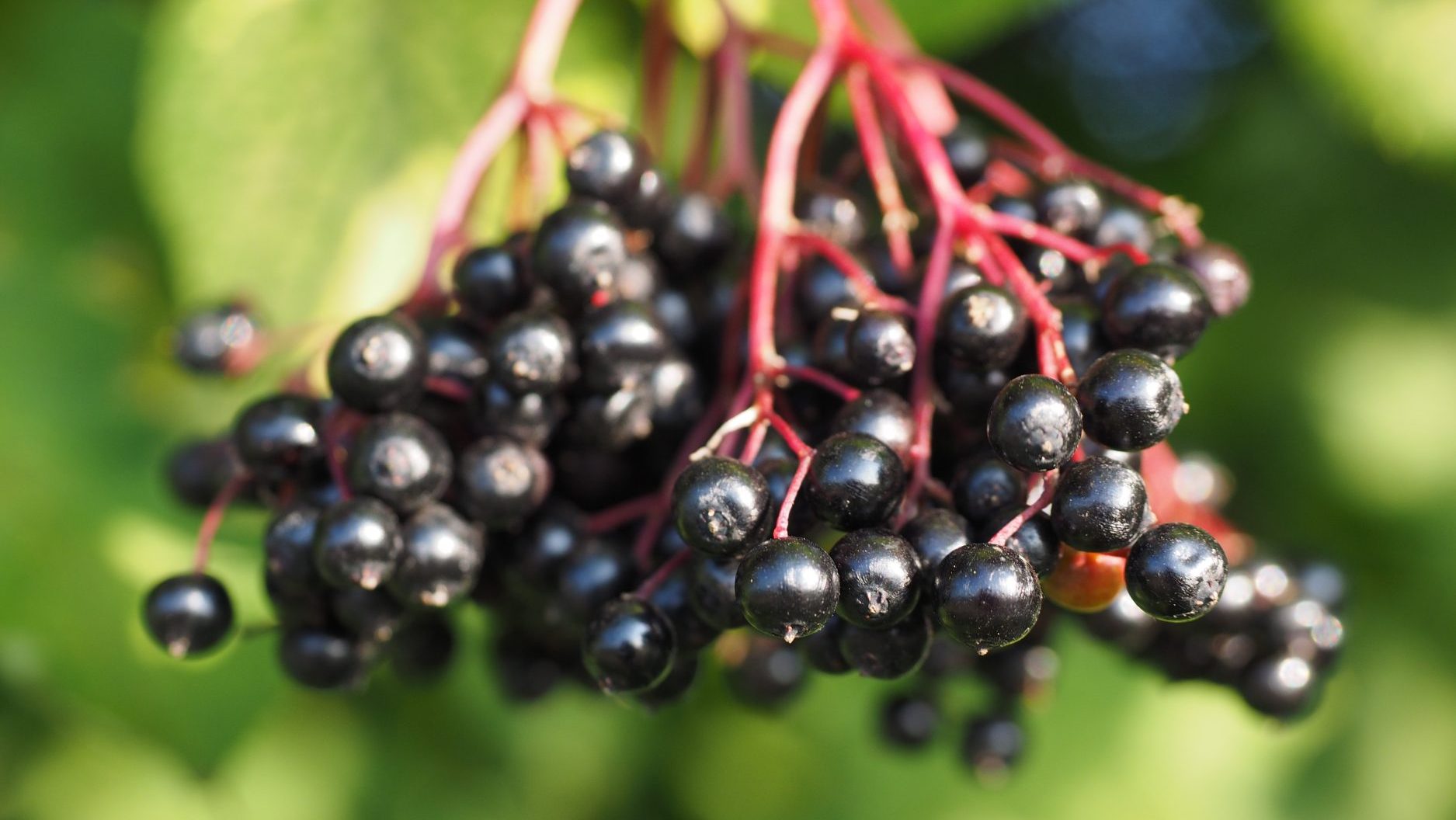
Elderberries contain exceptionally high anthocyanin content (up to 1,600 mg/100g fresh berries), giving them their deep purple colour.
Major anthocyanins:
- Cyanidin 3-glucoside (Cy-3-glu): Most abundant
- Cyanidin 3-sambubioside (Cy-3-sam): Unique to elderberry
- Cyanidin 3-sambubioside-5-glucoside
- Cyanidin 3,5-diglucoside
Other bioactive compounds:
- Flavonols: Quercetin derivatives, rutin
- Phenolic acids: Chlorogenic acid, caffeic acid derivatives
- Triterpenes: Ursolic acid, oleanolic acid
Mechanism 1: Hemagglutinin Inhibition
The viral surface spike:
Influenza viruses have hemagglutinin (HA) glycoprotein spikes on their surface. HA binds to sialic acid residues on host cell membranes, initiating infection.
Elderberry’s action:
Research demonstrates that elderberry anthocyanins bind directly to hemagglutinin spikes, causing:
- Denaturation: Structural changes in HA protein
- Blocked binding sites: Prevents HA from attaching to sialic acid receptors
- Viral inactivation: Virus cannot penetrate cells
Scientific evidence:
- Elderberry extract inhibited hemagglutination in laboratory assays
- Blocked viral attachment to erythrocytes (red blood cells)
- Effective against multiple influenza strains (H1N1, H3N2, influenza B)
Result: Virus cannot initiate infection
Mechanism 2: Neuraminidase Inhibition
The viral release enzyme:
After viruses replicate inside cells, neuraminidase (NA) cleaves sialic acid bonds, allowing new viruses to bud from the cell surface and spread to infect other cells.
Elderberry’s action:
Cyanidin 3-sambubioside specifically binds to influenza neuraminidase:
Molecular binding:
- Attaches to NA active site residues 356-364 and 395-432
- Blocks specific segments of the enzyme
- Shields proteases from releasing these peptide segments
- Novel binding mode not seen with pharmaceutical NA inhibitors (oseltamivir/Tamiflu)
Effect: Prevents viral release and propagation to other cells
Clinical significance:
- Reduces viral load
- Limits spread within respiratory tract
- Decreases symptom severity
Note: This dual action (blocking entry AND release) makes elderberry particularly effective.
Mechanism 3: Multi-Stage Viral Inhibition
University of Sydney research (Torabian et al., 2019):
Comprehensive study using commercially farmed elderberries against influenza A virus demonstrated:
Pre-infection treatment:
- Applied elderberry before virus exposure
- Blocked viral entry into cells
- Significant inhibitory effect
During infection:
- Applied elderberry during active infection
- Reduced viral replication
- Moderate effect
Post-infection (most surprising finding):
- Applied elderberry AFTER cells already infected
- Even more effective than early treatment
- Blocked viral propagation at later stages
- Prevented transmission to neighboring cells
Mechanism explanation:
- Early stage: Blocks hemagglutinin (entry)
- Late stage: Inhibits neuraminidase (release) more potently
- Works at multiple points in viral life cycle
Clinical implication: Elderberry effective even if not taken at first symptom — still beneficial during active infection.
Mechanism 4: Immunomodulation
Cytokine effects:
Elderberry influences immune signaling, though effects are complex:
Stimulatory effects:
- Increases production of IL-6, IL-8, TNF-α in some studies
- Enhances inflammatory response to clear infection
- Activates immune cells
Anti-inflammatory effects:
- Other studies show reduction in pro-inflammatory cytokines
- Prevents excessive inflammation
- Balances immune response
Current understanding:
- Context-dependent effects
- May enhance appropriate immune response while preventing excessive inflammation
- Polysaccharide and anthocyanin components have different immunological effects
Practical outcome: Supports effective immune response without causing cytokine storm.
Clinical Evidence
Meta-analysis (Hawkins et al., 2019):
Analysis of 4 randomised controlled trials, 180 participants total:
Primary finding:
- Large effect size (1.717, P<0.001)
- Elderberry substantially reduced duration of upper respiratory symptoms
Influenza-specific:
- Effect size 2.074 (very large effect)
- Average reduction: 2-4 days symptom duration
- More effective against flu than common cold (cold ES: 0.662)
Safety:
- No significant adverse effects reported
- Well-tolerated across all studies
Zakay-Rones studies (1995, 2004):
Used standardised elderberry extract (Sambucol, 1,900 mg anthocyanins daily):
1995 study (Influenza B outbreak):
- 93% of elderberry group complete symptom relief in 2 days
- Placebo group: 6 days for symptom relief
2004 study (Influenza A and B):
- Symptoms relieved 4 days earlier on average
- Less need for rescue medication
Active compounds dose-dependent:
- Higher anthocyanin content = better results
- Standardisation important for clinical effect
Bioavailability and Metabolism
Absorption:
Anthocyanins absorbed in small intestine:
- Peak plasma levels 1-2 hours after ingestion
- Relatively low bioavailability (individual anthocyanins 0.1-1%)
- Metabolites more abundant than parent compounds
Gut microbiome role:
Unabsorbed anthocyanins reach colon where gut bacteria metabolise them into:
- Phenolic acid metabolites (protocatechuic acid, others)
- These metabolites may contribute significantly to biological activity
- Persist longer in circulation than parent anthocyanins
Implications:
- Regular dosing maintains active compounds and metabolites
- Effects are systemic, not just local to respiratory tract
- Individual microbiome may influence effectiveness
Echinacea: Immunomodulation Science

Phytochemical Complexity
Three primary constituent classes:
1. Alkamides (Alkylamides):
Structure: Long-chain fatty acid derivatives with nitrogen-containing groups
Primary alkamides in Echinacea:
- Dodeca-2E,4E,8Z,10E/Z-tetraenoic acid isobutylamide
- Undeca-2E,4Z-diene-8,10-diynoic acid isobutylamide
- Multiple others (>20 identified)
Location: Concentrated in roots; lesser amounts in aerial parts
Solubility: Lipophilic (fat-soluble); extracted well by alcohol, poorly by water
Sensation: Cause tingling sensation on tongue when consuming fresh echinacea
2. Caffeic Acid Derivatives:
Major compounds:
- Cichoric acid (Chicoric acid): Most abundant in E. purpurea aerial parts
- Echinacoside: Found primarily in E. angustifolia and E. pallida roots
- Chlorogenic acid: Present in all species
Properties:
- Hydrophilic (water-soluble)
- Potent antioxidants
- Anti-inflammatory
3. Polysaccharides:
Types:
- Arabinogalactans
- Arabinoxylans
- Inulin-type fructans
Characteristics:
- High molecular weight
- Water-soluble
- Extracted by aqueous preparations (teas, fresh juice)
Immunomodulation Mechanisms
Mechanism 1: Macrophage Activation
Macrophages are key innate immune cells that:
- Phagocytose (engulf and destroy) pathogens
- Present antigens to activate adaptive immunity
- Secrete cytokines to coordinate immune response
Echinacea’s effects on macrophages:
Enhanced phagocytosis:
- Alkamides and polysaccharides increase rate at which macrophages engulf particles
- Water-ethanol extracts containing chicoric acid, polysaccharides, and alkamides increased macrophage phagocytic activity in rats
- Higher concentrations → greater activity
- Carbon clearance test (mice): Enhanced removal of foreign particles from bloodstream
Increased nitric oxide (NO) production:
- Spleen macrophages from echinacea-treated rats show increased NO release when stimulated
- NO has antimicrobial properties
- Involved in inflammatory signaling
Mechanism:
- Alkamides may interact with cannabinoid receptors (CB2) on immune cells
- Polysaccharides bind to pattern recognition receptors (Toll-like receptors)
- Activates intracellular signaling cascades
- Increases expression of immune-related genes
Mechanism 2: Natural Killer Cell Enhancement
NK cells are innate immune cells that:
- Identify and destroy virus-infected cells
- Kill tumor cells
- Don’t require prior sensitisation (unlike T cells)
Echinacea’s effects:
Increased NK cell numbers:
- Oral administration of E. purpurea root extract increased NK cells in normal, leukemic, and aging mice
Enhanced cytotoxicity:
- NK cells from echinacea-treated animals more effective at killing target cells
- Increased release of perforin and granzymes (cytotoxic molecules)
Clinical relevance: More rapid elimination of virus-infected cells before viral replication spreads.
Mechanism 3: Cytokine Production
Pro-inflammatory cytokines (infection-fighting):
Echinacea polysaccharides stimulate macrophages to produce:
- IL-1: Fever, inflammation, T-cell activation
- IL-6: Acute phase response, antibody production
- TNF-α: Activates neutrophils, enhances inflammation
Mechanism: Polysaccharides bind to macrophage surface receptors → activation of transcription factors (NF-κB) → increased cytokine gene expression
Timing importance: Enhanced cytokine production beneficial at infection onset; excessive or prolonged production harmful
Mechanism 4: Interferon Stimulation
Interferons are crucial antiviral molecules.
Echinacea’s effects:
- Stimulates production of Type I interferons (IFN-α, IFN-β)
- Alkamides and caffeic acid derivatives activate interferon pathways
Antiviral mechanism:
- Interferons bind to neighboring cell receptors
- Induce “antiviral state” in cells
- Upregulate enzymes that degrade viral RNA
- Inhibit protein synthesis needed for viral replication
Result: Cells become resistant to viral infection before virus spreads.
Mechanism 5: Dendritic Cell Modulation
Dendritic cells (DCs) bridge innate and adaptive immunity:
- Capture antigens
- Migrate to lymph nodes
- Present antigens to T cells (initiates adaptive response)
Echinacea’s complex effects:
Polysaccharides (aqueous extracts):
- Activate DCs
- Increase expression of co-stimulatory molecules
- Enhance DC ability to activate T cells
Alkamides (ethanolic extracts):
- May suppress DC function in some contexts
- Potentially prevent over-activation
- Context and dose-dependent
Interpretation: Different preparations (water vs. alcohol) have different DC effects. May contribute to echinacea’s ability to enhance immunity without causing excessive inflammation.
Antimicrobial Mechanisms
Beyond immunomodulation, echinacea has direct effects on pathogens:
Cell membrane disruption:
- Alkamides are lipophilic
- Integrate into microbial lipid bilayers
- Increase membrane permeability
- Cause cell lysis and death
Enzyme inhibition:
- Caffeic acid derivatives inhibit microbial enzymes
- Affects cell wall synthesis
- Disrupts nucleic acid production
Antiviral activity:
- Inhibits influenza hemagglutination
- Active against HSV-1, HSV-2, influenza A and B
- Blocks viral entry in some cases
Species and Part Differences
Chemical composition varies significantly:
E. purpurea (Purple Coneflower):
- High cichoric acid in aerial parts
- Moderate alkamides in roots
- Most researched species
- Often used as fresh pressed juice or dried herb
E. angustifolia (Narrow-Leaf Coneflower):
- High echinacoside in roots
- Higher alkamide content than E. purpurea
- Traditional Native American medicine
- Often used as root tincture
E. pallida (Pale Purple Coneflower):
- High echinacoside
- Different alkamide profile
- Less commonly used
Aerial parts vs. roots:
- Aerial parts: Higher caffeic acid derivatives (especially cichoric acid)
- Roots: Higher alkamides
- Both have polysaccharides
Extraction method matters:
- Aqueous (tea, fresh juice): Polysaccharides, some phenolics
- Alcoholic (tincture): Alkamides, phenolics
- Combined extracts may offer synergistic benefits
Clinical Evidence
Meta-analyses and systematic reviews:
Cochrane Review:
- Identified multiple trials with mixed results
- Quality of studies variable
- Product standardisation major issue
Consistent findings across studies:
- May reduce incidence of colds (preventative use)
- More effective at onset of symptoms
- Reduces symptom duration by ~1-2 days on average
- Effects modest but significant
Key challenges in research:
- Product variability (different species, parts, extracts)
- Lack of standardisation
- Dosing differences
- Timing of administration
Studies with positive results typically used:
- Fresh plant preparations or standardised extracts
- Adequate alkamide and/or polysaccharide content
- Early intervention (first 24-48 hours)
- Sufficient dosing (300-500mg extract 3x daily minimum)
Pharmacokinetics
Alkamide absorption:
- Rapidly absorbed from GI tract
- Peak plasma levels 30 minutes to 2 hours
- Accumulate in tissues
- Half-life approximately 3-6 hours
- Metabolised primarily in liver
Clinical implication: Frequent dosing (every 2-3 hours) maintains therapeutic levels during acute infection.
Polysaccharide absorption:
- Large molecules, minimal absorption intact
- Effects primarily through gut-associated lymphoid tissue (GALT)
- Activate immune cells in intestinal mucosa
- Systemic immunomodulation without systemic absorption
Garlic: Antimicrobial Biochemistry

Organosulfur Chemistry
The Allicin Pathway:
Garlic’s antimicrobial power comes from organosulfur compounds formed when garlic is crushed:
1. Intact garlic clove contains:
- Alliin (S-allyl-L-cysteine sulfoxide): Stable, odorless precursor
- Alliinase enzyme: Stored in separate compartments
2. When crushed:
- Cell damage brings alliin and alliinase together
- Alliinase converts alliin → allicin (diallyl thiosulfinate)
- Reaction occurs rapidly (seconds to minutes)
- Allicin is responsible for characteristic pungent odor
3. Allicin instability:
- Allicin degrades quickly (half-life minutes at room temp, hours when refrigerated)
- Breaks down into multiple sulfur compounds:
- Diallyl sulfide (DAS) – Diallyl disulfide (DADS) – Diallyl trisulfide (DATS) – Ajoene (formed in oil) – Vinyldithiins
Why crushing and waiting matters:
- Maximum allicin formation requires 10 minutes after crushing
- Cooking immediately after crushing destroys alliinase before allicin forms
- For maximum benefit: Crush → wait 10 minutes → consume raw or add to food after cooking
Antimicrobial Mechanisms
Broad-spectrum activity:
Garlic compounds effective against:
- Gram-positive bacteria (Staphylococcus, Streptococcus)
- Gram-negative bacteria (E. coli, Salmonella)
- Fungi (Candida, Aspergillus)
- Viruses (influenza, rhinovirus, herpes)
- Parasites
Mechanism 1: Thiol-Disulfide Exchange
Allicin chemistry:
- Highly reactive due to sulfur-sulfur bond
- Reacts with thiol (-SH) groups in proteins
- Particularly targets cysteine residues
Effect on microbes:
- Modifies essential microbial enzymes
- Disrupts protein folding
- Inhibits DNA and RNA synthesis
- Damages cell membranes
- Multiple targets → difficult for resistance to develop
Example:
- Allicin inhibits cysteine proteases essential for microbial metabolism
- Inactivates enzymes involved in lipid synthesis
- Disrupts energy production pathways
Mechanism 2: Oxidative Stress
Reactive oxygen species (ROS):
- Allicin and derivatives generate ROS in microbial cells
- Overwhelms antioxidant defences
- Causes oxidative damage to:
- DNA (mutations, strand breaks) – Proteins (oxidation of amino acids) – Lipids (membrane peroxidation)
Selective toxicity:
- Higher concentrations needed to damage human cells
- Therapeutic window exists
- Microbes more susceptible than host cells
Mechanism 3: Membrane Disruption
Lipophilic compounds (ajoene, diallyl sulfides):
- Integrate into lipid bilayers
- Increase membrane fluidity
- Disrupt membrane integrity
- Cause leakage of cellular contents
Effect:
- Loss of membrane potential
- Disrupted ion gradients
- Cell death
Antiviral Mechanisms
Activity against respiratory viruses:
Research demonstrates garlic effectiveness against:
- Influenza A and B
- Rhinovirus (common cold)
- RSV (respiratory syncytial virus)
- Herpes simplex virus
Mechanisms:
Viral entry inhibition:
- Garlic compounds interfere with viral attachment proteins
- Block virus-cell membrane fusion
- Prevent viral penetration into cells
Replication inhibition:
- Some organosulfur compounds inhibit viral polymerases
- Interfere with viral protein synthesis
- Reduce viral yield in infected cells
Immune enhancement:
- Stimulates NK cell activity
- Enhances macrophage function
- Increases interferon production
Clinical evidence:
- Supplementation reduces cold incidence
- Decreases symptom severity
- Shortens illness duration (1-2 days average)
Immunomodulation
Enhanced immune cell function:
Macrophages and neutrophils:
- Increased phagocytosis
- Enhanced respiratory burst (antimicrobial ROS production)
- Improved chemotaxis (migration to infection site)
NK cells:
- Increased cytotoxicity against virus-infected cells
- Higher NK cell numbers with regular garlic consumption
T-cell proliferation:
- Aged garlic extract stimulates T-cell production
- Enhances cell-mediated immunity
Cytokine modulation:
- Increases IL-2 (T-cell growth factor)
- Enhances IFN-γ production (Th1 response)
- May reduce excessive pro-inflammatory cytokines in some contexts
Preparation and Bioavailability
Raw vs. Cooked:
Raw garlic:
- Maximum allicin and derivatives
- Strongest antimicrobial activity
- Most pungent
Cooked garlic:
- Heat destroys alliinase
- If crushed and waited 10 minutes before cooking, some allicin formed and converts to stable compounds
- Less antimicrobial activity than raw
- Still provides some organosulfur compounds and other benefits
Aged garlic extract:
- Fermented garlic
- Contains S-allyl cysteine (SAC) and other water-soluble compounds
- No allicin
- Different biological properties (cardiovascular, antioxidant)
- Milder, less antimicrobial activity than fresh
- More tolerable for long-term use
Garlic oil:
- Oil-soluble compounds (ajoene, diallyl sulfides)
- Different spectrum of activity
- Effective against some pathogens
Optimal for immune support:
- Fresh, raw garlic
- Crushed and waited 10 minutes
- Consumed regularly during high-risk periods
Synergistic Formulation Strategies
Understanding Synergy
Types of herb interactions:
Additive: 1 + 1 = 2 (combined effect equals sum of individual effects)
Synergistic: 1 + 1 = 3+ (combined effect greater than sum)
Antagonistic: 1 + 1 = 1 or less (one herb reduces another’s effectiveness)
Mechanisms of synergy:
- Multi-target effects (herbs act at different points in disease process)
- Enhanced bioavailability (one herb improves absorption of another)
- Complementary mechanisms (different immune pathways activated)
- Reduced side effects (lower doses needed when combined)
Example Synergistic Combination: Elderberry + Echinacea
Complementary mechanisms:
Elderberry:
- Direct antiviral (blocks hemagglutinin and neuraminidase)
- Works at entry and release stages of viral cycle
- Immunomodulatory (cytokine effects)
Echinacea:
- Immunostimulant (enhances macrophage, NK cell activity)
- Increases interferon production
- Some direct antiviral effects
- Anti-inflammatory (alkamides)
Combined effect:
- Elderberry prevents viral entry and spread
- Echinacea activates immune cells to destroy viruses that do enter
- Echinacea’s interferon stimulation makes cells resistant to infection
- Elderberry’s cytokine modulation + echinacea’s anti-inflammatory effects balance immune response
Clinical support:
- Combination products widely used
- Anecdotal reports suggest better outcomes than single herb
- No formal studies comparing combination vs. single herbs
Multi-Herb Formulation Principles
Building comprehensive immune formula:
1. Antiviral component (choose 1-2):
- Elderberry (primary)
- Lemon balm (anti-herpes, anti-influenza)
- Licorice (antiviral glycyrrhizin)
2. Immunostimulant (choose 1-2):
- Echinacea (acute use)
- Astragalus (preventative, long-term)
- Medicinal mushrooms (beta-glucans)
3. Antimicrobial (choose 1-2):
- Garlic (broad-spectrum)
- Thyme (respiratory focus)
- Oregano (strong antimicrobial)
4. Circulatory stimulant (choose 1):
- Ginger (drives herbs, warming)
- Cayenne (very warming, circulatory)
5. Demulcent/soothing (optional, for symptom relief):
- Marshmallow root (soothes throat and respiratory)
- Licorice (soothing, antiviral)
- Mullein (expectorant, lung tonic)
Dosing considerations:
- Lower doses of each herb when combining
- Monitor for interactions
- Start with 2-3 herbs before adding more
Clinical Evidence and Application
Evidence Levels
Level 1: Systematic reviews and meta-analyses
- Elderberry: Multiple meta-analyses showing efficacy
- Echinacea: Mixed results, quality variable
Level 2: Randomised controlled trials
- Elderberry: Several high-quality RCTs
- Echinacea: Many RCTs, results variable based on preparation
- Garlic: Moderate evidence for cold prevention
Level 3: Observational studies
- Traditional use across cultures
- Clinical observations
Level 4: In vitro and animal studies
- Strong mechanistic evidence for most immune herbs
- Demonstrates biological plausibility
Translating Research to practise
Challenges:
Product variability:
- Different species, plant parts, extraction methods
- Lack of standardisation in many studies
- Commercial products vary widely in active constituents
Dosing:
- Research doses often higher than commercial product recommendations
- Effective dose-response relationships not always clear
Timing:
- Critical factor often underemphasised
- Early intervention typically more effective
Individual variation:
- Genetics (cytochrome P450 polymorphisms affect metabolism)
- Microbiome (influences metabolism and absorption)
- Immune status (immunocompromised vs. healthy)
- Age (elderly may respond differently)
Evidence-Based Protocols
Prevention Protocol (Autumn-Winter):
Daily baseline:
- Garlic: 1-2 raw cloves in food
- Medicinal mushrooms or astragalus: Daily dose as per product
- Vitamin D: Essential for immune function (especially NZ winter)
- Sleep: 7-9 hours
When exposure increases (sick coworkers, family, travel):
- Add echinacea: 2 weeks on, 1 week off cycles
- Increase garlic to 2-3 cloves
- Fire cider: 1 tablespoon daily
Acute Intervention Protocol (First 24-48 Hours):
Hour 0 (first symptom):
- Elderberry syrup: 1 tablespoon immediately
- Echinacea tincture: 4ml immediately
- Raw garlic: 2 cloves
- Rest begins NOW
Hours 2-4:
- Echinacea: 2-4ml every 2-3 hours (aggressive dosing)
- Hot ginger-lemon tea: Continuously sipping
- Elderberry: 1 tablespoon every 4 hours
Ongoing (Days 1-3):
- Maintain high-dose elderberry and echinacea
- Garlic: 3-4 cloves throughout day
- Thyme tea: 3-4 cups daily
- maximise rest, fluids, warmth
Days 4-7:
- Reduce to moderate doses
- Monitor symptoms
- Continue rest
Recovery:
- Taper to preventative doses
- Don’t stop abruptly
- Resume normal activities gradually
Safety and Contraindications
Elderberry:
- Very safe when cooked/processed
- Avoid raw berries (can cause nausea)
- Generally safe in pregnancy/lactation (cooked)
Echinacea:
- Generally safe short-term
- Possible concerns:
- Autoimmune conditions (theoretical risk of stimulation) – Allergic reactions in daisy/ragweed allergic individuals – May interact with immunosuppressants
- Avoid long-term continuous use (>8 weeks)
Garlic:
- Very safe as food
- High doses may cause:
- GI upset – Body odour – Mild blood thinning
- Interactions:
- Blood thinners (warfarin): Monitor INR – Antiplatelet drugs: Additive effects – HIV medications (saquinavir): Reduces drug levels
General principles:
- Inform healthcare providers of all herbs used
- Herbs support but don’t replace medical care
- More is not always better
- Quality and timing matter more than quantity
References
Barrett, B. (2003). Medicinal properties of Echinacea: A critical review. Phytomedicine, 10(1), 66-86.
Bone, K., & Mills, S. (2013). Principles and practice of phytotherapy: Modern herbal medicine (2nd ed.). Churchill Livingstone.
Hawkins, J., et al. (2019). Black elderberry (Sambucus nigra) supplementation effectively treats upper respiratory symptoms: A meta-analysis of randomised, controlled clinical trials. Complementary Therapies in Medicine, 42, 361-365.
Hudson, J., & Vimalanathan, S. (2011). Echinacea — A source of potent antivirals for respiratory virus infections. Pharmaceuticals, 4(7), 1019-1031.
Percival, S.S. (2000). Use of echinacea in medicine. Biochemical Pharmacology, 60(2), 155-158.
Torabian, G., et al. (2019). Anti-influenza activity of elderberry (Sambucus nigra). Journal of Functional Foods, 54, 353-361.
Zakay-Rones, Z., et al. (1995). Inhibition of several strains of influenza virus in vitro and reduction of symptoms by an elderberry extract during an outbreak of influenza B. Journal of Alternative and Complementary Medicine, 1(4), 361-369.
Zakay-Rones, Z., et al. (2004). Randomised study of the efficacy and safety of oral elderberry extract in the treatment of influenza A and B virus infections. Journal of International Medical Research, 32(2), 132-140.
Rongoā Māori Disclaimer: This guide does not represent rongoā Māori preparation methods or traditional Māori medicine-making. Rongoā Māori is a complete healing system with its own protocols, karakia (prayers), and cultural practices that cannot be separated from te ao Māori (the Māori worldview). For rongoā Māori knowledge and treatment, please consult qualified rongoā practitioners through Te Paepae Motuhake or other appropriate Māori health services.
Medical Disclaimer: This guide is for educational purposes only and is not medical advice. Herbal preparations can interact with medications, cause allergic reactions, and may be contraindicated in certain health conditions. Always consult qualified healthcare practitioners before using herbal medicines, especially if you are pregnant, nursing, taking medications, or have medical conditions. You are solely responsible for correct plant identification, safe preparation practices, and appropriate use. The information presented represents current scientific understanding, which continues to evolve.
Note on Pricing: All prices mentioned in this guide are approximate and based on New Zealand suppliers as of January 2026. Prices vary by supplier, season, and market conditions. We recommend checking current prices with your local suppliers.