Learning to Recognise NZ’s Most Forageable Plants
This guide teaches you how to confidently identify the most common and useful herbs you’ll encounter when foraging in New Zealand. We’ll focus on distinctive features, seasonal changes, and how to avoid dangerous look-a-likes.
Remember: Never use a plant unless you’re 100% certain of its identity. This guide is a starting point—always cross-reference with multiple field guides and, when possible, learn from experienced foragers.
Why Herb Identification Matters
Learning to identify plants confidently transforms your relationship with the land around you:
Safety: Misidentification can cause serious illness or death (hemlock, for example, is deadly). Confident ID = safe foraging.
Empowerment: Walk through a “weedy” park and see food, medicine, beauty where others see “just grass.” Recognise dozens of useful plants hiding in plain sight.
Connection: Understanding plants by name, season, habitat creates deep relationship with place. You notice when the first dandelions bloom, when cleavers appears, when kawakawa sets fruit.
Self-Sufficiency: Seasonal harvests provide free, local herbs for teas, cooking, first aid. A patch of plantain becomes your first-aid kit. A dandelion patch becomes your salad greens.
Cost Savings: Commercial dried herbs cost $15-30 per 100g. A 30-minute forage can yield $50-100 worth of herbs. Knowledge literally grows on trees (and in lawns, and pathways…).
This guide teaches you to see familiar places with new eyes—and harvest safely from NZ’s generous plant community.
How to Use This Guide
Each plant profile includes:
- Key identification features (what makes it unmistakable)
- Seasonal variations (how it changes through the year)
- Look-a-likes (what it might be confused with and how to tell the difference)
- Where to find it (typical habitats)
- Uses (medicinal and edible)
- Harvest guidelines (what to take, when, and how much)
Study one plant at a time. Don’t try to learn all of these at once—you’ll get overwhelmed and make mistakes.
The “Big Three” Identification Features
Before we dive into specific plants, understand these three critical identification categories:
1. Leaf Venation (Vein Pattern)
Most plants have branching veins that radiate out from a central midrib. But some have parallel veins running the length of the leaf. This is unusual in broad-leaved plants and immediately distinctive.
Example: Plantain has parallel veins—this alone makes it almost impossible to confuse with anything dangerous.
2. Stem Shape
- Round stems: Most common
- Square stems: Mint family (Lamiaceae)—lemon balm, mint, sage, thyme
- Hollow stems: Dandelion, some carrot family plants (careful with this family!)
- Triangular stems: Some sedges
Why this matters: Stem shape often tells you the plant family, narrowing down possibilities.
3. Growth Form
- Basal rosette: Leaves arranged in a circle at ground level (plantain, dandelion, hawkbit)
- Upright stems with leaves: Most plants
- Climbing/vining: Needs support
- Mat-forming/creeping: Spreads along ground
Plant Profiles: The Essential Twelve
1. Plantain (Plantago major & P. lanceolata)
Why start here: Virtually impossible to mistake, grows everywhere, incredibly useful
Key Identification Features:
Broad-Leaved Plantain (P. major):

- Parallel leaf veins running length of leaf (DISTINCTIVE!)
- Broad, oval leaves in basal rosette
- Leaves 5-20cm long, 4-9cm wide
- Smooth or slightly wavy leaf margins
- Flowering stem 10-50cm tall
- Flowers tiny, greenish-white, on cylindrical spike
- No milky sap
- Parallel veins (distinctive!)
- Narrow, lance-shaped leaves
- Leaves 10-30cm long, 1-3cm wide
- Prominent ribs on underside of leaf
- Flower stem 20-50cm, grooved
- Flower head short (1-3cm), dark brown at maturity
Narrow-Leaved Plantain (P. lanceolata / Ribwort):

Where to Find:
Lawns, pathways, compacted soil, pastures, waste areas—anywhere people walk regularly
Seasonal Changes:
- Spring: Fresh young leaves emerge
- Summer: Flowers appear
- Autumn: Still green, flowering may continue
- Winter: Rosettes persist (evergreen in mild areas)
Look-a-Likes:
None that are dangerous. Sometimes confused with:
- Each other (but both are safe and useful!)
- Young dock (but dock has branching veins, not parallel)
NZ Context:
Both P. major and P. lanceolata are introduced species, naturalised throughout NZ. No native plantain relatives likely to cause confusion. Very safe beginner plant for NZ foragers.
Uses:
- First aid: Crush fresh leaf, apply to insect bites, stings, minor cuts
- Internal: Tea for coughs, digestive upset
- Edible: Young leaves in salads (slightly bitter)
Harvest:
Pick outer leaves, leave centre rosette intact for regrowth. Can harvest year-round but best in spring.
2. Dandelion (Taraxacum officinale)

Why learn this: Extremely common, highly nutritious, no dangerous NZ look-a-likes
Key Identification Features:
- Bright yellow flower heads (2-5cm across)
- Flowers turn into white “clocks” (seed heads)
- Hollow flower stem (distinctive!)
- Milky white sap when broken (distinctive!)
- Deeply toothed leaves (like lion’s teeth—”dent-de-lion”)
- Leaves in basal rosette
- Hairless or nearly hairless leaves and stems
- Single flower per stem (unbranched)
- Deep taproot
Where to Find:
Lawns, gardens, roadsides, pastures, waste areas—ubiquitous
Seasonal Changes:
- Spring: Main flowering period, tender young leaves
- Summer: Continuous flowering, leaves become more bitter
- Autumn: Roots at peak (harvest time for roots)
- Winter: Rosettes may die back in cold areas or persist
Look-a-Likes (All Safe in NZ):
Cat’s Ear (Hypochaeris radicata):

- Hairy leaves (dandelion leaves are smooth)
- Branched flower stems (dandelion stems are unbranched)
- Solid stem (dandelion is hollow)
- Otherwise very similar and also edible!
Hawkbit (Leontodon):

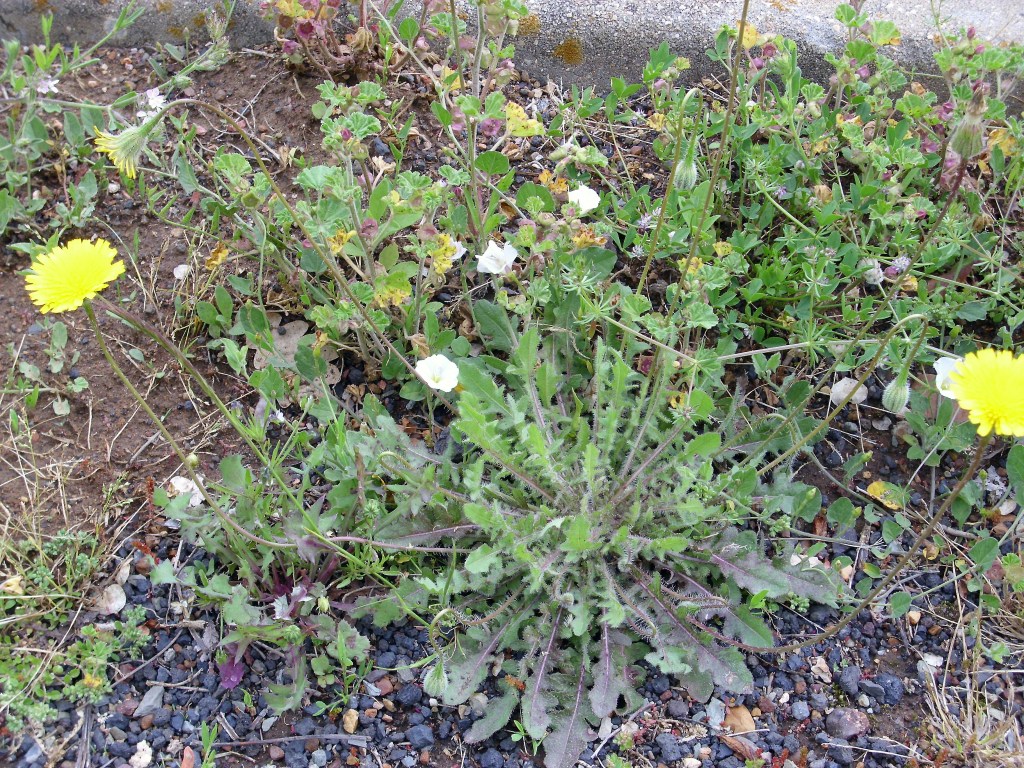
- Hairy leaves (key difference)
- Wiry, thin flower stem (dandelion is fleshy)
- Unbranched like dandelion
- Also edible
Hawksbeard (Crepis):
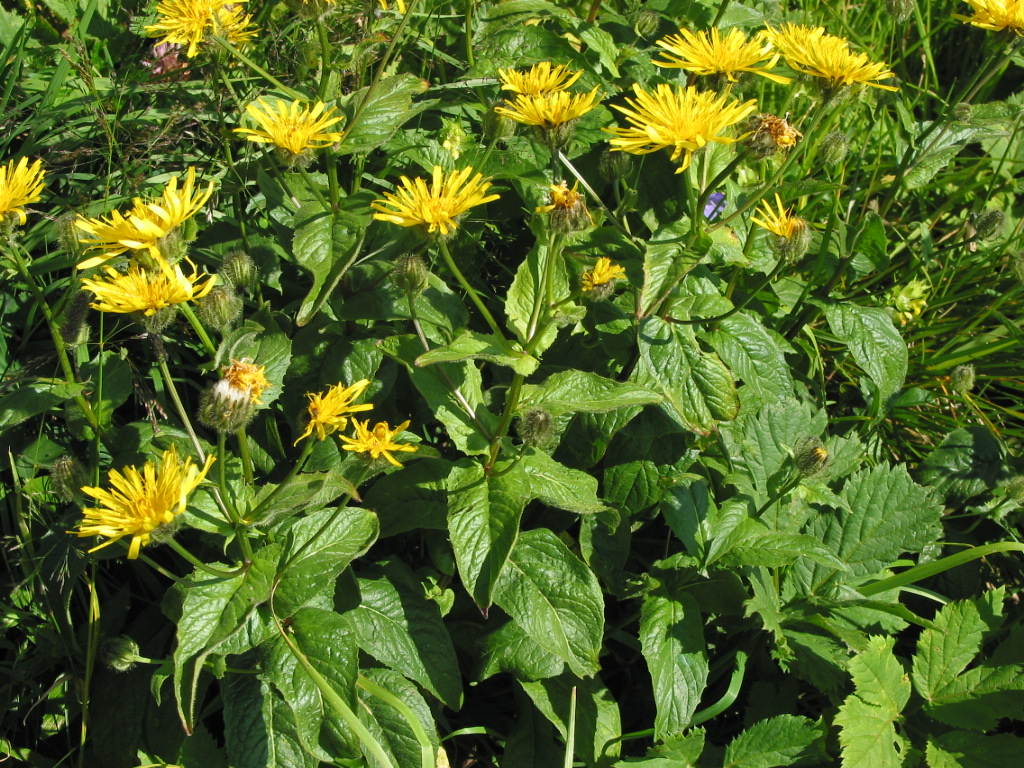


- Nearly hairless like dandelion
- Branched flower stems (key difference)
- Smaller flowers
- Also safe
NZ Context:
True Taraxacum officinale plus several similar species (all safe). Cat’s ear (Hypochaeris) extremely common in NZ, often more abundant than true dandelion in some regions. Both edible—learn to recognise both.
Uses:
- Leaves: Salad greens (young = less bitter), rich in vitamins A, C, K, minerals
- Roots: Coffee substitute when roasted, liver support
- Flowers: Wine, fritters, decoration
Harvest:
- Leaves: Spring before flowering (least bitter)
- Flowers: Morning when fully open
- Roots: Autumn (maximum stored energy)
3. Cleavers (Galium aparine)

Why learn this: Unmistakable texture, safe, excellent lymphatic herb
Key Identification Features:
- Sticky, Velcro-like stems and leaves (DISTINCTIVE!)
- Square stems (typical of bedstraw family)
- Leaves in whorls of 6-8 around stem
- Narrow, lance-shaped leaves
- Small white flowers (tiny, 4-petaled, 2mm across)
- Grows as sprawling, climbing annual
- Seeds are small burrs (also sticky)
- Reaches 30-150cm in length
Where to Find:
Damp, shady areas, hedgerows, gardens, edges of bush, waste areas
Seasonal Changes:
- Spring: Main growth period, tender and mild
- Summer: Flowering, still harvestable
- Autumn: Setting seed, becoming tough
- Winter: Dies back (annual plant)
Look-a-Likes:
None. The sticky texture is unique among NZ plants you’re likely to encounter.
Uses:
- Lymphatic support: Traditional spring tonic
- Mild diuretic: Supports kidney function
- Skin conditions: Externally as wash
- Edible: Young shoots cooked like spinach (fuzzy texture when raw)
Harvest:
Collect young growing tips in spring before flowering. Whole above-ground plant used. Can harvest generously (it’s an annual introduced species).
4. Kawakawa (Piper excelsum / Macropiper excelsum)

Why learn this: Important rongoā Māori plant, distinctive leaves, common in North Island
Key Identification Features:
- Heart-shaped leaves (DISTINCTIVE!)
- Leaves 5-12cm long, bright green
- Aromatic when crushed (peppery, spicy smell)
- Often has holes from kawakawa moth (small green caterpillar)
- Leaves have glossy appearance
- Small flowers on spikes (inconspicuous)
- Orange berries on female plants (small, on spike)
- Grows as shrub or small tree (2-6m tall)
- Jointed stems
Where to Find:
Native to NZ, common in North Island bush, coastal to montane forest, prefers damp shaded areas. Increasingly cultivated in gardens.
Seasonal Changes:
- Evergreen (present year-round)
- Flowers: Spring-summer
- Berries: Summer-autumn (on female plants only)
- Leaves can be harvested year-round
Look-a-Likes:
None in NZ. The heart-shaped leaves with aromatic peppery scent are unmistakable. Sometimes confused with:
- Renga renga lily (Arthropodium cirratum) before examining closely, but renga renga has strap-like leaves, not heart-shaped

Cultural Considerations – CRITICAL:
Rongoā Māori Context:
Kawakawa is a taonga (treasure) in rongoā Māori, a complete traditional healing system with its own protocols, karakia (prayers/incantations), and ancestral knowledge passed down through generations. This guide addresses kawakawa from a Western botanical identification perspective only.
This Guide Does NOT:
- Provide rongoā Māori instruction or traditional preparation methods
- Address spiritual or cultural protocols for working with kawakawa
- Replace learning from qualified rongoā practitioners
For Rongoā Māori Knowledge:
Those seeking rongoā Māori knowledge should connect with:
- Te Paepae Motuhake (Rongoā Standards Authority): Regulatory body for rongoā Māori practice
- Local marae: Community centres often have connections to rongoā practitioners
- Māori health providers: DHBs and community health organisations offer rongoā services
- Qualified rongoā practitioners: Who have traditional training and cultural authority
Respectful Harvesting Practices:
- Take only what you need: Minimum impact on plant population
- Harvest from multiple plants: 2-3 leaves per plant maximum, not all from one
- Leave majority of foliage: Plant needs leaves for photosynthesis and growth
- “Holey leaves” tradition: Traditionally, leaves with insect damage considered more potent (kawakawa moth relationship is part of plant’s ecology)
- Offer thanks/gratitude: Acknowledge plant as living being providing medicine
- Support Māori growers: Consider purchasing kawakawa from Māori-owned businesses when possible
Conservation Status:
- Not threatened nationally
- Locally declining in some areas due to habitat loss
- Cultivation encouraged (reduces pressure on wild populations)
- Never harvest from: DOC land without permit, small populations, stressed plants
Uses (Western Botanical Perspective):
- Digestive support: Tea from leaves
- Skin healing: Wash from leaf tea
- Pain relief: Traditional use for various aches
- General tonic: Supports overall wellbeing
Harvest:
Pick 2-3 leaves per plant from multiple plants. Don’t strip one plant. Harvest year-round but traditionally spring-summer is preferred.
5. Nettle (Urtica dioica & U. urens)


Why learn this: Extremely nutritious, unmistakable (ouch!), common
Key Identification Features:
- Stinging hairs on leaves and stems (YOU’LL KNOW if you touch it!)
- Opposite leaves (paired along stem)
- Heart-shaped to lance-shaped leaves with serrated edges
- Square stems (crush dried stem to see)
- Grows 50-200cm tall
- Small greenish flowers in clusters from leaf axils
- Spreads by rhizomes (underground stems)
Two Species:
- Stinging Nettle (U. dioica): Taller (up to 2m), perennial
- Dwarf Nettle (U. urens): Shorter (15-60cm), annual, smaller leaves
Both are edible and medicinal. Both sting.
Where to Find:
Damp, nitrogen-rich soils, edges of bush, stream banks, gardens, disturbed areas, often near human habitation
Seasonal Changes:
- Spring: New growth, most tender, best harvest time
- Summer: Flowering, still usable but tougher
- Autumn: Seeds form, leaves tougher
- Winter: Dies back (U. dioica) or completes lifecycle (U. urens)
Look-a-Likes:
Dead Nettles (Lamium sp.):

- Similar leaf shape
- No sting (key difference!)
- Purple or white flowers (more showy than nettle)
- Also edible but different properties
Uses:
- Highly nutritious: Rich in iron, calcium, magnesium, vitamins A, C, K
- Allergy support: Tea helps with hay fever (ironically!)
- Mineral tonic: Long infusion provides deep nourishment
- Edible: Cooked like spinach (cooking destroys sting)
Harvest:
Wear gloves! Collect young growing tips (top 10-15cm) in spring before flowering. Once dried or cooked, stinging compounds are destroyed.
6. Chickweed (Stellaria media)
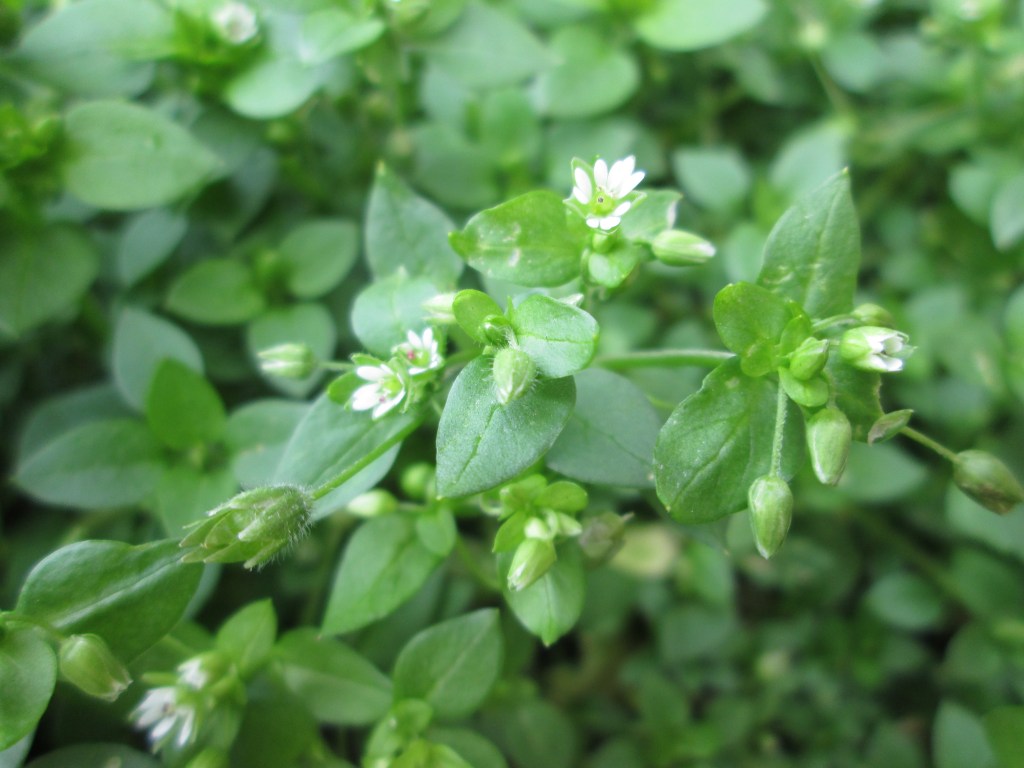
Why learn this: Mild, safe, nutritious, grows in most gardens
Key Identification Features:
- Small plant (5-40cm long), mat-forming or trailing
- Single line of hairs running up stem between each pair of leaves (DISTINCTIVE! Use magnifying glass)
- Opposite oval leaves, pointed at tip
- Tiny white flowers (5-10mm), star-shaped
- 5 deeply split petals (look like 10 petals)
- Succulent, tender stems
- Small oval leaves (5-20mm long)
Where to Find:
Gardens, lawns, cultivated areas, waste ground, prefers cool moist conditions
Seasonal Changes:
- Spring-Autumn: Main growing season
- Flowers most of year in mild areas
- Winter: May die back in cold regions or continue growing in mild areas
- Annual, but self-seeds prolifically
Look-a-Likes:
Scarlet Pimpernel (Anagallis arvensis):

- Similar small creeping habit
- Orange or blue flowers (chickweed is white)
- No line of hairs on stem
- Toxic—do not consume
Mouse-ear Chickweed (Cerastium spp.):

- Similar flowers
- Hairy all over (common chickweed has line of hairs)
- Edible but less palatable
Uses:
- Edible: Mild salad green, high in vitamins and minerals
- Skin soother: Poultice or wash for itchy skin, eczema
- Cooling herb: Traditional use for inflammation
Harvest:
Snip above-ground portions with scissors. Can harvest generously—it regrows quickly and is often considered a pest.
7. Purslane (Portulaca oleracea)

Why learn this: Succulent texture unmistakable, highly nutritious, safe
Key Identification Features:
- Succulent, fleshy leaves and stems (DISTINCTIVE!)
- Leaves small (1-3cm), paddle-shaped, smooth-edged
- Reddish stems (often)
- Grows as low mat (prostrate)
- Tiny yellow flowers (5 petals, 4-6mm across)
- Stems can be green or reddish-purple
- Smooth, hairless throughout
Where to Find:
Gardens, cracks in pavement, cultivated areas, waste ground, prefers dry sunny spots
Seasonal Changes:
- Summer: Main growing season, flowering
- Autumn: Continues until frost
- Winter: Dies (annual)
- Spring: Germinates from seed
Look-a-Likes:
Spurge (Euphorbia spp.):
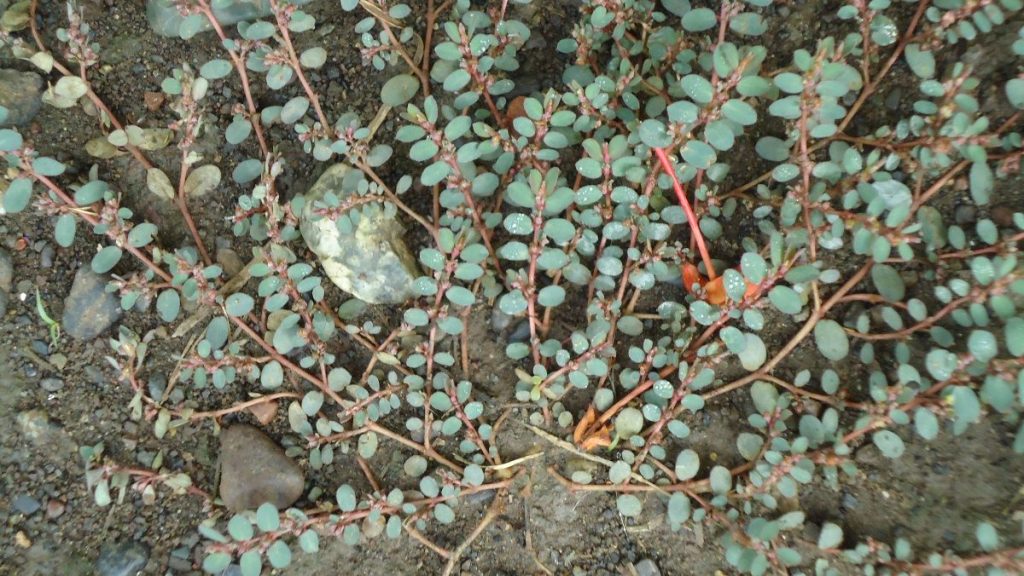
- Some species have similar succulent appearance
- Milky white sap when broken (purslane has no sap)
- Toxic—do not confuse!
Test: Break stem—if milky sap appears, it’s NOT purslane.
Uses:
- Edible: Lemony, salty flavour, excellent in salads
- Omega-3 fatty acids: Unusually high for a plant
- Vitamins: Rich in vitamins A, C, E
- Mucilaginous: Soothing for digestive tract
Harvest:
Snip stems, leaving some to regrow. Harvest before flowering for best flavour. Can harvest generously (annual weed).
8. Nasturtium (Tropaeolum majus)

Why learn this: Distinctive, beautiful, tasty, impossible to confuse
Key Identification Features:
- Round, shield-shaped leaves (peltate—stem attaches to centre of leaf)
- Bright orange, yellow, or red spurred flowers
- Peppery taste when chewed (watercress-like)
- Trailing or climbing habit
- Smooth, hairless throughout
- Leaves 3-15cm across
- Flowers 3-6cm across
Where to Find:
Gardens, escaped from cultivation, roadsides, waste areas, prefers sunny spots
Seasonal Changes:
- Spring-Summer: Main flowering
- Autumn: Can continue in mild areas
- Winter: Dies back (frost-tender)
- Self-seeds in favourable conditions
Look-a-Likes:
None. The combination of round peltate leaves and spurred flowers is unique.
Uses:
- Edible: Leaves, flowers, and seed pods all edible
- High in Vitamin C: Traditional anti-scurvy plant
- Antimicrobial: Contains compounds similar to antibiotics
- Peppery flavour: Adds zing to salads
Harvest:
Pick leaves and flowers freely—this plant is vigorous and benefits from harvesting (encourages more flowering).
9. Self-Heal (Prunella vulgaris)

Why learn this: Common, safe, useful wound herb
Key Identification Features:
- Square stems (mint family characteristic)
- Opposite leaves, oval to lance-shaped
- Purple-violet flower spike on top of stem (distinctive!)
- Flowers in whorls around spike
- Low-growing (10-30cm tall)
- No minty smell (unlike most mint family)
- Creeping habit, forms mats
Where to Find:
Lawns, pastures, edges of paths, waste areas, prefers moist ground
Seasonal Changes:
- Spring-Summer: Main flowering period
- Autumn: Flowering may continue
- Winter: Evergreen in mild areas, dies back in cold
- Perennial
Look-a-Likes:
Other Mint Family Plants:
All have square stems. Self-heal distinguished by:
- Lack of minty scent
- Distinctive purple flower spike
- Lower growing habit
Uses:
- Wound healing: Poultice for cuts, scrapes
- Sore throat: Gargle with tea
- Mild antimicrobial: Supports healing
- Traditional “cure-all”: Used for various minor ailments
Harvest:
Collect flowering tops during bloom. Leave roots intact for regrowth.
10. Queen Anne’s Lace / Wild Carrot (Daucus carota)

⚠️ CAUTION: Advanced foragers only. Carrot family has poisonous look-a-likes.
Why learn this: Edible root, but REQUIRES EXTREME CARE due to hemlock look-alike
Key Identification Features (ALL must be present):
- Hairy stem and leaves (hemlock is smooth!)
- Lacy, fern-like compound leaves
- Carrot smell when root crushed (distinctive!)
- White flower cluster (umbel, 5-10cm across)
- Often has single dark purple flower in centre of umbel
- Biennial (leafy first year, flowers second year)
- Taproot
DEADLY LOOK-A-LIKE: Hemlock (Conium maculatum)

DO NOT HARVEST QUEEN ANNE’S LACE UNLESS YOU CAN DISTINGUISH IT FROM HEMLOCK WITH 100% CERTAINTY.
Hemlock vs. Queen Anne’s Lace:
| Feature | Hemlock (DEADLY) | Queen Anne’s Lace (SAFE) |
|---|---|---|
| Stem | Smooth, purple spots | Hairy, no purple spots |
| Smell | Mouse urine (rank) | Carrot (pleasant) |
| Height | 1.5-2.5m | 30-100cm |
| Root | No carrot smell | Smells like carrot |
| Stem hollow | Yes | Yes (not diagnostic) |
IF IN ANY DOUBT, DO NOT HARVEST.
Where to Find:
Roadsides, fields, waste areas (often same places as hemlock!)
Uses:
- Root: Edible like carrot (wild ancestor of carrot)
- Seeds: Carrot flavour, used as spice
Harvest:
Only if you have 100% certainty and have been taught by an experienced forager in person. Beginners should avoid this plant entirely.
11. Horopito (Pseudowintera colorata)

⚠️ CONSERVATION: Only harvest from cultivated plants or with explicit permission
Why learn this: Valuable NZ native with potent antimicrobial properties, distinctive taste
Key Identification Features:
- INTENSELY peppery taste when leaf chewed (DISTINCTIVE! Polygodial compound)
- Oval to elliptical leaves, 3-8cm long
- Leaves often have red/purple blotches on upper surface (variable)
- Underside of leaf pale yellow-green to silvery
- Thick, leathery leaves
- Small, shrubby tree (1-5m tall)
- Woody stems
- Small greenish-yellow flowers (inconspicuous)
- Purple-black berries when fruiting
Where to Find:
- Native to NZ: North and South Island forests
- Montane to subalpine areas
- Prefers cool, moist environments
- SLOW-GROWING: 10-20 years to reach harvesting size in wild
- Increasingly available in native plant nurseries
Seasonal Changes:
- Evergreen (present year-round)
- Flowers: Spring-summer (October-December)
- Berries: Summer-autumn (on female plants)
- Leaves can be harvested year-round (with permission/cultivation)
Look-a-Likes:
None that are common. The combination of peppery taste + red blotches + pale underside is distinctive. Sometimes confused with:
- Horopito ‘pepper tree’ (Taiwanese/Japanese species in gardens) – taste similar but leaves larger, not native
- Other Pseudowintera species (all NZ natives, similar characteristics)

CRITICAL CONSERVATION INFORMATION:
⚠️ ONLY HARVEST FROM CULTIVATED PLANTS
Why:
- Very slow-growing (10-20 years to maturity in wild)
- Increasing demand for medicinal use
- Wild populations can be impacted by over-harvesting
Where to Source Plants for Cultivation:
- Auckland: Oratia Native Plant Nursery, Native Habitat
- Wellington: Otari Native Plant Nursery
- Christchurch: Motukarara Conservation Nursery
- Online: Trees That Count, NZ Native Plant Network
- Cost: $10-25 per plant (investment in sustainable supply)
If Wild-Harvesting (with landowner permission ONLY):
- NEVER from DOC land (illegal without permit)
- NEVER from small populations (<10 plants)
- Mature plants only (minimum 1m tall, 5+ years old)
- Maximum 1-2 leaves per plant
- Maximum 10% of plant’s foliage
- 12-month minimum regeneration period
- Cultivation strongly preferred over wild harvest
Uses:
- Antimicrobial: Particularly antifungal (polygodial compound)
- Digestive support: Traditional use for stomach upset
- Wound care: Traditionally used externally
- Culinary: Small amounts as peppery spice (very potent!)
Harvest (Cultivated Plants Only):
- Pick mature leaves from established plants (>3 years old, >50cm tall)
- Maximum 2-3 leaves per plant per year
- Dry thoroughly for storage (see Storage Guide)
- Use sparingly (very potent medicine)
Cultural Note:
Horopito is a taonga (treasure) in traditional Māori medicine. While not as culturally central as kawakawa, it deserves respectful treatment as a native medicinal plant.
12. Mānuka (Leptospermum scoparium)

Why learn this: Iconic NZ native, antimicrobial properties, common
Key Identification Features:
- Small, needle-like leaves (4-12mm long, 1-3mm wide) (DISTINCTIVE!)
- Leaves aromatic when crushed (honey-like, resinous scent)
- Leaves prickly to touch (stiff, pointed tips)
- Small shrub or tree (1-5m tall, occasionally to 15m)
- White or pale pink flowers (8-15mm across, 5 petals)
- Flowers have numerous stamens (prominent central boss of stamens)
- Woody seed capsules persist on branches
- Bark flaky, peeling in strips (grey-brown)
Where to Find:
- Native to NZ: Throughout both islands
- Scrubland, forest margins, disturbed areas
- Tolerates poor soils, very adaptable
- Sea level to subalpine
- Common in regenerating bush
Seasonal Changes:
- Evergreen (present year-round)
- Flowers: Spring-summer (October-January), sometimes autumn
- Seed capsules: Persist year-round
- Leaves harvestable year-round
Look-a-Likes:
Kānuka (Kunzea spp.):
Very similar to mānuka! Key differences:

| Feature | Mānuka | Kānuka |
|---|---|---|
| Leaves | Prickly, stiff | Softer, not prickly |
| Leaf smell | Honey-like, strong | Milder, eucalyptus-like |
| Flowers | Larger (8-15mm), often solitary | Smaller (4-8mm), usually in clusters |
| Seed capsules | 5-7mm | 2-4mm (smaller) |
| Bark | Flaky, peeling | Smoother, less peeling |
Both are safe and have similar (though not identical) medicinal properties. When in doubt, the prickly leaf test is most reliable.
Uses:
- Antimicrobial: Leaves used for infections, wounds
- Digestive support: Tea from leaves
- Skin conditions: Wash from leaf infusion
- Respiratory: Steam inhalation from leaves
- Note: Mānuka honey (from flower nectar) is famous, but leaves are also medicinal
Harvest:
- Leaves and young twigs can be harvested year-round
- Take from outer growth, leave main structure intact
- Mānuka is abundant and regenerates well (sustainable harvest)
- Harvest flowers sparingly (important for bees, mānuka honey production)
Cultural Note:
Mānuka has traditional uses in rongoā Māori. While more commonly available than horopito or kawakawa, still treat with respect as a taonga species.
Urban Foraging Safety
Finding herbs in cities requires extra caution:
Contamination Concerns
Avoid harvesting from:
- Within 10 metres of roads: Exhaust particles, heavy metals (lead, cadmium) accumulate on leaves
- Industrial areas: Potential chemical contamination
- Treated lawns/gardens: Herbicides, pesticides common
- Dog walking areas: Urine/faeces contamination
- Stormwater outlets: Runoff concentrates pollutants
Safer Urban Locations:
- Community gardens: (with permission) Often organic
- Your own garden/balcony: You control inputs
- Parks designated organic: Some councils have chemical-free zones
- Māori gardens/heritage sites: Often traditionally managed
- Friends’ chemical-free yards: With permission
Permission Protocol
Always obtain permission before harvesting:
- Public parks: Check council regulations (Auckland, Wellington, Christchurch have different rules)
- Private property: Explicit permission from landowner
- Community spaces: Permission from managing organisation
Examples:
- Auckland: Personal foraging allowed in some regional parks (check specific park rules)
- Wellington: Generally allowed for personal use in city parks (not commercial)
- Christchurch: Varies by park designation (contact Parks department)
Never harvest from:
- Cemeteries (disrespectful)
- Māori sacred sites (culturally inappropriate)
- DOC conservation land (illegal without permit)
- Private gardens without permission
Washing Protocol for Urban Herbs
Even from “safe” locations, urban herbs need thorough washing:
Method:
- First rinse: Cold water to remove loose dirt, insects
- Soak: 10-15 minutes in water with 1 tablespoon vinegar per litre (helps remove surface contaminants)
- Second rinse: Fresh cold water, agitate gently
- Third rinse: Final rinse with clean water
- Dry thoroughly: Salad spinner or air dry on clean towel
For extra caution with roadside herbs:
- Discard outer leaves (most exposed to traffic)
- Use middle/inner growth only
- Some heavy metals don’t wash off (better to avoid roadside entirely)
Accessible Foraging
Foraging for people with limited mobility or other access needs:
Limited Mobility Options
Balcony/Windowsill Growing:
- Grow “forageable” herbs in containers (nasturtium, lemon balm, plantain grows in pots)
- Accessible year-round without travel
- Control all inputs (organic, chemical-free)
- Where to buy plants/seeds: Kings Seeds, Oderings, Mitre 10, online
Accessible Foraging Locations:
- Wheelchair-accessible parks: Many NZ parks have paved paths with plantain, dandelion nearby
- Low-bend areas: Raised garden beds in community gardens (with permission)
- Seated foraging: Nasturtium, purslane, chickweed grow at accessible heights in garden beds
Visual Impairment Adaptations
Multi-sensory identification:
- Touch: Square stems (mint family), sticky stems (cleavers), prickly (nettle, mānuka), smooth (plantain)
- Smell: Aromatic plants (kawakawa peppery, mānuka honey-like, horopito intensely peppery, mint family)
- Taste: (Advanced, only when 100% certain) Peppery (horopito, nasturtium), bitter (dandelion)
Assistance Options:
- Foraging with sighted companion (describe features aloud)
- Plant ID apps with voice output (iNaturalist has accessibility features)
- Textured labels for home-grown herbs
Budget-Friendly Learning
Free resources:
- iNaturalist app (free, community ID verification)
- Library field guides (borrow before buying)
- Online plant databases (Landcare Research, NZPCN – free)
- Community foraging walks (many free or koha/donation)
Low-cost options:
- Secondhand field guides (Trade Me, Book Depository)
- Join foraging groups (shared knowledge, free)
- Learn from gardener friends (free mentorship)
Quick ID Flowchart
Use this to narrow down possibilities:
- Does it sting when touched?
- YES → Nettle
- NO → Continue
- Does it stick to your clothes (Velcro-like)?
- YES → Cleavers
- NO → Continue
- Does it have succulent (thick, fleshy) leaves?
- YES → Likely Purslane (check for no milky sap)
- NO → Continue
- Are the leaves in a basal rosette (circle at ground level)?
- YES → Go to #5
- NO → Go to #6
- Do leaves have parallel veins?
- YES → Plantain (broad or narrow-leaved)
- NO → Likely Dandelion (check for milky sap, hollow stem)
- Does it have a square stem?
- YES → Mint family (Self-Heal if purple flower spike and no mint smell)
- NO → Continue
- Are leaves heart-shaped and aromatic (peppery)?
- YES → Kawakawa
- NO → Continue
- Are leaves needle-like and prickly?
- YES → Mānuka (or kānuka – both safe)
- NO → Continue
- Intensely peppery taste and red-blotched leaves?
- YES → Horopito (only harvest cultivated!)
- NO → Consult field guide
Seasonal Foraging Calendar (NZ)
Spring (September-November):
Best harvest:
- Nettle (young tops)
- Cleavers (whole plant)
- Chickweed (whole plant)
- Young dandelion greens
- Plantain (fresh leaves)
- Kawakawa (new growth)
Summer (December-February):
Best harvest:
- Nasturtium (flowers and leaves)
- Kawakawa (leaves)
- Mānuka (leaves)
- Self-heal (flowering tops)
- Purslane (stems and leaves)
Autumn (March-May):
Best harvest:
- Dandelion roots
- Plantain seeds
- Horopito (cultivated only)
Winter (June-August):
Best harvest:
- Kawakawa (year-round)
- Mānuka (year-round)
- Horopito (year-round, cultivated)
- Plantain (in mild areas)
Practice Exercises
Week 1: Master Plantain
- Find plantain in 5 different locations
- Photograph it at different life stages
- Sketch the leaves, noting parallel veins
- Touch, smell (doesn’t have strong scent)
- Do NOT harvest yet—just observe
Week 2: Add Dandelion
- Locate dandelion
- Break stem, observe milky sap
- Note hollow stem
- Compare to look-a-likes (cat’s ear, hawkbit)
- Begin small harvest after 100% certainty
Week 3: Add One More
- Choose from chickweed, cleavers, or nasturtium
- Repeat observation process
- Begin harvest only when certain
By Month 3: You should confidently know 5-7 plants
Month 4-6: Add NZ natives (kawakawa, mānuka) if available in your area
Common Mistakes & How to Avoid Them
Mistake #1: Relying on just one feature
Fix: Always use multiple identification points. “It has a rosette” isn’t enough. “It has a rosette, parallel-veined leaves, and a tall flower spike with greenish flowers” = plantain.
Mistake #2: Assuming “looks like” means “is”
Fix: Actively look for differences, not just similarities.
Mistake #3: Trusting plant ID apps 100%
Fix: Apps are helpful for initial guidance but can be wrong. Always cross-reference with field guides and experienced foragers.
Mistake #4: Learning too many plants at once
Fix: Master 3-5 plants thoroughly before adding more.
Mistake #5: Ignoring seasonal changes
Fix: Revisit the same plants through all seasons to see how they change.
Mistake #6: Harvesting from contaminated areas
Fix: Follow urban foraging safety guidelines (avoid roadsides, get permission, wash thoroughly).
Mistake #7: Over-harvesting slow-growing natives
Fix: Follow conservation protocols (horopito from cultivation only, kawakawa 2-3 leaves per plant maximum).
Building Your Skills
Create a Personal Field Guide:
- Take 20+ photos of each plant (different angles, life stages)
- Press samples
- Write detailed notes
- Create comparison charts for look-a-likes
- Review regularly
Join Community:
- Local foraging groups
- iNaturalist (get expert verification)
- Botanical societies
- Guided foraging walks
- Māori cultural groups (for learning about native plants respectfully)
Recommended NZ Field Guides:
- Crowe, A. (2004). A Field Guide to the Native Edible Plants of New Zealand. Penguin Books. ($45-55)
- Knox, J. (2013). The Forager’s Treasury. Penguin Random House NZ. ($45-55)
- Brooker, S. G., Cambie, R. C., & Cooper, R. C. (1987). New Zealand Medicinal Plants. Heinemann Publishers.
- Riley, M. (1994). Māori Healing and Herbal: New Zealand Ethnobotanical Sourcebook. Viking Sevenseas NZ Ltd.
- Landcare Research’s Weeds Key (online, free): www.landcareresearch.co.nz
Final Reminders
The 100% Rule: If you’re not completely certain, don’t use it. Period.
Start Simple: Master plantain, dandelion, and cleavers before moving to anything else.
Learn from Experts: Books and guides are essential, but nothing beats learning from an experienced forager in person.
Cultural Respect: NZ natives like kawakawa, horopito, and mānuka are taonga. Harvest respectfully, follow conservation protocols, and consider learning from Māori perspectives.
Urban Caution: City foraging requires extra care—avoid contaminated areas, get permission, wash thoroughly.
Patience: Becoming confident at plant ID takes time. Don’t rush.
The land is generous—learn to recognise its gifts safely and confidently.
Sources & Further Reading
Books:
- Crowe, A. (2004). A Field Guide to the Native Edible Plants of New Zealand. Penguin Books.
- Knox, J. (2013). The Forager’s Treasury. Penguin Random House NZ.
- Brooker, S. G., Cambie, R. C., & Cooper, R. C. (1987). New Zealand Medicinal Plants. Heinemann Publishers.
- Riley, M. (1994). Māori Healing and Herbal: New Zealand Ethnobotanical Sourcebook. Viking Sevenseas NZ Ltd.
Online Resources:
- Landcare Research Weeds Key: www.landcareresearch.co.nz
- Massey University Weeds Database: www.massey.ac.nz
- iNaturalist: www.inaturalist.org (free app, community ID verification)
- NZ Plant Conservation Network: www.nzpcn.org.nz
- Te Paepae Motuhake (Rongoā Standards Authority): For rongoā Māori practitioner information
Community Resources:
- Local foraging groups (search social media for your area)
- Botanic gardens (often offer guided walks)
- Community gardens (ask about foraging workshops)
- Native plant nurseries (staff can help with ID)
Disclaimer: This guide is for educational purposes only and addresses plant identification from a Western botanical perspective. It does not represent rongoā Māori traditional knowledge or practice. Plant misidentification can result in serious illness or death. You are solely responsible for correct identification. Always use multiple sources and consult with experienced foragers. When in doubt, don’t consume. For rongoā Māori knowledge, consult qualified rongoā practitioners through Te Paepae Motuhake, local marae, or Māori health providers.
Note on Pricing: All prices mentioned in this guide are approximate and based on New Zealand suppliers as of December 2025. Prices vary by supplier, season, and market conditions. We recommend checking current prices with your local suppliers.
 The Public Herbarium