A Deep Dive into Botanical Recognition for NZ Foragers
This comprehensive guide explores the scientific principles underlying plant identification, teaching you systematic approaches to recognising herbs with confidence.
Cultural Context and Scope
Rongoā Māori and Traditional Knowledge Systems
This guide addresses plant identification from a Western botanical and scientific perspective. It is important to acknowledge:
Rongoā Māori is a Complete Healing System:
Rongoā Māori (traditional Māori medicine) is a holistic healing system with its own protocols, cultural practices, karakia (incantations/prayers), and knowledge frameworks passed down through generations. It encompasses spiritual, physical, and communal dimensions that extend far beyond botanical identification.
This Guide’s Scope:
This document presents identification principles based on:
- Western botanical science (morphology, taxonomy, nomenclature)
- Scientific classification systems (Linnaean hierarchy)
- Chemical analysis approaches
This Guide Does NOT:
- Represent rongoā Māori knowledge or practice
- Provide instruction on traditional preparation methods
- Address spiritual or cultural protocols for working with taonga (treasured) plants
For Rongoā Māori Knowledge and Practice:
Those seeking rongoā Māori knowledge should connect with:
- Te Paepae Motuhake (Rongoā Standards Authority): The regulatory body for rongoā Māori practice
- Local marae: Community centres often have connections to rongoā practitioners
- Māori health providers: DHBs and community health organisations offer rongoā services
- Qualified rongoā practitioners: Who have traditional training and cultural authority
Respect for Taonga Species:
Native plants like kawakawa, horopito, and mānuka are taonga (treasures) with deep cultural significance. While this guide addresses their identification from a botanical perspective, users should:
- Understand these plants within their cultural context
- Approach harvest and use with respect and gratitude
- Follow conservation protocols (see Everyperson Guide for details)
- Consider learning from Māori perspectives on plant relationships
Complementary Approaches:
Western botanical knowledge and rongoā Māori can coexist respectfully when boundaries are clear and cultural authority is honoured. This guide offers one lens (botanical science) while recognising it is not the only—or necessarily primary—way of understanding these plants.
Table of Contents
- Botanical Classification & Nomenclature
- Systematic Morphological Analysis
- Plant Families: Recognition Patterns
- Twelve Species: Complete Profiles
- Advanced Identification Methods
- Seasonal & Environmental Variations
- Building Expert-Level Skills
Botanical Classification & Nomenclature
The Linnaean Hierarchy
Plants are classified in nested categories from broad to specific:
Kingdom → Division → Class → Order → Family → Genus → Species
Example: Broad-leaved Plantain
- Kingdom: Plantae
- Division: Magnoliophyta (flowering plants)
- Class: Magnoliopsida (dicots)
- Order: Lamiales
- Family: Plantaginaceae (tells you related plants)
- Genus: Plantago (all plantains)
- Species: major (this specific plantain)
Full name: Plantago major L. (L. = Linnaeus, the botanist who first formally described it)
Why this matters for foragers: When you identify plantain as Plantago major (Plantaginaceae), you immediately know:
- Other Plantago species likely share medicinal properties (family membership predicts chemistry)
- It’s related to other Plantaginaceae (formerly Scrophulariaceae)
- Research on European Plantago applies to NZ Plantago
- Scientific literature search uses Plantago major (not variable common names)
Why Latin Names Matter for Foragers
Common names are unreliable:
- “Plantain” means Plantago major in herbalism but Musa species (bananas) in cooking
- “Hemlock” could mean poison hemlock (Conium maculatum) or hemlock tree (Tsuga species)
- Regional variations create confusion
Scientific names are universal:
- Plantago major means the same plant worldwide
- Genus indicates closely related species with similar properties
- Family membership predicts chemical constituents and potential uses
Understanding Binomial Nomenclature
Format Rules:
- Always italicised (or underlined if handwritten)
- Genus capitalised: Plantago
- Species lowercase: major
- Author citation (optional but informative): Plantago major L.
Subspecies and Varieties:
- Plantago major subsp. intermedia
- Plantago major var. asiatica
Why This Matters:
When researching safety or properties, using the scientific name ensures you’re reading about the correct plant.
Systematic Morphological Analysis
Root Systems: Underground Architecture
Taproot System:
- Single dominant vertical root
- Examples: Dandelion, burdock, dock
- Advantage: Accesses deep water and nutrients
- Foraging implication: Can regenerate from root fragments; difficult to eradicate completely
- Harvest consideration: Requires digging tool; disturbs soil significantly
Fibrous Root System:
- Network of similar-sized roots
- Examples: Grasses, many monocots
- Advantage: Stabilises soil, absorbs nutrients from broad area
- Foraging implication: Anchors plant firmly; harder to pull up
Adventitious Roots:
- Roots arising from stems or leaves (not from primary root)
- Examples: Plantain (from crown), strawberry runners
- Indicates: Vegetative reproduction capability
Rhizomes (Underground Stems, Not Roots):
- Horizontal underground stems
- Examples: Nettle, couch grass, mint
- Nodes visible (roots don’t have nodes)
- Foraging implication: Plant spreads vegetatively; very difficult to remove; harvest can be more aggressive
Stem Characteristics: Structural Clues
Cross-Sectional Shape:
Terete (Round):
- Most common stem type
- Examples: Dandelion, most plants
- Not particularly diagnostic
Quadrangular (Square):
- DIAGNOSTIC for Lamiaceae (mint family)
- Examples: Mint, lemon balm, self-heal, basil, oregano
- How to check: Roll dried stem between fingers—you’ll feel distinct corners
- Why it matters: Immediately identifies plant family, predicting properties
Why this matters: Square stem = Lamiaceae. Lamiaceae = generally safe, aromatic, volatile oil-rich herbs (mint, lemon balm, basil, oregano, thyme, rosemary). Recognising square stem instantly narrows possibilities to a SAFE plant family—valuable shortcut when foraging.
Triangular:
- Common in Cyperaceae (sedges)
- Mnemonic: “Sedges have edges, rushes are round”
Hollow vs. Solid:
- Dandelion: Hollow (diagnostic when combined with other features)
- Queen Anne’s Lace: Hollow (but so is deadly hemlock—not diagnostic alone!)
- Most plants: Solid
- How to check: Gently pinch stem—hollow stems compress easily
Surface Texture (Indumentum):
- Glabrous: Completely smooth, hairless (dandelion)
- Pubescent: Covered with fine, soft hairs
- Hirsute: Coarse, stiff hairs (cat’s ear, hawkbit)
- Tomentose: Dense, woolly, matted hairs
- Scabrous: Rough texture, feels like sandpaper
Critical Example:
Dandelion vs. Cat’s Ear—both have yellow composite flowers, but dandelion is glabrous while cat’s ear is hirsute (hairy). This is often the easiest distinguishing feature.
Leaf Morphology: The Most Informative Feature
Arrangement on Stem:
Alternate:
- One leaf per node, alternating sides as you move up stem
- Examples: Nasturtium, most plants in basal rosettes
Opposite:
- Two leaves per node, directly across from each other
- Examples: Mint family, chickweed, nettle
- Often indicates specific plant families
Whorled:
- Three or more leaves per node, arranged in circle
- Cleavers: 6-8 leaves per whorl (distinctive!)
- Less common arrangement
Basal Rosette:
- Leaves arranged in circle at ground level
- Examples: Plantain, dandelion, dock
- Adaptive significance: Protects growing point from mowing/grazing, shades out competitors
Leaf Shape (Blade Configuration):
Linear: Long and narrow, parallel sides (grasses)
Lanceolate: Lance-shaped, widest below middle (narrow-leaved plantain)
Ovate: Egg-shaped, widest below middle (broad-leaved plantain)
Obovate: Reverse egg, widest above middle
Cordate: Heart-shaped (kawakawa—diagnostic!)
Peltate: Shield-shaped, petiole attaches to centre not edge (nasturtium—diagnostic!)
Palmate: Hand-like with radiating lobes
Leaf Margin:
Entire: Smooth, no teeth (kawakawa, chickweed)
Serrate: Teeth pointing forward like saw (nettle—sharp!)
Dentate: Teeth pointing outward
Crenate: Rounded scalloped edges
Lobed: Deep indentations creating lobes (dandelion—”lion’s teeth”)
Venation (Vein Patterns):
Pinnate (Feather-like):
- Central midrib with lateral veins branching off
- MOST COMMON in dicots
- Examples: Most broad-leaved plants
Parallel:
- Veins run parallel, don’t branch to leaf edges
- Common in monocots (grasses, lilies)
- UNUSUAL in broad-leaved dicots
- DIAGNOSTIC for plantain among foraged herbs—if you see parallel veins in a broad-leaved plant, it’s almost certainly plantain
Palmate:
- Multiple main veins radiating from base
- Examples: Some maple-like leaves
Why plantain’s parallel venation is so powerful: It’s almost impossible for a poisonous broad-leaved dicot to have parallel veins. This ONE feature makes plantain nearly un-mistakeable. In foraging, features that EXCLUDE dangerous plants are gold.
Leaf Texture & Surface:
Succulent: Thick, fleshy, water-storing (purslane—diagnostic!)
Coriaceous: Leathery, tough (mature kawakawa, horopito)
Membranous: Thin, pliable (chickweed)
Trichomes (Plant Hairs) Types:
- Stinging hairs: Nettle—hollow needles containing chemical irritants
- Glandular hairs: Sticky, often aromatic (mint family)
- Non-glandular: Simple protection or water retention
Chickweed’s Diagnostic Feature:
Single line of hairs running up stem between each pair of leaves, alternating sides. Requires hand lens to see clearly. This feature is absolutely unique and distinguishes chickweed from all look-a-likes.
Flower Morphology: Family Indicators
Basic Flower Structure (Generalised):
From outside to inside:
- Calyx: Sepals (outer protective layer, often green)
- Corolla: Petals (often colourful, attract pollinators)
- Androecium: Stamens (male parts: anther produces pollen, filament supports it)
- Gynoecium: Pistil (female parts: stigma receives pollen, style connects to ovary, ovary contains ovules)
Symmetry Types:
Radial/Actinomorphic:
- Can be divided into equal halves through multiple planes
- Examples: Nasturtium (5 petals), chickweed (5 petals), purslane
- Generally indicates older evolutionary lineage
Bilateral/Zygomorphic:
- Can be divided into equal halves through only ONE plane
- Examples: Mint family flowers, pea family
- Indicates co-evolution with specific pollinators
Inflorescence Types (Flower Arrangements):
Solitary: Single flower (dandelion, nasturtium)
Spike: Flowers attached directly to unbranched stem (plantain—distinctive!)
Raceme: Flowers on unbranched stem, each with own stalk
Umbel: Flowers radiate from single point like umbrella ribs (Apiaceae/carrot family—CAUTION!)
Capitulum: Dense head of tiny flowers appearing as one (dandelion—Asteraceae family)
Why Flowers Are Critical:
- Often most distinctive feature for identification
- Usually diagnostic for plant family
- Limitation: Seasonal—not always present, making vegetative identification crucial
Fruit & Seed Characteristics
Dry Fruits:
Achene: Small, single-seeded, doesn’t split (dandelion “seeds” are actually achenes with pappus attached)
Capsule: Splits open to release seeds (mānuka, plantain)
Silique: Long pod that splits (mustard family)
Fleshy Fruits:
Berry: Multiple seeds in fleshy tissue (kawakawa orange berries, horopito purple-black berries)
Drupe: Single seed surrounded by hard shell, then flesh (not common in herbs discussed)
Seed Dispersal Mechanisms:
Wind: Dandelion pappus (feathery structure), lightweight achene
Animal: Hooked fruits (cleavers burrs stick to fur/clothing)
Gravity: Heavy seeds fall near parent plant
Plant Families: Recognition Patterns
Lamiaceae (Mint Family)
Diagnostic Features:
- Square stems (quadrangular in cross-section)
- Opposite leaves
- Usually aromatic (volatile oils in glandular hairs)
- Bilabiate (two-lipped) flowers
- Four nutlets as fruit
NZ Examples:
- Lemon balm (Melissa officinalis)
- Mints (Mentha spp.)
- Self-heal (Prunella vulgaris)
- Thyme (Thymus vulgaris)
Chemical Profile:
Rich in volatile oils (monoterpenes, sesquiterpenes), often antimicrobial, generally safe family
Foraging Value:
High—most members edible/medicinal, few toxic species
Asteraceae (Daisy/Composite Family)
Diagnostic Features:
- Composite flower head (capitulum) made of many tiny flowers
- Ray flowers (petal-like, around edge) and/or disk flowers (tubular, in centre)
- Inferior ovary (below petals)
- Achene fruits often with pappus (feathery dispersal structure)
NZ Examples:
- Dandelion (Taraxacum officinale)
- Cat’s ear (Hypochaeris radicata)
- Yarrow (Achillea millefolium)
- Calendula (Calendula officinalis)
Chemical Profile:
Sesquiterpene lactones (often bitter), inulin in roots, diverse secondary metabolites
Foraging Value:
Moderate to high—many edible/medicinal, some can cause contact dermatitis
Apiaceae (Carrot/Parsley Family)
⚠️ CAUTION: Contains deadly species
Diagnostic Features:
- Umbel inflorescence (flowers radiate from single point like umbrella)
- Often compound umbels (umbels of umbels)
- Hollow stems (usually)
- Divided leaves (often fern-like)
- Distinctive aromatic compounds (varies by species)
NZ Examples:
- Safe: Queen Anne’s Lace (Daucus carota), fennel (Foeniculum vulgare)
- DEADLY: Poison hemlock (Conium maculatum)
Chemical Profile:
Essential oils (varies hugely), coumarins, polyacetylenes, some species have deadly alkaloids
Foraging Value:
LOW for beginners—requires expert-level ID due to deadly hemlock. Advanced foragers only.
Plantaginaceae (Plantain Family)
Diagnostic Features:
- Parallel leaf venation (unusual for dicots)
- Basal rosette growth form
- Spike inflorescence with tiny flowers
- Small capsule fruits
NZ Examples:
- Broad-leaved plantain (Plantago major)
- Narrow-leaved plantain (Plantago lanceolata)
Chemical Profile:
Iridoid glycosides (aucubin), mucilage, tannins, flavonoids
Foraging Value:
Very high—safe, easily identified, medicinal
Piperaceae (Pepper Family – in NZ context)
Diagnostic Features (for kawakawa specifically):
- Cordate (heart-shaped) leaves
- Jointed stems
- Aromatic (peppery scent)
- Small flowers on spikes
- Berries on female plants
NZ Examples:
- Kawakawa (Piper excelsum / Macropiper excelsum)
Chemical Profile:
Phenylpropanoids (myristicin), sesquiterpenes, flavonoids
Cultural Note:
Taonga species in rongoā Māori—see cultural context section
Winteraceae (Ancient Flowering Plant Family – NZ endemic genus)
Diagnostic Features:
- Primitive flower structure (many parts, spirally arranged)
- Leathery leaves
- Often aromatic
- Berry fruits
NZ Examples:
- Horopito (Pseudowintera colorata)
- Mountain horopito (Pseudowintera axillaris)
Chemical Profile:
Sesquiterpene dialdehydes (polygodial – very high concentrations), unique chemistry
Conservation Note:
Slow-growing natives—cultivation preferred over wild harvest
Myrtaceae (Myrtle Family – in NZ context)
Diagnostic Features:
- Aromatic leaves (essential oils)
- Opposite leaves (usually)
- Numerous stamens in flowers
- Woody capsule fruits
- Oil glands visible in leaves (hold up to light)
NZ Examples:
- Mānuka (Leptospermum scoparium)
- Kānuka (Kunzea spp.)
- Pōhutukawa (Metrosideros excelsa)
- Rātā (Metrosideros spp.)
Chemical Profile:
Rich in essential oils (monoterpenes, sesquiterpenes, unique compounds like mānuka’s triketones)
Foraging Value:
High for mānuka/kānuka (leaves medicinal), cultural significance for pōhutukawa/rātā
Twelve Species: Complete Profiles
1. Plantago major (Broad-leaved Plantain)


Taxonomic Position:
- Family: Plantaginaceae
- Genus: Plantago (approximately 200 species worldwide)
- Species: major (common plantain)
Diagnostic Features:
Leaves:
- Venation: Parallel (3-9 prominent veins running length of leaf) – DIAGNOSTIC
- Shape: Broadly ovate to elliptical
- Size: 5-20cm long, 4-9cm wide
- Margin: Entire to slightly toothed
- Texture: Smooth to slightly hairy
- Arrangement: Basal rosette
Inflorescence:
- Spike: 10-50cm tall, slender
- Flowers: Tiny, greenish-white, densely packed
- Season: Spring through autumn
Root:
- Fibrous with short thick crown
- Adventitious roots from crown
Chemical Profile:
- Iridoid glycosides: Aucubin (1-3%), catalpol
- Mucilage: Polysaccharides (up to 6% dry weight)
- Tannins: Condensed type
- Flavonoids: Apigenin, luteolin derivatives
Why parallel venation is so diagnostic: Among broad-leaved plants, parallel venation is extremely rare. This single feature almost guarantees plantain identification, excluding virtually all toxic plants.
NZ Context:
Introduced species, fully naturalised. No native plantain relatives. Very safe for beginners.
2. Taraxacum officinale (Dandelion)

Taxonomic Position:
- Family: Asteraceae
- Genus: Taraxacum (several hundred species, many apomictic)
- Species: officinale (common dandelion)
Diagnostic Features:
Leaves:
- Lobed (dentate – “lion’s teeth”)
- Hairless to nearly hairless (DIAGNOSTIC vs. cat’s ear)
- Basal rosette
- Size: Variable, 5-40cm long
Flower:
- Composite head (capitulum) 2-5cm diameter
- All ray flowers (no disk flowers)
- Bright yellow
- Hollow flower stem (DIAGNOSTIC)
- Milky white latex when broken (DIAGNOSTIC)
Fruit:
- Achene with feathery pappus (“clock”)
Root:
- Substantial taproot (up to 30cm deep)
Chemical Profile:
- Sesquiterpene lactones: Taraxacin, taraxacoside (bitter principles)
- Triterpenes: Taraxasterol, taraxerol
- Inulin: High in roots (15-40%), prebiotic fibre
- Minerals: Potassium (high), calcium, iron
Look-a-Like Distinction:
Cat’s ear (Hypochaeris radicata) has hairy leaves and branched flower stems (dandelion unbranched). Both edible.

3. Galium aparine (Cleavers)

Taxonomic Position:
- Family: Rubiaceae (coffee family)
- Genus: Galium (bedstraw genus)
- Species: aparine (cleavers, goosegrass)
Diagnostic Features:
Stems:
- Square cross-section
- Covered with tiny hooked hairs (Velcro-like texture) – ABSOLUTELY DIAGNOSTIC
- Weak, sprawling (30-150cm long)
Leaves:
- Whorled arrangement: 6-8 leaves per node (DISTINCTIVE)
- Narrow-lanceolate
- Hooked hairs on margins and midrib (feel sticky)
Flowers:
- Tiny (2mm), white, 4-petaled
- Clusters from leaf axils
Fruit:
- Small burrs (2-4mm), covered in hooked hairs
Chemical Profile:
- Iridoids: Asperuloside
- Anthraquinones: Trace amounts
- Flavonoids: Various
- Coumarins: Present
Unique Feature:
The hooked hair texture is unique among NZ plants likely to be encountered. Once felt, never forgotten.
4. Piper excelsum / Macropiper excelsum (Kawakawa)

Taxonomic Position:
- Family: Piperaceae (pepper family)
- Genus: Piper (worldwide) / Macropiper (Pacific region classification)
- Species: excelsum (NZ endemic)
Diagnostic Features:
Leaves:
- Cordate (heart-shaped) – HIGHLY DIAGNOSTIC
- Size: 5-12cm long, similar width
- Glossy upper surface
- Aromatic when crushed (peppery, spicy scent)
- Often with holes from kawakawa moth larvae (traditional sign of potency)
Stems:
- Jointed (nodes visible)
- Somewhat succulent when young
Flowers:
- Small, on spikes
- Inconspicuous, greenish
Fruit:
- Orange berries (on female plants)
- On spike, small (2-4mm)
Growth Habit:
- Shrub to small tree (2-6m)
Chemical Profile:
- Phenylpropanoids: Myristicin (major component), elemicin
- Sesquiterpenes: Various
- Flavonoids: Quercetin derivatives, kaempferol derivatives
Conservation & Cultural Protocols:
- Status: Not Threatened nationally, locally declining in urban areas
- Taonga species: Deep significance in rongoā Māori
- Sustainable harvest: Maximum 2-3 leaves per plant from multiple plants
- Never harvest: Plants <1m tall, stressed plants, small populations (<5 plants)
- Cultural protocol: Offer gratitude, support Māori growers when possible
- “Holey leaves”: Leaves with kawakawa moth damage traditionally considered more potent; moth-plant relationship is part of ecosystem
- Rongoā Māori: For traditional knowledge, consult Te Paepae Motuhake, local marae, or Māori health providers
Why cordate leaves + peppery scent = diagnostic: This combination is unique in NZ. No toxic look-a-likes.
5. Urtica dioica (Stinging Nettle)

Taxonomic Position:
- Family: Urticaceae (nettle family)
- Genus: Urtica
- Species: dioica (stinging nettle)
Diagnostic Features:
- Stinging hairs containing histamine, acetylcholine, serotonin, formic acid – ABSOLUTELY DIAGNOSTIC (you’ll know if you touch it!)
- Square hollow stems
- Opposite, deeply serrated leaves
- Rhizomatous perennial
Stinging Mechanism:
Hollow silica-tipped trichomes break off when touched, injecting chemical irritants like hypodermic needles.
Chemical Profile:
- Minerals: Extremely high in iron, calcium, magnesium (5-8% ash content)
- Vitamins: A, C, K (high concentrations)
- Proteins: 25-42% dry weight (unusually high for leafy green)
- Chlorophyll: High content
- Sterols: β-sitosterol
- Flavonoids: Quercetin derivatives
Traditional Use:
“Spring tonic” – mineral-rich infusion for nutritional support
6. Stellaria media (Chickweed)
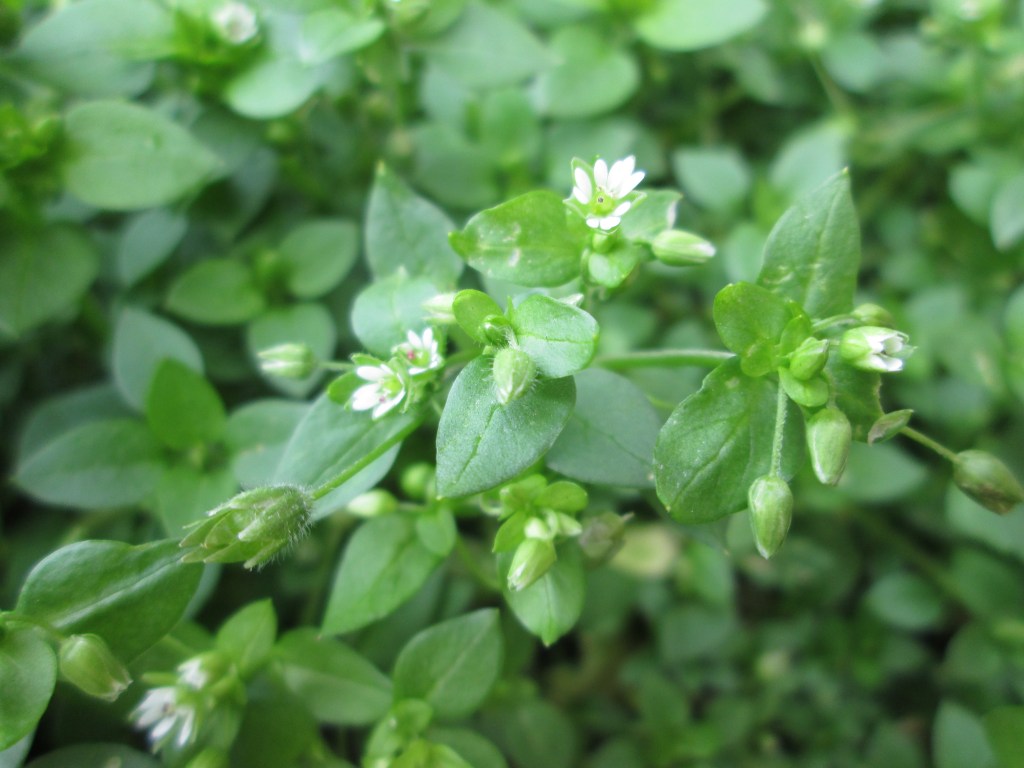
Taxonomic Position:
- Family: Caryophyllaceae (pink/carnation family)
- Genus: Stellaria (starwort genus)
- Species: media (common chickweed)
Diagnostic Feature:
Single line of hairs alternating up stem between leaf pairs. Use 10x hand lens to see clearly. Absolutely unique feature among NZ plants.
Other Features:
- Small (5-40cm), mat-forming
- Opposite oval leaves
- Tiny white flowers with 5 deeply split petals (appear as 10)
- Succulent, tender stems
Chemical Profile:
- Saponins: Triterpenoid type
- Flavonoids: C-glycosides
- Vitamins: C, A (moderate amounts)
- Minerals: Calcium, potassium, iron
7. Portulaca oleracea (Purslane)

Taxonomic Position:
- Family: Portulacaceae (purslane family)
- Genus: Portulaca
- Species: oleracea (common purslane)
Diagnostic:
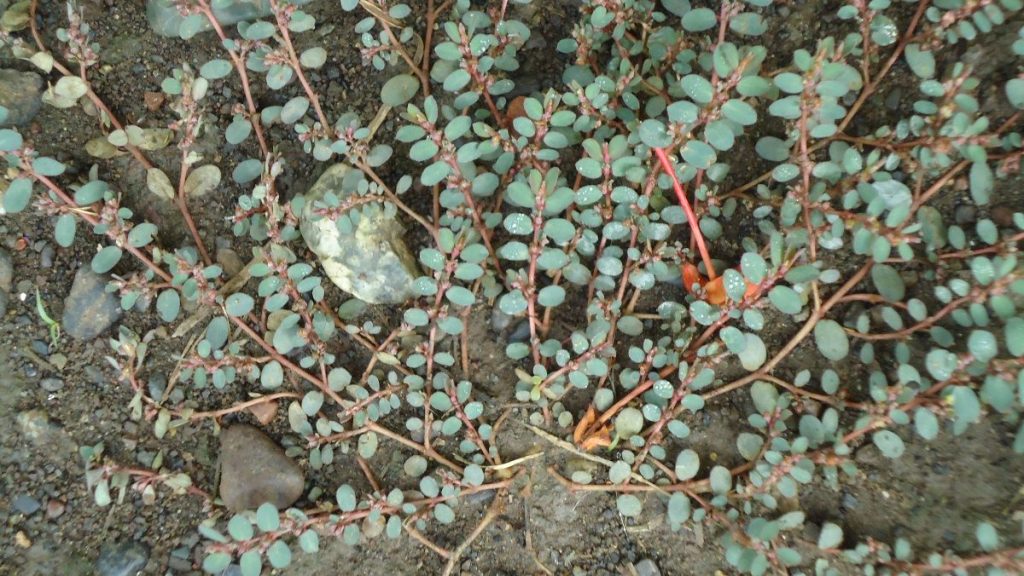
- Succulent leaves and stems (fleshy, water-storing) – DISTINCTIVE
- No milky sap (test by breaking—distinguishes from toxic spurge)
- Reddish stems (often)
- Small paddle-shaped leaves
- Low mat-forming habit
Chemical Profile:
- Omega-3 fatty acids: α-linolenic acid (300-400mg/100g fresh) – highest of any leafy vegetable
- Vitamins: A (1320 IU/100g), C, E
- Minerals: Magnesium, calcium, potassium
- Betalains: Pigments (in red-stemmed varieties)
- Mucilage: Polysaccharides
Critical Safety Test:
Break stem – if milky sap appears, it’s NOT purslane (could be toxic spurge). Purslane has clear sap.
8. Tropaeolum majus (Nasturtium)

Taxonomic Position:
- Family: Tropaeolaceae (nasturtium family)
- Genus: Tropaeolum
- Species: majus (garden nasturtium)
Diagnostic:
- Peltate leaves (round, petiole attaches to centre of leaf, not edge) – HIGHLY DIAGNOSTIC
- Bright orange/yellow/red flowers with prominent spur
- Peppery taste (glucosinolates like watercress)
Chemical Profile:
- Glucosinolates: Benzyl glucosinolate (converts to benzyl isothiocyanate – pungent, antimicrobial)
- Vitamin C: Very high (130mg/100g – comparable to oranges)
- Carotenoids: Lutein, β-carotene
Look-a-Likes:
None. Combination of peltate leaves and spurred flowers is unique.
9. Prunella vulgaris (Self-Heal)

Taxonomic Position:
- Family: Lamiaceae (mint family)
- Genus: Prunella
- Species: vulgaris (common self-heal)
Diagnostic:
- Purple-violet flower spike (distinctive appearance)
- Square stems (mint family characteristic)
- No mint scent (unusual for Lamiaceae – helps distinguish)
- Low-growing, creeping habit
Chemical Profile:
- Triterpenes: Ursolic acid, oleanolic acid
- Flavonoids: Rutin, hyperoside
- Tannins: Rosmarinic acid
- Vitamins: K, C
10. Daucus carota (Queen Anne’s Lace/Wild Carrot)
⚠️ CRITICAL SAFETY – ADVANCED FORAGERS ONLY

Taxonomic Position:
- Family: Apiaceae (carrot family)
- Genus: Daucus
- Species: carota (wild carrot, ancestor of cultivated carrot)
ALL features required for positive ID:
- Hairy stem and leaves (hemlock is smooth!)
- Carrot smell from crushed root (distinctive)
- Often dark purple flower in centre of white umbel
- NO purple spots on stem (hemlock has purple spots)
- Biennial growth (leafy first year, flowers second)
Deadly Look-a-Like: Poison Hemlock (Conium maculatum)

| Feature | Hemlock (DEADLY) | Queen Anne’s Lace (SAFE) |
|---|---|---|
| Stem texture | Smooth, hairless | Hairy |
| Stem markings | Purple/red spots or blotches | No purple spots (may have fine hairs) |
| Smell | Mouse urine (musty, unpleasant) | Carrot (pleasant, distinctive) |
| Height | 1.5-2.5m (tall) | 30-100cm (shorter) |
| Root smell | No carrot smell | Strong carrot smell |
Chemical Profile (Queen Anne’s Lace):
- Volatile oils: Carotol, daucol (carrot scent)
- Carotenoids: In roots
- Coumarins: Various
Hemlock Toxicity:
Contains coniine alkaloid – LETHAL. Causes respiratory paralysis. No antidote. Death in 2-3 hours.
Professional Recommendation:
Beginners should completely avoid this plant and all Apiaceae. Only harvest under direct expert supervision after extensive training.
11. Pseudowintera colorata (Horopito)

⚠️ CONSERVATION: Only harvest from cultivated plants
Taxonomic Position:
- Family: Winteraceae (ancient lineage, primitive flowering plant family)
- Genus: Pseudowintera (NZ endemic genus, 3 species)
- Species: colorata (most widespread, medicinally significant)
Diagnostic Botanical Features:
Leaves:
- Morphology: Oval to elliptical, 3-8cm long, 1.5-4cm wide
- Texture: Coriaceous (thick, leathery) – adaptation to montane/subalpine environments
- Colour variation: Upper surface often with red/purple blotches (anthocyanin pigments – variable expression)
- Underside: Pale yellow-green to silvery (stomata concentrated on underside – hypostomatous)
- Margin: Entire (smooth), slightly revolute (rolled under)
- Venation: Pinnate, midrib prominent, lateral veins subtle
Stems:
- Woody, multi-branched
- Bark grey-brown, somewhat smooth
- Growth habit: Small shrub to small tree (1-5m typically)
Flowers:
- Structure: Small (5-10mm), greenish-yellow
- Petals: 5-7, inconspicuous
- Reproductive: Dioecious (separate male and female plants)
- Season: Spring-summer (October-December)
Fruit:
- Berries: Purple-black when ripe
- Size: 5-8mm diameter
- Only on female plants
- Season: Summer-autumn
Chemical Profile:
Primary Bioactive: Polygodial (sesquiterpene dialdehyde)
- Concentration: 0.2-2% of dry leaf weight (highly variable)
- Chemical structure: C₁₅H₂₄O₂ (two aldehyde functional groups)
- Properties:
- Intensely pungent (activates TRPA1 receptors – same as wasabi, horseradish)
- Antifungal (disrupts fungal cell membranes)
- Antibacterial (gram-positive activity)
- Biosynthetic pathway: Terpenoid biosynthesis via mevalonate pathway
Secondary Compounds:
- Additional sesquiterpenes (structural variants)
- Flavonoids (quercetin derivatives)
- Tannins (condensed type)
Taste Test:
INTENSELY peppery – one of most diagnostic features. Small piece of leaf (2-3mm) creates powerful burning sensation on tongue. Unmistakable when experienced.
Anatomical Features (Requires Microscopy):
Leaf Cross-Section:
- Thick cuticle (xeromorphic adaptation despite growing in moist environments – montane UV protection)
- Hypostomatous (stomata only on lower epidermis)
- Oil cells scattered in mesophyll (contain polygodial)
- Sclerenchyma cells (create leathery texture)
Look-a-Likes:
None particularly close in NZ flora. Combination of:
- Thick leathery leaves
- Red blotches (when present)
- Pale underside
- Intense peppery taste
…is unique.
Sometimes confused with:
- Other Pseudowintera species (P. axillaris – mountain horopito; similar properties)
- Taiwanese/Japanese “pepper trees” in cultivation (larger leaves, not native)
Distribution & Habitat:
- Endemic to NZ: North and South Islands
- Altitudinal range: Montane to subalpine (300-1200m typically)
- Habitat: Cool, moist forests; forest margins; scrubland
- Climate preference: High rainfall, cool temperatures
- Associates: Often with beech (Nothofagus), podocarp forests
Conservation Status:
- Nationally: Not Threatened
- Concern: Slow growth rate (10-20 years to harvesting size)
- Pressure: Increasing demand for medicinal/culinary use
- Protocol: Wild harvest ONLY with explicit landowner permission and conservation protocols (see Everyperson Guide)
- Recommendation: Cultivation strongly preferred
Phenological Notes:
- Evergreen (retains leaves year-round)
- New leaf flush: Spring (September-November)
- Flowering: Spring-summer (October-December)
- Fruiting: Summer-autumn (female plants only)
Chemical Variation:
Polygodial content varies with:
- Genetics: Different populations/plants have different concentrations
- Environment: Higher altitude = often higher polygodial
- Season: Slight seasonal variation
- Leaf age: Mature leaves generally highest concentration
Identification Confidence Level:
- Taste test: 100% diagnostic (if intensely peppery = horopito)
- Visual alone: 85% (distinctive but variable red blotching)
- Combined features: 95%+
Cultural Note:
Horopito is a taonga (treasure) in traditional Māori medicine. While not as culturally central as kawakawa, it deserves respectful treatment as a native medicinal plant. For rongoā Māori knowledge, consult qualified practitioners through Te Paepae Motuhake, local marae, or Māori health providers.
12. Leptospermum scoparium (Mānuka)

Taxonomic Position:
- Family: Myrtaceae (myrtle family – aromatic shrubs/trees)
- Genus: Leptospermum (tea-trees, primarily Australian/NZ)
- Species: scoparium (NZ species, most medicinally significant)
Diagnostic Botanical Features:
Leaves:
- Morphology: Small, linear to narrow-lanceolate, 4-12mm long, 1-3mm wide
- Apex: Sharply pointed (pungent – prickly to touch)
- Texture: Stiff, almost needle-like (sclerophyllous adaptation)
- Colour: Dark green to grey-green, sometimes with bronze tinge
- Arrangement: Alternate, densely clustered
- Venation: Single prominent midvein
- Aromatic: When crushed, releases characteristic honey-like, resinous scent
Stems:
- Habit: Multi-stemmed shrub to small tree
- Height: Typically 1-5m, occasionally to 15m (favourable sites)
- Bark: Flaky, peeling in papery strips (grey-brown to red-brown)
- Young twigs: Often pubescent (short, fine hairs)
Flowers:
- Size: 8-15mm diameter (relatively large for Myrtaceae)
- Colour: White to pale pink (occasionally darker pink cultivars)
- Structure:
- Petals: 5, rounded, spreading
- Stamens: Numerous (15-40+), prominent (create characteristic “boss” in centre)
- Ovary: Inferior (below petals)
- Arrangement: Usually solitary in leaf axils, sometimes clustered
- Season: Spring-summer (October-January), sometimes sporadic autumn flowering
Fruit:
- Type: Woody capsule (typical Myrtaceae feature)
- Size: 5-7mm diameter
- Structure: 5-chambered, splits to release seeds
- Persistence: Remains on plant for years (diagnostic for aged plants)
- Seeds: Numerous, tiny
Chemical Profile:
Essential Oil (0.5-2.5% of leaf dry weight):
Major Component Classes:
1. Triketones (β-triketones – UNIQUE to mānuka/kānuka):
- Leptospermone (primary)
- Isoleptospermone
- Flavesone
- Chemical structure: Three ketone groups (C=O) in sequence
- Properties: Antimicrobial, particularly antibacterial
- Diagnostic: These compounds ONLY in Leptospermum and Kunzea species
2. Sesquiterpenes:
- Cadinene
- Calamenene
- Others (variable composition)
3. Monoterpenes (minor components):
- α-pinene
- β-pinene
- 1,8-cineole (trace)
Flavonoids (Non-volatile):
- Quercetin (and glycosides)
- Myricetin
- Catechins
Comparison with Honey:
Mānuka honey’s famous component (methylglyoxal/MGO) is NOT in leaves. MGO forms from dihydroxyacetone in nectar. Leaf chemistry different from honey chemistry.
Anatomical Features:
Leaf Cross-Section (Microscopy):
- Epidermis: Thick cuticle (drought/UV protection)
- Mesophyll: Dense, sclerophyllous (many sclerenchyma cells)
- Oil glands: Scattered throughout mesophyll (source of essential oils)
- Xeromorphic features: Small leaf size, thick cuticle, sunken stomata (adaptations to variable moisture)
Look-a-Like: Kānuka (Kunzea spp.)

CRITICAL DISTINCTION: Mānuka and kānuka are very similar. Key differences:
| Feature | Mānuka | Kānuka |
|---|---|---|
| Leaf texture | Prickly, stiff, sharp | Softer, not prickly |
| Leaf feel | Painful if rubbed | Not painful |
| Leaf aroma | Strong honey-like, resinous | Milder, more eucalyptus-like |
| Flower size | Larger (8-15mm) | Smaller (4-8mm) |
| Flower arrangement | Often solitary | Usually clustered |
| Seed capsule | 5-7mm | 2-4mm (smaller) |
| Bark | Flaky, peeling significantly | Smoother, less peeling |
| Habitat | Wider range (scrub to forest) | Often wetter sites |
Definitive Test: Prickly leaf feel. Rub leaves between fingers – mānuka HURTS (sharp, stiff points), kānuka doesn’t.
Taxonomic Note: Kunzea (kānuka) recently reclassified. Formerly Leptospermum ericoides, now Kunzea ericoides and related species. Biochemically similar but distinct.
Distribution & Habitat:
- Endemic to NZ: Throughout North and South Islands
- Altitudinal range: Sea level to subalpine (~1500m)
- Habitat:
- Pioneer species (colonises disturbed areas)
- Scrubland, forest margins
- Tolerates poor soils (nitrogen-fixing association with mycorrhizae)
- Often dominates after fire or clearance
- Ecological role: Important successional species, food for native birds
Conservation Status:
- Nationally: Not Threatened
- Abundance: Very common, often forms extensive stands
- Ecological concern: Can dominate to exclusion of other natives in some areas
- Harvest sustainability: Abundant enough that sustainable harvest not concern (unlike horopito)
Phenological Cycle:
- Evergreen: Retains leaves year-round
- New growth: Spring (September-November)
- Main flowering: Late spring-summer (November-January)
- Sporadic flowering: Can flower sporadically in autumn
- Seed maturation: Summer-autumn
- Seed release: Capsules persist, release seeds over extended period
Chemical Variation:
Triketone concentrations vary with:
- Chemotype: Different genetic populations have different profiles
- Geography: North Island often different from South Island
- Environment: Sunlight, soil nutrients affect production
- Season: Some seasonal variation in oil composition
Identification Confidence Level:
- Prickly leaf test: 95% diagnostic (mānuka hurts, kānuka doesn’t)
- Visual + aroma: 90% (honey-like scent characteristic)
- Flower size + leaf feel: 99% (combination highly diagnostic)
- Chemical analysis: 100% (triketones diagnostic)
Cultural Significance:
Mānuka has traditional uses in rongoā Māori. While abundant and widely available, it remains a taonga species and should be treated with respect. For traditional knowledge and cultural protocols, consult qualified rongoā practitioners through Te Paepae Motuhake, local marae, or Māori health providers.
Advanced Identification Methods
Using a 10x Hand Lens
What to Examine:
- Trichome structure: Chickweed’s single hair line only visible with magnification
- Gland presence: Sticky glandular vs. non-glandular hairs
- Stomata patterns: Breathing pores on leaf surfaces
- Surface texture details: Features invisible to naked eye
Where to Purchase (NZ):
- Bunnings, Mitre 10 (gardening section): $10-20
- Scientific suppliers online: $15-40
- Jeweller’s loupes (alternative): Similar magnification, $10-30
Smell Testing (When Safe)
Aromatic Compounds Create Diagnostic Scents:
- Kawakawa: Peppery, spicy (phenylpropanoids)
- Horopito: Intensely peppery (polygodial)
- Mānuka: Honey-like, resinous (triketones, sesquiterpenes)
- Mint family: Minty, lemony (lemon balm), etc. (monoterpenes)
- Queen Anne’s Lace: Carrot (carotol, daucol)
- Hemlock: Mouse urine, unpleasant (coniine, volatile alkaloids)
- Fennel: Anise (anethole)
Safety Protocol:
Never smell unknown Apiaceae plants closely. Some aromatic compounds are volatile toxins.
Taste Testing (Extreme Caution)
Only for 99% certain IDs, confirming final 1%:
- Touch to lips → wait 5 min
- Touch to tongue tip → wait 5 min
- Chew small piece without swallowing → wait 5 min
- If no burning/numbing/odd sensations, likely safe
Never taste:
- Apiaceae unless 100% certain
- Plants with milky sap (except dandelion ID’d by other means)
- Anything unidentified
NZ Native Taste Tests:
- Horopito: Intensely peppery (100% diagnostic)
- Mānuka: Slightly resinous, aromatic (supportive evidence)
- Kawakawa: Mildly peppery (supportive evidence)
Seasonal & Environmental Variations
Seasonal Morphology
Spring:
- Tender growth, less bitter
- Roots depleting energy (poor for root harvest)
- Many plants similar before flowering
- NZ timing: September-November (main growth period)
Summer:
- Flowering (best ID time)
- Mature leaves (tougher, more bitter)
- NZ timing: December-February (peak flowering)
Autumn:
- Roots at peak energy (best root harvest)
- Seeds maturing
- Leaves yellowing, dying back
- NZ timing: March-May (harvest season for roots)
Winter:
- Perennials dormant (fewer ID features)
- Evergreens (kawakawa, mānuka, horopito) maintain leaves
- NZ timing: June-August (limited foraging, rely on evergreens)
Environmental Stress Responses
Drought:
- Smaller leaves
- Earlier flowering
- Higher secondary metabolite concentrations (often more potent medicinally)
Shade:
- Larger, thinner leaves (maximising light capture)
- Taller, leggier growth
- Fewer flowers
- Lower essential oil content
Nutrient-Poor Soil:
- Smaller overall size
- Yellowing leaves
- Reduced flowering
NZ Regional Identification Considerations
Urban vs. Rural Morphological Variations:
Urban Environments (Auckland, Wellington, Christchurch):
- Stress-induced changes:
- Compaction: Plantain, dandelion develop more robust taproots (adaptation to compacted soil)
- Pollution: Leaves may be smaller, darker (stress response to exhaust particles)
- Mowing: Basal rosettes more pronounced (selection pressure favouring low growth)
- Heat island effect: Extended growing season, less winter dormancy
- Identifying stressed specimens: Use multiple features (don’t rely on size alone – stressed plant may be half normal size but still have all diagnostic features)
Regional Climate Effects:
Northern NZ (Auckland, Northland, Bay of Plenty):
- Higher humidity: Increased fungal growth on leaves (not diagnostic feature – ignore when IDing)
- Warmer: Year-round growth for many species (less pronounced winter dormancy)
- Coastal: Salt tolerance variants (some species show morphological differences – smaller, thicker leaves)
- Native distribution: Kawakawa common (thrives in warm, humid conditions)
Central/Wellington:
- Wind: Stunted growth, smaller leaves in exposed sites (Wellington’s notorious wind shapes plants)
- Variable weather: Plants show wider phenotypic plasticity (same species can look quite different in sheltered vs. exposed sites)
- Temperature swings: Nor’westers create dramatic day-to-day changes
Southern NZ (Canterbury, Otago, Southland):
- Cooler: Shorter growing season, more pronounced seasonality
- Frost: Some species (kawakawa) absent or only in very sheltered sites
- Alpine influence: Montane species (horopito) at lower elevations than North Island
- Dry (Central Otago): Plants often smaller, more xeromorphic adaptations
Identification Principle:
Same species can look dramatically different in different regions. Always use MULTIPLE diagnostic features, not just size or colour (which vary with environment).
Building Expert-Level Skills
The 100-Hour Pathway
0-20 hours: Basic ID of 3-5 common plants (plantain, dandelion, cleavers)
20-50 hours: Confident with 10-15 plants across seasons
50-100 hours: Solid foundational knowledge (recognise plants in all life stages)
100-500 hours: Approaching expert level (can ID stressed/damaged specimens)
Creating a Personal Herbarium
Method:
- Collect specimen with all features (leaves, flowers, roots if possible)
- Press between newspaper under weight (books work well)
- Dry 1-2 weeks (check halfway, replace damp newspaper)
- Mount on archival paper (acid-free cardstock)
- Label: scientific name, location (GPS coordinates), date, habitat, collector
Value:
- Permanent reference (photos fade, memories fail)
- Shows seasonal variations side-by-side
- Documents learning journey
- Builds pattern recognition through repeated observation
NZ-Specific Consideration:
Include notes on regional variations you observe. Your herbarium becomes valuable data on NZ plant populations.
Pattern Recognition Development
Your brain builds neural pathways for plant recognition through repetition:
Practice Methods:
- Daily photo review of target plants (5-10 minutes builds neural pathways)
- Monthly visits to same plants through all seasons (observe changes)
- Side-by-side comparison of similar species (dandelion vs. cat’s ear, mānuka vs. kānuka)
- Blind identification tests (cover labels, test yourself)
- Teach others (explaining reinforces your own knowledge)
Olfactory Memory:
Smell is powerfully linked to memory. Regularly smell target plants (kawakawa, mānuka, horopito) to build olfactory reference library.
Tactile Memory:
Touch distinctive features regularly (plantain’s parallel veins, mānuka’s prickly leaves, cleavers’ sticky stems) to build tactile recognition.
Joining Scientific Community
Resources:
New Zealand-Specific:
- iNaturalist: Upload observations, get expert verification (NZ has active community)
- NZ Plant Conservation Network: Contribute sightings of rare species
- Regional Botanical Societies:
- Auckland Botanical Society
- Wellington Botanical Society
- Canterbury Botanical Society
- Otago Botanical Society
- Attend field trips, lectures
- Citizen science projects:
- Great Kereru Count
- Garden Bird Survey (plants = bird habitat)
- NatureWatch NZ
International:
- NZPCN (NZ Plant Conservation Network): www.nzpcn.org.nz
- Biodiversity databases: Contribute to NZ biodiversity data
Local Connections:
- Foraging groups (Facebook, Meetup)
- Native plant nurseries (staff often knowledgeable)
- Māori cultural groups (for learning about native plants respectfully)
Conclusion: The Journey to Mastery
Plant identification is a skill that deepens with practice. Start with unmistakable plants (plantain, dandelion, cleavers), build confidence, then gradually expand your repertoire.
Remember:
- Multiple features always required (never rely on single characteristic)
- Seasonal observation essential (see plants through all life stages)
- 100% certainty or don’t use (no exceptions)
- Build skills gradually over time (rushing causes dangerous mistakes)
- Cultural respect for taonga species (rongoā Māori has own knowledge systems)
The goal isn’t speed—it’s accuracy and confidence.
For NZ Foragers Specifically:
- Learn NZ natives alongside introduced species (kawakawa, mānuka, horopito are valuable)
- Understand regional variations (Auckland plant ≠ Otago plant even if same species)
- Respect conservation protocols (horopito wild harvest inappropriate, cultivation essential)
- Connect with cultural knowledge (rongoā Māori practitioners for traditional perspectives)
This is a lifelong journey. Every walk reveals new details, every season brings new understanding. Enjoy the process.
Comprehensive Sources
Academic References:
- Harris, J.G., & Harris, M.W. (2001). Plant Identification Terminology: An Illustrated Glossary (2nd ed.). Spring Lake Publishing.
- Simpson, M.G. (2010). Plant Systematics (2nd ed.). Academic Press.
- Mabberley, D.J. (2017). Mabberley’s Plant-Book: A Portable Dictionary of Plants (4th ed.). Cambridge University Press.
NZ-Specific:
- Crowe, A. (2004). A Field Guide to the Native Edible Plants of New Zealand. Penguin Books.
- Brooker, S. G., Cambie, R. C., & Cooper, R. C. (1987). New Zealand Medicinal Plants. Heinemann Publishers.
- Riley, M. (1994). Māori Healing and Herbal: New Zealand Ethnobotanical Sourcebook. Viking Sevenseas NZ Ltd.
- Dawson, M., et al. (2007-2025). Weeds Key. Landcare Research.
- Popay, I., et al. (2010). An Illustrated Guide to Common Weeds of New Zealand (3rd ed.). NZ Plant Protection Society.
- Allan, H. H. (1961). Flora of New Zealand (Vol. 1). Government Printer. (Classic reference)
Phytochemistry:
- Chevallier, A. (2016). Encyclopedia of Herbal Medicine (3rd ed.). DK Publishing.
- Bone, K., & Mills, S. (2013). Principles and Practice of Phytotherapy (2nd ed.). Churchill Livingstone.
Online:
- Landcare Research Weeds Key: www.landcareresearch.co.nz
- Massey University Weed Database: www.massey.ac.nz
- NZ Plant Conservation Network: www.nzpcn.org.nz
- iNaturalist NZ: www.inaturalist.nz (community ID verification)
- Te Papa (Museum of NZ): Collections database includes plant specimens
Cultural Resources:
- Te Paepae Motuhake (Rongoā Standards Authority): For rongoā Māori practitioner information
- Local marae: Community connections to traditional knowledge
- Māori health providers: DHB services, community organisations
Disclaimer: This guide is for educational purposes only and addresses plant identification from a Western botanical and scientific perspective. It does not represent rongoā Māori traditional knowledge or practice. Plant misidentification can cause serious illness or death. You are solely responsible for correct identification. Always use multiple sources and consult experts. When uncertain, don’t consume. For rongoā Māori knowledge and traditional protocols regarding native plants, consult qualified rongoā practitioners through Te Paepae Motuhake, local marae, or Māori health providers.
Note on Pricing: All prices mentioned in this guide are approximate and based on New Zealand suppliers as of December 2025. Prices vary by supplier, season, and market conditions. We recommend checking current prices with your local suppliers.
 The Public Herbarium